Nearly 21 million U.S. adults experienced at least one major depressive episode in recent years, representing about 8.3% of the adult population according to the National Institute of Mental Health (NIMH). For many, depression isn’t just an occasional low mood—it’s a persistent daily reality that drains energy, clouds thinking, and makes even routine tasks feel monumental. If you’ve woken up feeling heavy, struggled to get out of bed, or wondered how to face another day with that familiar weight of hopelessness, you’re not alone. Living with depression daily can disrupt work, relationships, and simple joys, often creating a cycle of isolation and fatigue.
The good news is that while depression is challenging, evidence-based strategies can help you manage symptoms and improve your quality of life. This guide draws from research by organizations like the NIMH, Mayo Clinic, and studies on lifestyle interventions to offer practical, actionable steps. You’ll learn how to build supportive routines, cope effectively day by day, and incorporate habits that research suggests may reduce symptoms and build resilience. Small, consistent changes can make a meaningful difference—one intentional day at a time.
For related reading, see our guide on Signs of Mental Health Issues: Ultimate Guide to Understanding Depression
What Does Living with Depression Daily Really Feel Like?
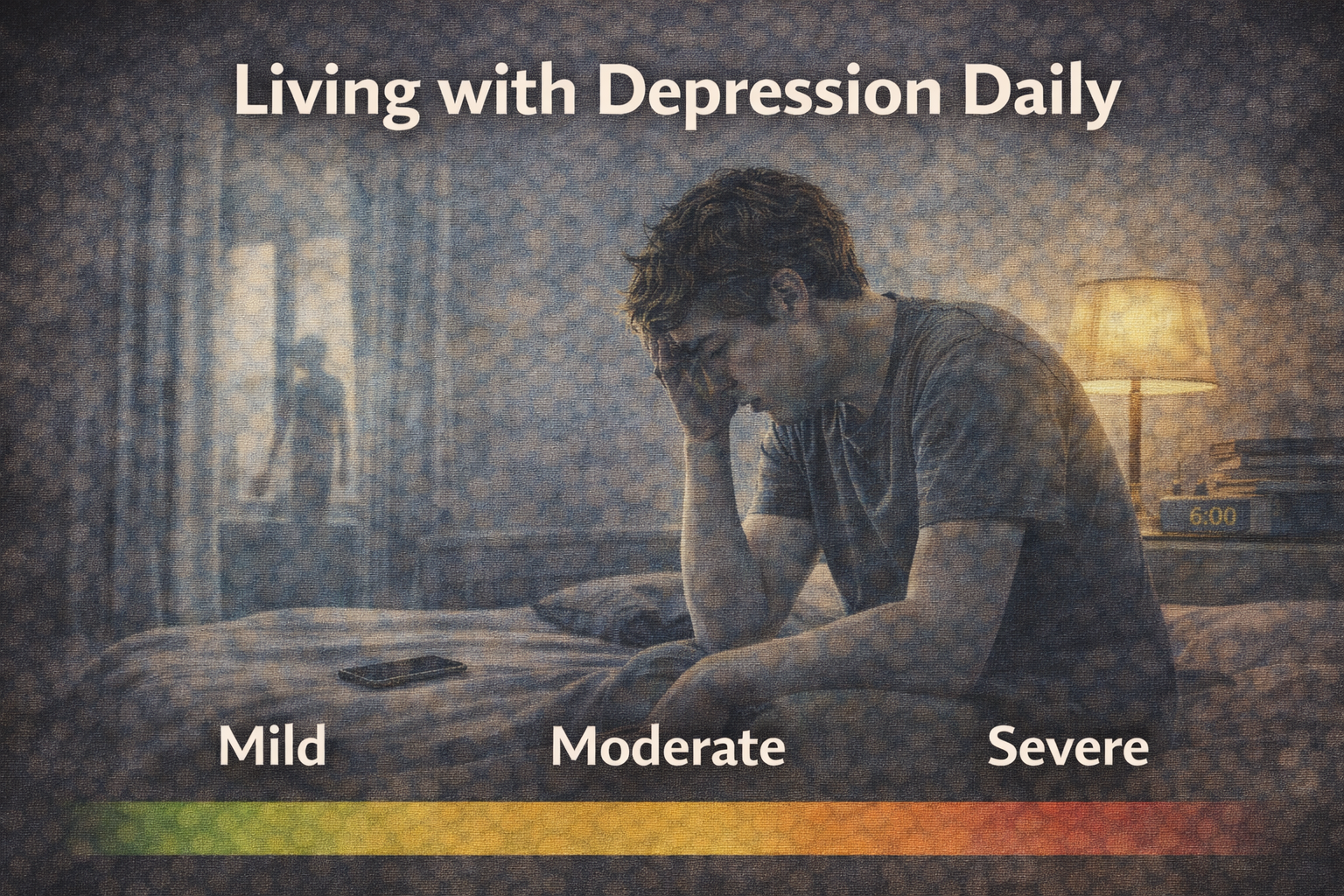
Living with depression daily often means navigating a constant undercurrent of emotional and physical exhaustion that affects every aspect of life. Unlike temporary sadness, these symptoms persist and interfere with functioning.
Understanding the Daily Impact of Depression
Depression brings persistent low mood, profound fatigue, and a marked loss of interest or pleasure in activities once enjoyed. You might feel emotionally numb, easily irritated, or overwhelmed by sadness that doesn’t lift. Physical symptoms frequently accompany these feelings, such as changes in sleep (insomnia or oversleeping), appetite shifts leading to weight changes, or unexplained aches.
These symptoms disrupt daily routines—getting ready for work might take enormous effort, social plans feel impossible, and concentration for tasks becomes elusive. Over time, this creates a cycle where avoidance reinforces hopelessness.
Depression vs. Normal Sadness
Normal sadness is typically tied to a specific event, like a loss, and fades with time. Depression lasts weeks or longer, feels disproportionate or unexplainable, and severely impairs daily life. Major or chronic depression persists daily, often without clear triggers, and includes feelings of worthlessness or guilt.
Why Daily Management Matters
Proactive daily management prevents symptom escalation and fosters resilience. Small, consistent actions build momentum, helping break the cycle of inertia. Research suggests that structured approaches can improve mood stability and reduce relapse risk.
For related reading, see our guide on Signs of Mental Health Issues: What is Depression? Complete Overview
Why Living with Depression Daily Requires a Structured Approach
Depression often erodes motivation and structure, making a deliberate routine essential for stability.
The Role of Routine in Mental Health Stability
Consistent daily habits provide anchors when motivation is low. Studies show that maintaining regular sleep of 7-9 hours may reduce depression risk significantly. Routines combat decision fatigue and create predictability, which can ease the mental load.
Benefits of Daily Coping Strategies
Implementing coping tools daily can lead to better energy levels, mood regulation, and a greater sense of control. Over time, these practices build long-term resilience and may lower the likelihood of severe episodes.
How to Build a Supportive Daily Routine for Depression
Creating a routine tailored to depression focuses on gentle, achievable steps that prioritize basics.
Start with Sleep and Wake Consistency
Aim for 7-9 hours of sleep with fixed bedtime and wake times, even on weekends. Good sleep hygiene—dim lights, no screens before bed—helps regulate mood. Research indicates that consistent sleep patterns may reduce depression risk by around 22%.
Incorporate Gentle Movement and Nutrition
Begin with short daily walks or light activity; studies link higher step counts (such as 7,000+ per day) to lower depression risk. Focus on balanced meals with protein, fruits, vegetables, and hydration to support energy and brain function.
Add Mindfulness and Small Pleasures
Include brief mindfulness practices, like 5-10 minutes of meditation or deep breathing, and gratitude journaling. These can interrupt negative thought loops.
Sample Daily Routine Template
Morning: Wake at consistent time, hydrate, light stretch or short walk, healthy breakfast.
Midday/Afternoon: Scheduled break for movement (e.g., 20-30 minute walk), complete one small task.
Evening: Wind-down routine—limit screens, reflect on positives, prepare for bed.
Many people find tools like fitness trackers helpful for monitoring steps and sleep. Devices such as Fitbit offer features to track activity and provide gentle reminders.
Practical Ways to Cope with Depression Every Day
Coping involves active strategies to manage symptoms in the moment.
Behavioral Activation Techniques
Schedule small, enjoyable or achievement-oriented activities, even if motivation is low. Cognitive Behavioral Therapy (CBT) research supports this approach—starting small builds momentum.
Managing Negative Thoughts Daily
Use simple thought records: note the thought, evidence for/against it, and a balanced alternative. This helps challenge automatic negativity.
Building Social Connections
Make one small outreach daily—a text, call, or brief interaction. Social support reduces isolation, a key depression driver.
Daily Habits to Manage Depression Effectively
Focus on foundational habits that compound over time.
Prioritize Self-Care Basics
Maintain hydration, regular meals, and basic hygiene—these often slip but stabilize mood.
Incorporate Evidence-Based Habits
Include daily movement, limited alcohol, and social contact. These support brain health and emotional regulation.
Track Progress and Adjust
Journal small wins and triggers to identify patterns and celebrate progress. Adjust as needed.
For CBT-inspired techniques, explore our article on [CBT Techniques for Depression].
Overcoming Depression One Day at a Time: Realistic Strategies
Approach management incrementally to avoid overwhelm.
Break Tasks into Tiny Steps
Focus on “today only”—one small action at a time reduces pressure.
Celebrate Small Wins
Acknowledge completions to boost dopamine and motivation.
When to Seek Extra Support
Watch for worsening symptoms, suicidal thoughts, or interference with life. Therapy or medication adjustments may help.
Scientific Evidence & Research on Daily Depression Management
Research supports lifestyle approaches as valuable complements to treatment.
Clinical Studies
A landmark study in Nature Mental Health found that healthy lifestyle factors—like good sleep, exercise, social connection, and moderate habits—reduced depression risk by up to 57%. Aerobic exercise shows effects comparable to therapy or medication in some cases.
Expert Opinions
The Mayo Clinic and NIMH emphasize routine and behavioral activation as core CBT elements for managing depression.
Statistical Data
About 8.3% of U.S. adults experience a major depressive episode annually (NIMH). Poor habits correlate with higher rates.
Common Mistakes to Avoid When Living with Depression Daily
Mistake #1: Isolating Yourself Completely
Isolation worsens loneliness and symptoms. Better approach: Start with small daily connections, like a quick message.
Mistake #2: Ignoring Medication or Treatment Adherence
Skipping doses increases relapse risk. Better approach: Maintain a consistent schedule and discuss concerns with your provider.
Mistake #3: Over-Reliance on Unhealthy Coping (e.g., Alcohol)
Temporary relief often worsens mood long-term. Better approach: Replace with healthy habits like movement.
Frequently Asked Questions (FAQs)
What does living with depression daily involve?
Living with depression daily involves managing persistent symptoms like low energy, sadness, and motivation loss through routines, coping tools, and support to maintain daily function. It requires consistent small actions to prevent escalation and promote stability.
What is a good daily routine for depression?
A good daily routine for depression includes consistent sleep (7-9 hours), gentle exercise like walking, balanced meals, mindfulness practices, and scheduled activities. Research shows these elements can help reduce symptoms and improve mood regulation.
How can I cope with depression every day?
You can cope with depression every day by using behavioral activation (scheduling small activities), challenging negative thoughts with records, staying connected socially, and practicing basic self-care. These strategies, rooted in CBT, help manage symptoms in real time.
Are there daily habits to manage depression long-term?
Yes—consistent sleep, regular movement (e.g., 7,000+ steps), social interaction, and avoiding isolation or excess alcohol support long-term management. These habits align with evidence showing reduced risk and symptom improvement.
How do I handle daily challenges of living with depression?
Handle daily challenges by breaking tasks into tiny steps, tracking progress in a journal, and seeking professional help if symptoms worsen or interfere significantly. Professional input ensures safe, personalized adjustments.
Can living with major depression daily get better?
Yes, living with major depression daily can improve significantly with consistent management, including therapy, medication if prescribed, and healthy habits. Many people experience meaningful relief and better functioning over time.
Quick Takeaways
- Structured routines and healthy habits empower daily management and may reduce symptoms.
- Small, consistent actions—like consistent sleep and gentle movement—build resilience.
- Behavioral activation and social connection combat isolation effectively.
- Evidence supports lifestyle changes as valuable complements to professional care.
- You’re not alone—progress is possible with patience and support.
Conclusion
Living with depression daily is undeniably difficult, but incorporating structured routines, practical coping strategies, and evidence-based habits offers real hope. These approaches—consistent sleep, gentle movement, mindfulness, and small social connections—empower you to regain control, reduce symptom intensity, and foster a sense of accomplishment one day at a time.
The core value lies in intentionality: you have more influence over your daily experience than depression might suggest. Start small—perhaps commit to a consistent wake time tomorrow or a short walk. These steps accumulate into meaningful change.
If symptoms feel overwhelming, consult a mental health professional for personalized guidance—therapy or medication can make a profound difference. Sign up for our newsletter to receive weekly mental health tips and resources.
You’re taking a brave step by reading this. Progress may feel slow, but every effort counts. With support and persistence, brighter days are within reach. You deserve them.
Medical Disclaimer: This article is for informational and educational purposes only and does not constitute medical advice. Always consult with a qualified healthcare professional before making any changes to your mental health treatment. If in crisis, call 988 immediately.