Have you ever felt a heavy cloud of sadness that won’t lift, or a constant buzz of worry that keeps you on edge? In the United States, an estimated 21 million adults experience at least one major depressive episode each year, while around 42.5 million grapple with anxiety disorders. These conditions are widespread, yet many people struggle to tell them apart, leading to confusion and delayed care.
The overlap in symptoms—like fatigue, sleep problems, and irritability—can make it hard to know if you’re dealing with depression, anxiety, or both. This confusion often prolongs suffering, as each requires specific strategies for relief. Without clarity on depression vs anxiety differences, individuals may miss out on effective interventions, worsening their quality of life.
In this guide, you’ll discover clear definitions, symptom comparisons, causes, and treatment options to help distinguish these conditions. We’ll explore how to recognize signs in your daily life and when to seek help, empowering you to take informed steps toward better mental health. Backed by insights from the National Institute of Mental Health (NIMH), Mayo Clinic, and recent clinical research, this information aims to provide accurate, practical guidance.
What is Depression?
Depression is more than just feeling down—it’s a serious mental health condition that affects how you think, feel, and handle daily activities. Understanding depression vs anxiety differences starts with grasping its core features, as it often involves persistent low mood that can disrupt work, relationships, and self-care. This section breaks down its definition, causes, and impacts to help you recognize it early.
For related reading, see our guide on Signs of Mental Health Issues: Ultimate Guide to Understanding Depression
Definition and Overview of Depression
Depression, clinically known as major depressive disorder, involves a persistent feeling of sadness or loss of interest in activities for at least two weeks, significantly interfering with daily functioning. Other types include persistent depressive disorder (dysthymia), which is a chronic, milder form lasting two years or more. According to NIMH data, it affects about 8.3% of U.S. adults, with higher rates among women (10.3%) and young adults aged 18-25 (18.6%).
Research suggests depression isn’t just emotional; it involves brain changes, such as reduced activity in areas regulating mood. Seasonal affective disorder and postpartum depression are variations tied to specific triggers.
Common Causes of Depression
Biological factors play a key role, including imbalances in neurotransmitters like serotonin and norepinephrine, or genetic vulnerabilities—people with family history are at higher risk. Environmental triggers, such as trauma, loss, or chronic stress, can precipitate episodes. Psychological elements, like negative thought patterns or low self-esteem, often perpetuate the cycle.
Studies show that life events, including financial strain or relationship issues, contribute significantly. For instance, the COVID-19 pandemic saw a rise in cases, highlighting how external stressors amplify biological predispositions.
How Depression Impacts Daily Life
Depression can lead to reduced energy, making simple tasks feel overwhelming, and social withdrawal, straining relationships. It increases risks for physical issues like heart disease or weakened immunity. In severe cases, it may cause thoughts of self-harm, emphasizing the need for prompt attention.
Many experience concentration difficulties at work, leading to decreased productivity. Over time, untreated depression can affect overall health, but early recognition of depression vs anxiety differences can guide better management.
Pro Tip: Track your mood daily using a simple journal app to spot patterns in depression symptoms, helping you discuss specifics with a healthcare provider.
For related reading, see our guide on Signs of Mental Health Issues: Major Depressive Disorder (MDD) Guide
What is Anxiety?
Anxiety goes beyond normal stress—it’s a persistent state of worry that can hijack your thoughts and body. Distinguishing it from depression is crucial, as anxiety often focuses on future threats, while depression dwells on past losses. Here, we’ll define anxiety, explore its causes, and examine its effects on routine life.
Definition and Overview of Anxiety
Anxiety disorders involve excessive, ongoing fear or worry that interferes with daily activities, lasting six months or more for diagnoses like generalized anxiety disorder (GAD). Types include GAD (constant worry), panic disorder (sudden attacks), and social anxiety (fear of social situations). NIMH reports that 19.1% of U.S. adults experience any anxiety disorder annually, with GAD affecting 3.1% and phobias up to 9.1%.
Women are more affected (23.4%) than men (14.3%), and rates are rising, with recent polls showing 43% of adults feeling more anxious than last year.
Common Causes of Anxiety
Genetic factors increase susceptibility if there’s family history. Traumatic events or chronic stress can trigger onset, while medical conditions like thyroid problems or caffeine overuse may exacerbate it. Brain chemistry imbalances, particularly in the amygdala, play a role in heightened fear responses.
Environmental pressures, such as work demands or uncertainty, often fuel anxiety. Research links it to modern factors like social media, which can amplify comparison and worry.
How Anxiety Affects Everyday Functioning
Anxiety may cause avoidance of situations, limiting opportunities, and physical symptoms like rapid heartbeat or sweating that disrupt focus. It often co-occurs with other issues, increasing distress and fatigue.
In daily life, it can lead to procrastination or strained interactions. Recognizing anxiety vs depression differences helps in choosing targeted coping strategies.
For related reading, see our guide on Signs of Mental Health Issues: When to Seek Help for Depression
Key Depression vs Anxiety Differences
Understanding the core depression vs anxiety differences can clarify why one feels like a weight pulling you down, while the other feels like a storm brewing ahead. This knowledge is vital for effective management, as misidentifying them may lead to mismatched treatments. We’ll compare emotional, physical, and temporal aspects.
Emotional and Cognitive Differences
Depression often brings hopelessness and rumination on past failures, fostering a sense of worthlessness. Anxiety, however, centers on fear of future events, with excessive worry about “what ifs.” Both involve negative thinking, but depression’s is self-directed, while anxiety’s is threat-focused.
Overlaps like irritability can confuse, but tracking thought patterns helps differentiate.
Physical Manifestations
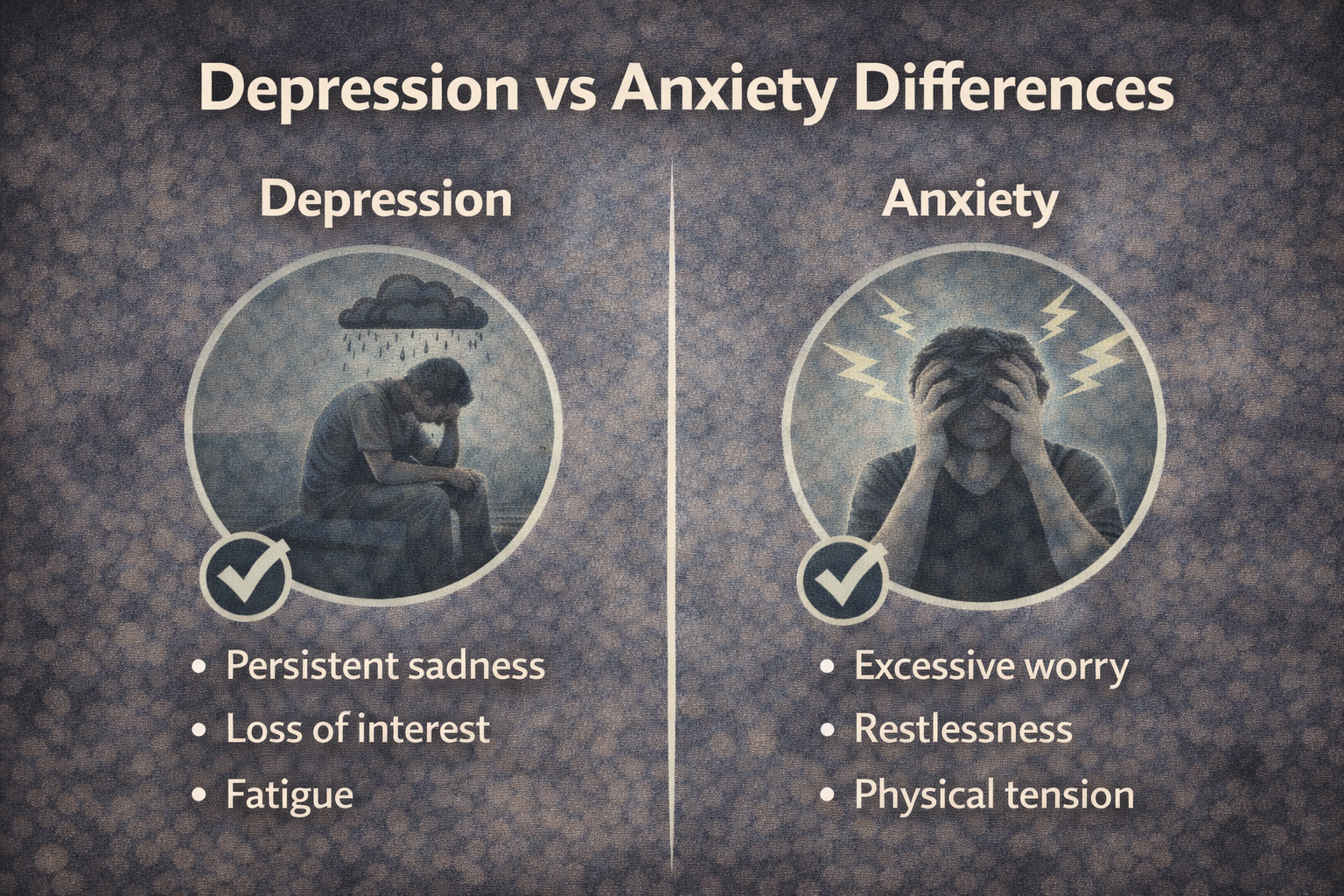
In depression, low energy and appetite changes (often weight gain or loss) dominate. Anxiety manifests as restlessness, muscle tension, or trembling. Shared symptoms include sleep disturbances and fatigue, which blur lines but highlight distinct energies—depression’s lethargy vs. anxiety’s agitation.
Research shows these stem from different brain pathways, with depression linked to inflammation.
Duration and Triggers
Depression tends to be chronic, persisting without obvious triggers. Anxiety is more episodic, often sparked by specific situations like deadlines. This difference aids in identification.
| Aspect | Depression | Anxiety | Overlap |
| Emotional | Hopelessness, past rumination | Future fear, worry | Negative thoughts |
| Physical | Low energy, appetite shifts | Restlessness, tension | Fatigue, sleep issues |
| Duration | Chronic, no clear trigger | Episodic, situation-based | Can co-occur long-term |
Research Shows: A 2024 study in JAMA Psychiatry found distinct biochemical markers, with depression showing higher inflammation levels compared to anxiety’s metabolic changes.
Depression vs Anxiety Symptoms: A Side-by-Side Comparison
Symptoms are the frontline clues in spotting depression vs anxiety differences, but overlaps can trick you. This comparison highlights unique and shared signs to avoid confusion and promote timely help. Use the table for quick reference.
Symptoms of Depression vs Anxiety
Depression symptoms include persistent sadness, feelings of worthlessness, and loss of pleasure in activities (anhedonia). Anxiety features nervousness, a sense of impending doom, and physical hyperarousal like hyperventilation.
These contrasts help pinpoint the primary issue.
Overlapping Symptoms and Why They Confuse
Shared symptoms such as irritability, difficulty concentrating, and body aches often lead to misdiagnosis. This confusion delays treatment, as about 50% of those with depression also have anxiety.
Addressing both is key for comprehensive care.
Severity Indicators for Each
For depression, suicidal thoughts signal urgent need. Anxiety’s panic attacks indicate escalation, requiring immediate strategies.
| Symptom Type | Depression | Anxiety | Shared |
| Emotional | Sadness, worthlessness | Nervousness, doom | Irritability |
| Physical | Loss of pleasure, low energy | Hyperventilation, restlessness | Concentration issues, aches |
| Severity | Suicidal ideation | Panic attacks | Escalating interference |
Expert Insight: “Differentiating symptoms early can improve outcomes by 30-40%, as tailored therapies work best,” notes a clinical psychologist from Mayo Clinic.
How to Tell Depression from Anxiety
Wondering if your restlessness is anxiety or your fatigue depression? Learning how to tell depression from anxiety empowers self-awareness, but it’s no substitute for professional input. Follow these steps for clarity.
Self-Assessment Tips
- Track emotions: Note if fears are future-oriented (anxiety) or regrets past-focused (depression).
- Monitor physical cues: Arousal like racing heart suggests anxiety; lethargy points to depression.
Journaling over a week can reveal patterns.
When to Seek Professional Help
If symptoms last over two weeks or impair work/life, consult a doctor. Use free screenings from NIMH or Mayo Clinic online.
Early help prevents worsening.
Distinguishing Depression and Anxiety Differences in Real Life
Consider scenarios: Work stress triggering worry is likely anxiety, while chronic emptiness despite stability suggests depression. Real-life context aids differentiation.
Why Understanding Depression vs Anxiety Differences Matters
Grasping depression vs anxiety differences isn’t just academic—it can transform your health journey. This awareness leads to better choices, reducing unnecessary suffering. Let’s explore the personal, relational, and societal benefits.
Benefits for Personal Health
Tailored treatments, like therapy for anxiety’s worries or meds for depression’s low mood, improve outcomes. It also lowers risks of comorbidity, where one condition fuels the other.
Impact on Relationships and Work
Clear understanding fosters better communication, boosting productivity and connections. It prevents escalation, maintaining balance.
Broader Societal Importance
In the USA, it reduces stigma, encouraging awareness and access to care, benefiting communities.
Treatment Options for Depression and Anxiety
Effective treatments exist for both, but depression vs anxiety differences influence choices. This overview covers therapies, meds, and lifestyle tweaks for informed decisions.
Therapies and Medications
Both benefit from cognitive behavioral therapy (CBT) and antidepressants like SSRIs. Anxiety may add exposure therapy or short-term benzodiazepines.
Research shows CBT reduces symptoms by 50-60%.
Lifestyle Changes and Self-Care
Exercise and mindfulness help both; aim for 30 minutes daily. Stress management, like meditation, is key.
When Treatments Overlap or Differ
For comorbid cases, integrated approaches work best. Consult professionals for personalization.
Best Practices for Managing Depression and Anxiety
Managing these conditions requires consistent habits tailored to their differences. These expert tips focus on daily routines for long-term relief.
Daily Habits to Adopt
Prioritize routine sleep (7-9 hours) and a balanced diet rich in omega-3s. Build social support through regular connections.
Coping Strategies
Journal to process thoughts; use breathing exercises for anxiety spikes.
Professional monitoring ensures adjustments.
Long-Term Prevention Tips
Schedule regular mental health check-ins and build resilience via hobbies.
Important: Avoid self-medicating with alcohol, as it can worsen both conditions and lead to dependency—always seek guided care.
Scientific Evidence & Research
Evidence underscores depression vs anxiety differences, guiding treatments. This section reviews key studies and data.
Clinical Studies
The NESDA study linked depression to higher inflammation, differing from anxiety’s metabolic profiles. STAR*D found anxious depression more severe, with poorer treatment response.
Expert Opinions
NIMH notes 45-50% comorbidity and shared genetics. Mayo Clinic highlights symptom overlaps but distinct triggers.
Statistical Data
Depression affects 8.3% of U.S. adults; GAD 3.1%. Lifetime overlap reaches 70% for some anxiety types.
See NIMH studies; JAMA Psychiatry.
Common Mistakes to Avoid
Avoiding pitfalls in handling depression and anxiety can accelerate recovery. Here are key errors and fixes.
Mistake #1: Ignoring Overlapping Symptoms
This leads to incomplete treatment. Better: Opt for comprehensive screenings to address both.
Mistake #2: Self-Medicating with Substances
It worsens symptoms and risks addiction. Instead: Follow professional guidance for safe options.
Mistake #3: Delaying Professional Help
Conditions intensify over time. Approach: Seek early intervention through therapy or meds.
Frequently Asked Questions (FAQs)
What is the difference between anxiety and depression?
Depression involves persistent sadness and loss of interest, while anxiety features excessive worry and fear. Both can overlap in fatigue and sleep issues, but treatments like CBT help distinguish and manage them. Research suggests biochemical differences, such as inflammation in depression. Always consult a professional for personalized assessment, especially if symptoms persist.
Is it anxiety or depression?
Track if symptoms are future-oriented fear (anxiety) or hopeless rumination (depression). Consult a professional for accurate diagnosis, as 45% of cases co-occur. Self-assessments can guide, but expert evaluation ensures proper treatment. Comorbidity is common, so integrated care may be needed.
Symptoms of depression vs anxiety?
Depression: Hopelessness, low energy; Anxiety: Restlessness, rapid heartbeat. Shared: Irritability. Use self-assessments but seek expert evaluation. Overlaps can confuse, but noting core emotions helps. Professional screening tools from NIMH can clarify.
How depression differs from anxiety?
Depression is past-focused with despair; anxiety is future-oriented with tension. Biochemical studies show depression’s inflammation vs. anxiety’s arousal. These distinctions guide therapy choices. If unsure, a healthcare provider can help differentiate.
Anxiety and depression symptoms comparison?
Compare: Depression lacks motivation; anxiety heightens alertness. Overlaps include concentration problems—address both for holistic care. Studies indicate 50% comorbidity, so dual approaches often work best. Speak with a doctor for tailored plans.
Depression or anxiety which is it?
Evaluate core emotions: Emptiness (depression) vs. apprehension (anxiety). Comorbidity is common; integrated therapy is key. Track patterns over time. Professional diagnosis is essential to avoid missteps.
Key differences depression and anxiety?
Emotional: Sadness vs. fear; Physical: Lethargy vs. agitation. Research highlights genetic overlaps but distinct pathways. Understanding these aids in seeking appropriate help. Consult experts for confirmation.
Conclusion
Recognizing depression vs anxiety differences unlocks targeted strategies that can significantly ease your burden and enhance daily functioning. By understanding unique symptoms, causes, and treatments, you’re equipped to make empowered choices, potentially reducing symptom severity and preventing escalation. This knowledge fosters resilience, helping you navigate challenges with greater confidence.
Take one actionable step today: Schedule a consultation with a mental health professional to discuss your experiences. Resources like the NIMH helpline can connect you quickly.
Seek support today—don’t wait for symptoms to worsen. Sign up for our weekly mental health tips email for ongoing guidance.
You’re not alone; effective treatments exist for a brighter future. With the right tools, many find lasting relief and renewed hope.
Medical Disclaimer:
This article is for informational purposes only and not a substitute for professional medical advice. Consult a healthcare provider for diagnosis and treatment. If in crisis, call the 988 Suicide & Crisis Lifeline or visit an emergency room. For support, contact SAMHSA at 1-800-662-4357. Content based on 2026 research, but verify with your provider.