Did you know that an estimated 21 million adults in the United States experience at least one major depressive episode each year, yet many remain undiagnosed? This staggering statistic highlights a silent struggle affecting millions, where persistent feelings of sadness, exhaustion, or disinterest blur the line between everyday blues and a serious mental health condition. Without proper understanding of depression diagnosis, individuals may delay seeking help, leading to prolonged suffering, strained relationships, and even physical health complications.
This article provides a comprehensive guide to understanding depression diagnosis, exploring symptoms across different groups, underlying causes, diagnostic processes, and when to seek professional support. You’ll learn how to recognize early signs, differentiate types of depression, and explore evidence-based approaches for management. By the end, you’ll feel empowered to take informed steps toward better mental health.
Backed by insights from leading organizations like the National Institute of Mental Health (NIMH) and the American Psychiatric Association (APA), this content aligns with WebMD standards for accuracy and reliability.
What is Depression?
Depression is more than fleeting sadness—it’s a complex mental health disorder that affects how you feel, think, and handle daily activities. Understanding depression diagnosis begins with recognizing it as a treatable condition influenced by biological, psychological, and environmental factors. According to the DSM-5, depression involves persistent symptoms that interfere with life for at least two weeks. This overview explains core aspects to help you identify when professional evaluation is needed.
Understanding Depression Symptoms
Core symptoms often include a persistent low mood that feels overwhelming and unshakeable. You might experience this as constant tearfulness or emotional numbness. Loss of interest in activities once enjoyed, known as anhedonia, is another hallmark—hobbies, social gatherings, or even favorite foods lose their appeal. Changes in appetite or sleep patterns are common too; some people overeat for comfort, while others lose their appetite entirely, leading to unintended weight fluctuations.
These symptoms can vary in intensity but must persist most days to warrant concern. Research suggests that ignoring them early can prolong recovery, emphasizing the importance of timely understanding depression diagnosis.
Different Types of Depression
Major depressive disorder (MDD) is the most common type, characterized by severe symptoms that disrupt daily functioning. Persistent depressive disorder (PDD), or dysthymia, involves milder but chronic symptoms lasting at least two years. Seasonal affective disorder (SAD) typically emerges in fall or winter, linked to reduced sunlight, and improves with spring.
Other forms include postpartum depression, affecting new parents, and bipolar depression, part of mood swings in bipolar disorder. Each type requires tailored approaches for effective management.
Physical Symptoms of Depression
Depression isn’t just mental—it manifests physically. Unexplained aches, such as headaches or back pain, often resist typical treatments. Fatigue and low energy make simple tasks feel exhausting, even after rest. Digestive issues like nausea or constipation can arise from stress on the body’s systems.
Studies show these symptoms stem from inflammation and neurotransmitter imbalances. Recognizing them as part of depression can prevent misdiagnosis as other illnesses.
Pro Tip: Track symptoms in a journal for two weeks, noting patterns in mood, energy, and physical sensations. This can provide valuable insights for your doctor during understanding depression diagnosis.
For a broader foundation, see our guide on Signs of Mental Health Issues:Seasonal Affective Disorder (SAD)
Why Understanding Depression Diagnosis Matters
Grasping the nuances of depression diagnosis can be life-changing, as early recognition leads to better outcomes and prevents escalation. Untreated depression affects work, relationships, and physical health, increasing risks like substance use or chronic illness. By understanding warning signs, you empower yourself to seek help promptly, fostering resilience and recovery.
Early Signs of Depression
Subtle mood changes, like increased irritability or unexplained frustration, often signal the onset. You might withdraw from social activities, preferring isolation over connection. Difficulty concentrating—trouble focusing at work or during conversations—can emerge gradually.
These signs may seem minor but accumulate, impacting daily life. Addressing them early through lifestyle adjustments or therapy can halt progression.
Warning Signs of Depression
More severe indicators include suicidal thoughts or behaviors, demanding immediate attention—call 988 if in crisis. Extreme hopelessness feels like a dark cloud without end. Sudden weight changes, either gain or loss, reflect disrupted eating habits.
These symptoms warrant urgent professional intervention to ensure safety and start recovery.
Is It Depression or Just Sadness?
Sadness is temporary, often tied to specific events, resolving within days. Depression persists for weeks, with intense symptoms affecting functioning. While sadness might dim daily life briefly, depression disrupts sleep, appetite, and motivation profoundly.
If low mood lingers beyond two weeks, consult a healthcare provider to clarify.
Research Shows: A CDC study found depression prevalence at 13.1% among U.S. adolescents and adults, higher in females, underscoring the need for awareness.
Signs of Depression in Men
Men often experience depression differently, with symptoms masked as behavioral changes rather than overt sadness. Understanding depression diagnosis in men involves recognizing these unique presentations, which can delay help-seeking due to societal expectations.
Common Behavioral Signs
Increased anger or aggression may surface as short-tempered outbursts. Risk-taking behaviors, like reckless driving, provide temporary escapes. Substance misuse, including alcohol or drugs, often self-medicates underlying pain.
These signs can strain relationships and work performance.
Physical and Emotional Indicators
Chronic fatigue drains energy for daily tasks. Loss of libido affects intimacy. Isolation from loved ones deepens loneliness.
Men might dismiss these as stress, but they signal deeper issues.
How to Recognize It Early
Monitor mood swings for patterns. Seeking professional screening, like a PHQ-9 questionnaire, aids early detection. Open conversations with trusted friends can encourage support.
Expert Insight: “Men’s depression often shows as irritability rather than tears,” notes a clinical psychologist, highlighting the need for gender-aware diagnosis.
Signs of Depression in Women
Women may face depression influenced by hormonal factors, leading to emotional intensity. Understanding depression diagnosis helps tailor support, as symptoms can overlap with life stages like pregnancy or menopause.
Emotional Symptoms
Overwhelming guilt or worthlessness erodes self-esteem. Frequent crying spells release pent-up emotions. Anxiety and rumination involve endless worry cycles.
These can amplify during stress.
Hormonal Influences
Postpartum depression links to hormonal shifts after birth. Menstrual cycle impacts worsen premenstrually. Menopause-related changes trigger mood instability.
Hormones interact with brain chemistry.
Social and Relational Signs
Withdrawal from relationships strains bonds. Changes in self-care, like neglecting appearance, reflect low motivation.
Seeking community support can mitigate isolation.
Important: If symptoms include thoughts of harm to self or baby in postpartum cases, seek emergency help immediately—depression is treatable, but delays risk complications.
For related reading, see our guide on Signs of Mental Health Issues:Depression in Older Adults
Symptoms of Depression in Teens and Young Adults
Depression in youth differs from adults, often appearing as behavioral shifts. Understanding depression diagnosis early can prevent long-term impacts on development and academics.
Symptoms of Depression in Teens
Irritability and rebellion replace sadness. Academic decline signals concentration issues. Social media withdrawal indicates isolation.
Teens may mask pain with defiance.
Depression Symptoms in Young Adults
Career or study apathy hinders progress. Relationship struggles stem from emotional detachment. Sleep disturbances, like insomnia, exacerbate fatigue.
Transitions amplify vulnerability.
Mild Depression Symptoms
Subtle mood dips feel like off days. Occasional fatigue without cause. Minor concentration issues affect productivity.
These may resolve but warrant monitoring.
Research Shows: NIMH data shows 18.6% prevalence in ages 18-25, highest among adults.
What Causes Depression?
Depression arises from a interplay of factors, not a single cause. Understanding depression diagnosis involves exploring these to inform prevention and treatment. Research points to multifaceted origins.
Biological and Genetic Factors
Brain chemistry imbalances, like low serotonin, disrupt mood regulation. Family history raises risks—genetics account for about 50% of vulnerability. Neurotransmitter roles in communication pathways are key.
These factors explain why depression runs in families.
Environmental Triggers
Stressful life events, such as loss or job changes, can precipitate episodes. Trauma or abuse leaves lasting impacts. Chronic illness adds burden, worsening symptoms.
Environment interacts with biology.
Lifestyle and Psychological Contributors
Poor diet and exercise impair brain health. Negative thinking patterns perpetuate cycles. Social isolation fuels hopelessness.
Addressing these through habits can aid recovery.
How is Depression Diagnosed?
Diagnosis relies on clinical evaluation, not a single test. Understanding depression diagnosis empowers you to prepare for consultations, ensuring accurate assessment.
How to Know if You Have Depression
Self-assessment checklists, like online quizzes, offer initial insights. Tracking symptoms over time reveals patterns. Consulting a primary care doctor starts the process.
These steps guide toward clarity.
Professional Diagnosis Process
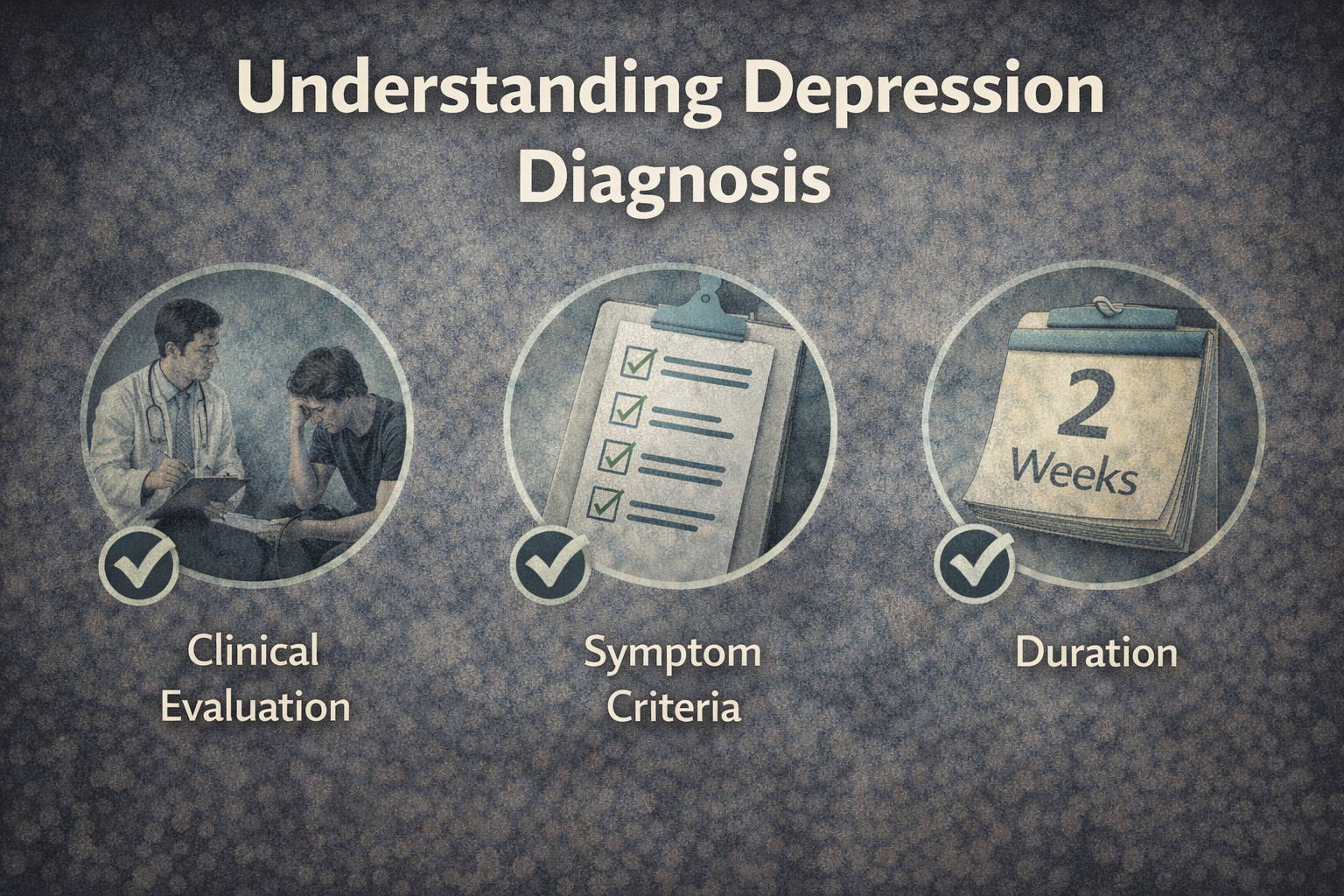
Clinical interviews explore history and symptoms. DSM-5 criteria require five symptoms for two weeks, including mood or interest loss. Physical exams rule out medical causes, like thyroid issues.
Accuracy depends on open dialogue.
How Long Does Depression Last?
Acute episodes may span weeks to months if treated. Chronic forms persist years untreated. Factors like severity and support influence duration—early intervention shortens it.
Pro Tip: Use apps for symptom tracking to share precise data with your provider.
Can Depression Go Away on Its Own?
While some mild cases resolve naturally, most require intervention. Understanding depression diagnosis helps discern when to act, preventing chronicity.
When It Might Resolve Naturally
Mild cases benefit from lifestyle changes, like exercise. Situational triggers, such as temporary stress, may fade. Resilience plays a role in rebounding.
However, monitor closely.
When Professional Help is Needed
Persistent or severe symptoms demand attention. If impacting daily life, seek therapy. Risk of recurrence rises without treatment.
Don’t wait—help accelerates recovery.
Best Practices for Self-Management
Exercise and nutrition boost mood chemicals. Social support networks provide emotional buffers. Mindfulness techniques reduce rumination.
Combine with professional care for best results.
Scientific Evidence & Research
Evidence underscores depression’s treatability. Studies highlight diagnostic accuracy and interventions’ efficacy.
Clinical Studies
NIMH research shows early intervention reduces severity, with therapies like CBT effective in 60-80%.
Expert Opinions
APA guidelines emphasize DSM-5 for precise diagnosis, noting symptom variability across demographics.
Statistical Data
CDC reports 8.3% U.S. adults with depression, higher in women (10.3%) vs. men (6.2%).
Explore NIMH Depression; APA DSM-5 Guidelines; CDC Depression Data.]
Common Mistakes to Avoid
Avoiding pitfalls enhances recovery. Common errors stem from misconceptions.
Mistake #1: Ignoring Physical Symptoms
Why it’s problematic: They mimic other conditions, delaying help. Better approach: Track holistically and consult promptly.
Mistake #2: Self-Diagnosing Without Professional Input
Why it’s problematic: Leads to errors or denial. Better approach: Use tools as starters, then verify with experts.
Mistake #3: Delaying Treatment
Why it’s problematic: Symptoms worsen, complicating recovery. Better approach: Act early with therapy or meds.
Important: Never ignore suicidal thoughts—contact 988 immediately for support.
Frequently Asked Questions (FAQs)
What are the early signs of depression?
Early signs include persistent fatigue, irritability, or loss of interest in hobbies. These subtle changes can escalate if ignored. Recognizing them promptly allows for timely intervention, potentially shortening episodes. Consult a professional if lasting over two weeks for understanding depression diagnosis.
How long does depression last?
Untreated depression can last months or years, but treatment often brings improvement in 4-6 weeks. Severity, support, and adherence affect duration. Early help from therapy or medication enhances outcomes—don’t hesitate to seek evaluation.
Can depression go away on its own?
Mild depression may resolve with lifestyle adjustments, but severe cases rarely do without help. Professional intervention prevents recurrence and manages underlying causes. If symptoms persist, speak with a healthcare provider for personalized guidance.
What causes depression?
Depression stems from genetics, brain chemistry, trauma, and stress combinations. No single factor dominates, but identifying personal triggers supports management. Research suggests biological and environmental interplay—understanding this aids in prevention and treatment.
Is it depression or just sadness?
Sadness is event-linked and temporary; depression persists over two weeks, disrupting life. Additional symptoms like fatigue or hopelessness distinguish it. If unsure, a professional assessment clarifies and guides next steps.
What are symptoms of depression in teens?
Teens often display irritability, academic drops, or social withdrawal instead of sadness. These can mimic typical adolescence but warrant attention if persistent. Early understanding depression diagnosis in youth promotes healthy development—encourage open talks.
How to know if you have depression?
Track symptoms like hopelessness, sleep changes, or appetite shifts for two weeks. Validated quizzes provide insights, but professional confirmation is essential. A doctor uses DSM-5 criteria for accurate understanding of depression diagnosis.
Conclusion
Gaining insight into understanding depression diagnosis equips you with tools to recognize symptoms early, differentiate types, and address causes effectively—potentially transforming persistent struggles into manageable challenges. This knowledge not only reduces suffering but also enhances overall well-being, fostering stronger relationships and productivity. You’re now better prepared to advocate for your mental health or support loved ones.
Take one clear step today: Schedule a consultation with a healthcare provider if symptoms resonate. Professional guidance can illuminate your path forward.
For ongoing support, consider our email opt-in for weekly mental health tips, or explore related resources. Remember, seeking help is a strength—many find relief through evidence-based approaches. You deserve to thrive beyond depression’s shadow.