Have you ever felt your heart race, palms sweat, and mind go blank just before an important exam or certification test—even when you know the material? You’re far from alone. Research shows that test anxiety affects between 10% and 40% of students, with many adults aged 25–55 experiencing similar challenges during professional licensing exams, career advancement tests, or continuing education.
This persistent worry, racing thoughts, and physical discomfort can turn well-prepared individuals into underperformers, affecting grades, careers, and self-confidence. For busy professionals balancing work, family, and study demands, these symptoms often feel overwhelming and isolating.
For a broader foundation, see our guide on Signs of Mental Health Issues: Social Anxiety Disorder
What is Test Anxiety Management?
Test anxiety management refers to a set of evidence-based strategies designed to reduce the cognitive, emotional, and physical symptoms that interfere with performance during evaluative situations. It goes beyond simple calming tips to build sustainable skills that address root causes.
Understanding Test Anxiety
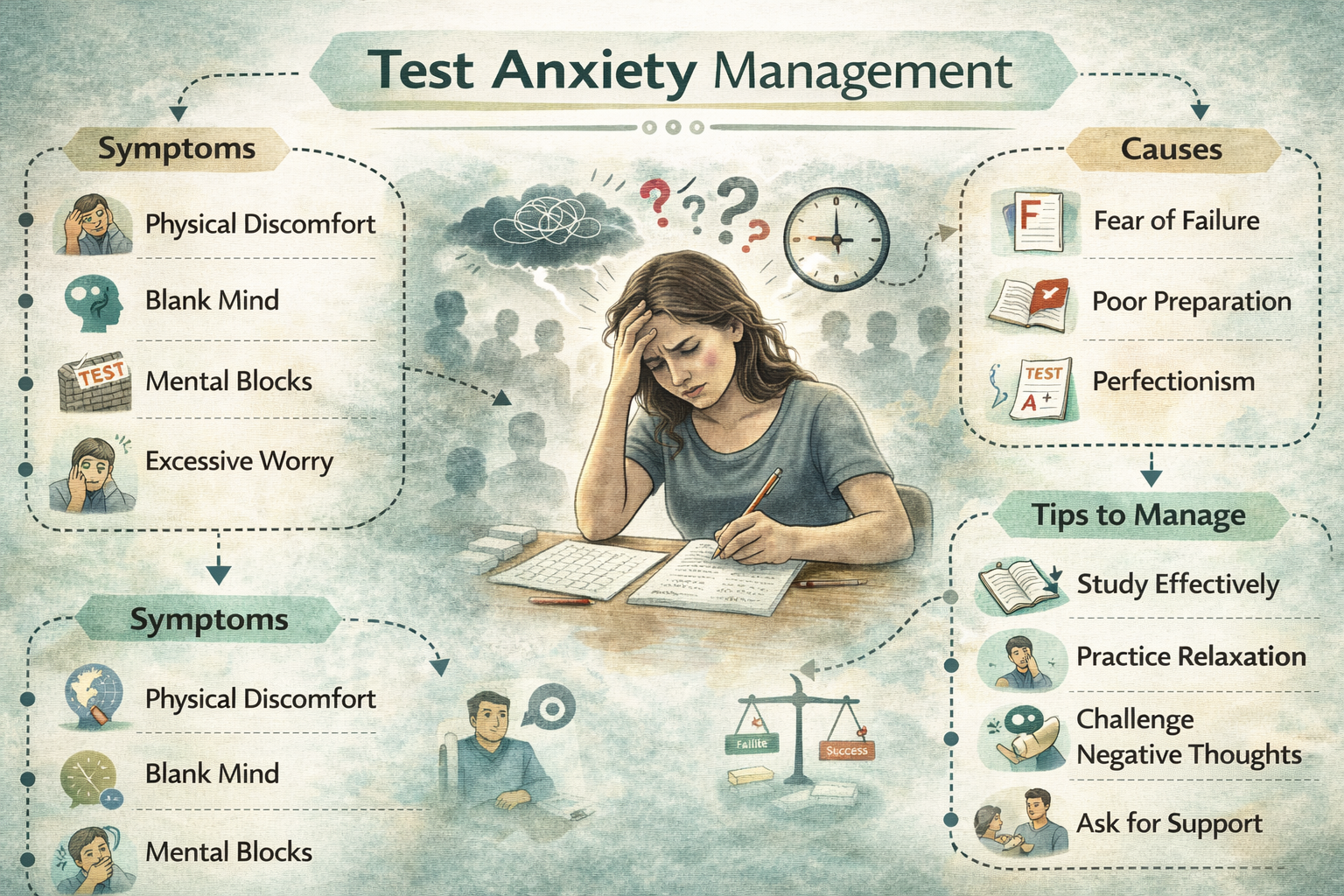
Test anxiety involves three interconnected components:
- Physiological — Rapid heartbeat, sweating, nausea, or shallow breathing triggered by the body’s fight-or-flight response.
- Cognitive — Negative thoughts like “I’ll fail” or “I can’t remember anything.”
- Behavioral — Avoidance, procrastination, or blanking out during the test.
Normal pre-test nerves can actually enhance focus and motivation. Clinical-level test anxiety, however, impairs working memory and performance, creating a self-reinforcing cycle.
What Effective Test Anxiety Management Looks Like
Effective test anxiety management balances immediate relief with long-term resilience. Short-term tools (like breathing exercises) quiet acute symptoms, while long-term approaches (such as cognitive behavioral techniques and lifestyle changes) rewire responses to stress.
Evidence-based methods include cognitive behavioral therapy (CBT) principles, mindfulness, and lifestyle adjustments—none of which require medication for most people.
Who Needs Test Anxiety Management Most
Working professionals preparing for certifications, graduate students, career changers, and parents returning to education (ages 25–55) often face heightened pressure. High-stakes environments amplify symptoms, making targeted test anxiety management essential.
Pro Tip: Many adults underestimate how past negative testing experiences create subconscious triggers years later. Recognizing this pattern is the first step toward breaking the cycle.
Why Does Test Anxiety Happen?
Understanding the “why” behind test anxiety empowers you to address it effectively rather than just managing symptoms.
Biological and Psychological Triggers
The body’s fight-or-flight response activates during perceived threats, releasing stress hormones like cortisol and adrenaline. Perfectionism, fear of failure, and previous negative experiences amplify this reaction. The brain’s amygdala overreacts, flooding the prefrontal cortex (responsible for clear thinking) with stress signals.
Common Lifestyle Factors in Adults 25–55
Sleep deprivation, excessive caffeine, demanding careers, and juggling family responsibilities heighten vulnerability. Chronic stress from work or life transitions sensitizes the nervous system, making test situations feel disproportionately threatening.
When Test Anxiety Becomes Problematic
When symptoms consistently lower performance, disrupt sleep, or cause avoidance of opportunities, it impacts health, self-esteem, and career progress. Untreated, it can contribute to broader anxiety patterns.
For a broader foundation, see our guide on Signs of Mental Health Issues: Complete Guide to Anxiety Disorders
How to Manage Test Anxiety: Step-by-Step Guide
How to manage test anxiety effectively requires a structured approach combining preparation, in-the-moment tools, and sustained habits.
7-Day Preparation Plan to Reduce Test Anxiety Before Exam
- Days 1–3: Break material into chunks; use active recall (practice testing yourself without notes).
- Days 4–5: Simulate test conditions—timed practice exams in a quiet space.
- Day 6: Light review + full relaxation day with breathing practice.
- Day 7: Final quick review in the morning; early bedtime.
This timeline builds confidence while preventing last-minute cramming.
Day-of-Test Routine That Actually Works
- 60 minutes before: Eat a balanced meal; do 5 minutes of cyclic sighing.
- During the test: If panic rises, pause, ground yourself with the 5-4-3-2-1 technique (name 5 things you see, 4 you can touch, etc.).
- After: Debrief positively—what went well?—to reframe future experiences.
Long-Term Test Anxiety Management Habits
Incorporate weekly practice tests, consistent sleep, and mindfulness. Over time, these recondition your brain to view tests as challenges rather than threats.
Download our free 7-Day Test Anxiety Action Plan (lead magnet signup) to get printable checklists and trackers.
For a broader foundation, see our guide on Signs of Mental Health Issues: Performance Anxiety
Natural Remedies for Test Anxiety
Many people seek natural remedies for test anxiety to support their nervous system without medication.
Evidence-Based Herbal & Supplement Options
- Ashwagandha: An adaptogen that research suggests may lower cortisol and perceived stress. Studies show 250–600 mg daily for 8 weeks can reduce anxiety symptoms in stressed adults (consult your doctor first).
- L-Theanine: Found in green tea; 200 mg may promote calm focus without drowsiness, especially useful before tests.
- Magnesium glycinate: Supports GABA (calming neurotransmitter); many find 200–400 mg helpful for relaxation.
Research Shows: A review of studies on ashwagandha found significant reductions in stress and anxiety scores compared to placebo.
Lifestyle Natural Remedies That Work Fast
Regular exercise (even 20–30 minutes of walking), balanced nutrition (stable blood sugar prevents anxiety spikes), and 7–9 hours of sleep optimize your body’s stress response.
Aromatherapy and Sensory Tools
Lavender essential oil or grounding scents can provide quick sensory calm when diffused or applied (diluted) before studying.
Many people find success with high-quality magnesium glycinate or ashwagandha supplements from reputable brands—always check with your healthcare provider, especially if you take medications.
Breathing Exercises for Test Anxiety
Breathing exercises for test anxiety are among the fastest, most accessible tools available.
4-7-8 Breathing Technique
Developed by Dr. Andrew Weil:
- Inhale quietly through your nose for 4 seconds.
- Hold your breath for 7 seconds.
- Exhale completely through your mouth (making a “whoosh” sound) for 8 seconds.
- Repeat 4 cycles.
Use this nightly or when anxiety spikes. It activates the parasympathetic nervous system, promoting rapid calm.
Cyclic Sighing (Stanford Protocol)
The most effective technique from Stanford Medicine research:
- Take a deep inhale through the nose.
- Add a second shorter “top-up” inhale.
- Exhale slowly and fully through the mouth. Practice 5 minutes daily. The 2023 Stanford study (published in Cell Reports Medicine) found it significantly improved mood and reduced respiratory rate more than mindfulness meditation.
Box Breathing for Exam Day
Inhale 4 seconds → Hold 4 → Exhale 4 → Hold 4. Repeat. Used by Navy SEALs for high-pressure situations.
Expert Insight: “Controlled breathing directly influences the autonomic nervous system, giving you an immediate sense of control,” notes research from Stanford Medicine.
Mindfulness for Test Anxiety Management
Mindfulness for test anxiety helps you observe thoughts without being overwhelmed by them.
5-Minute Mindfulness Script for Test Day
Sit comfortably. Notice your breath. Scan your body from toes to head, releasing tension. When worries arise, gently label them (“thinking”) and return to the present. End with three grounding breaths.
Daily Mindfulness Routine for Students and Professionals
Practice 10 minutes morning or evening using body scans or guided apps. Consistency builds resilience over weeks.
Apps & Resources Comparison
Headspace and Calm offer test-specific sessions. Many users report reduced rumination after consistent use.
Coping with Test Anxiety for Students and Adults
Targeted strategies make coping with test anxiety more effective for different life stages.
Strategies for Working Professionals
Schedule study blocks like work meetings. Use lunch breaks for short breathing resets. Reframe tests as skill demonstrations rather than judgments.
Parent & Student Support Toolkit
Parents can model calm preparation and avoid pressure language. Create family “test success” rituals focused on effort.
Self Help for Test Anxiety Worksheets
Journal worries 10–15 minutes before bed to offload them. Track triggers and successes in a dedicated notebook.
Scientific Evidence & Research on Test Anxiety Management
Test anxiety management is supported by robust clinical research.
Clinical Studies
A 2023 randomized controlled trial from Stanford Medicine (Balban et al., Cell Reports Medicine) demonstrated that 5 minutes daily of cyclic sighing produced greater mood improvement and physiological calm than mindfulness meditation.
Prevalence studies consistently show test anxiety impacts 10–40% of learners, with higher rates in high-stakes environments.
Expert Opinions
The Mayo Clinic recommends efficient study habits, relaxation techniques, and professional help when symptoms interfere with life. APA-endorsed CBT approaches show strong long-term efficacy.
Statistical Data
Untreated test anxiety correlates with lower performance and increased avoidance of educational/career opportunities.
- Stanford Cyclic Sighing Study: https://pubmed.ncbi.nlm.nih.gov/36630953/
- Mayo Clinic on Test Anxiety: https://www.mayoclinic.org/diseases-conditions/generalized-anxiety-disorder/expert-answers/test-anxiety/faq-20058195
- NIH resources on anxiety management.
Common Mistakes to Avoid in Test Anxiety Management
Avoiding these pitfalls accelerates progress.
Mistake #1: Cramming the Night Before
Why it backfires: Increases fatigue and anxiety while reducing retention.
Better approach: Space study sessions over weeks with active recall.
Mistake #2: Negative Self-Talk
Why it backfires: Reinforces fear circuits.
Better approach: Reframe with evidence-based statements like “I’ve prepared, and I can handle this.”
Mistake #3: Ignoring Physical Symptoms
Why it backfires: Symptoms escalate.
Better approach: Address them early with breathing or movement.
Mistake #4: Relying Only on Caffeine or Avoidance
Why it backfires: Worsens jitteriness or delays skill-building.
Better approach: Balanced routines with natural energy sources.
Important: If symptoms include panic attacks or persistent interference with daily life, consult a healthcare professional—self-help complements, but does not replace, professional care when needed.
Frequently Asked Questions (FAQs)
How to manage test anxiety the night before an exam?
Focus on light review, then wind down with 4-7-8 breathing and a consistent bedtime routine. Avoid screens and heavy studying. A calm evening prevents adrenaline overload the next day. If worry arises, write it down and set it aside.
How to overcome test anxiety naturally without medication?
Combine daily breathing practice, consistent study habits, mindfulness, and lifestyle factors like exercise and sleep. Research supports these approaches for many people. Results build over 2–4 weeks of consistent use.
What are the best breathing exercises for test anxiety?
Cyclic sighing (Stanford protocol) and 4-7-8 breathing show strong evidence for quick calm. Practice daily for best results. Box breathing works well during the actual test.
Can mindfulness really help with test anxiety management?
Yes. Studies show regular mindfulness reduces rumination and improves focus. Even 5–10 minutes daily can lower perceived stress during exams.
When should I seek professional help for severe test anxiety?
If anxiety causes panic attacks, avoidance of tests, or significant life disruption, consult a licensed therapist or doctor. CBT is highly effective for test anxiety.
Do natural remedies for test anxiety actually work?
Some, like ashwagandha and magnesium, show promise in studies for reducing stress. Results vary; always consult your doctor before starting supplements.
How long does it take to see results from test anxiety management strategies?
Many notice calmer responses within 1–2 weeks of daily breathing and mindfulness. Full resilience often develops over 4–8 weeks of consistent practice.
Conclusion
Effective test anxiety management empowers you to reclaim control, perform at your best, and approach evaluations with confidence rather than dread. By understanding triggers, practicing proven breathing and mindfulness techniques, building smart preparation habits, and addressing lifestyle factors, you can transform test days from sources of fear into opportunities for success.
Start tonight with just 5 minutes of cyclic sighing or 4-7-8 breathing. Small, consistent actions compound into lasting change.
Medical Disclaimer:
This article is for informational and educational purposes only and does not constitute medical advice. The information provided should not be used for diagnosing or treating a health problem or disease. Always consult with a qualified healthcare professional before making any changes to your mental health routine, starting new supplements, or trying new techniques.
If you’re experiencing a mental health crisis, please call or text 988 (Suicide & Crisis Lifeline) or visit your nearest emergency room. For non-emergency support, contact the SAMHSA National Helpline at 1-800-662-HELP (4357).