Did you know that nearly 32% of U.S. adolescents experience an anxiety disorder, with rates climbing to 16% for current diagnoses among 12-17-year-olds?
These staggering statistics highlight a growing crisis in teen mental health. Teen anxiety issues can disrupt school performance, strain relationships, and interfere with daily activities, potentially leading to long-term challenges like depression or substance use if left unaddressed. Parents and caregivers often feel overwhelmed, watching their once-confident child withdraw or struggle with overwhelming worry.
But there’s hope. This comprehensive guide explores the signs of anxiety in teens, causes of anxiety in teenagers, effective coping strategies for teen anxiety, and treatment options. You’ll learn practical ways to support your teen, from natural remedies for teen anxiety to when professional help is needed.
For a broader foundation, see our guide on Signs of Mental Health Issues: What is Anxiety Disorder?
What Are Teen Anxiety Issues?
Teen anxiety issues refer to a range of disorders where excessive worry, fear, or nervousness interferes with a teenager’s daily life. Unlike typical stress from exams or social situations, these issues persist and can intensify without intervention. Research suggests that teen anxiety issues affect brain chemistry and development, making early recognition crucial.
Anxiety Disorders in Adolescents
Anxiety disorders in adolescents involve persistent worry that disrupts sleep, schoolwork, or relationships. Common types include generalized anxiety disorder (GAD), where teens fret about multiple issues; social anxiety disorder, marked by fear of judgment; and panic disorder, with sudden intense fear episodes. According to the NIMH, the lifetime prevalence stands at 31.9% among U.S. teens, with higher rates in females (38%) than males (26.1%).
Many adolescents experience overlapping symptoms, complicating diagnosis. Untreated, these can lead to avoidance behaviors, impacting future opportunities.
How Teen Anxiety Differs from Normal Stress
Normal stress is temporary, like nerves before a test, resolving once the event passes. In contrast, teen anxiety is chronic and overwhelming, often without a clear trigger. It impacts brain development during puberty, when hormonal shifts heighten emotional responses. Studies show this chronic state can alter neural pathways, making anxiety harder to manage over time.
Parents might notice their teen overreacting to minor issues or constantly anticipating worst-case scenarios. Recognizing this difference is key to addressing teen anxiety issues effectively.
School Anxiety in Teens
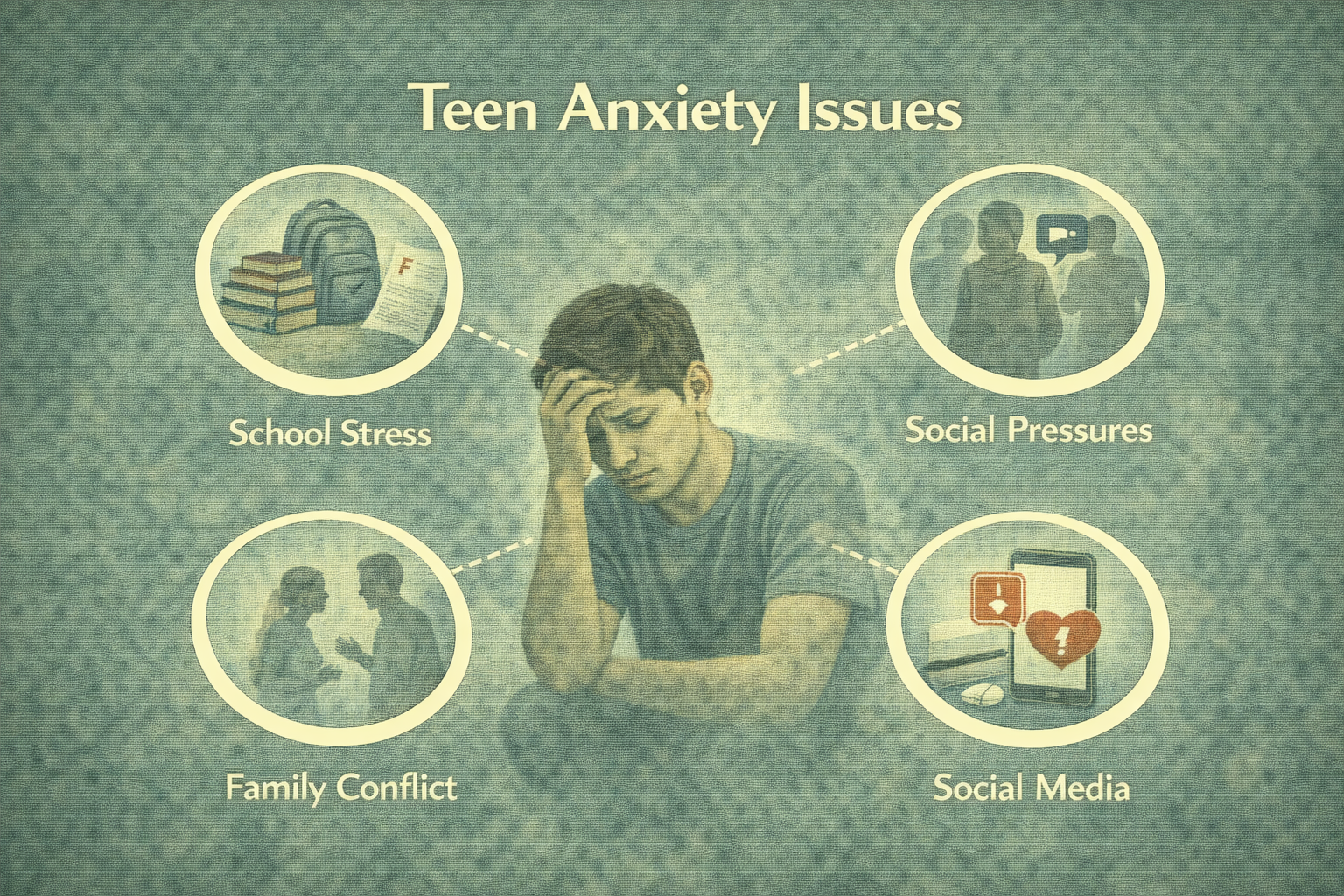
School anxiety in teens often stems from academic pressures, bullying, or social interactions. Triggers like presentations or group work can lead to avoidance, such as skipping classes or feigning illness. This can result in physical symptoms like headaches or stomachaches, further compounding teen anxiety issues.
Encouraging open dialogue about school stressors can help. Research indicates early intervention prevents escalation.
Research Shows: A CDC report notes that diagnosed anxiety in youth aged 3-17 rose 61% from 2016-2023, underscoring the need for proactive support.
Signs of Anxiety in Teens
Recognizing signs of anxiety in teens is vital for timely support. These can manifest emotionally, behaviorally, or physically, often mimicking other teen issues. If your teen shows multiple signs persisting for weeks, it may indicate underlying teen anxiety issues.
Social Anxiety in Teenagers Symptoms
Social anxiety in teenagers symptoms include intense fear of judgment, leading to avoidance of social events like parties or group activities. Teens may blush, sweat, or tremble in social settings, feeling self-conscious about everyday interactions.
This can isolate them from peers, worsening feelings of loneliness. Parents might notice reluctance to speak in class or make eye contact.
Common Emotional and Behavioral Indicators
Emotional signs include irritability, excessive worry, or sudden mood swings. Behaviorally, teens may withdraw from activities they once enjoyed, procrastinate on tasks, or seek constant reassurance.
Trouble concentrating or sleeping often accompanies these, affecting school performance. These indicators signal deeper teen anxiety issues needing attention.
Physical Symptoms to Watch For
Physical symptoms to watch for include headaches, stomachaches, rapid heartbeat, or chronic fatigue. Restlessness or muscle tension is common, as the body stays in “fight-or-flight” mode.
These can be mistaken for physical illnesses, but when linked to stress, they point to anxiety. Monitoring patterns helps differentiate.
Expert Insight: “Anxiety in teens often presents as irritability rather than overt fear,” notes a child psychologist from the NIMH.
For a broader foundation, see our guide on Signs of Mental Health Issues: Social Anxiety Disorder
Causes of Anxiety in Teenagers
Understanding causes of anxiety in teenagers involves biological, environmental, and social factors. These interplay during adolescence, a time of rapid change, making teens vulnerable to anxiety disorders.
Biological and Genetic Factors
Biological factors include hormonal changes during puberty, which can amplify emotional responses. Genetic predisposition plays a role; a family history increases risk by up to 30%.
Brain chemistry imbalances, like low serotonin, contribute. Research suggests these factors make some teens more prone to persistent worry.
Environmental and Social Influences
Environmental influences encompass academic pressure, family conflicts, or bullying. High-stakes testing and peer dynamics heighten stress.
Traumatic events, like loss or relocation, can trigger anxiety. Supportive environments mitigate these, but chronic stressors exacerbate issues.
Effects of Social Media on Teen Anxiety
Effects of social media on teen anxiety stem from constant comparison and cyberbullying. Excessive use—over three hours daily—doubles the risk of anxiety symptoms, per the U.S. Surgeon General.
Filtered images foster unrealistic expectations, leading to low self-esteem. Limiting screen time and promoting offline activities can help.
We recommend anxiety-tracking apps like MoodKit, which offer journaling tools to monitor triggers and moods.
Important: If social media use leads to isolation or sleep disruption, consult a professional, as it may signal deeper teen anxiety issues.
Why Do Teen Anxiety Issues Matter?
Teen anxiety issues matter because they extend beyond temporary discomfort, affecting long-term health and development. Addressing them early prevents escalation and fosters resilience.
Long-Term Impacts on Mental Health
Untreated anxiety raises the risk of depression or substance use in adulthood. Studies show 50% of anxious teens develop additional mental health issues without intervention.
This cycle can lead to chronic conditions, emphasizing the need for prompt action.
Effects on Academic and Social Development
Anxiety impacts academic performance through poor concentration, leading to lower grades. Socially, it strains relationships, causing isolation.
Research links this to reduced college readiness and future career challenges.
Importance of Early Intervention
Early intervention prevents escalation into adulthood issues, with treatments showing 60-80% success rates. It builds coping skills, improving overall well-being.
Pro Tip: Start with small, daily check-ins to normalize discussions about feelings, reducing stigma around teen anxiety issues.
For a broader foundation, see our guide on Signs of Mental Health Issues: Childhood Anxiety Disorders
How to Help a Teenager with Anxiety
Wondering how to help a teenager with anxiety? Start with empathy and practical steps. Building trust encourages open communication, key to managing symptoms.
Parenting a Teen with Anxiety
Parenting a teen with anxiety involves listening without judgment and validating their feelings. Avoid dismissing worries; instead, say, “I see this is hard for you.”
Set consistent routines to provide stability.
Encouraging Professional Support
Encourage therapy early, like CBT, which helps 60% of teens. Frame it positively: “It’s a tool to feel stronger.”
Involve them in choosing providers for empowerment.
Building a Supportive Home Environment
Promote open communication and healthy habits like shared meals. Limit stressors, encourage hobbies.
Model calm behaviors to teach coping.
Coping Strategies for Teen Anxiety
Coping strategies for teen anxiety empower teens to manage symptoms independently. These evidence-based techniques, when practiced regularly, reduce intensity over time.
Mindfulness and Relaxation Techniques
Mindfulness involves present-moment focus through deep breathing or meditation apps. Techniques like 4-7-8 breathing calm the nervous system.
Research shows mindfulness reduces anxiety by 20-30%.
Physical Activity and Lifestyle Changes
Regular exercise, like walking or sports, releases endorphins, lowering anxiety. Aim for 30 minutes daily.
Healthy sleep routines—7-9 hours—prevent symptom worsening.
Journaling and Positive Affirmations
Journaling tracks triggers and reframes thoughts. Positive affirmations, like “I am capable,” build self-esteem.
Combine with daily reflection for best results.
Research Shows: Exercise reduces anxiety symptoms by 20-30%, comparable to some medications.
What Are Teen Anxiety Symptoms and Treatment Options?
Teen anxiety symptoms include worry, restlessness, and physical discomfort. Treatment options range from therapy to medication, tailored to severity.
Teen Anxiety Medication Options
Teen anxiety medication options include SSRIs like sertraline, which balance brain chemicals. Consult professionals; they’re effective but monitored for side effects.
FDA-approved for teens: fluoxetine, escitalopram.
Therapy Approaches for Teens
CBT, proven effective in 60-80% of cases, challenges negative thoughts. Sessions teach coping skills.
Group therapy fosters peer support.
Combining Therapy and Medication
Integrated approaches yield best outcomes, with 80% improvement in studies like CAMS.
Monitor progress regularly.
Natural Remedies for Teen Anxiety
Natural remedies for teen anxiety offer complementary support. Always consult doctors before starting, especially with other treatments.
Herbal Supplements and Teas
Chamomile and lavender teas promote relaxation. Small studies show they reduce worry.
Safe in moderation, but check for interactions.
Dietary Changes and Nutrition
Omega-3s from fish or supplements aid brain health. Magnesium-rich foods like nuts calm nerves.
Balanced diets stabilize mood.
Alternative Therapies Like Yoga
Yoga builds resilience, reducing stress. Evidence suggests it lowers anxiety symptoms.
Combine with breathing for enhanced effects.
Expert Insight: “Yoga and mindfulness can be as effective as therapy for mild cases,” per NCCIH reviews.
Scientific Evidence & Research
Scientific evidence underscores the rise and treatability of teen anxiety issues. Studies provide data-driven insights for effective interventions.
Clinical Studies
The CAMS study (Walkup et al., 2008) showed CBT plus sertraline effective in 80% of anxious teens.
Long-term follow-ups confirm sustained benefits.
Expert Opinions
NIMH experts note higher prevalence in females (38% vs. 26%). They emphasize early screening.
Statistical Data
CDC data: 11% of 3-17-year-olds have diagnosed anxiety; rates rose 61% from 2016-2023.
Social media exacerbates this, doubling risks.
(For more, see NIMH anxiety stats; CDC children’s mental health; JAMA Pediatrics on CBT.)
Common Mistakes to Avoid
Avoiding common pitfalls ensures effective support for teen anxiety issues. Awareness prevents unintentional harm.
Mistake #1: Minimizing Their Feelings
Minimizing feelings invalidates emotions, increasing isolation. It discourages open sharing.
Better approach: Validate with “That sounds tough” and listen actively.
Mistake #2: Overprotecting or Accommodating Avoidance
Overprotecting reinforces anxiety cycles, preventing skill-building.
Encourage gradual exposure, like small social steps, with support.
Mistake #3: Ignoring Your Own Anxiety
Ignoring parental anxiety models poor coping, passing stress to teens.
Important: If symptoms include suicidal thoughts, seek immediate help via 988.
Frequently Asked Questions (FAQs)
How to Deal with Teen Anxiety?
Start by validating feelings and encouraging open talks. Seek CBT therapy, which helps 60% of teens, and promote coping like exercise. Consult a professional for personalized plans. Additional strategies include limiting caffeine and establishing routines to reduce triggers.
Teen Anxiety Test Online?
Online quizzes from reputable sites like NIMH can screen symptoms, but they’re not diagnostic. Common signs include worry and avoidance; follow up with a doctor. These tools provide a starting point, but professional assessment is essential for accurate diagnosis.
How to Reduce Anxiety in Teenagers?
Use mindfulness, physical activity, and routines. Studies show exercise reduces symptoms by 20-30%; limit social media to under 3 hours daily. Incorporate family activities to build support and monitor progress.
What Are the Best Natural Remedies for Teen Anxiety?
Chamomile tea and omega-3s aid relaxation. Yoga and journaling build resilience; always check with a doctor before supplements. These complement therapy but aren’t substitutes for severe cases.
What Role Does Parenting Play in Teen Anxiety Issues?
Supportive parenting reduces risks; avoid overprotection. Research links family stress to higher anxiety; focus on empathy and boundaries. Model healthy coping to foster resilience.
Conclusion
Addressing teen anxiety issues early improves academic success, relationships, and long-term well-being, empowering teens with strategies to manage anxiety effectively. By recognizing signs, understanding causes, and implementing coping tools, you can guide your teen toward a more confident future. The journey may include therapy, lifestyle changes, or medication, but progress is achievable with support.
Take the next step: Schedule a consultation with a mental health expert today. Resources like school counselors or online platforms make it accessible. With the right help, teens can thrive despite anxiety—remember, seeking support is a strength.
Medical Disclaimer:
This article is for informational purposes only and not a substitute for professional medical advice. Consult a healthcare provider for diagnosis and treatment.
If you’re experiencing a mental health crisis, please call the 988 Suicide & Crisis Lifeline or visit your nearest emergency room. For non-emergency support, contact the Substance Abuse and Mental Health Services Administration (SAMHSA) National Helpline at 1-800-662-4357.
The content in this article is based on current research and expert consensus as of 2026, but medical knowledge evolves. Always verify information with your healthcare provider.