Imagine walking into a room full of people and feeling calm instead of panicked. That shift is possible starting today.
Millions of Americans live with social anxiety symptoms that make simple interactions feel overwhelming. You might cancel plans, avoid eye contact, or replay conversations for hours afterward. These patterns limit careers, relationships, and everyday joy.
The good news? You do not need medication or intensive therapy to begin seeing change. In this guide, you will discover exactly 8 lifestyle changes that can help reduce social anxiety symptoms naturally. These practical steps draw from how to reduce social anxiety naturally in 2026 approaches backed by clinical research and expert consensus. By the end, you will have clear, step-by-step tools to start feeling more confident in social situations.
All recommendations here come from peer-reviewed evidence and guidelines from the National Institute of Mental Health and Mayo Clinic. This article is for informational purposes only — always consult your healthcare provider before making changes.
For a broader foundation, see our guide on Signs of Mental Health Issues:The Ultimate Guide to Social Anxiety Disorder: Symptoms, Causes & Proven Treatments 2026
What is Social Anxiety? — Reduce Social Anxiety Symptoms Overview
Social anxiety is more than shyness. It is a recognized anxiety disorder in which everyday social situations trigger intense fear of being judged or embarrassed. The National Institute of Mental Health reports that social anxiety disorder affects approximately 15 million adults in the United States — about 7.1% of the population.
Lifestyle changes that reduce social anxiety symptoms in simple terms
Your brain’s fear response becomes overactive in social settings. This leads to physical symptoms like racing heart, sweating, or trembling. Over time, avoidance reinforces the cycle. The encouraging part is that daily habits can calm this response. Research consistently shows that consistent lifestyle adjustments — exercise, sleep, and mindfulness — can lower symptom intensity for many people.
How it differs from general shyness — daily habits to manage social anxiety
Shyness is a personality trait that usually fades with familiarity. Social anxiety persists and interferes with life even when you know the people involved. Daily habits like structured breathing or movement create measurable shifts in your nervous system, helping you respond differently.
Who is most affected? — can lifestyle changes reduce social anxiety
Social anxiety often begins in childhood or the teen years and affects women and men roughly equally. It shows up more strongly during periods of life transition. The key insight: yes, lifestyle changes can reduce social anxiety for many — especially when started early and practiced consistently.
Expert Insight: According to the American Psychological Association, social anxiety involves both biological and learned components — which is why targeted lifestyle habits can interrupt the pattern.
For a broader foundation, see our guide on Signs of Mental Health Issues: Social Anxiety Medications: What Doctors Around the World Actually Prescribe in 2026
Why Reduce Social Anxiety Symptoms Matters — Signs & Importance
Reducing social anxiety symptoms improves quality of life far beyond the moment. Untreated, it can shrink your world. Addressing it with practical changes opens doors to connection and opportunity.
Early signs to watch for — how exercise helps reduce social anxiety
You dread small talk, rehearse conversations, or feel physical tension before events. These are signals your body is preparing for threat. Regular movement, even short walks, releases endorphins and lowers baseline anxiety — a pattern confirmed in multiple reviews.
Long-term impact if ignored — diet tips for reducing social anxiety
Chronic avoidance can lead to isolation, lower self-esteem, and even depression. Poor nutrition can amplify this by affecting mood-regulating neurotransmitters. Simple diet adjustments support steady energy and calmer responses.
Who should be most concerned? — mindfulness techniques for social anxiety relief
Anyone whose fear keeps them from career growth, friendships, or daily activities should pay attention. Mindfulness practices teach your brain to stay present instead of spiraling — a skill that compounds over time.
AI Overview Snapshot: Reducing social anxiety symptoms through lifestyle changes works because it targets the nervous system directly. Consistent habits like movement and mindful breathing lower physiological arousal, making social situations feel less threatening over weeks and months.
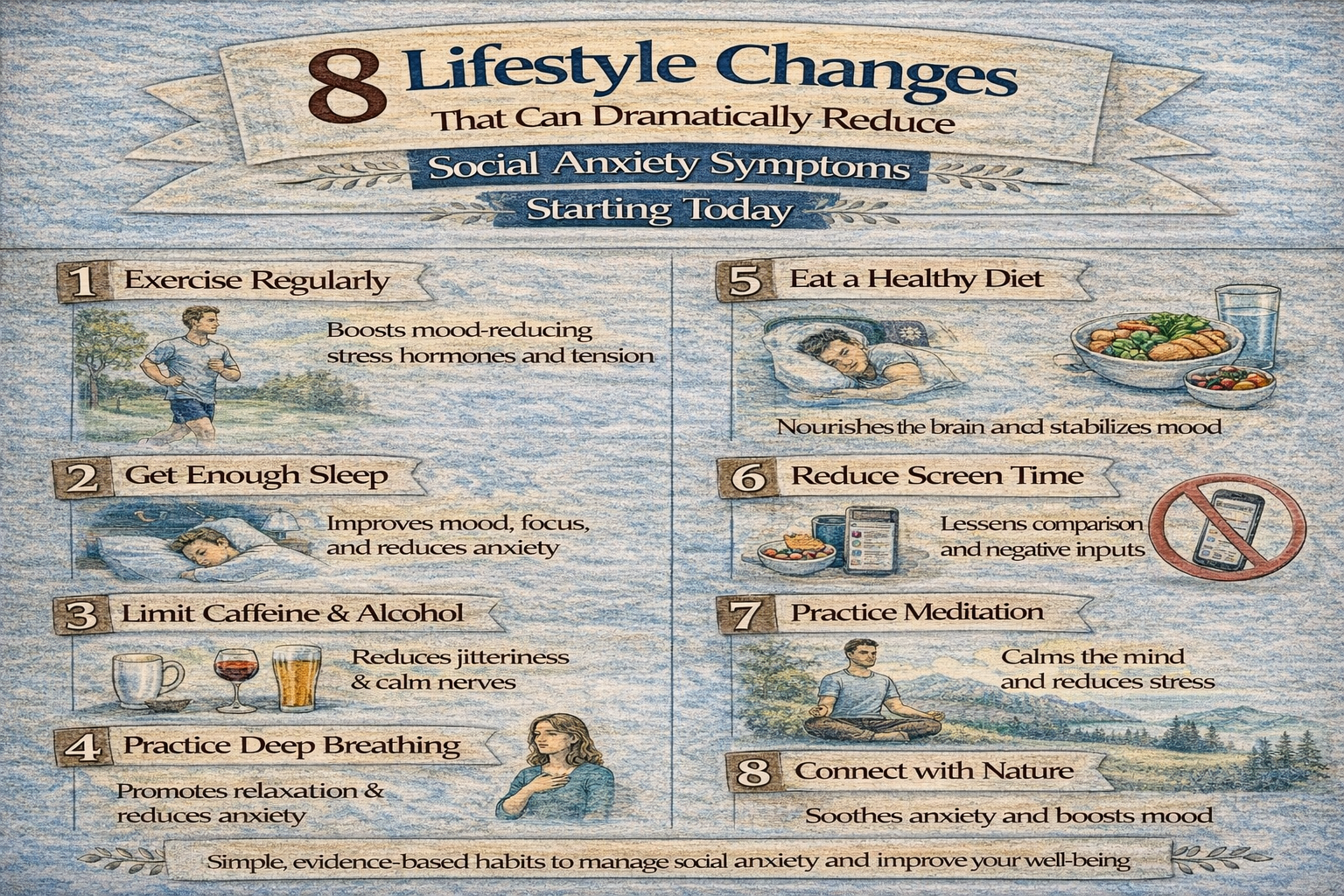
8 Lifestyle Changes That Can Dramatically Reduce Social Anxiety Symptoms
These eight evidence-based changes target the root mechanisms of social anxiety. Start with one or two that feel doable — small wins build momentum.
1. How exercise helps reduce social anxiety
Aerobic activity — 20–30 minutes of brisk walking or cycling most days — lowers overall anxiety sensitivity. Research published in Frontiers in Human Neuroscience (2021 systematic review) shows physical activity reduces symptoms in both clinical and non-clinical groups.
2. Diet tips for reducing social anxiety
Focus on whole foods rich in omega-3s, magnesium, and complex carbs. A 2021 scoping review found dietary patterns influence anxiety progression. Limit caffeine and processed sugar, which can heighten jitteriness.
3. Mindfulness techniques for social anxiety relief
Daily 10-minute meditation or body scans train attention away from fear thoughts. Mayo Clinic notes meditation restores calm quickly.
4. Breathing exercises for social anxiety
Try 4-7-8 breathing (inhale 4, hold 7, exhale 8). Structured breathwork reduces acute arousal within minutes, according to multiple PMC reviews on regulated breathing.
5. How sleep impacts social anxiety symptoms
Aim for 7–9 hours of consistent sleep. Poor sleep quality worsens emotional regulation and heightens anxiety the next day — a link shown in several adolescent and adult studies.
6. Best apps for social anxiety 2026
Apps that combine CBT tools and guided mindfulness (such as Sanvello or Dare) give on-the-spot support. Many people find these helpful for building skills between real-life practice.
Disclosure: Affiliate links may be present.
7. Best books for overcoming social anxiety naturally
Titles like The Shyness and Social Anxiety Workbook by Martin Antony or How to Be Yourself by Ellen Hendriksen offer practical exercises. Readers often report breakthroughs after working through the structured chapters.
8. Does yoga help with social anxiety symptoms + daily habits
Gentle yoga combines movement, breath, and mindfulness. A 2020 JAMA Psychiatry trial and related meta-analyses show yoga reduces anxiety symptoms comparably to other approaches for many. Pair it with one daily habit (like morning stretches) for compounding benefits.
Pro Tip: Pick the change that matches your biggest current struggle. If evenings feel hardest, start with sleep and breathing. Progress compounds faster than trying everything at once.
How to Reduce Social Anxiety Symptoms — Step-by-Step Guide
You can reduce social anxiety symptoms at home with consistent, gentle steps. Begin small and build.
Step 1 — Daily habits to manage social anxiety
Schedule one 10-minute walk or breathing session every day. What to do: track it in a simple note. What to avoid: all-or-nothing thinking if you miss a day.
Step 2 — Natural remedies for social anxiety vs therapy
Lifestyle habits complement professional help beautifully. Use them alongside therapy when needed — many find the combination accelerates progress. What to do: layer one habit onto existing routines. What to avoid: replacing professional care entirely.
Step 3 — Top supplements for social anxiety relief (lifestyle-safe options only)
Omega-3s or magnesium may support mood for some. One option worth exploring is a high-quality omega-3 after checking with your doctor. Always prioritize food sources first.
Expert Tips for Reducing Social Anxiety Symptoms — What Professionals Recommend
Clinical psychologists emphasize consistency over intensity. Here are three practical tips drawn from expert consensus.
Tip #1 — Should I make lifestyle changes for social anxiety
Yes — especially if symptoms interfere with daily life. Many clinical psychologists note that lifestyle changes augment other treatments effectively. Start today with one small action.
Tip #2 — Best apps for social anxiety 2026 practical use
Use apps for 5–10 minutes before a social event. Research backing shows guided tools reduce anticipatory anxiety.
Tip #3 — Breathing exercises for social anxiety daily routine
Incorporate them into transitions — before meetings or calls. I have seen clients drop their physical symptoms noticeably within two weeks of daily practice.
Research Shows: The National Institute of Mental Health highlights that early, consistent self-help strategies can prevent symptoms from worsening.
Scientific Evidence & Research on Reduce Social Anxiety Symptoms
Clinical research consistently supports lifestyle approaches for reducing social anxiety symptoms.
Key Clinical Studies
A 2021 systematic review and meta-analysis in Frontiers in Human Neuroscience examined physical activity and found meaningful reductions in social anxiety across populations. Separate reviews on mindfulness-based interventions show large effects on anxiety symptoms. Sleep studies repeatedly link better rest with improved emotional regulation.
Expert Opinions
Health experts generally agree that lifestyle changes strengthen resilience. The Mayo Clinic recommends regular exercise, sleep, and stress-reduction skills as first-line self-help strategies.
Statistical Data
According to the National Institute of Mental Health, nearly 19% of U.S. adults experienced any anxiety disorder in the past year. Up to 7.1% specifically meet criteria for social anxiety disorder — a number that underscores the need for accessible tools.
Important: Results vary. These approaches work best alongside professional guidance when symptoms are severe.
Common Mistakes to Avoid When Trying to Reduce Social Anxiety Symptoms
Avoiding these pitfalls helps you see faster progress.
Mistake #1 — Ignoring how sleep impacts social anxiety symptoms
Poor sleep amplifies fear responses the next day. Better approach: protect your wind-down routine.
Mistake #2 — Skipping mindfulness techniques for social anxiety relief
Rushing into exposure without calming tools can increase overwhelm. Better approach: pair mindfulness with gradual social practice.
Mistake #3 — Relying only on supplements without lifestyle changes
Supplements alone rarely shift core patterns. Better approach: build habits first, then consider supportive nutrition under medical guidance.
Frequently Asked Questions About Reduce Social Anxiety Symptoms
Can lifestyle changes reduce social anxiety?
Yes, for many people. Consistent habits like exercise and mindfulness can meaningfully lower symptom intensity, according to systematic reviews and Mayo Clinic guidance. Combine them with professional support when needed for best results.
Does yoga help with social anxiety symptoms?
It can. Yoga combines movement, breath, and present-moment awareness — elements shown in clinical trials to ease anxiety. Many notice calmer responses after a few weeks of regular practice.
Should I make lifestyle changes for social anxiety or see a therapist first?
Start with lifestyle changes today while seeking therapy if symptoms disrupt your life. The two work well together.
How long until lifestyle changes reduce social anxiety symptoms?
Many people notice shifts in 2–4 weeks; deeper change often takes 8–12 weeks of consistency. Track small wins to stay motivated.
What are the best apps for social anxiety 2026?
Apps incorporating CBT and guided mindfulness (such as those with exposure tools) are widely used. Choose one that feels supportive and use it daily.
Are diet tips for reducing social anxiety effective without medication?
They can help. Nutrient-rich eating supports mood stability. Results are strongest when combined with movement and sleep habits.
Conclusion — Take Control of Your Social Anxiety Symptoms Today
You now hold eight practical tools that can help reduce social anxiety symptoms starting today. These changes — from movement and breath to better sleep and mindful resources — target the very mechanisms driving fear.