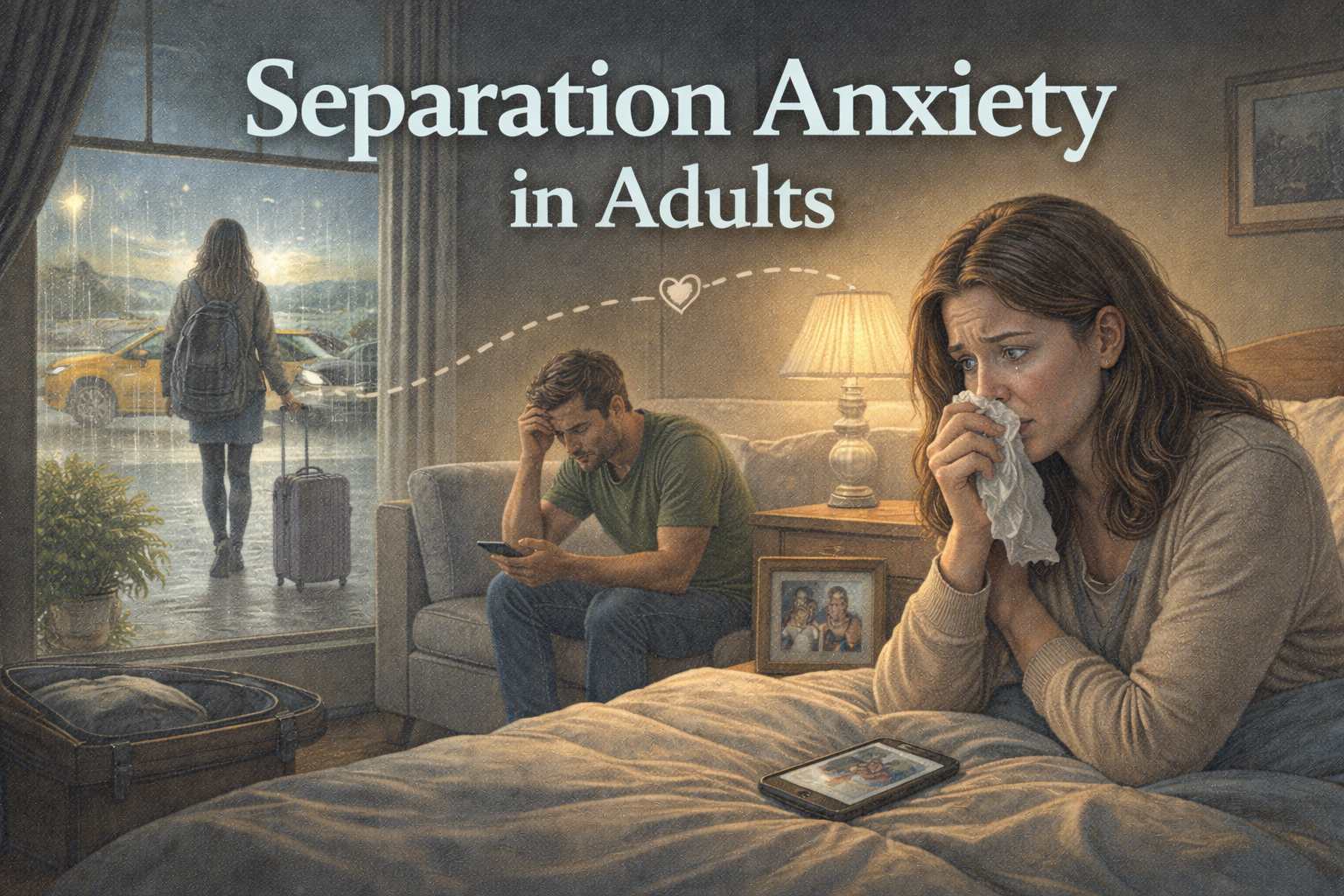
Imagine the knot in your stomach tightening as your partner heads out the door for a routine errand, your mind racing with fears of something terrible happening. This intense dread is the hallmark of separation anxiety in adults, a condition that affects up to 6.6% of U.S. adults over their lifetime, with many cases emerging in adulthood rather than childhood. If you’re grappling with overwhelming worry about being apart from loved ones, it can strain relationships, disrupt work, and lead to isolation, making everyday independence feel impossible.
This anxiety often stems from deeper roots, like past traumas or attachment issues, and can coexist with other mental health challenges. But you’re not alone, and understanding it is key to change. In this article, you’ll discover symptoms, causes, evidence-based treatments, self-help strategies, and coping tips to foster healthier connections and reduce distress.
Based on insights from trusted sources like the National Institute of Mental Health and Mayo Clinic, this guide provides reliable, actionable information to support your journey.
For a broader foundation, see our guide on Signs of Mental Health Issues: Complete Guide to Anxiety Disorders
What is Separation Anxiety in Adults?
Separation anxiety in adults goes beyond typical concerns about loved ones—it’s an intense, persistent fear of being apart that disrupts daily life. Recognizing this can be the first step toward managing it effectively. We’ll break down the disorder, its impact on relationships, and how it’s diagnosed.
Understanding Separation Anxiety Disorder Adults
Adults with this disorder experience excessive anxiety when separated from key attachment figures, such as partners or family. This might involve constant worry about accidents or harm befalling them. It can lead to behaviors like excessive texting or avoiding solo activities, creating a cycle of dependency.
Research suggests this fear often ties to perceived threats of loss, amplifying emotional distress. However, it’s treatable with targeted approaches.
Separation Anxiety in Relationships
In partnerships, it shows up as distress during absences, like work trips, prompting constant check-ins or unfounded jealousy from fear of abandonment. Unlike healthy attachment, it causes significant strain, potentially leading to conflicts or codependency.
Differentiating it from normal worries helps—here, the anxiety impairs functioning. Couples therapy can address these dynamics.
Diagnosing Adult Separation Anxiety
According to DSM-5, diagnosis requires at least three symptoms, like recurrent distress or reluctance to be alone, lasting six months or more in adults. It must cause notable impairment and not stem from another condition.
A mental health professional evaluates through interviews, ruling out similar issues like agoraphobia.
Pro Tip: Keep a “separation log” noting triggers and intensity— this can reveal patterns and make therapy sessions more focused.
Why Separation Anxiety in Adults Matters
Addressing separation anxiety in adults isn’t just about easing worry—it’s about reclaiming independence and strengthening bonds. Ignoring it can compound issues, but awareness opens doors to better mental health. Let’s explore its effects, prevalence, and why early action pays off.
Effects of Separation Anxiety Adults
This disorder can strain relationships through clinginess or conflicts, lead to social withdrawal, and cause work absences due to avoidance of independent tasks. It heightens risks for depression or substance use as coping mechanisms.
Over time, it erodes self-confidence, making solitude feel unbearable.
Prevalence and Statistics
Lifetime prevalence is about 6.6% in U.S. adults, with up to 77.5% of cases starting in adulthood. It’s higher in women and often comorbid with other anxieties.
These numbers highlight it’s more common than thought, affecting diverse groups.
Benefits of Early Awareness
Spotting it soon allows interventions that prevent escalation, boosting independence and relationship harmony. It also improves overall well-being, reducing secondary issues like isolation.
For a broader foundation, see our guide on Signs of Mental Health Issues: What is Anxiety Disorder?
Signs of Separation Anxiety in Adults
Spotting signs of separation anxiety in adults early can prevent it from overshadowing life. These indicators blend emotional, physical, and behavioral elements, often intensifying during transitions. Here’s a closer look.
Adult Separation Anxiety Symptoms
Key symptoms include recurrent distress when anticipating separation and excessive worry about loved ones’ safety, like accidents or illnesses. You might refuse to travel alone or insist on constant proximity.
This creates a persistent undercurrent of fear.
Signs of Separation Anxiety Adults
Physical signs emerge like panic attacks, headaches, or nausea during partings. Behaviorally, it shows in frequent calls or avoiding commitments that require independence.
These disrupt routines and signal need for support.
Separation Anxiety in Adult Women
Women report higher rates, possibly due to hormonal influences or relational stressors. It may peak during life changes like motherhood or menopause, amplifying emotional responses.
Research Shows: A World Mental Health Survey found 43.1% of separation anxiety cases onset after age 18, emphasizing adult emergence.
Causes of Adult Separation Anxiety
Unraveling causes of adult separation anxiety reveals a mix of biology, experiences, and environment. This understanding guides effective management. We’ll cover core factors and supportive strategies.
Causes of Adult Separation Anxiety
Genetics play a role, with family history of anxiety increasing risk. Childhood attachment issues, trauma, or life stresses like loss or divorce often trigger it. It’s frequently comorbid with mood disorders.
These interplay to heighten separation fears.
Adult Separation Anxiety Coping Strategies
Therapy builds secure attachments; mindfulness helps manage intrusive worries. Daily practices like journaling reduce intensity over time.
Consistency fosters resilience.
Natural Remedies Separation Anxiety Adults
Exercise and relaxation techniques may ease symptoms, with limited evidence for herbs like chamomile. These adjuncts support but don’t replace professional care—discuss with your doctor
How to Overcome Separation Anxiety Adults
Overcoming separation anxiety in adults requires intentional steps, blending education and practice. This guide provides a roadmap to build confidence. Start small for lasting change.
Overcoming Separation Anxiety Adults
Educate yourself on anxiety cycles to normalize feelings. Then, engage gradual exposures: begin with short separations, noting positive outcomes to rewire responses.
Support from loved ones eases the process.
Separation Anxiety Adults Therapy
CBT and exposure therapy are highly effective, reframing fears and reducing avoidance. Couples therapy addresses relational strains.
Expect gradual improvement with commitment.
Separation Anxiety Adults Self Help
Journal worries to challenge them; practice deep breathing for calm. Establish solo routines, like hobbies, to foster independence.
Coping Strategies for Separation Anxiety in Adults
Coping strategies for separation anxiety in adults empower daily management. These tools blend immediate relief with long-term habits. Integrate them for better control.
Adult Separation Anxiety Coping Strategies
Use grounding exercises, like 5-4-3-2-1 sensory focus, during rising anxiety. Positive self-talk, such as “This is temporary,” counters fears.
Scheduled check-ins limit constant contact.
Adult Separation Anxiety Support Groups
Online platforms like ADAA forums offer shared stories and validation. They build community, easing loneliness.
Participate regularly for ongoing encouragement.
Best Practices and Expert Tips
Practice consistently; journal progress to stay motivated. Experts recommend blending self-help with therapy for comprehensive results.
Important: If anxiety leads to thoughts of harm or severe disruption, contact 988 immediately for crisis support.
Scientific Evidence & Research
Scientific evidence on separation anxiety in adults supports effective interventions. Studies affirm its prevalence and treatability. Dive into key findings.
Clinical Studies
CBT with exposure shows strong efficacy for anxiety disorders, including separation features, with significant symptom reductions in meta-analyses. A 2015 WHO survey highlights adult-onset patterns.
Expert Opinions
Mayo Clinic recommends CBT as first-line; SSRIs for comorbidities. Experts note DSM-5’s adult recognition aids diagnosis.
Statistical Data
U.S. lifetime prevalence is 6.6%; 12-month around 1%. Often comorbid, affecting women more.
See NIMH anxiety statistics; Mayo Clinic page; NCBI on SAD.
Common Mistakes to Avoid
Sidestepping common mistakes accelerates progress in managing separation anxiety. These pitfalls can hinder recovery, but alternatives exist.
Mistake #1: Suppressing Feelings or Avoiding Separation Entirely
Why it’s problematic: It reinforces fears, deepening dependency and isolation. Better approach: Opt for gradual, therapist-guided exposures to build tolerance.
Mistake #2: Over-Relying on Reassurance from Loved Ones
Why it’s problematic: Provides short-term ease but sustains anxiety without building self-reliance. Better approach: Develop internal tools through CBT.
Mistake #3: Ignoring Comorbid Conditions
Why it’s problematic: Untreated depression or other anxieties amplify symptoms. Better approach: Seek full mental health evaluation for integrated care.
Frequently Asked Questions (FAQs)
What are Adult Separation Anxiety Symptoms?
Adult separation anxiety symptoms include excessive distress anticipating separation, constant worry about harm to loved ones, and reluctance to be alone. Physical issues like nausea or panic may arise. These persist six months, impairing work or relationships—seek professional help if they dominate daily life.
How to Overcome Separation Anxiety Adults?
Overcome separation anxiety in adults via CBT and exposure therapy, gradually facing fears. Build self-help skills like mindfulness; many see improvement with consistent effort. Consult a therapist for tailored plans, especially if severe.
What Causes Adult Separation Anxiety?
Causes of adult separation anxiety include genetics, childhood attachments, trauma, or life changes like loss. It’s often linked to other anxieties. Early experiences shape adult responses, but therapy addresses roots effectively.
Signs of Separation Anxiety Adults?
Signs of separation anxiety in adults involve fear of loss, constant contact, avoidance of alone time, and anxiety symptoms. More common in women; if it affects functioning, evaluation is key.
Separation Anxiety in Relationships?
Separation anxiety in relationships causes distress over absences, clinginess, or fear-driven jealousy. It strains bonds but therapy like couples counseling fosters secure attachments and healthier interactions.
Natural Remedies Separation Anxiety Adults?
Natural remedies for separation anxiety in adults may involve exercise, meditation, or chamomile tea for calm. These aid relaxation but aren’t substitutes for therapy—discuss with a provider to integrate safely.
Adult Separation Anxiety Support Groups?
Adult separation anxiety support groups online, such as ADAA, share experiences and strategies, reducing isolation. They complement therapy, offering community—join moderated ones for reliable support.
Conclusion
Understanding separation anxiety in adults unlocks paths to less isolation, stronger relationships, and greater self-reliance through proven strategies like CBT. You’ll now spot symptoms sooner, apply coping tools, and avoid pitfalls, leading to more balanced connections and reduced daily stress. Effective management transforms overwhelming fears into manageable moments, enhancing life quality.
Your next clear step: Contact a mental health professional for an assessment and customized plan.
Book therapy or join online groups today—resources like ADAA are accessible. With dedication and support, meaningful relief and enriching bonds await; you’re capable of this growth.
Medical Disclaimer:
This article is for informational and educational purposes only and does not constitute medical advice. The information provided should not be used for diagnosing or treating a health problem or disease. Always consult with a qualified healthcare professional before making any changes to your mental health treatment, starting new medications, or trying new supplements.
If you’re experiencing a mental health crisis, please call the 988 Suicide & Crisis Lifeline or visit your nearest emergency room. For non-emergency support, contact the Substance Abuse and Mental Health Services Administration (SAMHSA) National Helpline at 1-800-662-4357.
The content in this article is based on current research and expert consensus as of 2026, but medical knowledge evolves. Always verify information with your healthcare provider.