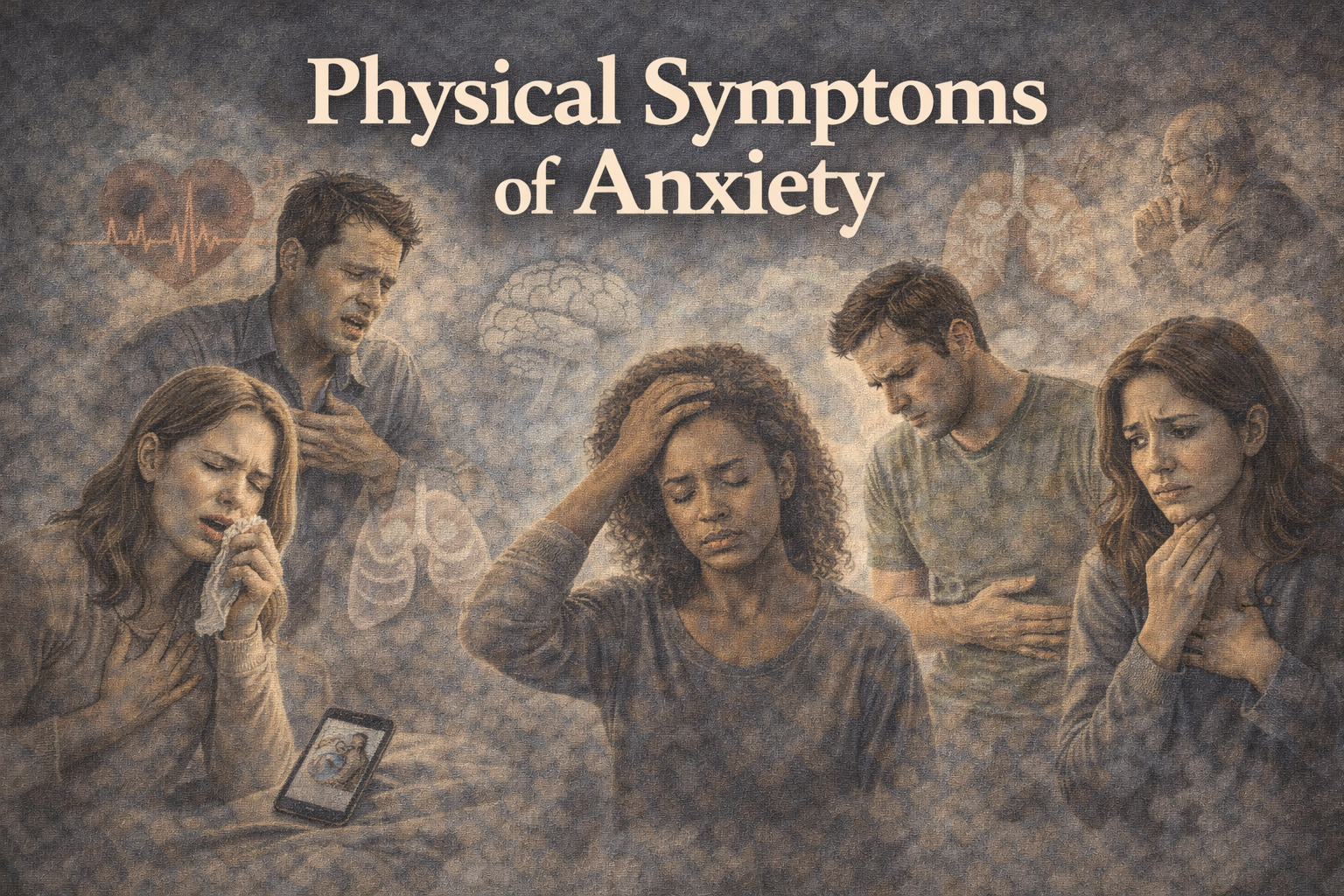
Your heart races, chest tightens, stomach churns, and you feel dizzy—yet there’s no obvious danger. These are common physical symptoms of anxiety experienced by millions of U.S. adults every year. If you’re dealing with unexplained bodily sensations that mimic serious health issues, you might worry about heart problems or other conditions, leading to repeated doctor visits and heightened stress.
This misattribution delays addressing the root cause—anxiety—which can worsen symptoms and impact daily life. Recognizing these signs is crucial for timely support. This article covers the most common physical symptoms of anxiety, explains the body’s response, distinguishes anxiety from medical emergencies, offers evidence-based management strategies, and guides when to seek help.
Based on guidelines from the American Psychiatric Association (DSM-5), National Institute of Mental Health (NIMH), Mayo Clinic, and peer-reviewed anxiety research, this information aims to empower you.
For a broader foundation, see our guide on Signs of Mental Health Issues: Complete Guide to Anxiety Disorders
What Are the Physical Symptoms of Anxiety?
Physical symptoms of anxiety stem from the body’s stress response, often surprising in intensity. Understanding them reduces fear. This section outlines triggers and lists common manifestations.
How Anxiety Triggers Physical Symptoms
Anxiety activates the fight-or-flight response via the sympathetic nervous system. Adrenaline and cortisol surge, preparing for threats through increased heart rate and alertness.
Symptoms may onset suddenly in panic attacks or linger in chronic anxiety.
Most Common Physical Symptoms of Anxiety
- Rapid heartbeat or heart palpitations, feeling like your heart skips beats.
- Chest tightness or pain, often mistaken for cardiac issues.
- Shortness of breath or suffocation sensation, leading to hyperventilation.
- Dizziness, lightheadedness, or faintness from blood flow changes.
- Trembling, shaking, or muscle tension, especially in limbs.
These are hallmark physical symptoms of anxiety.
Gastrointestinal & Other Frequent Complaints
- Stomach pain, nausea, or “nervous stomach” from digestive slowdown.
- Sweating, hot flashes, or chills due to temperature regulation shifts.
- Fatigue, weakness, or “wired but tired” feeling from sustained arousal.
Physical symptoms of anxiety vary but often cluster.
Pro Tip: Sip ginger tea during nausea episodes—it may soothe without medication, but check with your doctor if persistent.
Why Anxiety Causes Such Strong Physical Symptoms
Anxiety’s physical toll feels intense because it hijacks survival mechanisms. This mind-body link explains why symptoms mimic illnesses. Explore the connections.
The Mind-Body Connection in Anxiety
The brain perceives threats, activating the autonomic nervous system via amygdala and hypothalamus. This drives arousal, manifesting physically.
It’s evolutionary but maladaptive in modern anxiety.
Role of the Autonomic Nervous System
Sympathetic activation acts as a “gas pedal,” boosting heart rate and breathing for energy. In chronic anxiety, parasympathetic “brake” delays recovery.
This prolongs discomfort.
Why Symptoms Feel So Real & Alarming
The body treats perceived danger as physical, creating a feedback loop: sensations heighten fear, worsening symptoms.
For a broader foundation, see our guide on Signs of Mental Health Issues: What is Anxiety Disorder?
Anxiety Physical Symptoms Chest Pain – When to Worry
Chest pain ranks among alarming anxiety symptoms, prompting emergency fears. Distinguish it from serious issues for safety.
What Anxiety Chest Pain Feels Like
It presents as tightness, pressure, stabbing, or aching, often with rapid heartbeat and shortness of breath.
It fluctuates with stress levels.
Anxiety vs. Heart Attack – Key Differences
Anxiety pain is gradual, position-sensitive, and eases with relaxation. Heart attack pain is crushing, radiates to arm/jaw, and worsens with exertion.
Know the contrasts.
When to Seek Emergency Care
For sudden severe pain with sweating, nausea, or arm/jaw involvement, or lasting over 20 minutes, call 911.
Physical Symptoms of Anxiety in Women
Physical symptoms of anxiety in women may differ due to biology and society. Awareness aids tailored management.
Common Patterns in Women
Women report higher nausea, stomach pain, and fatigue rates. Hormonal shifts during cycles or perimenopause intensify these.
This affects daily functioning.
Anxiety Physical Symptoms in Women – Unique Considerations
Breast tenderness or heightened shortness of breath/dizziness sensitivity occur. These tie to estrogen fluctuations.
Monitor during hormonal changes.
Sociocultural Factors
Women more often somaticize anxiety; stigma delays care. Encouraging open dialogue helps.
For a broader foundation, see our guide on Signs of Mental Health Issues: Anxiety vs Normal Worry
How to Manage Physical Symptoms of Anxiety
Managing physical symptoms of anxiety involves immediate and long-term tactics. These evidence-based methods empower relief.
Immediate Relief Techniques
Practice diaphragmatic breathing: Inhale 4 seconds, hold 7, exhale 8 to calm nerves.
Progressive muscle relaxation: Tense then release groups sequentially.
Try cold water on face for vagus stimulation.
Longer-Term Strategies
Engage regular aerobic exercise to lower arousal. Prioritize sleep hygiene, limit caffeine.
Use CBT to disrupt symptom-fear loops.
Consistency yields results.
When Lifestyle Changes Aren’t Enough
Seek psychotherapy like CBT or ACT. Consider medication with a prescriber if severe.
Combine approaches for best outcomes.
Physical Symptoms from Anxiety – When to See a Doctor
Physical symptoms from anxiety warrant medical checks to rule out other causes. This guide helps decide.
Red Flags Requiring Medical Evaluation
New/worsening chest pain over 35, persistent dizziness with falls, unexplained weight loss/fever/night sweats signal urgency.
Don’t ignore these.
Ruling Out Medical Causes
Conditions like thyroid issues, anemia, heart problems, or vestibular disorders mimic anxiety. Bloodwork or ECG may clarify.
Thorough evaluation ensures safety.
Primary Care vs. Mental Health Provider
Start with PCP for physical exclusion. If anxiety confirmed, refer to psychiatrist/therapist.
Important: Always err on caution with chest pain—call emergency if unsure.
Scientific Evidence & Research
Scientific evidence validates physical symptoms of anxiety as common and treatable. Studies inform understanding.
Clinical Studies
Somatic symptoms appear in 60-80% of anxiety cases. CBT reduces their severity significantly in meta-analyses.
This highlights therapy’s role.
Expert Opinions
Mayo Clinic and APA cite chest pain, palpitations, dyspnea as prevalent. HPA axis overactivation explains fatigue/GI issues.
Statistical Data
Lifetime anxiety prevalence is 31%; women 1.5-2x more somatic.
Explore NIMH Anxiety Disorders; Mayo Clinic Anxiety Symptoms; APA Anxiety Overview.
Common Mistakes to Avoid
Avoiding pitfalls in handling physical symptoms of anxiety prevents complications. Learn from these errors.
Mistake #1: Repeated ER Visits Without Mental Health Follow-Up
Why problematic: Clears acute threats but ignores anxiety roots. Better approach: Request screening post-medical clearance.
Mistake #2: Ignoring Symptoms Hoping They’ll “Go Away”
Why problematic: Allows chronic worsening or avoidance. Better approach: Track and seek early intervention.
Mistake #3: Self-Medicating with Alcohol or Caffeine
Why problematic: Exacerbates symptoms, risks dependency. Better approach: Opt for proven relaxation methods.
Frequently Asked Questions (FAQs)
What are the Physical Symptoms of Anxiety?
Physical symptoms of anxiety include rapid heartbeat, chest tightness, shortness of breath, dizziness, trembling, sweating, nausea, stomach pain, fatigue, and muscle tension. These arise from fight-or-flight and often mimic illnesses. They vary in intensity; chronic ones may need management.
Can Anxiety Cause Chest Pain?
Yes, anxiety often causes chest pain or tightness. It feels like pressure or aching, fluctuates with breathing/position, and eases with relaxation. Severe/persistent pain warrants medical check to exclude cardiac issues—call 911 if unsure.
What are Physical Signs of an Anxiety Attack?
Physical signs of an anxiety attack include pounding heart, shortness of breath, chest pain, dizziness, trembling, sweating, nausea, chills/hot flashes, numbness, impending doom. They peak minutes, subside 30 minutes. Breathing helps; seek care if frequent.
Are Physical Symptoms of Anxiety Different in Women?
Women report higher nausea, stomach pain, fatigue, shortness of breath. Hormonal changes in cycles/pregnancy/menopause intensify. Societal factors may influence reporting—tailored care advised.
Can Anxiety Cause Dizziness and Shortness of Breath?
Yes—hyperventilation/adrenaline cause dizziness/lightheadedness, air hunger sensation. Common in anxiety/panic, improves with diaphragmatic breathing. Persistent cases need evaluation.
How Do I Know if Physical Symptoms Are From Anxiety?
If symptoms tie to stress/worry, improve with relaxation/distraction, normal tests, likely anxiety-related. Persistent/severe ones require doctor to rule out others—journal helps identify patterns.
Can Anxiety Cause Nausea, Fatigue, or Heart Palpitations?
Absolutely—nausea from digestive shifts; fatigue from arousal; palpitations from adrenaline. Hallmarks of anxiety; management reduces them—consult if impacting life.
(Word count: 372)
Conclusion
Recognizing physical symptoms of anxiety lessens fear, avoids needless tests, shortens distress, and facilitates treatment. You’ll now identify signs like chest pain or dizziness as anxiety-related, respond calmly, and seek appropriate care.
Understanding these empowers proactive management.
Start a 7-day symptom journal: note occurrences, intensity (1-10), triggers, relief methods.
If frequent/severe/frightening, schedule with your doctor or mental health professional. These sensations are real but not dangerous from anxiety—with tools/support, improvement awaits; control is achievable.
Medical Disclaimer:
This article is for informational and educational purposes only and does not constitute medical advice. The information provided should not be used for diagnosing or treating a health problem or disease. Always consult with a qualified healthcare professional before making any changes to your mental health treatment, starting new medications, or trying new supplements.
If you’re experiencing a mental health crisis, please call the 988 Suicide & Crisis Lifeline or visit your nearest emergency room. For non-emergency support, contact the Substance Abuse and Mental Health Services Administration (SAMHSA) National Helpline at 1-800-662-4357.
The content in this article is based on current research and expert consensus as of 2026, but medical knowledge evolves. Always verify information with your healthcare provider.