Performance anxiety is a common challenge that can strike in high-pressure moments—whether delivering a presentation, competing in a sport, performing on stage, or engaging intimately with a partner. Picture this: heart racing, palms sweating, and mind flooding with doubts like “What if I mess up?” Recent surveys, including the American Psychiatric Association’s 2024 poll, indicate that 43% of U.S. adults reported feeling more anxious than the previous year, with many citing performance-related situations as triggers amid broader stressors like economic concerns and current events.
This intense fear of negative evaluation or failure goes beyond typical nervousness and can lead to avoidance behaviors, diminished confidence, and even physical issues such as trembling or sexual difficulties. It often interferes with professional success, athletic achievement, creative expression, and personal relationships.
The good news is that performance anxiety is highly manageable. In this comprehensive guide, readers will learn its definition, root causes, recognizable symptoms, and evidence-based strategies to overcome it—including cognitive behavioral techniques, mindfulness practices, natural approaches, and when to seek professional support. Backed by research from institutions like the National Institute of Mental Health (NIMH), American Psychological Association (APA), and peer-reviewed studies, this article equips readers with practical tools to regain control and perform with greater calm and confidence.
For a broader foundation, see our guide on Signs of Mental Health Issues: What is Anxiety Disorder?
What Is Performance Anxiety?
Performance anxiety refers to excessive worry and fear surrounding situations where someone feels evaluated or judged, often leading to impaired functioning despite preparation or skill.
Definition and Types of Performance Anxiety
This form of anxiety involves intense apprehension before or during tasks requiring demonstration of ability. It frequently appears as a subtype of social anxiety disorder, specifically the “performance-only” specifier in diagnostic criteria.
Common types include:
- Public speaking anxiety — fear during presentations or speeches.
- Athletic performance anxiety — pressure in competitions or high-stakes games.
- Sexual performance anxiety — concerns about arousal, stamina, or satisfaction.
- Musical or stage performance — dread before concerts, auditions, or acting.
Research suggests it stems from perceived high stakes and fear of scrutiny.
Common Symptoms – Cognitive, Somatic, Behavioral
Symptoms typically cluster into three categories.
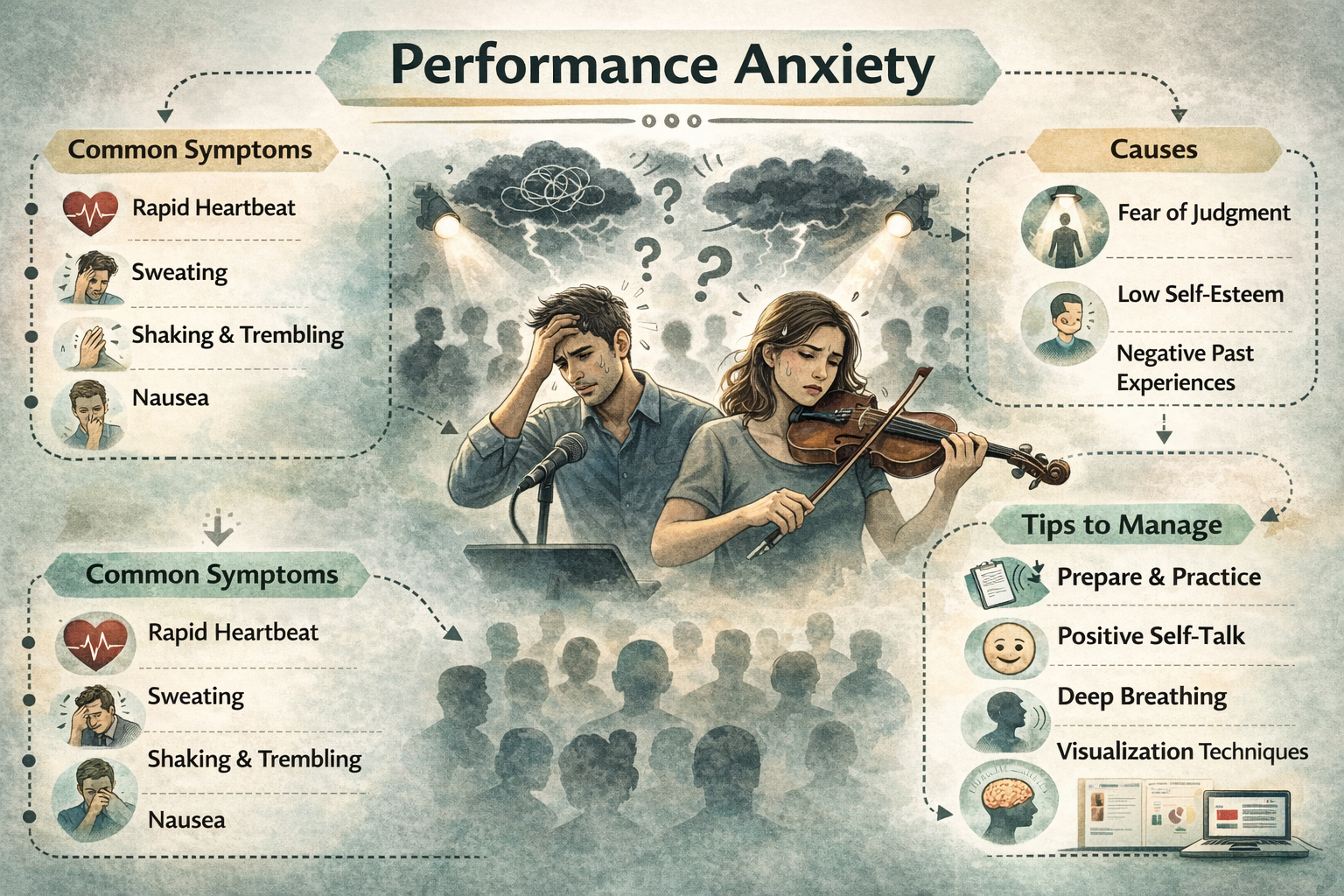
Cognitive signs involve racing thoughts: excessive worry about failure, negative self-talk (“Everyone will see I’m incompetent”), or catastrophic thinking.
Somatic (physical) manifestations include a racing heart, sweating, trembling, dry mouth, shortness of breath, or nausea—results of the body’s fight-or-flight response.
Behavioral responses often include avoidance (skipping opportunities), procrastination, or over-preparation to perfectionistic levels.
Note: Track symptoms in a journal before high-pressure events to identify patterns and triggers early.
How It Differs from Normal Nerves
Everyone feels some nerves before important tasks—these can sharpen focus and motivation (the “Yerkes-Dodson law” suggests moderate arousal optimizes performance).
Performance anxiety, however, crosses into distress: it impairs concentration, causes significant discomfort, and may lead to avoidance or reduced quality of life.
For a broader foundation, see our guide on Signs of Mental Health Issues: Complete Guide to Anxiety Disorders
What Causes Performance Anxiety?
Understanding the origins helps demystify the experience and reduces self-blame.
Psychological and Environmental Triggers
A core driver is fear of negative evaluation—worrying about judgment from others. Perfectionism amplifies this, as does past criticism or failure experiences.
High-stakes environments (job interviews, competitions, deadlines) intensify pressure.
Biological and Genetic Factors
The sympathetic nervous system overactivates, releasing adrenaline and causing physical symptoms.
Genetic predisposition plays a role; family history of anxiety disorders increases risk, as does heightened sensitivity to stress hormones.
Specific Contexts – Public Speaking, Sports, Sexual Performance
In public speaking, scrutiny fear dominates. Athletes face competition pressure and outcome expectations. Sexual performance anxiety often involves fear of inadequacy, leading to erectile dysfunction or arousal difficulties in men, and self-consciousness in women.
For a broader foundation, see our guide on Signs of Mental Health Issues: Health Anxiety (Hypochondria)
How to Overcome Performance Anxiety – Proven Strategies
Skills can be built to manage and reduce performance anxiety effectively.
How to Manage Performance Anxiety in the Moment
When symptoms surge:
- Practice 4-7-8 breathing: Inhale for 4 seconds, hold for 7, exhale for 8—activates the parasympathetic system.
- Use grounding: Name 5 things seen, 4 touched, 3 heard, etc.
- Reframe thoughts: Replace “I’ll fail” with “I’ve prepared; nerves mean I care.”
Research Shows: Brief breathing techniques can quickly lower physiological arousal, per studies on anxiety management.
How to Deal with Performance Anxiety Long-Term
Build resilience through:
- Gradual exposure: Start with low-stakes practice (e.g., record yourself speaking, then share with a trusted friend).
- Thorough preparation and rehearsal to foster mastery and confidence.
Tips to Reduce Performance Anxiety Naturally
Incorporate daily habits:
- Regular aerobic exercise (30 minutes most days) to regulate stress hormones.
- Prioritize sleep hygiene and limit caffeine/alcohol.
- Try mindfulness meditation apps for consistent practice.
Performance Anxiety Treatment Options – What Works Best
Professional interventions offer structured support.
Cognitive Behavioral Therapy (CBT) for Performance Anxiety
CBT is the gold-standard approach. It identifies distorted thoughts, challenges them through cognitive restructuring, and uses exposure to build tolerance.
Meta-analyses show large effects on state (situational) anxiety reduction.
Mindfulness for Performance Anxiety
Mindfulness reduces physiological arousal and rumination. Studies link regular practice to lower performance-related stress in athletes and performers.
Performance Anxiety Therapy Techniques – CBT, ACT, Exposure
Techniques include:
- Cognitive restructuring for balanced thinking.
- Acceptance and Commitment Therapy (ACT) to accept thoughts without fusion.
- Systematic exposure to feared scenarios.
Many find success with online platforms like BetterHelp for accessible therapy, or apps like Headspace for guided mindfulness sessions.
Expert Insight: Therapists emphasize combining techniques for personalized results—CBT for thoughts, mindfulness for presence.
Overcoming Sexual Performance Anxiety
This subtype deserves focused attention.
Causes and Prevalence
It stems from fear of inadequacy or disappointing a partner, often exacerbating issues like erectile dysfunction or delayed arousal.
Research estimates it affects 9-25% of men and 6-16% of women.
Strategies to Overcome Sexual Performance Anxiety
Shift focus from performance to pleasure and connection:
- Open, non-judgmental communication with a partner.
- Practice mindfulness during intimacy to stay present.
- Consider CBT or sex therapy for reframing thoughts.
For additional support, check our sexual health resources.
Beta Blockers for Performance Anxiety – Benefits and Risks
Some use medications situationally.
How They Help Situational Anxiety
Beta blockers (e.g., propranolol) block adrenaline effects, reducing tremors, rapid heartbeat, and sweating—useful for public speaking or performances.
Evidence and Limitations
They provide short-term symptom relief off-label, with some supportive evidence for situational use.
However, they’re not first-line for ongoing anxiety and lack robust long-term data. Always consult a doctor; they’re not suitable for everyone.
Scientific Evidence & Research on Performance Anxiety
Evidence supports effective management.
Clinical Studies
Meta-analyses of psychological interventions, including CBT, demonstrate large reductions in state performance anxiety and moderate effects on trait anxiety.
Expert Opinions
The APA and NIMH recommend therapy as first-line; mindfulness shows promise in reducing stress and enhancing focus.
Statistical Data
An estimated 19.1% of U.S. adults experience any anxiety disorder annually, with performance subtypes common in social anxiety (affecting over 15 million).
Common Mistakes to Avoid When Dealing with Performance Anxiety
Avoid these pitfalls for better outcomes.
Mistake #1: Ignoring Physical Symptoms
Problem: Dismissing them worsens the cycle. Better: Address with breathing or professional input.
Mistake #2: Over-Reliance on Avoidance
Problem: Reinforces fear long-term. Better: Use gradual exposure.
Mistake #3: Self-Medicating Without Guidance
Problem: Risks side effects or dependency. Better: Seek professional consultation.
Important: Never abruptly stop any medication—consult a provider.
Frequently Asked Questions (FAQs)
How to Overcome Performance Anxiety?
Start with preparation, CBT techniques like thought reframing, and mindfulness; gradual exposure builds lasting confidence. Many see improvement with consistent practice—combine self-help with therapy if needed.
What Are Performance Anxiety Treatment Options?
CBT remains most effective for restructuring thoughts and exposure; mindfulness reduces arousal, while beta blockers help situational physical symptoms. Lifestyle changes and therapy often combine for best results—consult a professional to tailor approaches.
How to Manage Performance Anxiety in Public Speaking?
Prepare thoroughly, practice deep breathing or power poses beforehand, and reframe nerves as excitement or energy. Focus on the message rather than perfection to ease pressure.
Does Mindfulness Help with Performance Anxiety?
Yes—regular mindfulness reduces physiological arousal and stress; research shows benefits for athletes and performers by improving focus and acceptance of sensations.
Can Beta Blockers Help Performance Anxiety?
They can reduce physical symptoms like trembling or racing heart in specific situations; however, they’re off-label, short-term, and require a doctor’s prescription—not recommended for ongoing use.
How Common Is Overcoming Sexual Performance Anxiety?
It affects many (9-25% men, 6-16% women); CBT, open communication, and mindfulness prove effective—seek sex therapy if persistent.
When Should I Seek Professional Help for Performance Anxiety?
Seek help if it impairs daily life, relationships, or work; persistent avoidance or severe symptoms warrant consulting a therapist specializing in anxiety.
Quick Takeaways
- Performance anxiety is common and treatable with evidence-based strategies.
- CBT and mindfulness offer strong support for reducing symptoms.
- Lifestyle habits like exercise and breathing provide natural relief.
- Avoid avoidance and self-medication—professional guidance helps when needed.
- Small, consistent steps lead to meaningful confidence gains.
Conclusion
Performance anxiety may feel overwhelming, but it’s a manageable response that millions navigate successfully. By understanding its causes and symptoms, applying proven strategies like CBT reframing, mindfulness, and gradual exposure, and steering clear of common pitfalls, high-pressure moments can be transformed into opportunities for growth.
The real value lies in reclaiming calm and presence—whether nailing a presentation, excelling in competition, or enjoying intimacy without self-doubt.
Start today: Try a 5-minute mindfulness exercise or breathing technique the next time nerves arise. Small actions compound into lasting change.
If symptoms persist or interfere significantly, consider booking a consultation with a licensed therapist. Resources like our therapy directory or CBT techniques guide can help. Capability, confidence, and support are available—relief and stronger performance are within reach.
Medical Disclaimer
This article is for informational and educational purposes only and does not constitute medical advice. The information provided should not be used for diagnosing or treating a health problem or disease. Always consult with a qualified healthcare professional before making any changes to mental health treatment, starting new medications, or trying new supplements.
If experiencing a mental health crisis, please call the 988 Suicide & Crisis Lifeline or visit the nearest emergency room. For non-emergency support, contact the Substance Abuse and Mental Health Services Administration (SAMHSA) National Helpline at 1-800-662-4357.
The content in this article is based on current research and expert consensus as of 2026, but medical knowledge evolves. Always verify information with a healthcare provider.