Imagine you’re in a high-stakes meeting when suddenly your heart races, your breath shortens, and an overwhelming fear takes hold—a panic attack striking at work. According to surveys from the Anxiety and Depression Association of America (ADAA), 28% of employees have experienced such an anxiety or panic attack, yet only 9% have been formally diagnosed. This hidden struggle affects millions, disrupting focus and leading to unnecessary suffering.
Panic attacks at work can disrupt productivity, strain professional relationships, and contribute to absenteeism, with global estimates showing billions of lost workdays each year due to anxiety-related issues. Many employees feel isolated, fearing judgment or career repercussions, which only worsens the cycle. However, you’re not alone, and effective strategies exist to regain control.
For a broader foundation, see our guide on Signs of Mental Health Issues: The Ultimate Guide to Panic Attacks: Causes, Symptoms & How to Overcome Them for Good (2026)
What Are Panic Attacks?
Panic attacks are sudden, intense surges of fear or discomfort that peak within minutes, often feeling like a heart attack or loss of control. They can strike without warning, making them particularly challenging in work environments where focus and composure are expected. Understanding what they are is the first step in learning how to handle panic attacks at work, as it demystifies the experience and reduces associated stigma.
Symptoms of Panic Attacks at Work
Physical signs like rapid heartbeat, sweating, and shortness of breath can mimic serious health issues, leading to heightened alarm. Emotionally, you might feel intense fear, dread, or a sense of impending doom. In office settings, these may manifest during presentations, tight deadlines, or even routine tasks, causing you to withdraw or avoid situations.
Moreover, trembling, chest pain, or dizziness can disrupt your workflow, making simple activities feel overwhelming. Recognizing these as temporary can help you respond more effectively.
Causes and Triggers in the Workplace
Common stressors such as looming deadlines, high-stakes meetings, or interpersonal conflicts often ignite panic attacks. Biological factors, like a genetic predisposition to anxiety, combined with psychological elements such as perfectionism, can amplify vulnerability. Additionally, chronic stress from workload overload may lower your threshold for episodes.
Research suggests that unresolved trauma or ongoing pressure can contribute, turning everyday work demands into triggers. Identifying personal catalysts is key to prevention.
Difference Between Panic Attacks and General Anxiety
Panic attacks are sudden, intense episodes lasting minutes, unlike the ongoing worry of general anxiety that simmers throughout the day. While panic involves acute physical symptoms, general anxiety focuses more on persistent mental rumination. Duration-wise, panic subsides quickly, but its fear can linger, whereas anxiety is more chronic.
This distinction matters because strategies for how to handle panic attacks at work differ from managing daily anxiety, emphasizing immediate interventions over long-term coping.
Research Shows: A study from the National Institute of Mental Health indicates that panic disorder affects about 2.7% of U.S. adults, often co-occurring with general anxiety but requiring targeted approaches for effective management.
For a broader foundation, see our guide on Signs of Mental Health Issues: 10 Proven Self-Help Strategies for Panic Attacks Recommended by Real Therapists
Why Do Panic Attacks Happen at Work?
Workplaces can amplify underlying vulnerabilities, turning routine demands into catalysts for panic. Understanding why they occur helps in developing strategies to mitigate them, promoting a healthier professional life. This section explores key factors, highlighting how environmental and personal elements intersect.
Common Workplace Stressors Leading to Panic
High-pressure environments and workload overload often create a breeding ground for anxiety. Lack of control, such as unpredictable schedules or micromanagement, exacerbates this, leaving you feeling trapped. Support from colleagues can buffer these effects, but isolation intensifies vulnerability.
Furthermore, constant connectivity via emails or virtual meetings blurs boundaries, increasing stress accumulation.
Impact of Job Insecurity and Burnout
Job insecurity fuels chronic worry, linking directly to heightened anxiety risks. According to the APA, 77% of workers experience work-related stress, which can lead to burnout and anxiety disorders. This cycle reduces resilience, making panic more likely.
Statistics show that prolonged burnout correlates with absenteeism, underscoring the need for early intervention.
Personal Factors Influencing Vulnerability
A history of anxiety or past trauma can heighten susceptibility in stressful settings. Lifestyle elements like poor sleep or inadequate diet weaken your ability to cope, allowing triggers to overwhelm. Moreover, personality traits such as high sensitivity to criticism play a role.
For a broader foundation, see our guide on Signs of Mental Health Issues: How to Support a Loved One Struggling With Panic Attacks: A Complete Family Guide
How to Recognize a Panic Attack at Work
Spotting the onset early allows for timely intervention, minimizing disruption. This knowledge empowers you to differentiate panic from other issues, fostering confidence in management. We’ll cover signs and tools for self-assessment.
Early Warning Signs to Watch For
Subtle cues like restlessness, mild dizziness, or a racing mind often precede full episodes. These can progress rapidly if ignored, evolving into intense symptoms. Paying attention to patterns, such as after caffeine intake, aids prevention.
Journaling these precursors can reveal trends.
Distinguishing from Other Health Issues
Panic mimics heart attacks with chest pain or asthma with breathlessness, but lacks lasting damage. If symptoms include severe pain or persist, seek immediate medical help to rule out emergencies. Consulting a doctor ensures accurate identification.
This step reassures and guides appropriate responses.
Self-Assessment Techniques
Use quick checklists: Rate symptoms on intensity and frequency. Journaling triggers, like crowded elevators, builds awareness. Apps can track patterns, offering insights for better control.
Immediate Strategies: How to Handle Panic Attacks at Work
When an attack hits, quick actions can restore calm efficiently. This step-by-step guide focuses on accessible techniques suitable for professional settings, helping you navigate episodes discreetly.
Breathing Exercises for Quick Relief
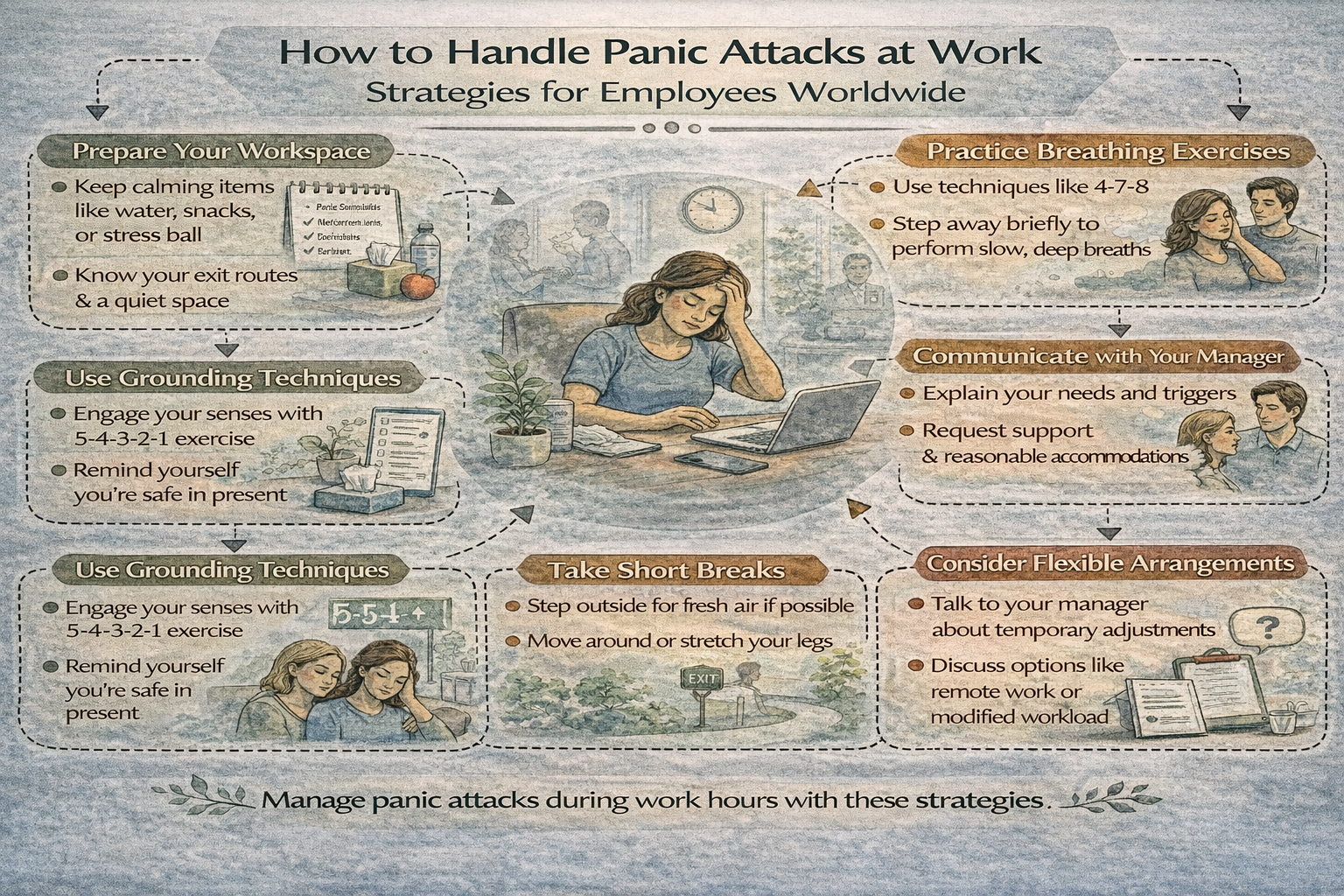
The 4-7-8 technique—in Hale for 4 seconds, hold for 7, exhale for 8—slows your heart rate. Combine with grounding: Name 5 things you see, 4 you touch, 3 you hear, 2 you smell, 1 you taste. Practice daily to make it instinctive.
These methods shift focus from panic to the present.
Physical Techniques to Calm Down
Progressive muscle relaxation—tense and release groups from toes to head—releases built-up tension. Find a quiet space, like a restroom, to step away briefly. Gentle movement, such as stretching, can also ground you.
Avoid caffeine during episodes, as it heightens symptoms.
Mental Distraction Methods
Use positive affirmations like “This will pass” or visualize a calm place. Apps provide quick guided meditations for support. Reframe thoughts: Challenge “I’m dying” with “This is temporary anxiety.”
These tools empower immediate self-management.
Pro Tip: Keep a small “coping card” in your wallet with key affirmations and breathing steps for discreet reference during work.
Long-Term Techniques for Managing Anxiety Attacks at Work
Building sustained resilience requires ongoing efforts beyond immediate fixes. This list outlines lifestyle and professional adjustments to reduce frequency and severity over time.
Building Resilience Through Lifestyle Changes
Regular exercise, balanced nutrition, and consistent sleep routines fortify mental health. Incorporate daily mindfulness, like 10-minute meditation, to lower baseline anxiety. Aim for 150 minutes of moderate activity weekly, as research shows it can reduce anxiety symptoms by up to 40%.
These habits create a buffer against triggers.
Workplace Adjustments and Accommodations
Communicate needs with HR or managers for flexible options, like remote work days. Request ergonomic setups or quiet zones to minimize stressors. Legal protections under ADA support such requests.
Open dialogue fosters a supportive environment.
Therapy and Medication Options
Cognitive behavioral therapy (CBT), recommended by Harvard Health, reshapes thought patterns effectively for panic. Consider medications like SSRIs if symptoms persist, but always under professional guidance. Online platforms offer accessible sessions.
Best Practices and Expert Tips for Coping with Panic Attacks During Work
Expert-recommended practices enhance daily coping, turning reactive measures into proactive habits. This section provides actionable tips for various work scenarios.
Tips for Panic Attacks in Office Settings
Prepare a personal coping kit with water, essential oils, and noise-canceling earbuds. Build a support network by confiding in a trusted colleague for discreet assistance. Practice preventive breathing before known triggers.
These preparations reduce isolation.
Techniques for Panic Attacks Work Prevention
Attend stress management workshops or use time-blocking for breaks. Prioritize tasks to avoid overload, incorporating Pomodoro techniques. Regular self-check-ins prevent buildup.
Consistency yields long-term benefits.
Overcoming Panic Attacks at Workplace Long-Term
Set achievable goals, like reducing episodes by tracking progress weekly. Celebrate small wins to build momentum. Integrate therapy insights into routines.
Expert Insight: As a clinical psychologist might note, “Viewing panic as a manageable signal rather than a threat transforms your response, turning fear into opportunity for growth.”
When to Seek Professional Help for Dealing with Panic Attacks at Job
Knowing when self-management isn’t enough prevents escalation. This guidance outlines signs and steps to access support effectively.
Signs That Professional Intervention is Needed
If frequency increases or impacts daily functioning, like avoiding work, seek help. Persistent interference with tasks signals a need for expertise.
Don’t wait for crisis.
Types of Help Available
Therapists, counselors, or psychiatrists offer tailored plans. Employee Assistance Programs (EAPs) provide confidential, often free, support.
Explore options fitting your needs.
How to Start the Conversation
Approach employers with “I need support for well-being” or doctors with symptom descriptions. Resources like ADAA directories aid finding providers.
Starting opens doors to relief.
Important: If symptoms include suicidal thoughts or severe impairment, contact the 988 Lifeline immediately for crisis support.
Scientific Evidence & Research
Backing strategies with data builds trust. This section reviews key studies, opinions, and stats on panic at work.
Clinical Studies
ADAA surveys show 28% of employees experience panic attacks, with CBT proving effective in managing symptoms, achieving up to 70-90% recovery in trials. Harvard Health endorses CBT for lasting relief.
Expert Opinions
WHO notes 15% of working-age adults have mental disorders, linking workplace stress to anxiety; APA reports 77% face work-related stress leading to burnout.
Statistical Data
Globally, 12 billion working days are lost annually to depression and anxiety (WHO). In Germany, anxiety symptoms affect about 5.6% of working-age adults, linked to higher unemployment (8-20%) and sick leave.
Common Mistakes to Avoid
Sidestepping pitfalls enhances effectiveness. This list explains common errors and better paths.
Mistake #1: Ignoring Early Symptoms
Why it’s problematic: It allows escalation, worsening productivity and confidence. Better approach: Acknowledge signals and apply immediate coping like breathing.
Mistake #2: Avoiding Professional Help
Why it’s problematic: Leads to chronic issues and isolation. Better approach: Seek therapy or EAP early for structured support.
Mistake #3: Over-Reliance on Caffeine or Stimulants
Why it’s problematic: Exacerbates triggers, mimicking panic symptoms. Better approach: Opt for herbal teas or water for calm.
Frequently Asked Questions (FAQs)
What are strategies for panic attacks at office?
Use deep breathing, grounding techniques, and find a quiet space. These immediate strategies help regain control during an episode. Practice 4-7-8 breathing: Inhale for 4 seconds, hold for 7, exhale for 8. Combine with sensory grounding to shift focus from panic. If frequent, consult a professional for personalized plans.
How can I cope with panic attacks during work?
Identify triggers, use relaxation methods, and build a support system. Long-term, incorporate mindfulness and lifestyle changes. Keep a journal of episodes, practice daily meditation, and discuss accommodations with your employer for better management. Therapy can enhance these efforts.
What is panic attack management at workplace?
It involves immediate calming techniques and preventive measures like stress reduction. Seek professional help if frequent. Techniques include progressive relaxation; prevention via regular breaks and therapy, reducing impact on productivity. Always prioritize self-care.
Are there tips for panic attacks in office?
Yes, prepare a coping kit with essentials like water and affirmations, and use distraction methods. Include earphones for calming music; avoid caffeine; inform a trusted colleague for support during episodes. Build routines to anticipate and mitigate.
How to control panic at work effectively?
Employ breathing exercises, positive self-talk, and physical movement. For ongoing control, consider CBT therapy. Walk briefly if possible; reframe thoughts from catastrophic to realistic; track patterns for prevention. Consistency yields results.
What techniques for panic attacks work best?
Grounding, deep breathing, and mindfulness are highly effective. Evidence from APA supports these for quick relief. Use 5-4-3-2-1 method: Name 5 things you see, 4 you touch, etc., to anchor in the present. Integrate into daily practice.
How to overcome panic attacks at workplace?
Combine immediate strategies with long-term therapy and workplace adjustments. Consistency is key. Build resilience through exercise; use EAPs; monitor progress to reduce frequency over time. Professional guidance accelerates recovery.
Conclusion
Mastering these strategies empowers you to maintain productivity, reduce stress, and foster a healthier work-life balance, transforming potential setbacks into opportunities for growth. Effective ways to handle panic attacks at work can turn overwhelming moments into manageable ones, allowing you to thrive professionally.
Implement one technique today, like breathing exercises, and track your progress for ongoing improvement. Consult a mental health professional for personalized advice or explore related resources for deeper insights.
Medical Disclaimer:
This article is for informational purposes only and not a substitute for professional medical advice. Consult a healthcare provider for personalized guidance.
If you’re experiencing a mental health crisis, please call the 988 Suicide & Crisis Lifeline or visit your nearest emergency room. For non-emergency support, contact the Substance Abuse and Mental Health Services Administration (SAMHSA) National Helpline at 1-800-662-4357.
The content in this article is based on current research and expert consensus as of 2026, but medical knowledge evolves. Always verify information with your healthcare provider.