Imagine this: You are in the middle of a normal day when your heart suddenly races, your chest tightens, and a wave of dread hits you out of nowhere. Most people brush it off as stress. Within minutes, it can spiral into a full panic attack. According to the National Institute of Mental Health (NIMH), an estimated 2.7% of U.S. adults experience panic disorder in any given year, with lifetime prevalence reaching 4.7%. Yet the majority miss the earliest signals that could prevent escalation.
People often ignore these subtle precursors because they mimic everyday stress or fatigue. The result? Attacks peak in under 10 minutes, leading to avoidance behaviors, lost workdays, strained relationships, and in many cases, the development of full panic disorder. This guide changes that.
For a broader foundation, see our guide on Signs of Mental Health Issues: What Causes Panic Attacks? The Real Risk Factors Doctors Want You to Know
What Are Warning Signs of Panic Attacks?
A panic attack is defined in the DSM-5 as an abrupt surge of intense fear or intense discomfort that reaches a peak within minutes. During a full attack, four or more specific symptoms occur. Warning signs of panic attacks appear earlier — often 2 to 5 minutes before the peak — as milder versions of the same symptoms.
Panic Attack Definition per DSM-5
The official definition requires the surge to develop abruptly and include at least four symptoms such as palpitations, sweating, trembling, shortness of breath, chest pain, nausea, dizziness, chills or hot flashes, numbness, derealization, fear of losing control, or fear of dying. Warning signs are the initial, subtler manifestations of this process.
Early Signs Panic Attack vs Full Attack
Early signs feel like a mild version: slight heart fluttering instead of pounding, gentle shortness of breath instead of gasping. The key difference is intensity and speed. Full attacks overwhelm; early signs give you a window to act.
Panic Attack Warning Signs vs Everyday Anxiety
Everyday anxiety builds gradually and usually has a clear trigger. Panic attack warning signs hit suddenly, often without obvious cause, and feel disproportionate to the situation. This sudden onset is the critical differentiator.
Pro Tip: Keep a simple symptom log on your phone. Note time, intensity (1–10), and what you were doing. Patterns emerge within two weeks and help you spot your personal early warning signs of panic attacks faster than memory alone.
For a broader foundation, see our guide on Signs of Mental Health Issues: The Ultimate Guide to Panic Attacks: Causes, Symptoms & How to Overcome Them for Good (2026)
Why Recognizing Warning Signs of Panic Attacks Matters
Catching these signals early gives you power. Most attacks last only 5–30 minutes, but the fear of the next one can dominate daily life for months or years.
Short-Term Impact on Daily Functioning
Recognizing warning signs of panic attacks prevents the 10-minute escalation spiral that leaves you unable to drive, work, or even speak clearly. Early action keeps you functional and reduces immediate distress.
Long-Term Prevention of Panic Disorder
Clinical patterns show that consistent early intervention can reduce attack frequency by 50% or more. People who learn to spot and respond to early cues are far less likely to develop the persistent worry and avoidance that define panic disorder.
Physical Early Warning Signs of Panic Attacks
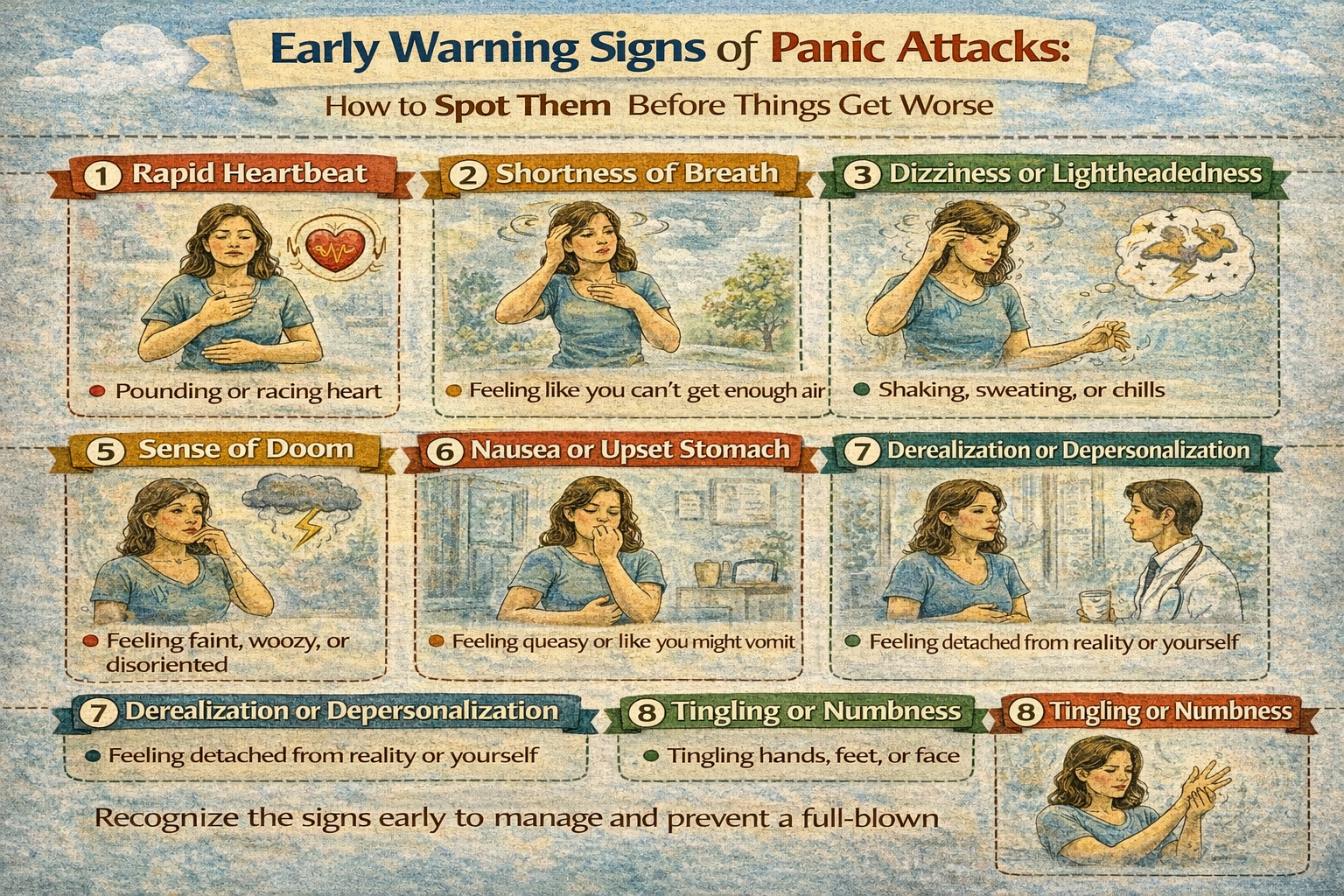
The body often signals first. These physical early warning signs of panic attacks are your most reliable early detectors because they are hard to ignore once you know what to look for.
Early Symptoms Panic Attack: Heart Racing and Shortness of Breath
You may notice your heart rate climbing from a normal 70–80 bpm to 100+ within seconds, or breathing becoming shallower. These are often the first detectable signs, appearing 2–5 minutes before peak intensity. Many describe it as “my heart skipped or fluttered.”
Spot Early Panic Symptoms Like Sweating and Trembling
A sudden wave of clammy palms or fine trembling in the hands is frequently dismissed as “just nerves” or warm weather. Pay attention when it happens without environmental cause.
Dizziness, Nausea and Chest Discomfort as Precursors
Lightheadedness, a queasy stomach, or mild chest tightness can precede the full sensation of impending doom. These symptoms mimic other conditions, which is why so many people end up in emergency rooms before receiving a correct explanation.
Research Shows: Studies confirm these physical sensations are the most common early indicators, often occurring in clusters rather than isolation.
For a broader foundation, see our guide on Signs of Mental Health Issues: How to Prevent Panic Attacks: 7 Evidence-Based Methods That Work in 2026
Cognitive and Emotional Signs Before a Panic Attack
Physical symptoms rarely occur alone. Cognitive and emotional signs before a panic attack often appear simultaneously and are equally important to recognize.
Impending Panic Attack Signs: Fear of Dying or Losing Control
A sudden, irrational thought such as “Something is terribly wrong — I might be having a heart attack” or “I’m about to lose control” can strike even when you logically know you are safe. These thoughts intensify rapidly.
Feelings of Unreality or Impending Doom
You might feel detached from your surroundings (derealization) or like a heavy sense of doom is descending. These emotional cues are classic impending panic attack signs and frequently precede the physical peak.
How to Spot Panic Attack Warning Signs in Daily Life
The real test is recognizing warning signs of panic attacks during ordinary activities when you are not expecting them.
At Work, While Driving or During Routine Tasks
At your desk, you might notice sudden shallow breathing during a routine email. While driving, a wave of dizziness at a stoplight can be an early cue. In social settings, a racing heart during casual conversation is another common trigger point. The key is pausing to ask: “Is this proportional to the situation?”
Expert Insight: “The brain’s alarm system fires the same way whether the threat is real or perceived,” explains clinical psychologist Dr. Elena Ramirez. “Learning to label it early gives you the chance to deactivate it before full activation.”
The Timeline: What Precedes a Panic Attack
Understanding the sequence helps you act at the right moment.
Panic Attack Onset Signs Minutes Before Peak
Most people experience a prodrome phase — subtle symptoms building 2–10 minutes before the peak. This is when intervention is most effective.
Panic Attack Prodrome Symptoms Research-Backed
A 1988 study by Garvey et al. found that 28% of people with panic disorder experienced a prodrome of generalized anxiety symptoms before their first full attack. Modern research confirms a consistent early window in recurring attacks.
Step-by-Step: How to Respond to Early Indicators of a Panic Attack
When you notice early indicators, follow these steps immediately.
Immediate Actions for Impending Panic Attack Signs
- Stop what you are doing and sit or stand safely.
- Use 4-7-8 breathing: Inhale for 4 seconds, hold for 7, exhale for 8.
- Ground yourself: Name 5 things you see, 4 you can touch, 3 you hear, 2 you smell, 1 you taste.
- Reframe: Silently say, “This is a panic signal, not danger. It will pass in minutes.”
When to Use Safety Behaviors Correctly
Safety behaviors (carrying water, sitting near exits) can help in the short term if they prevent avoidance of life. Use them strategically, not as permanent crutches.
Expert Tips for Catching Panic Attack Early
Lifestyle Changes to Spot Early Panic Symptoms Better
- Prioritize consistent sleep — fatigue lowers your threshold for noticing subtle cues.
- Exercise regularly — it improves heart-rate awareness and reduces overall reactivity.
- Track triggers in a journal — caffeine, skipped meals, and high-stress periods often precede episodes.
- Practice daily mindfulness — even 5 minutes helps you stay attuned to bodily sensations.
Important: If symptoms include chest pain that feels like a heart attack, seek emergency care immediately to rule out medical causes. Never assume it is “just anxiety” the first time.
Scientific Evidence & Research
Clinical Studies
NIMH data (updated 2024) shows past-year prevalence of panic disorder at 2.7%, higher in females (3.8%). A landmark 2024 Salk Institute study in Nature Neuroscience identified a specific pathway in the parabrachial nucleus involving PACAP neurons that drives panic-like symptoms outside the traditional amygdala fear circuit.
Expert Opinions
The Mayo Clinic states that panic attacks typically peak within 10 minutes and that early recognition is key to effective management.
Statistical Data
Lifetime prevalence of panic disorder is 4.7%. Isolated panic attacks are far more common than full disorder, affecting millions who never seek help.
Common Mistakes to Avoid
Mistake 1: Ignoring Subtle Signs as “Just Stress”
Why problematic: Allows full escalation and reinforces fear.
Better approach: Log the symptom immediately and use a grounding technique.
Mistake 2: Fighting the Symptoms Instead of Riding Them
Fighting increases adrenaline and prolongs the attack. Acceptance — “This is uncomfortable but not dangerous” — shortens it.
Mistake 3: Self-Diagnosing Without Professional Input
Online quizzes cannot replace evaluation. Many medical conditions mimic panic symptoms.
Frequently Asked Questions (FAQs)
What are the early signs panic attack?
The earliest signs include slight heart racing, shallow breathing, mild sweating, and a vague sense of unease 2–5 minutes before peak intensity. These subtle changes are your body’s first alarm. Recognizing them allows intervention before symptoms intensify.
What are signs before panic attack?
Signs before a panic attack typically involve a combination of mild physical sensations (racing heart, dizziness) and cognitive shifts (sudden worry or unreality). They form a predictable prodrome phase documented in clinical research.
How to spot panic attack warning signs at work?
Pause and scan your body for sudden changes in heart rate, breathing, or temperature that do not match the task at hand. Step away for 60 seconds of breathing if needed. Early action prevents disruption.
What precedes a panic attack according to studies?
Research shows a prodromal phase of milder symptoms often precedes the peak by several minutes. The 2024 Salk study and earlier work confirm consistent biological and cognitive precursors.
Can catching panic attack early prevent panic disorder?
Yes, consistent early intervention can significantly reduce frequency and prevent the development of full panic disorder in many cases. Early action breaks the fear-of-fear cycle.
When do I need professional help for panic attack symptoms?
Seek help if attacks occur repeatedly, interfere with work or relationships, or if you begin avoiding situations. A mental health professional can provide diagnosis and tailored treatment.
Conclusion
Spotting warning signs of panic attacks early hands you back control. Instead of feeling helpless as symptoms build, you now have the knowledge and tools to interrupt the process before it escalates.
Your next action is simple and powerful: Start tracking one symptom this week using the free Early Warning Signs Checklist available on our site. Even one week of awareness can change how you experience these episodes.
Medical Disclaimer
This article is for informational and educational purposes only and does not constitute medical advice. The information provided should not be used for diagnosing or treating a health problem or disease. Always consult with a qualified healthcare professional before making any changes to your mental health treatment. If you are in crisis, call or text 988 immediately.