You’re standing in a crowded grocery store when your heart suddenly races, breathing becomes shallow, and a wave of dread hits — convinced you’re having a heart attack. Yet the ER doctor says everything checks out as “normal.” This terrifying experience is all too common. According to the National Institute of Mental Health, an estimated 2.7% of U.S. adults experience panic disorder in any given year, with millions more facing occasional panic attacks.
Recurrent panic attacks often lead to avoidance behaviors, social isolation, and the exhausting “fear of fear” cycle that disrupts work, relationships, and everyday life. Many people feel trapped, wondering if they’ll ever feel safe in their own body again.
The good news? Effective, evidence-based therapy for panic attacks exists and continues to evolve. In this 2026-updated guide, you’ll discover the most effective treatments, how they work, step-by-step guidance to get started, and practical ways to reclaim your life. Written to the standards of WebMD, Mayo Clinic, and Psychology Today, this article draws from the latest 2025 research and APA guidelines.
For a broader foundation, see our guide on Signs of Mental Health Issues: What Is Panic Attacks? A Complete Beginner’s Guide for Readers (2026)
What Is Therapy for Panic Attacks?
Therapy for panic attacks focuses on breaking the cycle of sudden intense fear and the worry that more attacks will follow. Unlike general talk therapy, these targeted approaches address the unique “fear of fear” mechanism at the heart of panic disorder.
Understanding Panic Attacks vs. Panic Disorder
A panic attack involves a sudden surge of intense fear or discomfort that peaks within minutes. Physical symptoms include heart palpitations, sweating, trembling, shortness of breath, chest pain, dizziness, and fears of dying or losing control (DSM-5 criteria).
Panic disorder is diagnosed when attacks are recurrent and followed by at least one month of persistent worry about additional attacks or significant behavior changes to avoid them. Isolated attacks are common; full panic disorder affects daily functioning more profoundly.
How Therapy for Panic Attacks Differs from General Anxiety Treatment
While general anxiety treatment often addresses worry about future events, therapy for panic attacks specifically targets the misinterpretation of bodily sensations as dangerous. It helps you learn through experience that these sensations are uncomfortable but not harmful.
When Therapy Becomes the First-Line Treatment
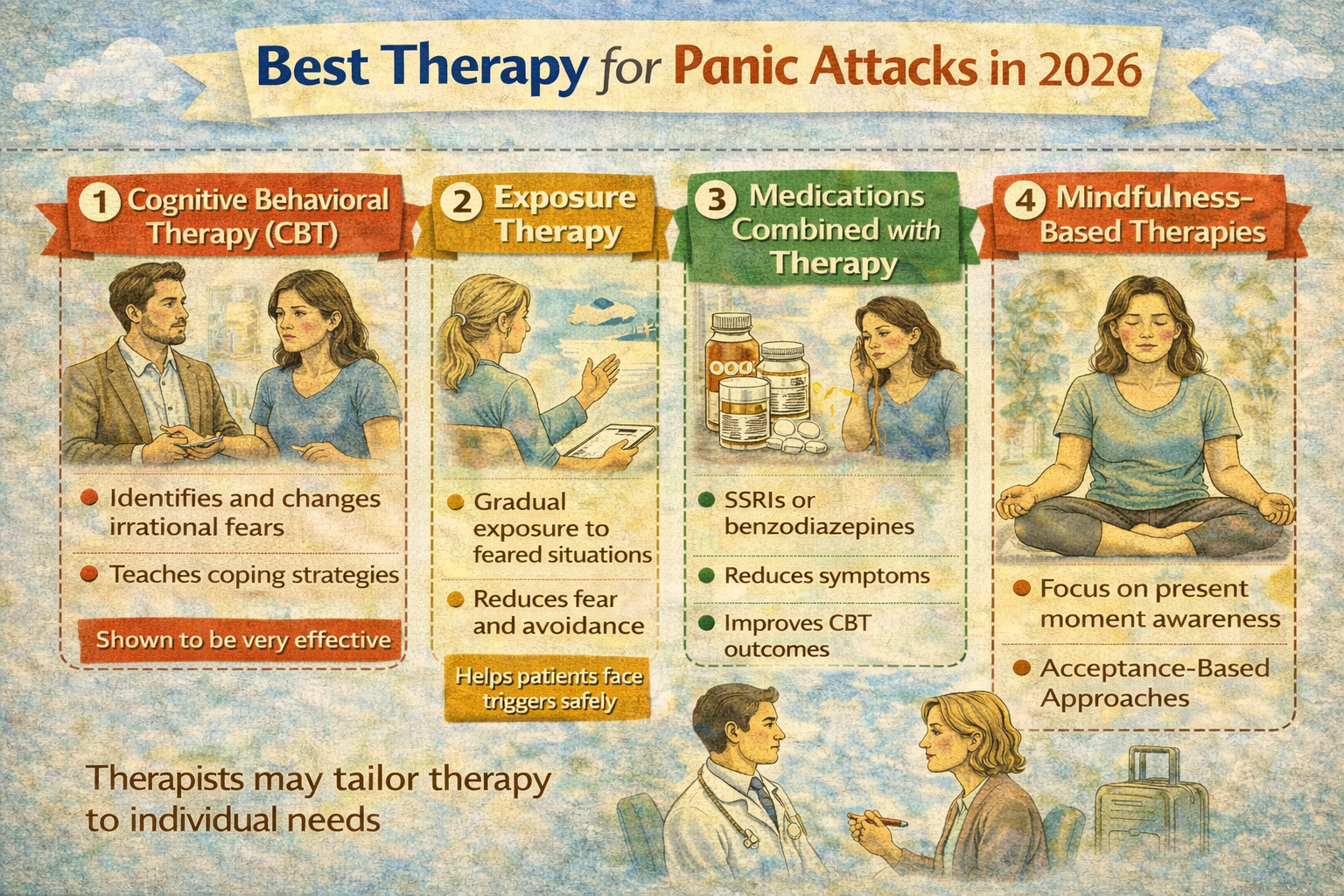
According to Mayo Clinic and APA guidelines, psychotherapy — particularly CBT — is the preferred first-choice treatment for most people with panic disorder. Therapy is recommended when symptoms interfere with daily life, even if medication is also considered.
Pro Tip:
Many people mistake panic symptoms for a medical emergency the first few times. Keeping a simple symptom log (time, triggers, intensity) can help you and your therapist identify patterns faster.
For a broader foundation, see our guide on Signs of Mental Health Issues: The Ultimate Guide to Panic Attacks: Causes, Symptoms & How to Overcome Them for Good (2026)
Why the Best Therapy for Panic Attacks Matters in 2026
Choosing the right therapy for panic attacks can transform your life far beyond simply reducing attacks. In 2026, with refined protocols and digital tools, outcomes are stronger than ever.
Long-Term Remission Rates
Research shows that proper therapy achieves 70-90% long-term remission rates, compared to medication alone, which often sees higher relapse when discontinued.
Reduced Need for Medication
Many individuals successfully taper off or reduce reliance on SSRIs after completing targeted therapy, as they gain skills to manage sensations independently.
Improved Quality of Life
People return to work, travel, social events, and activities they once avoided. Relationships strengthen when fear no longer controls decisions.
Before/After Graphic Suggestion (alt: “benefits of best therapy for panic attacks 2026”)
Research Shows:
A 2025 unified meta-analysis in JAMA Psychiatry confirmed large effect sizes for CBT in treating panic disorder, often outperforming other approaches in sustained results.
Cognitive Behavioral Therapy (CBT) for Panic Attacks – The Gold Standard
CBT remains the most researched and recommended therapy for panic attacks in 2026. It teaches you to change unhelpful thought patterns and behaviors that fuel the panic cycle.
CBT for Panic Attacks Core Components
- Cognitive restructuring: Challenge catastrophic thoughts like “I’m having a heart attack.”
- Interoceptive exposure: Safely recreate bodily sensations.
- Behavioral experiments: Test fears in real situations.
Intensive & Short-Term CBT Formats in 2026
The Bergen 4-Day Treatment (B4DT), a concentrated exposure-based CBT delivered over four consecutive days, has shown remarkable results. In a 2025 follow-up study, patients experienced dramatic symptom reduction, with 90% in remission at 18 months.
Success Rates and Timeline
Most people notice improvement within 4-8 weeks, with significant relief in 3-4 months. Large effect sizes appear consistently across 2025 meta-analyses.
Step-by-Step CBT Flowchart Suggestion (alt: “cbt for panic attacks process”)
For practical breathing support during early stages, explore our guide to Breathing Exercises for Anxiety Stress.
Expert Insight:
“CBT doesn’t just reduce panic attacks — it rewires how you relate to bodily sensations,” notes experts in the 2025 APA Monitor on intensive formats.
How Exposure Therapy for Panic Attacks Works Step-by-Step
Exposure therapy is a core part of CBT and one of the most powerful tools for overcoming panic.
Interoceptive Exposure Techniques
You deliberately bring on sensations safely: running in place, spinning in a chair, or breathing through a straw. This proves the sensations are tolerable.
In-Vivo and Imaginal Exposure
Build a fear hierarchy. Start with mildly avoided situations and gradually face them while using coping skills.
Virtual Reality Exposure Options in 2026
Blended VR protocols allow controlled practice of triggers like crowded spaces or driving.
Exposure Hierarchy Table Suggestion (alt: “exposure therapy for panic attacks hierarchy”)
Important:
Exposure should always be guided by a trained professional. Never attempt intense exposures alone if symptoms are severe.
Mindfulness Therapy for Panic Attacks and Natural Approaches
Mindfulness-based approaches complement CBT by teaching present-moment awareness without judgment.
Mindfulness-Based Cognitive Therapy (MBCT) for Panic Attacks
Recent studies (2023-2025) show MBCT helps reduce attack frequency and is sometimes comparable to medication for maintaining gains in anxiety symptoms.
Daily Mindfulness Practices That Reduce Attack Frequency
- Body scans to notice sensations without panic
- 3-minute breathing space during early warning signs
Online Therapy for Panic Attacks – Is It Right for You?
In 2026, online options make high-quality therapy for panic attacks more accessible than ever.
Blended & App-Based CBT Platforms in 2026
Recent RCTs show remote CBT produces large effect sizes, often comparable to in-person when structured well and therapist-supported.
How to Choose the Best Online Therapy for Panic Attacks
Look for licensed therapists, programs with panic-specific tracks, and platforms offering video + app support.
Laptop with Therapy Session Suggestion (alt: “online therapy for panic attacks 2026”)
Many people benefit from vetted platforms that include dedicated panic disorder modules.
Other Effective Therapy Techniques for Panic Attacks
Acceptance and Commitment Therapy (ACT)
Helps you accept sensations while committing to value-driven actions.
Brief Psychodynamic Approaches
Explore underlying patterns contributing to anxiety sensitivity.
Exercise as Interoceptive Exposure (2026 research)
Moderate aerobic activity serves as natural exposure while boosting mood.
How to Find the Best Psychologist for Panic Attacks
Credentials and Panic Disorder Specialization
Seek licensed psychologists or therapists with specific training in anxiety disorders and CBT certification.
Questions to Ask in First Session
- “How much experience do you have treating panic disorder?”
- “Do you use exposure techniques?”
- “What is your approach if I have a panic attack during session?”
Scientific Evidence & Research on Therapy for Panic Attacks
Clinical Studies
A 2025 meta-analysis confirmed large effect sizes for CBT in panic disorder. The Bergen 4-Day Treatment study (Eide et al., 2025) reported 90% remission at 18-month follow-up.
Expert Opinions
Mayo Clinic states psychotherapy is an effective first-choice treatment. APA guidelines continue to endorse CBT as gold standard.
Statistical Data
- 2.7% past-year U.S. prevalence (NIMH)
- Up to 90% remission with intensive CBT protocols
Common Mistakes to Avoid When Seeking Therapy for Panic Attacks
Mistake #1: Expecting Instant Results
Therapy builds skills over weeks. Rushing leads to frustration; realistic timelines prevent dropout.
Mistake #2: Stopping at Medication Only
Medications help quickly but skills from therapy provide lasting protection.
Mistake #3: Choosing a General Therapist Without Panic Experience
Specialization matters for effective exposure work.
Mistake #4: Avoiding Exposure Work
Frequently Asked Questions (FAQs)
What is the best therapy for panic attacks in 2026?
Cognitive Behavioral Therapy (CBT), particularly with exposure elements, remains the gold standard according to APA and Mayo Clinic guidelines. It consistently shows the strongest long-term results across large-scale studies.
How long does CBT for panic attacks take to work?
Many people notice reductions in attack frequency within 4-8 weeks, with major improvements often seen by 12-16 weeks. Intensive formats like Bergen 4-Day can accelerate this timeline dramatically.
Is online therapy for panic attacks as effective as in-person?
Yes, well-structured remote CBT shows large effect sizes comparable to face-to-face in recent meta-analyses, especially when it includes therapist support and exposure guidance.
Can exposure therapy for panic attacks make symptoms worse?
Temporary increases in discomfort can occur early on, but under professional guidance this is a normal and necessary part of learning. Symptoms typically decrease with continued practice.
What is the difference between panic attacks and panic disorder?
Panic attacks are sudden episodes of intense fear. Panic disorder involves recurrent attacks plus ongoing fear of more attacks or major behavior changes to avoid them.
Should I combine therapy with medication?
Many people benefit from short-term medication alongside therapy. Discuss options with your provider — therapy often allows eventual tapering of medication.
How do I find a therapist specializing in panic attacks near me?
Use Psychology Today, your insurance portal, or university clinics. Ask specifically about CBT training and experience with panic disorder.
Conclusion
The most effective therapy for panic attacks in 2026 combines proven CBT techniques, strategic exposure, and supportive mindfulness practices. These approaches don’t just reduce attacks — they restore confidence, freedom, and joy in daily living.
You now have a clear roadmap. The next step is simple: reach out to a licensed mental health professional experienced in panic disorder. Whether through in-person sessions, online platforms, or intensive programs, help is available and highly effective.
Medical Disclaimer:
This article is for informational and educational purposes only and does not constitute medical advice. Always consult with a qualified healthcare professional before making any changes to your mental health treatment. If you’re in crisis, call or text 988 or visit your nearest emergency room.