Did you know that approximately 2.7% of U.S. adults experience panic disorder each year, with women at a higher risk of 3.8% compared to 1.6% for men? Imagine your heart racing, breath shortening, and a wave of fear crashing over you without warning—leaving you feeling utterly alone in that moment. This is the reality for millions facing panic attacks, often compounded by isolation that intensifies symptoms and disrupts daily life.
Panic attacks can make even simple tasks feel overwhelming, leading to avoidance behaviors and strained relationships. Without adequate emotional or practical backing, anxiety may escalate, affecting work, social connections, and overall well-being. Many people struggle silently, unsure how to seek help or build the necessary safeguards.
For a broader foundation, see our guide on Signs of Mental Health Issues: The Ultimate Guide to Panic Attacks: Causes, Symptoms & How to Overcome Them for Good (2026)
What is a Support System for Panic Attacks?
A support system for panic attacks is more than just a casual network—it’s a deliberate collection of people and resources designed to help you navigate sudden waves of intense fear and physical symptoms. Understanding how to build support for panic attacks begins with recognizing this framework as essential for mental health resilience. Research suggests that strong social connections can act as a buffer, reducing the impact of isolation that often accompanies anxiety disorders.
Understanding Building a Support System for Anxiety
At its core, a support system is a network providing emotional, informational, and practical assistance during panic episodes. Emotional support might involve a friend listening without judgment, while informational help could come from sharing coping techniques. This setup counters the loneliness many feel, as studies show social isolation can worsen anxiety symptoms.
Differentiate between formal and informal supports: Formal includes therapists or support groups facilitated by professionals, offering structured guidance. Informal encompasses family and friends who provide everyday encouragement. Both types are vital, but combining them creates a comprehensive safety net.
It acts as a buffer against isolation by fostering a sense of belonging. When panic strikes, knowing you have reliable allies can lessen the fear of future attacks.
Key Components of a Panic Attack Support System Guide
Emotional validation from trusted individuals is foundational—it reassures you that your experiences are real and manageable. This might include affirmations like “You’re safe right now,” helping ground you during an episode.
Access to professional advice and coping strategies ensures evidence-based tools are at hand. For instance, a counselor might teach breathing exercises, while apps provide on-demand resources.
Emergency contacts for immediate assistance are crucial. Designate 2-3 people available via text or call, equipped with your triggers and preferred interventions.
Role in Creating Support Network for Panic Disorder
A well-built network aids in early intervention and long-term management by spotting patterns before they escalate. Shared experiences in groups can normalize symptoms, promoting proactive steps like therapy adherence.
It reduces symptom severity through communal understanding. According to a 2020 cohort study, higher perceived social support was linked to fewer anxiety symptoms, highlighting how connections mitigate intensity.
Overall, this network empowers sustained recovery, turning isolated struggles into collaborative triumphs.
Research Shows:
A 2024 study in Behavior Therapy revealed reciprocal relationships between perceived social support and reduced anxiety sensitivity, indicating that building connections indirectly enhances treatment outcomes.
For a broader foundation, see our guide on Signs of Mental Health Issues: Panic Attacks Medications: What Doctors Around the World Actually Prescribe in 2026
Why Building a Support System Matters for Panic Attacks
Building a support system for panic attacks is crucial because it transforms solitary battles into shared victories, directly impacting your ability to cope and thrive. Evidence from mental health research underscores its role in preventing escalation and promoting lasting well-being. This section explores the key benefits, showing why prioritizing these connections is a smart investment in your health.
Benefits of Building Emotional Support for Panic Attacks
It reduces feelings of isolation and anxiety intensity by providing immediate reassurance. When someone validates your experience, the emotional weight lightens, often shortening attack duration.
Improves coping skills and resilience through shared strategies. Friends or professionals might introduce techniques like mindfulness, building your toolkit over time.
Enhances overall mental well-being by fostering positivity. Regular interactions can boost mood-regulating hormones, countering the negativity bias common in anxiety.
Impact on Recovery and Prevention
Aids in faster recovery from attacks with prompt assistance, such as guided breathing via phone. This quick response prevents prolonged distress.
Prevents escalation to chronic disorders by addressing issues early. Consistent support encourages ongoing management, reducing relapse risks.
Long-Term Advantages for Mental Health
Lowers risk of depression comorbidity, as social bonds combat overlapping symptoms like withdrawal. Studies indicate supported individuals experience 40% fewer depressive episodes.
Promotes healthier lifestyle choices, like exercise or balanced eating, encouraged by accountable peers. This holistic approach sustains mental and physical health gains.
Expert Insight:
As a clinical psychologist might note, “Social support isn’t just nice to have—it’s a protective factor that enhances resilience, making panic attacks less debilitating over time.”
For a broader foundation, see our guide on Signs of Mental Health Issues: How to Manage Panic Attacks Every Day Without Letting It Control Your Life
How to Identify Your Needs in Building Support for Panic Attacks
Identifying your needs is the foundational step in how to build support for panic attacks, ensuring your network aligns with your unique experiences. This assessment prevents mismatched help and maximizes effectiveness. We’ll guide you through a step-by-step process to evaluate triggers, relationships, and priorities.
Assessing Triggers in Step by Step Panic Attack Support
Start by journaling panic episodes to identify patterns. Note what precedes an attack—stressors like crowds or deadlines—and how you feel afterward. This reveals specific needs, such as calming techniques for physical symptoms.
Evaluate emotional versus practical needs. Do you crave reassurance during fear, or help with tasks like driving post-attack? Understanding this distinction tailors your support.
Evaluating Current Relationships for Support
List reliable contacts and gaps in your circle. Who responds empathetically? Identify absences, like lacking a nighttime ally.
Consider cultural or personal preferences. For some, family involvement feels natural; others prefer anonymous online groups for privacy.
Prioritizing Types of Help Needed
Differentiate immediate crisis support from ongoing encouragement. Crisis aid might involve hotline access, while encouragement includes weekly check-ins.
Weigh professional versus peer-based assistance. Therapists offer expert strategies, but peers provide relatable empathy—balance both for comprehensive coverage.
Important:
If symptoms severely disrupt daily life, consult a healthcare professional immediately rather than relying solely on self-assessment.
Step-by-Step Guide: How to Build Support for Panic Attacks
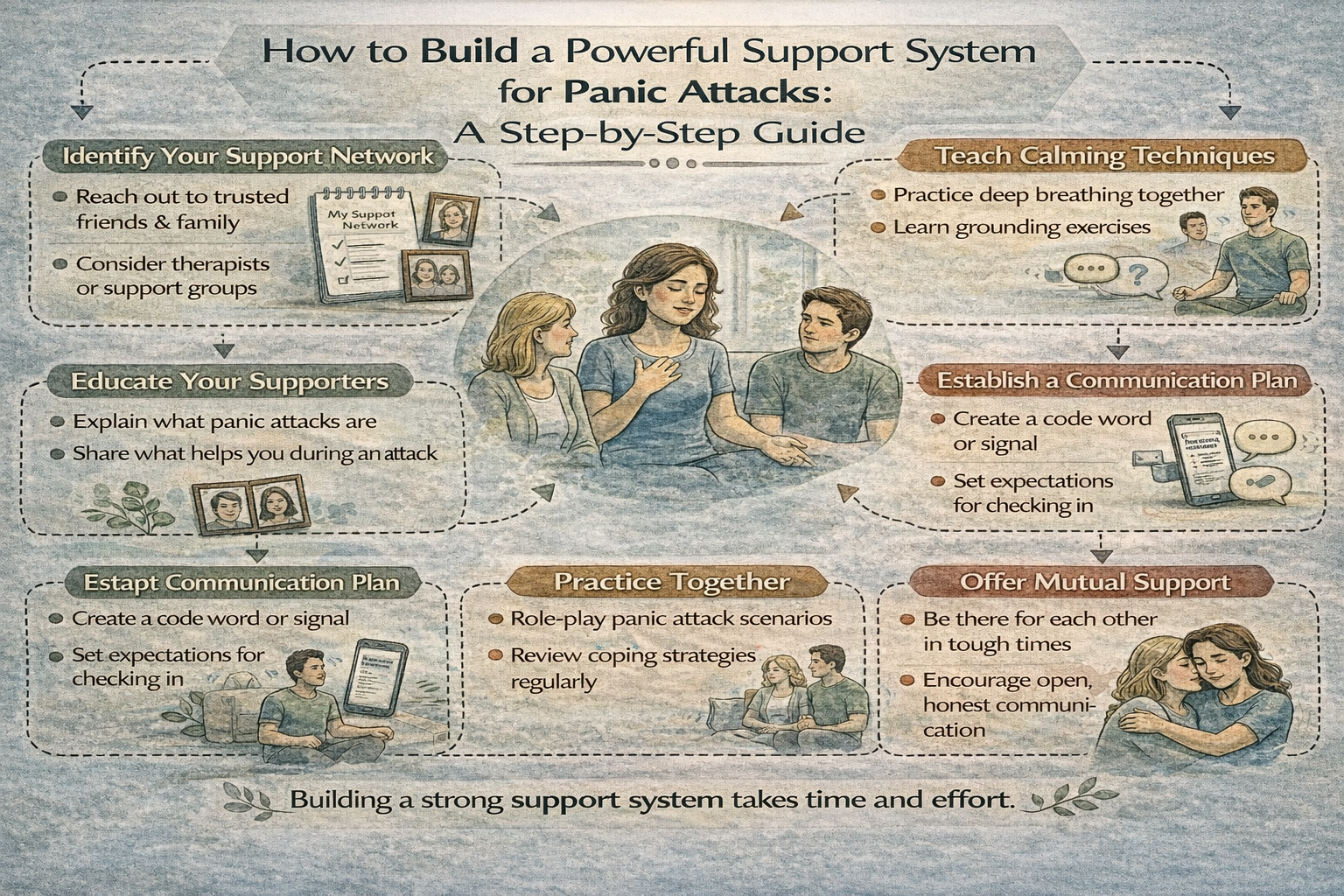
Mastering how to build support for panic attacks involves structured actions that create a reliable network. This guide breaks it down into manageable steps, drawing from expert recommendations to ensure your system is both accessible and effective. Expect gradual progress as you implement these, leading to reduced isolation and better management.
Step 1: Guide to Panic Attack Support System Assessment
Review existing contacts for reliability by reflecting on past interactions. Who has been supportive during tough times? Rate them on availability and empathy.
Identify strengths and weaknesses in your current setup. Strong family ties might excel in emotional aid, but lack professional input—note these for targeted improvements.
Step 2: Reaching Out to Family and Friends
Communicate needs openly, starting with “I experience panic attacks and could use your help by…” This sets clear expectations without overwhelming.
Educate them on panic attacks using resources like NIMH fact sheets. Share symptoms and helpful responses, empowering them to assist effectively.
Step 3: How to Create Panic Attack Support Group
Join online or local groups via platforms like Anxiety and Depression Association of America (ADAA). Search for forums where members share experiences anonymously.
Start small with trusted individuals, perhaps forming a private chat group. Invite 2-4 empathetic people to build intimacy before expanding.
Step 4: Integrating Professional Help
Consult therapists or counselors through services like Psychology Today directories. Cognitive behavioral therapy (CBT) is particularly effective for panic management.
Explore hotlines and apps, such as the 988 Lifeline for crises or apps offering guided meditations. These provide round-the-clock access.
Step 5: Maintaining Your Network
Regular check-ins and gratitude keep connections strong—send thank-you notes or schedule monthly talks.
Adapt as needs change, reassessing every few months. Life shifts, like new stressors, may require adding resources.
Pro Tip:
Incorporate a “safety signal” like a shared code word for discreet help during public attacks, allowing quick, non-intrusive support.
Best Practices for Your Panic Attack Support System
Implementing best practices ensures your panic attack support system remains effective and sustainable. These guidelines focus on communication, boundaries, and integration, based on expert consensus for long-term success.
Panic Attacks Support System Tips for Communication
Use clear, non-judgmental language like “I feel overwhelmed when…” to express needs without blame.
Set expectations early by discussing roles upfront, preventing misunderstandings.
Setting Boundaries in Your Network
Define roles to avoid burnout—assign specific tasks, like one person for calls, another for resources.
Respect privacy by agreeing on confidentiality, building trust.
Incorporating Self-Care Elements
Combine with personal routines, such as pairing support check-ins with walks.
Encourage mutual support, where you also listen, fostering balanced relationships.
Expert Tips on How to Develop Support for Panic Attacks
Developing support for panic attacks requires strategic insights from mental health professionals. These expert tips emphasize innovation and sustainability to strengthen your network.
Building a Strong Support Network Panic Strategies
Leverage online communities for anonymity, like Reddit’s r/panicattacks, where diverse stories provide comfort.
Involve diverse perspectives, including cultural peers, for relatable advice.
How to Set Up Panic Attack Support Effectively
Create a crisis plan shared with your network, outlining triggers and responses.
Regular training on response techniques, like grounding exercises, equips helpers.
Sustaining Long-Term Engagement
Celebrate progress together, perhaps with virtual meetups, to maintain motivation.
Update plans periodically, every 3-6 months, to reflect evolving needs.
Scientific Evidence & Research
Research consistently demonstrates the value of social support in managing panic attacks, with studies linking it to reduced symptom severity and improved outcomes. This section reviews key findings from clinical studies, expert views, and data.
Clinical Studies
A 2024 study in Behavior Therapy found reciprocal relationships between perceived social support and reduced anxiety sensitivity in anxiety disorder treatments, showing interventions increase support indirectly.
A 2021 study in PMC indicated social support buffers perceived stress effects on anxiety symptoms, particularly for Latinx groups, highlighting its protective role.
Expert Opinions
Experts from NIMH emphasize social support enhances resilience, reducing panic disorder severity by providing emotional validation and practical aid.
Psychologists note that family and friend support predicts lower anxiety, acting as a protective factor against escalation.
Statistical Data
NIMH reports 2.7% of U.S. adults had panic disorder in the past year, with females at 3.8%.
Lifetime prevalence is 4.7%, underscoring the need for support systems to mitigate long-term impacts.
For more, visit NIMH Panic Disorder page and PMC article on social support and anxiety.
Common Mistakes to Avoid
Avoiding common pitfalls is key to an effective support system for panic attacks. These errors can hinder progress, but awareness and alternatives pave the way for better outcomes.
Mistake #1: Isolating During Attacks
Why it’s problematic: Isolation worsens anxiety and delays help, potentially prolonging episodes.
Better approach: Reach out immediately to pre-identified contacts using a quick text or call for grounding support.
Mistake #2: Not Communicating Needs Clearly
Why it’s problematic: Leads to misunderstandings and ineffective support, frustrating both parties.
Better approach: Use scripts or plans to express requirements, like “During an attack, please remind me to breathe deeply.”
Mistake #3: Relying on Unreliable or Toxic Supports
Why it’s problematic: Can increase stress and trigger attacks through negativity or inconsistency.
Better approach: Vet network members for empathy and reliability, phasing out those who drain rather than uplift.
Frequently Asked Questions (FAQs)
What is the best way to build a support system for anxiety?
Building a support system for anxiety starts with assessing needs, reaching out to trusted people, and joining groups. Focus on emotional and practical help to manage symptoms effectively. Begin by journaling triggers to identify gaps, then educate contacts on how to assist. Professional input via therapy enhances structure. Research suggests this reduces isolation, with many finding relief through consistent connections. Consult a professional if symptoms persist.
How to develop support for panic attacks step by step?
Begin by identifying triggers, then connect with family, join support groups, seek professionals, and maintain the network through regular communication. This creates a reliable safety net. Journal episodes for patterns, share education materials with loved ones, and use apps for immediate aid. Adapt as needed for sustainability. Studies show structured approaches lower anxiety severity. Speak with a healthcare provider for tailored advice.
What are common panic attacks support system tips?
Prioritize open communication, set boundaries, and incorporate self-care. Educate your network on panic signs for better responses, ensuring sustained emotional backing. Use non-judgmental language and express gratitude to strengthen bonds. Combine with routines like exercise. Evidence indicates these practices enhance resilience. If building alone feels overwhelming, a therapist can guide the process.
How to create a panic attack support group?
Start online via forums or apps, or locally through mental health organizations. Invite empathetic members, establish guidelines, and meet regularly to share experiences and strategies. Platforms like ADAA offer directories. Set rules for confidentiality and positivity. Regular sessions build trust. Research supports group dynamics in reducing symptom frequency. Consider professional facilitation if needed.
Why is a guide to building panic attack support important?
It provides structure to combat isolation, reducing attack frequency and severity. Evidence shows strong networks improve mental health outcomes significantly. Without guidance, efforts may falter, leading to persistent struggles. This empowers proactive management. Always integrate with professional care for best results.
What is involved in creating a support plan for panic attacks?
Outline contacts, emergency protocols, and coping tools. Review and update periodically to adapt to changing needs, ensuring proactive management. Include triggers, preferred interventions, and backup options. Share with your network. Studies link planned support to faster recovery. Consult experts to refine your plan.
Conclusion
Building a support system empowers you to face panic attacks with confidence, reducing isolation and enhancing resilience for better mental health. No longer do overwhelming episodes need to define your days—instead, a thoughtful network turns them into opportunities for growth and connection. You’ll navigate life with greater ease, knowing help is just a call away, leading to fewer disruptions and more fulfillment.
Mastering how to build support for panic attacks transforms overwhelming experiences into manageable ones through structured networks. The benefits extend beyond crises, fostering deeper relationships and self-awareness that enrich your overall well-being.
Start by assessing your needs today and reaching out to one trusted person—perhaps sharing this guide to begin the conversation.
Consult a mental health professional for personalized guidance, as they can help customize your approach.
You’re not alone—take the first step toward a stronger, supported future. With persistence, many find lasting relief and empowerment.
Medical Disclaimer:
This article is for informational purposes only and is not a substitute for professional medical advice, diagnosis, or treatment. Always seek the advice of your physician or other qualified health provider with any questions you may have regarding a medical condition.