It is 3 AM. You jolt awake gasping, heart pounding, chest tight, convinced you are dying. No nightmare triggered it. This is a nocturnal panic attack, and poor sleep is often the hidden driver.
The link between poor sleep and panic attacks is bidirectional and well-documented. Up to 71 percent of people with panic disorder experience these nighttime episodes. Insomnia raises the risk of anxiety disorders by a factor of 3.23 according to a 2019 meta-analysis. The cycle worsens both conditions fast and leaves millions exhausted and terrified.
For a broader foundation, see our guide on Signs of Mental Health Issues: The Ultimate Guide to Panic Attacks: Causes, Symptoms & How to Overcome Them for Good (2026)
What Is the Link Between Poor Sleep and Panic Attacks?
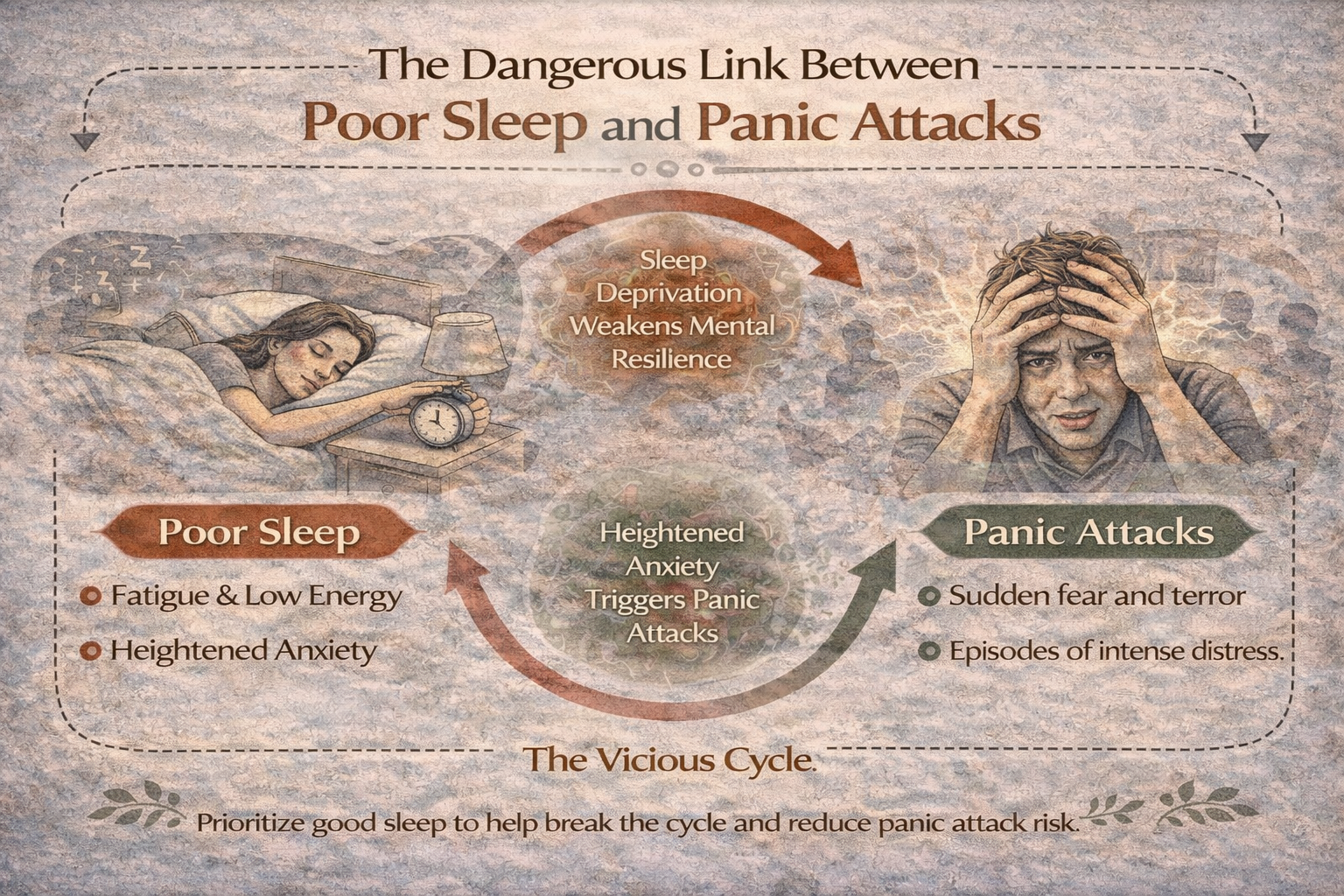
The link between poor sleep and panic attacks works in both directions. Poor sleep fuels panic. Panic destroys sleep.
The Bidirectional Mechanism
Poor sleep heightens amygdala reactivity and lowers the emotional regulation threshold. Even one night of restricted sleep increases amygdala response to negative stimuli by more than 60 percent. Panic attacks then trigger hyperarousal, cortisol spikes, and fragmented sleep that reduces deep restorative stages. The result is a vicious cycle: less slow-wave sleep impairs fear extinction the next day, which raises daytime anxiety and sets up the next nighttime episode.
Key Differences: Daytime vs. Nighttime Panic
Nighttime panic attacks lack obvious triggers and often occur in non-REM sleep stages 2 or 3. You wake fully alert and terrified. Between 44 and 71 percent of panic disorder patients report at least one lifetime episode. This rate is far higher than the roughly 5 percent seen in the general population. Daytime attacks usually have identifiable cues or build gradually.
Who Is Most at Risk
Highest risk applies to people with existing insomnia, high anxiety sensitivity, shift work, or undiagnosed sleep disorders. Women and those with comorbid depression face elevated odds.
Pro Tip:
Track sleep-panic episodes for one week in a simple diary. Record bedtime, wake time, caffeine cutoff, and exact attack timing. Patterns appear quickly and guide fixes more effectively than guesswork.
For a broader foundation, see our guide on Signs of Mental Health Issues: Best Panic Attacks Treatment Options in 2026: Evidence-Based Options That Actually Work
What Causes Nighttime Panic Attacks?
Nighttime panic attacks stem from multiple overlapping factors tied directly to poor sleep.
Physiological Triggers from Poor Sleep
Sleep deprivation elevates stress hormones and disrupts GABA and serotonin balance. This lowers the panic threshold. Reduced slow-wave sleep impairs the brain’s overnight fear-extinction process.
Behavioral and Environmental Factors
Irregular schedules, caffeine after 2 PM, blue light exposure, and conditioned arousal turn the bed into a worry zone. Many people develop sleep anxiety after repeated attacks, which makes bedtime itself a trigger.
Medical Contributors
Undiagnosed obstructive sleep apnea, restless legs syndrome, acid reflux, or thyroid issues can mimic or provoke panic-like symptoms at night. These conditions must be ruled out by a doctor.
Research Shows:
A 2019 meta-analysis by Hertenstein et al. found insomnia predicts new anxiety disorders with an odds ratio of 3.23. Batterham et al. (2012) linked sleep disturbance specifically to panic disorder onset with an odds ratio of 1.62.
Expert Insight:
Sleep specialists note that treating underlying sleep fragmentation often reduces panic frequency more effectively than anxiety-focused therapy alone in comorbid cases.
How Poor Sleep Worsens Anxiety Symptoms
One bad night raises anticipatory anxiety and emotional reactivity the next day. Berkeley and Stanford studies show heightened amygdala response and reduced prefrontal regulation after sleep loss.
Immediate Effects After One Bad Night
You feel more irritable and scan for threats more often. These changes appear after even mild sleep restriction.
Long-Term Impact on Panic Threshold
Chronic insomnia predicts new panic disorder onset in longitudinal data. The common assumption that one good night fixes everything is incorrect. Improvements require 4-8 weeks of consistent habits. Partial fixes deliver partial results.
The Effects of Bad Sleep on Anxiety and Panic
Bad sleep produces both physical and emotional damage that feeds panic.
Physical and Cognitive Toll
You experience heightened heart-rate variability problems, daytime fatigue, and concentration loss. Somatic symptoms such as dizziness or shortness of breath become more frequent and mimic panic.
Emotional Spiral
Panic attacks increase in frequency. Avoidance behaviors develop, such as fear of sleeping alone or in the dark. Secondary worry about sleep itself grows stronger.
For a broader foundation, see our guide on Signs of Mental Health Issues: How Exercise Reduces Panic Attacks: Science-Backed Benefits You Need to Know About
How to Break the Sleep-Panic Cycle
Follow these steps in order. Consistency matters more than perfection.
Step 1 – Track and Stabilize Schedule
Set a fixed bedtime and wake time every day, including weekends. Aim for 7-9 hours. Use the same wind-down routine each night.
Step 2 – Implement Stimulus Control
Reserve the bed for sleep and sex only. If awake longer than 20 minutes, get up and do a boring activity in dim light until sleepy. This breaks the bed-anxiety association.
Step 3 – Add Relaxation Protocol
Practice progressive muscle relaxation or 4-7-8 breathing for 10 minutes before bed. These techniques directly counter hyperarousal.
Many people find success with evidence-based CBT-I apps such as Sleepio. These programs have clinical trial backing and show measurable improvements in 6-8 weeks for most users.
Start a free sleep diary tonight. Patterns will show exactly where to intervene first.
Fixing Sleep to Reduce Panic Attacks: Proven Strategies
Targeted sleep changes directly lower panic frequency when applied consistently.
Core Sleep Hygiene for Panic Sufferers
Keep the bedroom cool (60-67 °F), dark, and quiet. Remove screens 60 minutes before bed. Exercise daily but finish at least 3 hours before bedtime. Limit caffeine after noon and avoid alcohol when possible.
Targeted Remedies for Sleep-Related Panic
Journal worries 30-60 minutes before bed, never in bed. Limit evening fluids. Magnesium glycinate may help some people with muscle relaxation, but consult your doctor first.
Important:
Natural remedies support behavioral changes but do not replace them or professional care for clinical panic.
Scientific Evidence & Research on the Link Between Poor Sleep and Panic Attacks
Multiple peer-reviewed studies confirm the connection.
Clinical Studies
The 2007 Yoo et al. study from UC Berkeley showed one night of sleep deprivation increases amygdala reactivity by more than 60 percent. Batterham et al. (2012) found sleep disturbance predicts panic onset. The 2019 Hertenstein meta-analysis reported an odds ratio of 3.23 for new anxiety disorders after insomnia.
Expert Opinions
CBT-I reduces both insomnia and panic symptoms across multiple randomized controlled trials. APA and sleep society guidelines list it as first-line treatment over medication for long-term management.
Statistical Data
Between 44 and 71 percent of panic disorder patients report nocturnal attacks. Chronic insomnia roughly triples the risk for new anxiety disorders.
Common Mistakes to Avoid When Managing the Link Between Poor Sleep and Panic Attacks
Three mistakes repeatedly stall progress.
Mistake #1: Using Alcohol or Sleeping Pills as Quick Fixes
Alcohol fragments sleep architecture and causes rebound anxiety. Most sleeping pills worsen long-term insomnia and panic. Replace them with CBT-I or stimulus control.
Mistake #2: Staying in Bed Worrying
Remaining in bed while awake strengthens the bed-panic association. Get up after 20 minutes and do a neutral activity until sleepy.
Mistake #3: Ignoring Daytime Habits
Caffeine, long naps, irregular schedules, and zero morning light exposure sabotage nighttime results. Maintain a strict routine plus 30 minutes of morning sunlight.
Frequently Asked Questions (FAQs)
What is the link between poor sleep and panic attacks?
The link is bidirectional. Poor sleep heightens amygdala reactivity and lowers the panic threshold. Panic attacks cause hyperarousal and cortisol release that fragment sleep. Targeted sleep interventions reduce both conditions. Meta-analyses confirm the connection is often causal.
Can sleep deprivation cause panic attacks?
Yes. Even one night raises anticipatory anxiety and amygdala response in vulnerable people. Chronic sleep deprivation strongly predicts new panic disorder onset. It does not cause panic in everyone but significantly elevates risk.
How do I stop nighttime panic attacks?
Use stimulus control, a consistent sleep schedule, pre-bed relaxation such as 4-7-8 breathing, and rule out medical causes like apnea. CBT-I has the strongest evidence. See your doctor first.
Does better sleep hygiene really reduce panic?
Yes. Consistent hygiene combined with CBT-I cuts symptoms significantly within weeks for most people with sleep-related panic. Hygiene alone helps mild cases; structured programs work better for moderate to severe.
When should I seek professional help for sleep panic?
Seek help if attacks occur weekly, interfere with daily function, or you suspect sleep apnea or depression. Start with your primary care doctor or a sleep specialist. Do not wait until symptoms become unbearable.
Are natural remedies enough to fix the link between poor sleep and panic attacks?
Natural remedies can help as support but are usually insufficient alone for clinical-level issues. Combine them with behavioral strategies and professional guidance. No supplement replaces CBT-I or medical evaluation.
Conclusion
Addressing the link between poor sleep and panic attacks lowers panic frequency, improves emotional regulation, and breaks the cycle when done systematically. You now have the precise mechanisms, evidence, and tools.
Tonight set a fixed bedtime and practice 4-7-8 breathing. Track results for seven days. That single change reveals the next adjustment needed.
Medical Disclaimer
This article is for informational and educational purposes only and does not constitute medical advice. The information provided should not be used for diagnosing or treating a health problem or disease. Always consult with a qualified healthcare professional before making any changes to your mental health treatment, starting new medications, or trying new supplements. If you are experiencing a mental health crisis, please call the 988 Suicide & Crisis Lifeline or visit your nearest emergency room. The content is based on current research and expert consensus as of 2026, but medical knowledge evolves. Always verify with your healthcare provider.