Anxiety disorders affect 19.1% of U.S. adults each year. Panic disorder alone hits 2.7% — roughly 7 million people — with women affected more than men. A panic attack can strike without warning: heart racing over 100 beats per minute, chest tight, dizziness, terror you are dying or losing control. These episodes peak in 10 minutes and leave you drained and afraid of the next one.
You do not have to live this way. This article shows exactly how to prevent panic attacks using 7 methods backed by clinical research. You will get step-by-step instructions, no medication required, plus trigger tracking and workplace tactics. These approaches come from NIMH, ADAA, and peer-reviewed meta-analyses. Results improve with consistent use.
For a broader foundation, see our guide on Signs of Mental Health Issues: The Ultimate Guide to Panic Attacks: Causes, Symptoms & How to Overcome Them for Good (2026)
What Are Panic Attacks?
A panic attack is a sudden surge of intense fear or discomfort that reaches a peak within minutes. Symptoms include at least four of the following: palpitations, sweating, trembling, shortness of breath, choking sensation, chest pain, nausea, dizziness, chills or hot flashes, numbness, derealization, fear of losing control, or fear of dying.
Core Symptoms Most People Miss
Physical signs often mimic a heart attack: heart rate spikes above 100 bpm, sweating, dizziness. Cognitive signs include detachment from reality or certainty of imminent death. Attacks last 5-30 minutes but the fear of recurrence can last days.
Panic Attacks vs Everyday Anxiety
Panic attacks start suddenly with no obvious trigger. Everyday anxiety builds gradually around specific worries. Here is a clear comparison:
| Aspect | Panic Attack | Everyday Anxiety |
| Onset | Sudden, out of the blue | Gradual |
| Peak time | Within 10 minutes | Builds over hours |
| Physical intensity | Severe (feels life-threatening) | Mild to moderate |
| Trigger | Often none | Usually identifiable |
| Duration | 5-30 minutes | Can last all day |
Who Experiences Them Most in 2026
Adults 30-44 show highest rates. Women are twice as likely as men. Adolescents aged 17-18 also report 3.3% lifetime prevalence with severe impairment in many cases.
Symptom infographic alt text: panic attack symptoms checklist
Why Preventing Panic Attacks Matters in 2026
Untreated panic attacks disrupt work, relationships, and physical health. People miss days at work, avoid driving or meetings, and develop agoraphobia in up to 30% of cases.
Real Cost to Work and Relationships
Frequent attacks lower productivity and strain personal connections. Fear of public episodes leads to isolation.
Long-Term Physical Health Risks
Chronic activation of the fight-or-flight system raises blood pressure and inflammation over time.
Measurable Gains from Consistent Prevention
Research shows 50-70% symptom reduction with regular practice of the methods below. See our guide on how to avoid panic attacks at work later in this article.
For a broader foundation, see our guide on Signs of Mental Health Issues: 10 Proven Self-Help Strategies for Panic Attacks Recommended by Real Therapists
How to Prevent Panic Attacks by Identifying Triggers
You cannot prevent what you cannot see. Tracking reveals patterns.
Top Triggers in 2026
Work deadlines, constant news, caffeine after noon, poor sleep, and hormonal shifts top the list for most adults.
7-Day Trigger Tracking Method
- Carry a note app or small notebook.
- Log date, time, situation, physical sensations, thoughts, caffeine/alcohol intake, sleep hours.
- Rate intensity 1-10.
- Review daily for patterns.
Building Your Personal Trigger Map
After 7 days, group entries into categories: physical (caffeine, sleep), situational (meetings), emotional (worry loops). Use this map to apply prevention methods early.
For a broader foundation, see our guide on Signs of Mental Health Issues:Stress Management Techniques That Prevent Panic Attacks From Spiraling Out of Control
How to Prevent Panic Attacks Naturally
Natural methods work long-term because they address root patterns instead of masking symptoms.
Why Natural Methods Outperform Medication Long-Term
Medication can help acute cases but does not teach skills. Skills from breathing, CBT, and lifestyle changes reduce recurrence rates by 50-70% after 6-12 months.
Who Should Start Here
Anyone with mild to moderate attacks and no safety issues (e.g., heart conditions). Check with your doctor first.
When to Add Professional Support
If attacks occur weekly, interfere with daily life, or include suicidal thoughts, see a licensed therapist or psychiatrist immediately.
Pro Tip:
Many people skip tracking and jump straight to breathing. Tracking first doubles your success rate because you catch attacks early.
The 7 Evidence-Based Methods to Prevent Panic Attacks in 2026
Practice one method daily for two weeks before adding another. Consistency beats intensity.
1. Breathing Techniques Prevent Panic Attacks
Slow diaphragmatic breathing counters hyperventilation. Sit or lie down. Place one hand on belly. Inhale slowly through nose for 4 seconds (belly rises). Hold 4 seconds. Exhale through mouth for 6-8 seconds. Repeat 10 times.
Research Shows: A 2023 systematic review of 58 studies found 75% of slow breathing interventions significantly reduced anxiety and stress scores when sessions lasted at least 5 minutes with proper training.
2. Stop Panic Attacks Without Medication with CBT Techniques
CBT rewires catastrophic thoughts. When symptoms start, ask: “What is the evidence this is a heart attack?” Write the thought, rate belief 0-100%, then list counter-evidence.
Use a thought record: Situation | Thought | Emotion | Evidence for | Evidence against | Balanced thought.
3. Mindfulness to Prevent Panic Attacks
Mindfulness-Based Cognitive Therapy (MBCT) reduces fear of sensations. Daily 10-minute practice: Sit quietly. Notice breath. When mind wanders to worry, label it “thinking” and return to breath.
Expert Insight: Studies from 2010-2021 show MBCT as adjunct lowers panic severity and intolerance of uncertainty.
4. Grounding Exercises Panic Attack Prevention
Use 5-4-3-2-1 when symptoms rise: Name 5 things you see, 4 you can touch, 3 you hear, 2 you smell, 1 you taste. This pulls attention to the present.
5. Lifestyle Changes Prevent Panic Attacks
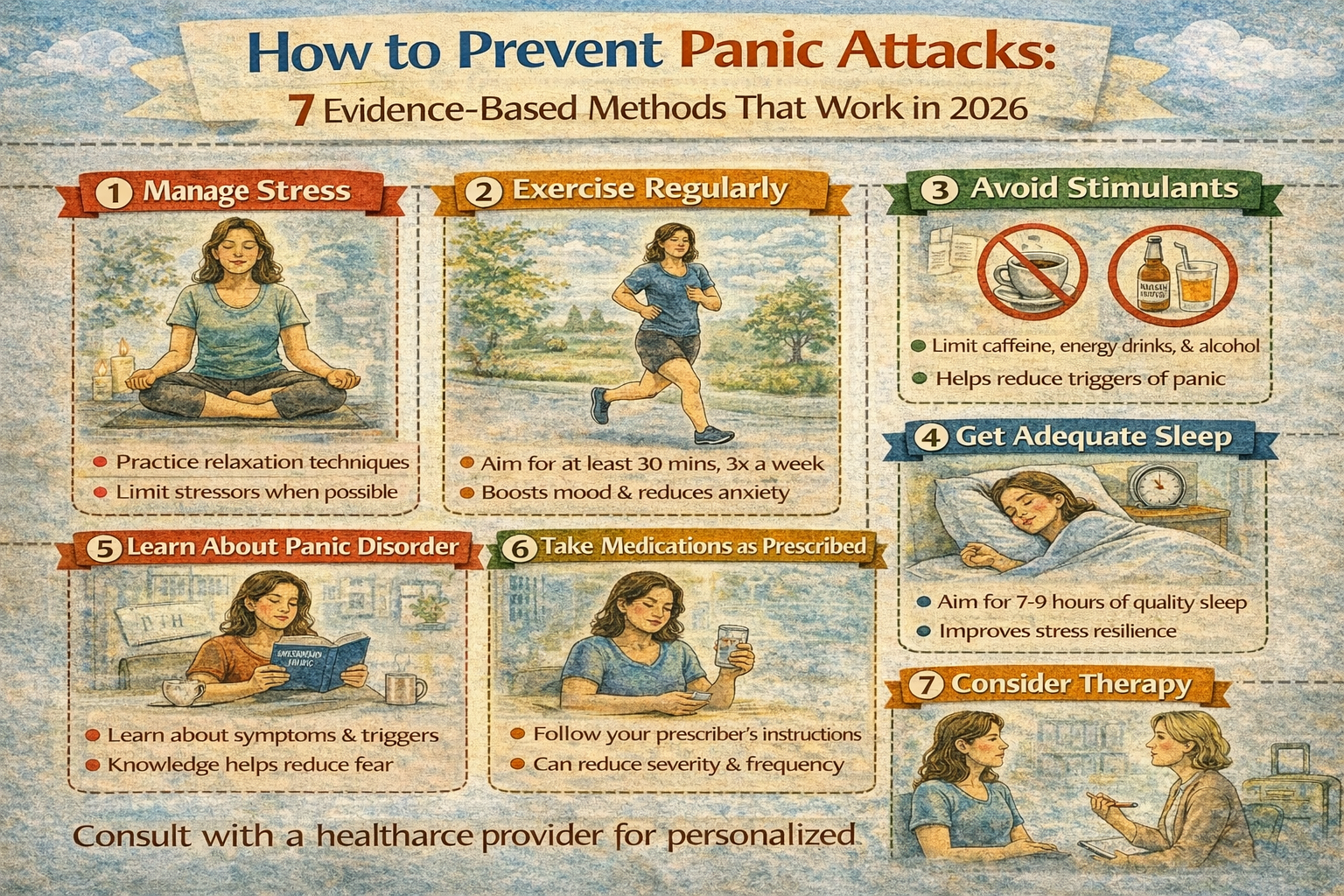
- Exercise: 150 minutes moderate aerobic weekly (brisk walking). A 2026 study found brief intense intermittent exercise reduced panic symptoms more than relaxation.
- Caffeine: Cut after noon.
- Sleep: Consistent 7-9 hours, no screens 1 hour before bed.
6. Progressive Muscle Relaxation
Tense then release muscle groups from toes to head. Hold tension 5 seconds, release 10 seconds. Full sequence takes 8-10 minutes. Systematic reviews confirm it lowers anxiety and improves sleep.
7. Quick Techniques to Prevent Panic Attacks On-Demand
Combine: Start 4-7-8 breathing + 5-4-3-2-1 grounding + cold water on wrists. Use at first sign of rising symptoms.
7 evidence-based methods to prevent panic attacks 2026 alt text
Important:
These methods reduce frequency and intensity for most people but do not replace therapy for severe or frequent attacks.
How to Avoid Panic Attacks at Work
Desk-friendly tools keep you functional.
Desk-Friendly Breathing and Grounding
Do 4-7-8 breathing with eyes open. Grip chair arms for grounding touch.
Pre-Meeting and High-Stress Protocols
5 minutes before: 2 minutes slow breathing + quick thought record. Keep water and protein snack handy.
Long-Term Workplace Prevention Plan
Schedule movement breaks every 90 minutes. Track work triggers in your journal. Discuss flexible options with HR if needed.
Professional at desk using discreet breathing alt text: how to avoid panic attacks at work breathing technique
Scientific Evidence & Research
Clinical Studies
A 2023 network meta-analysis showed CBT delivery formats produce large reductions in panic symptoms. The 2023 Brain Sciences review of breathing practices found 75% effectiveness when guidelines followed. 2024-2026 reviews confirm progressive muscle relaxation and aerobic exercise lower anxiety scores significantly.
Expert Opinions
NIMH and ADAA state structured skills training plus lifestyle changes form first-line non-drug approaches.
Statistical Outcomes
Consistent practice yields 50-70% reduction in attack frequency across studies.
Common Mistakes to Avoid
Mistake 1: Practicing Only During Attacks
Why it fails: Skills need repetition to rewire the nervous system. Better approach: Daily 10-minute practice regardless of symptoms.
Mistake 2: Inconsistent Daily Practice
Why it fails: Benefits fade without repetition. Better approach: Link practice to existing habit (e.g., after brushing teeth).
Mistake 3: Avoiding All Triggers Permanently
Why it fails: Avoidance strengthens fear. Better approach: Gradual exposure using CBT tools.
Mistake 4: Expecting Overnight Results
Why it fails: Brain changes take 2-6 weeks. Better approach: Track small wins weekly.
Frequently Asked Questions (FAQs)
How to prevent panic attacks naturally?
Start with daily slow diaphragmatic breathing, trigger tracking, and consistent exercise plus sleep hygiene. These build resilience without medication for many people. Combine with CBT thought records for faster results. Track progress for 14 days.
Can you stop panic attacks without medication?
Yes, for mild to moderate cases. Evidence-based skills like breathing, grounding, and CBT reduce frequency by 50-70% in studies. Severe or frequent attacks may still need professional evaluation.
What are the best breathing techniques prevent panic attacks?
Slow diaphragmatic breathing (4-second inhale, 6-8 second exhale) and 4-7-8 method. Practice 5-10 minutes daily. Avoid short or fast-only sessions.
How does mindfulness to prevent panic attacks work?
It reduces fear of bodily sensations by training non-judgmental awareness. MBCT studies show lower panic severity and better long-term outcomes as adjunct to other care.
What lifestyle changes prevent panic attacks most effectively?
Limit caffeine after noon, get 150 minutes weekly moderate exercise, maintain 7-9 hours sleep. These changes stabilize physiology and cut triggers.
How to avoid panic attacks at work?
Use discreet breathing, quick grounding, pre-meeting thought records, and scheduled movement breaks. Track work-specific triggers.
Do these methods work for prevent recurring panic attacks?
Yes. Consistent use of the 7 methods plus trigger management reduces recurrence rates significantly according to meta-analyses.
Conclusion
The 7 methods — breathing, CBT, mindfulness, grounding, lifestyle changes, progressive muscle relaxation, and on-demand techniques — give you practical control. Research shows they cut attack frequency and intensity when practiced daily.
Pick one method today. Practice it every day for the next 14 days. Log results. Adjust based on what reduces your symptoms most.
Medical Disclaimer:
This article is for informational and educational purposes only and does not constitute medical advice. The information provided should not be used for diagnosing or treating a health problem or disease. Always consult with a qualified healthcare professional before making any changes to your mental health treatment. If you are experiencing a mental health crisis, please call the 988 Suicide & Crisis Lifeline or visit your nearest emergency room.