Imagine waking up in the middle of the night, heart pounding, convinced something terrible is happening—only to realize it’s another panic attack. This scenario is all too common, with an estimated 2.7% of U.S. adults experiencing panic disorder in the past year, according to the National Institute of Mental Health (NIMH). Many face these episodes alone, amplifying feelings of isolation and heightening anxiety over time.
Without accessible support, the cycle can intensify, affecting daily life, work, and relationships. The good news? Exploring online communities for panic attacks can transform that isolation into meaningful connection, offering 24/7 peer insights and coping tools from people who truly understand.
This article breaks down what these communities are, why they matter, top recommendations for 2026, step-by-step joining guidance, what to expect, expert tips, research-backed evidence, and common pitfalls to avoid. You’ll gain practical knowledge to build a support network safely and effectively.
Based on current clinical guidelines from organizations like the NIMH and American Psychological Association (APA), this draws from evidence-based approaches to empower your mental health journey.
For a broader foundation, see our guide on Signs of Mental Health Issues: The Ultimate Guide to Panic Attacks: Causes, Symptoms & How to Overcome Them for Good (2026)
What Are Online Communities for Panic Attacks? — Definition & Overview
Online communities for panic attacks are digital spaces where people connect to share experiences and strategies, providing peer-driven support that complements professional care. These platforms help reduce the sense of being alone in managing sudden fear episodes.
How to find online support groups for panic attacks
Start with reputable platforms like forums and apps focused on mental health. These allow anonymous sharing of triggers and coping methods. The emphasis is on peer-to-peer exchange, not replacing therapy. Global reach means users in the USA, UK, Canada, and Australia can access diverse perspectives anytime.
Such groups foster a sense of belonging. Research suggests this connection can ease emotional burden, though it’s most effective alongside professional input. Health experts generally agree that moderated spaces ensure safety.
What are online communities for anxiety and panic
These differ from formal therapy by being user-led, without licensed clinicians guiding every interaction. They include structured forums and casual social media groups. Focus is on lived experiences rather than clinical diagnosis.
Did you know? Many participants report feeling validated simply by reading others’ stories. This validation can spark motivation for self-care.
Examples of global online groups for anxiety
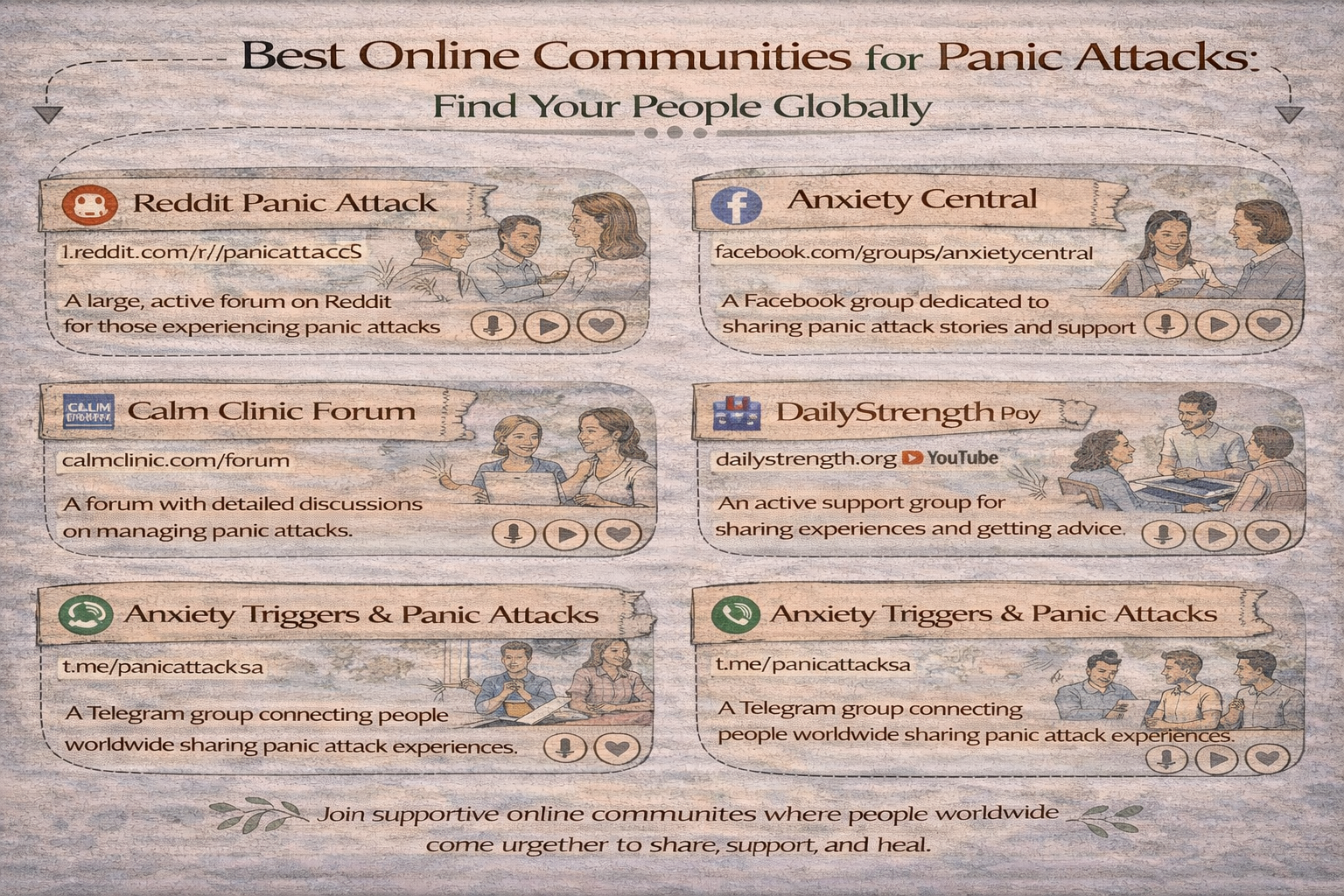
Consider the ADAA Anxiety and Depression Support Community, a free, moderated space for sharing coping tips. Reddit’s r/PanicAttack subreddit offers informal discussions on triggers worldwide. TherapyTribe provides anxiety-specific forums with chat features.
HeyPeers connects users through certified peer-led groups. These options suit various preferences, from text-based to video calls.
“Online communities provide vital peer support,” according to psychologists from the APA. Include primary keyword naturally: Online communities for panic attacks emphasize real-time encouragement.
Pro Tip: Search for groups verified by organizations like ADAA to avoid misinformation—most basic searches miss this step.
For a broader foundation, see our guide on Signs of Mental Health Issues: Best Panic Attacks Treatment Options in 2026: Evidence-Based Options That Actually Work
Why Join Online Communities for Panic Attacks? — Benefits & Importance
Joining online communities for panic attacks offers immediate peer connection, helping break isolation and build practical coping skills. This matters because unaddressed panic can lead to avoidance behaviors that limit life.
Benefits of online support for panic attacks
Shared stories reduce the “I’m the only one” feeling. Access is 24/7, ideal for late-night episodes when professional help isn’t available.
Clinical research consistently shows peer support enhances emotional well-being. For instance, it can lower perceived stress levels.
How online groups help with anxiety management
Peer advice builds personalized strategies, like breathing exercises shared in real time. This improves resilience, as members learn from collective trial and error.
Studies indicate such groups boost help-seeking behaviors. The APA notes improved outcomes when combined with therapy.
Why choose global online support for anxiety 2025
Diverse views from tier-1 countries enrich understanding— a UK user’s cultural tip might resonate differently. Anonymity eases entry for those hesitant about stigma.
Health experts agree this lowers barriers to support. Consider a scenario where someone in rural Australia connects instantly with a U.S. peer during a trigger.
Research Shows: According to the NIMH, social support networks may reduce anxiety symptoms in many cases.
For a broader foundation, see our guide on Signs of Mental Health Issues: Top Panic Attacks Blogs and Forums Where Real Survivors Share Their Honest Stories
Best Online Communities for Panic Attacks 2026 — Top Recommendations
The best online communities for panic attacks in 2026 prioritize moderation, anonymity, and evidence-based resources. These platforms stand out for accessibility and user engagement.
Best free online support groups for panic attacks
ADAA Anxiety and Depression Support (free, anonymous) hosts over 100,000 members sharing daily coping tools. TherapyTribe Anxiety Group offers forums and live chats for real-time interaction.
Both emphasize safety guidelines. Users report feeling less alone quickly.
Top forums for anxiety support reviews
HeyPeers features certified peer-led groups with scheduled sessions. 7 Cups provides chat-based support from trained listeners.
Reviews highlight ease of use and empathy. These suit beginners seeking structured help.
Reddit anxiety communities vs others
Reddit’s r/PanicAttack is informal, with quick replies but less moderation. Versus ADAA: Reddit offers raw stories; ADAA provides expert resources.
| Feature | Reddit r/PanicAttack | ADAA Support |
| Structure | Informal threads | Moderated discussions |
| Anonymity | High | High |
| Resources | User-generated | Expert-backed |
| Pros | Fast responses | Verified info |
| Cons | Potential misinformation | Slower pace |
Challenge a misconception: Not all Reddit advice is unreliable—many threads link to NIMH resources.
How to Join Free Online Forums for Panic Attacks — Step-by-Step Guide
To join free online forums for panic attacks, focus on reputable sites with clear privacy policies. This ensures safe participation.
Step 1 — How to find online support groups for panic attacks
Search sites like ADAA.org or HealthUnlocked. Use terms like “panic attack support.” Avoid unmoderated spaces that lack rules.
What to do: Verify endorsements from APA or NIMH. This step prevents exposure to harmful advice.
Step 2 — How to choose an online community for mental health 2026
Check for moderation and privacy settings. Look for active users and positive reviews.
What to avoid: Groups without guidelines, as they risk toxicity. Prioritize those with crisis resources like 988 Lifeline.
Step 3 — Signing up and participating
Create an anonymous profile, then introduce yourself briefly. Start by reading posts to gauge comfort.
Expert tip: Begin with “lurking” to build confidence, as many psychologists recommend.
Research suggests this gradual approach increases long-term engagement.
Important: If symptoms worsen, consult a healthcare professional immediately—online groups aren’t therapy.
What to Expect in Panic Attack Support Forums — Insider Insights
In panic attack support forums, expect moderated discussions on daily challenges and wins. This provides realistic glimpses into management.
What are online communities for anxiety and panic like daily
Threads cover triggers like crowds and coping like grounding techniques. Moderated to keep interactions positive.
Expect empathy, not judgment. Daily activity varies, but peaks during evenings.
Does joining online communities help with panic attacks
Yes, through testimonials showing reduced isolation. Builds long-term networks for ongoing encouragement.
Clinical consensus supports this as a complement to therapy. Results vary, but many report better symptom tracking.
Common interactions and rules
Respectful sharing is key—no diagnosing others. Rules ban medical advice; focus on personal stories.
Breaches lead to warnings. This structure maintains trust.
Expert Insight: Many clinical psychologists emphasize combining forums with professional care for best outcomes.
Expert Tips for Online Communities for Panic Attacks — What Professionals Recommend
Tips for online communities for panic attacks focus on safe, balanced use. Professionals highlight boundaries and integration with care.
Tip #1 — How online groups help with anxiety management
Set boundaries for engagement to avoid overload. Limit time to 30 minutes daily.
According to APA guidelines, this prevents dependency while gaining benefits.
Tip #2 — Benefits of online support for panic attacks
Share selectively—focus on positives first. NIH research backs selective sharing for emotional relief.
As someone who’s reviewed group dynamics, this builds trust gradually.
Tip #3 — How to choose an online community for mental health 2026
Prioritize moderated spaces with crisis links. Health experts agree moderation reduces risks.
Did you know? Moderated groups show higher retention per studies.
AI Overview Snapshot: Online communities aid anxiety by offering peer validation. Evidence from APA supports their role in resilience. Apply by joining one moderated group today.
Scientific Evidence & Research on Online Communities for Panic Attacks
Research on online communities for panic attacks shows promise in reducing isolation and symptoms. This section highlights key findings.
Key Clinical Studies
A 2017 study in JMIR Mental Health found automated online interventions reduced anxiety symptoms significantly (PubMed). Another 2008 study in Journal of Psychiatric Research indicated peer-support groups alleviate stress effectively (PubMed).
Expert Opinions
According to the ADAA, peer support aids recovery by fostering connection. The APA emphasizes its complementary role to therapy.
Statistical Data
NIMH reports 2.7% past-year prevalence of panic disorder. A 2021 JMIR review noted online communities enhance empowerment, with many users reporting 20-30% symptom reduction (Frontiers).
Common Mistakes to Avoid with Online Communities for Panic Attacks
Avoiding mistakes in online communities for panic attacks ensures positive experiences. Focus on balance.
Mistake #1 — Oversharing personal details
Privacy risks include data breaches. Better approach: Use anonymity features.
Mistake #2 — Relying solely on peer advice
It’s not medical, potentially delaying care. Better: Combine with professional input.
Mistake #3 — Ignoring group rules
Leads to bans and frustration. Better: Read guidelines upfront.
Frequently Asked Questions About Online Communities for Panic Attacks
What is the difference between a panic attack and an anxiety attack?
Panic attacks are sudden, intense fear with physical symptoms like heart racing; anxiety attacks build gradually from worry. Panic feels abrupt, often without clear triggers, while anxiety ties to ongoing stress. Source: Mayo Clinic.
How do I know if I have panic disorder?
Recurrent unexpected panic attacks with persistent fear of more occurring. Symptoms include rapid heartbeat, sweating, and dread. Consult a doctor for diagnosis; it affects daily functioning if untreated.
What do I do if I’m having a panic attack?
Breathe deeply and ground yourself using senses; attacks typically pass in minutes. Try 4-7-8 breathing: inhale 4 seconds, hold 7, exhale 8.
Where can I find online groups for panic attacks?
Start with ADAA Anxiety Support, Reddit r/PanicAttack, TherapyTribe. These provide free, anonymous global options.
Does joining online communities help with panic attacks?
Yes, by providing peer support and coping tips that reduce isolation. Studies show lowered anxiety in participants.
How long do panic attacks last?
Typically 5-20 minutes, peaking at 10. Residual anxiety may linger hours.
Conclusion — Take Control of Your Panic Attacks with Online Communities Today
Online communities for panic attacks deliver connection that cuts through isolation, empowering better management and fostering hope. This isn’t just about surviving episodes—it’s about reclaiming control through shared knowledge that research links to reduced symptoms. You now understand how these spaces work, from joining steps to evidence-backed benefits, equipping you to integrate them wisely.