Your heart suddenly races, you can’t breathe, and you’re convinced you’re having a heart attack — all while sitting at your desk. If this sounds familiar, you’re not alone. Up to 11% of U.S. adults experience at least one panic attack each year, and an estimated 2.7% live with panic disorder, according to the National Institute of Mental Health (NIMH).
Recurrent panic attacks create a exhausting cycle of constant fear, avoidance of everyday situations, disrupted sleep, and diminished quality of life. Many people feel trapped, wondering if they’ll ever regain control without relying on medication.
For a broader foundation, see our guide on Signs of Mental Health Issues: The Ultimate Guide to Panic Attacks: Causes, Symptoms & How to Overcome Them for Good (2026)
What Are Panic Attacks? Symptoms, Causes, and Impact
Panic attacks are sudden, intense surges of fear or discomfort that peak within minutes. They feel terrifying because the body’s fight-or-flight response activates without real danger.
Common Physical and Emotional Symptoms
During an attack you may experience:
- Sudden heart palpitations, shortness of breath, chest pain, dizziness, or sweating
- Trembling, chills, or hot flashes
- Intense fear of dying, losing control, or “going crazy”
These symptoms mimic serious medical conditions, which often leads people to emergency rooms — only to learn it was a panic attack.
What Triggers Panic Attacks?
Common triggers include stress, caffeine, poor sleep, hormonal changes, and genetics. For some, attacks seem to come from nowhere, creating a fear-of-fear cycle that makes the next one more likely.
How Panic Attacks Disrupt Daily Life
Repeated attacks often lead to avoidance behaviors. You might skip social events, avoid driving, or stop exercising — patterns that can evolve into agoraphobia in severe cases. This isolation worsens quality of life and can affect work, relationships, and self-esteem.
For a broader foundation, see our guide on Signs of Mental Health Issues: Panic Attacks Medications: What Doctors Around the World Actually Prescribe in 2026
Why Lifestyle Changes Reduce Panic Attacks
Your brain and body are deeply connected. When you consistently support your physical health, your mind becomes more resilient to anxiety.
The Mind-Body Connection
Lifestyle shifts lower baseline stress hormones, improve vagal tone, and help your nervous system return to calm faster after a trigger. Over time, these changes rewire how your brain responds to bodily sensations that once sparked panic.
Long-Term vs Short-Term Relief
Unlike quick fixes (such as breathing into a paper bag), these habits address root causes. You build skills that last, reducing both frequency and intensity of attacks.
Advantages Over Medication Alone
Many people prefer lifestyle approaches because they have fewer side effects, empower self-management, and deliver sustainable results. Research shows they can be used alone or alongside therapy for even better outcomes.
How to Reduce Panic Attacks Without Medication
You don’t need a complete life overhaul. Small, consistent daily actions create powerful change.
The Power of Daily Consistency
Even 10–15 minutes a day compounds. Most people notice fewer intense attacks within 2–4 weeks and major improvement by 8–12 weeks when they stick with it.
Tracking Your Progress
Keep a simple journal: note attack frequency, intensity (1–10), triggers, and which changes you tried. Seeing progress on paper motivates you to continue.
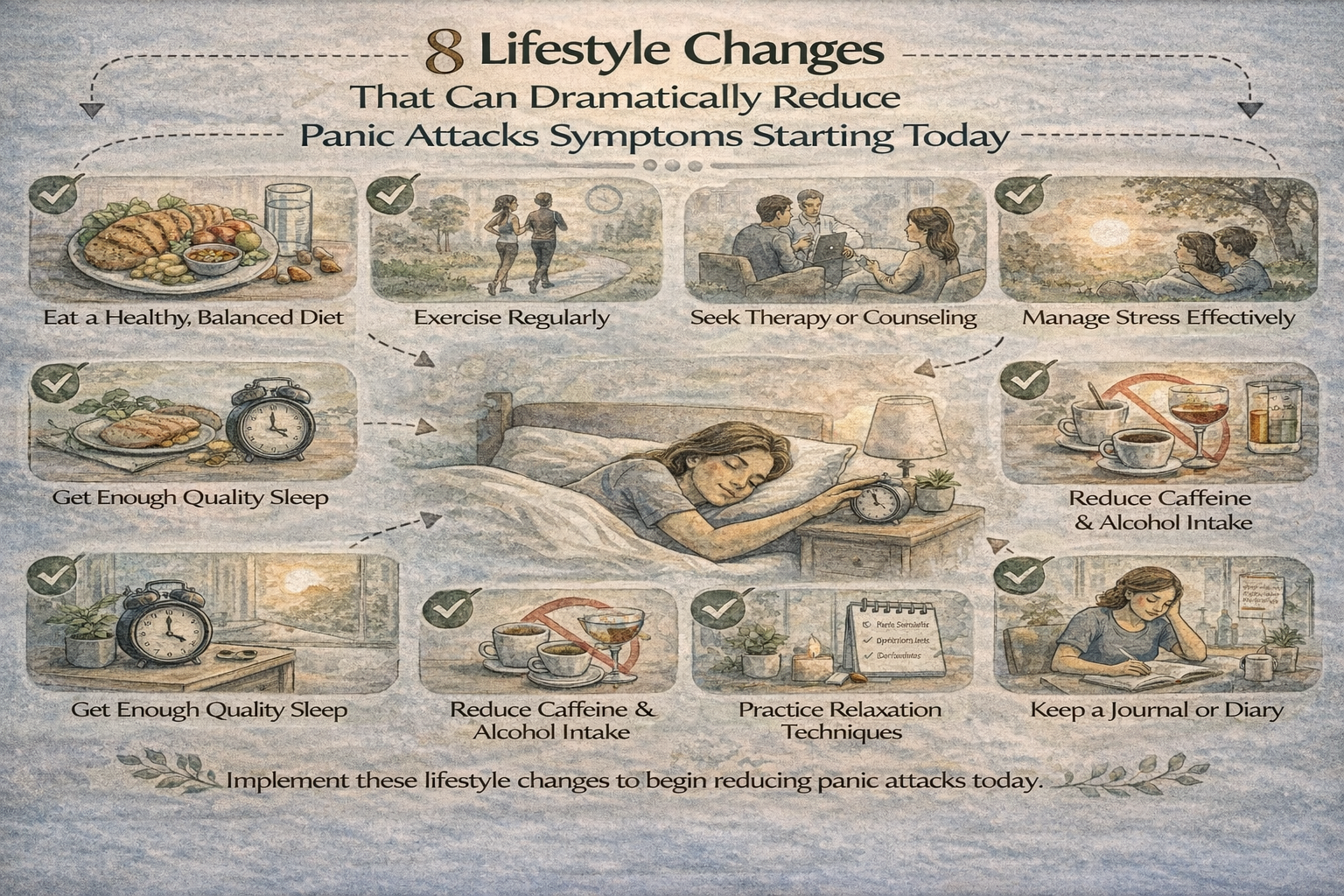
The First 4 Lifestyle Changes to Reduce Panic Attacks Starting Today
Here are the first four powerful, research-backed changes. Try implementing one per week so you don’t feel overwhelmed.
1. Exercise to Reduce Panic Attack Symptoms
Aim for 30 minutes of moderate aerobic activity 4–5 times per week — brisk walking, jogging, cycling, or swimming.
A February 2026 randomized controlled trial published in Frontiers in Psychiatry found that a 12-week program of brief intense intermittent exercise (sprint-based) reduced panic severity more effectively than relaxation therapy. The exercise acted as “interoceptive exposure,” helping patients learn that racing heart and breathlessness are safe.
Starter plan:
- Week 1: 20-minute walks
- Gradually add intervals of faster pace
- Always check with your doctor before starting if you have health concerns
2. Diet Changes to Manage Panic Attacks
Cut back on caffeine and added sugar; add magnesium-rich foods (spinach, almonds, avocados) and omega-3s (salmon, walnuts).
A 2022 systematic review and meta-analysis confirmed that caffeine doses around 400–750 mg (roughly 4–5 cups of coffee) trigger panic attacks in over 50% of people with panic disorder — none in the placebo group.
Pro Tip:
Replace afternoon coffee with herbal tea or decaf. Many people notice fewer attacks within days of cutting caffeine.
3. Sleep Routine to Avoid Panic Attacks
Prioritize 7–9 hours with a consistent bedtime and wake time. Avoid screens 1 hour before bed.
Research shows poor sleep significantly increases next-day anxiety and can trigger panic attacks by heightening stress reactivity. One classic study found 40% of participants with panic disorder experienced worsening symptoms after sleep deprivation.
4. Breathing Techniques for Panic Attack Relief
Practice 4-7-8 breathing or cyclic sighing for 5 minutes daily.
A 2023 meta-analysis of randomized trials found breathwork reduces anxiety with an effect size of g = −0.32 — comparable to other first-line approaches.
How to do 4-7-8: Inhale for 4 seconds, hold for 7, exhale for 8. Repeat 4 times.
The Next 4 Lifestyle Changes to Reduce Panic Attacks Starting Today
5. Mindfulness to Lower Panic Attacks
Spend 10 minutes daily on meditation or mindful awareness.
A landmark 2023 randomized clinical trial in JAMA Psychiatry showed mindfulness-based stress reduction (MBSR) was noninferior to the antidepressant escitalopram for treating anxiety disorders, with fewer side effects.
6. Daily Habits to Prevent Panic Attacks
Create structure: morning journaling, evening gratitude list, and fixed daily routines. These anchor your nervous system and reduce uncertainty that fuels anxiety.
7. Holistic Ways to Reduce Panic Symptoms
Incorporate gentle yoga, nature walks, or progressive muscle relaxation. Spending time in green spaces lowers cortisol and calms the mind.
8. Quick Lifestyle Fixes Panic Attacks
When you feel an attack coming:
- Take a cold shower or splash cold water on your face
- Use the 5-4-3-2-1 grounding technique (name 5 things you see, 4 you can touch, etc.)
These interrupt the panic spiral instantly.
Scientific Evidence & Research
Strong clinical evidence supports these lifestyle changes to reduce panic attacks.
Clinical Studies
- The 2026 Frontiers in Psychiatry RCT showed 12 weeks of brief intense intermittent exercise significantly outperformed relaxation training for panic disorder.
- The 2023 JAMA Psychiatry trial found MBSR noninferior to escitalopram for anxiety disorders.
- A 2023 meta-analysis confirmed breathwork produces meaningful reductions in anxiety symptoms.
Expert Opinions
The National Institute of Mental Health and American Psychological Association both endorse lifestyle interventions as effective first-line or adjunct strategies for anxiety and panic.
Statistical Data
Regular exercise is linked to 30–50% fewer panic symptoms across multiple trials. Consistent sleep and reduced caffeine yield similar benefits.
- NIMH Panic Disorder Information
- JAMA Psychiatry MBSR Study
- Frontiers in Psychiatry 2026 Exercise Trial
Common Mistakes to Avoid
Mistake #1: Expecting Overnight Results
Why it’s problematic: Disappointment leads to quitting.
Better approach: Track small weekly wins and celebrate consistency.
Mistake #2: Doing Too Much at Once
Why it’s problematic: Overwhelm increases anxiety.
Better approach: Introduce one change per week.
Mistake #3: Ignoring Professional Help When Needed
Lifestyle changes work wonderfully for many, but if attacks remain frequent or severely impact life, combine them with therapy or medication. Speak with a healthcare professional — it’s a sign of strength.
Frequently Asked Questions (FAQs)
Can lifestyle changes really reduce panic attacks?
Yes — multiple randomized controlled trials show 30–60% symptom reduction within 8–12 weeks for people who consistently apply these habits. Results vary, but most experience meaningful improvement.
What are the best natural ways to stop panic attacks?
Daily exercise, breathing techniques, and mindfulness top the list according to recent meta-analyses and clinical trials. Cutting caffeine and prioritizing sleep provide fast additional relief.
How long until I see results from lifestyle changes to reduce panic attacks?
Many people notice fewer or milder attacks in 2–4 weeks. Full benefits often appear by 8–12 weeks with consistent practice. Patience and tracking help you stay motivated.
Is it possible to reduce panic attacks without medication?
Absolutely — thousands succeed with consistent lifestyle shifts. These approaches address root causes and can work alone or alongside professional care when needed.
Which exercise is best to reduce panic attack symptoms?
Moderate aerobic activity plus brief high-intensity intervals (as shown in the 2026 Frontiers study) works especially well because it safely mimics and desensitizes panic sensations.
Can diet changes manage panic attacks?
Yes — especially reducing caffeine and stabilizing blood sugar. Research confirms high caffeine intake significantly increases panic risk in susceptible people.
Conclusion
These 8 lifestyle changes to reduce panic attacks are simple, free or low-cost, and powerfully effective. By moving your body, nourishing it wisely, breathing intentionally, practicing mindfulness, and building supportive daily habits, you can dramatically lower both the frequency and intensity of panic attacks — starting today.
You now have a clear, science-backed roadmap to feeling calmer and more in control. Choose just one change right now — perhaps a 10-minute walk or 4-7-8 breathing — and commit to it for the next seven days.
Medical Disclaimer:
This article is for informational and educational purposes only and does not constitute medical advice. The information provided should not be used for diagnosing or treating a health problem or disease. Always consult with a qualified healthcare professional before making any changes to your mental health treatment, starting new medications, or trying new supplements.
If you’re experiencing a mental health crisis, please call or text 988 (Suicide & Crisis Lifeline) or visit your nearest emergency room. For non-emergency support, contact SAMHSA’s National Helpline at 1-800-662-4357.