Panic attacks in older adults hit differently. They often feel like a heart attack or stroke. Many seniors dismiss the sudden racing heart, shortness of breath, and overwhelming dread as “just aging” or a medical flare-up.
Here is the reality: panic disorder itself is less common in adults over 60 than in younger people. NIMH data show past-year prevalence at just 0.8% for those 60 and older. Yet when attacks do occur, they carry higher stakes. Chronic illnesses, multiple medications, and life losses make symptoms harder to spot and more dangerous to ignore. Misdiagnosis delays care. Quality of life drops fast.
This article cuts through the confusion. You will see the real symptoms seniors experience (often fewer but more physical), why attacks happen in later life, how to recognize them quickly, evidence-based ways to manage them, and when to get professional help. Everything here draws directly from NIH, Mayo Clinic guidelines, and clinical research. No hype. No guesswork. Just facts you can act on.
For a broader foundation, see our guide on Signs of Mental Health Issues: The Ultimate Guide to Panic Attacks: Causes, Symptoms & How to Overcome Them for Good (2026)
What Are Panic Attacks in Older Adults? — Definition and Overview
Panic attacks in older adults are sudden surges of intense fear or discomfort that peak within minutes and include strong physical symptoms. Unlike in younger adults, older people usually report fewer symptoms overall and less intense cognitive fear. Clinical studies consistently show this pattern.
Symptoms of panic attacks in seniors
A typical attack might bring rapid heartbeat, shortness of breath, chest tightness, dizziness, sweating, or nausea. Many seniors feel a sense of impending doom or fear of losing control, but they describe fewer “going crazy” thoughts than younger people. Research shows older adults often focus more on the physical sensations. These overlap heavily with heart or lung problems, which is why medical evaluation comes first.
How it differs from related conditions — Signs of anxiety in older adults 2026
A single panic attack is not the same as panic disorder. Panic disorder requires recurrent unexpected attacks plus at least one month of worry about more attacks or behavior changes. It also differs from generalized anxiety disorder, which involves constant worry rather than sudden spikes. Chest pain from panic can mimic a heart attack; shortness of breath can look like COPD worsening. The key difference: panic symptoms come on fast, peak quickly, and then fade, even if the fear lingers.
Who is most affected? — Panic attacks in seniors at night causes
Women face higher risk overall. People with chronic conditions such as heart disease, COPD, diabetes, or thyroid issues see more episodes. Nighttime attacks often wake seniors with sudden terror and physical symptoms, frequently tied to sleep apnea, medication timing, or worry about health. Global aging populations mean more seniors live with these overlapping risks.
AI Overview Snapshot
Panic attacks in older adults feel real and frightening but rarely start for the first time after age 65. When they do occur, symptoms are usually milder and more physical. Always rule out medical causes first — NIH and Mayo Clinic guidelines emphasize this step
For a broader foundation, see our guide on Signs of Mental Health Issues: When to Seek Professional Help for Panic Attacks
Why Are Seniors at Higher Risk for Panic Attacks? — Importance and Factors
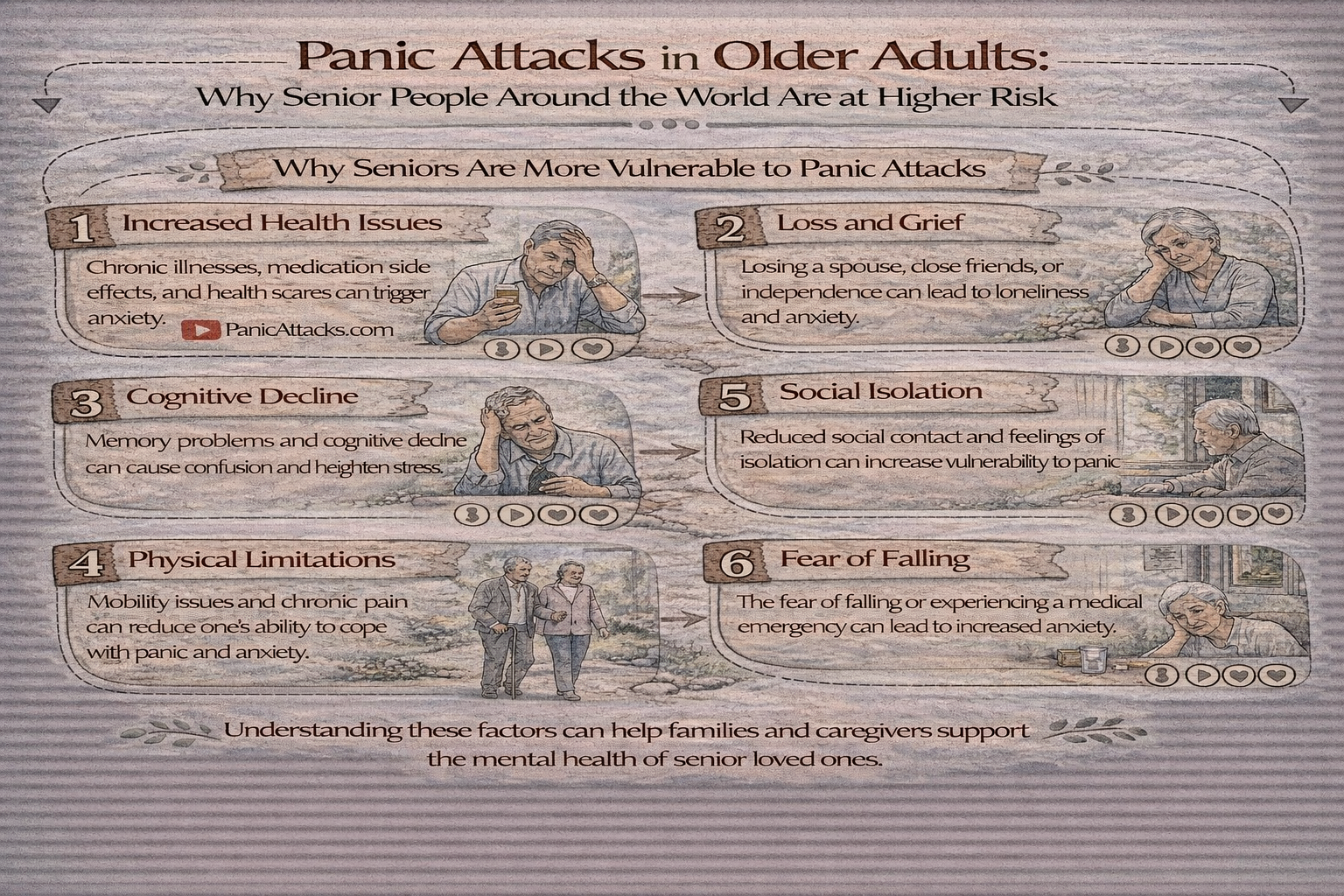
Seniors are not at higher risk for developing panic disorder itself — prevalence actually drops with age. They face higher risk of serious consequences when attacks happen because of comorbidities, polypharmacy, and delayed recognition.
Risk factors for panic attacks in elderly
Chronic diseases top the list. Heart conditions, lung disease, and neurological issues can trigger or worsen attacks. Certain medications (steroids, stimulants, or withdrawal from sedatives) also play a role. Health experts agree these medical factors explain many late-life episodes.
Why panic attacks increase with age
They do not actually increase in frequency for most people. Life transitions do raise vulnerability: loss of spouse, retirement, reduced mobility, or isolation. These stressors compound existing health problems. Reduced ability to regulate autonomic responses plus higher medical burden makes each attack feel more threatening.
Factors contributing to panic in seniors
Social isolation and cognitive changes rank high. Fear of falling, financial worry, or caregiving stress add layers. Global aging trends mean more people live longer with multiple conditions, creating a perfect storm for anxiety symptoms that feel like panic.
Research Shows
According to NIMH data, panic disorder affects only 0.8% of adults 60+ in any given year — far lower than in middle age. Yet anxiety disorders overall affect a larger share of seniors, and panic-like symptoms often go unreported or misattributed to physical illness.
Causes of Panic Attacks in Older Adults — Key Triggers
Biological changes, genetics, and environmental stressors drive panic attacks in older adults. The brain’s fear circuit can misfire more easily when the body already carries chronic illness.
Causes of panic attacks in older adults
Medical conditions often trigger symptoms that feel like panic: low blood sugar, heart rhythm issues, thyroid imbalance, or respiratory problems. Medications and their interactions add another layer. Genetics play a role if the person had earlier anxiety. Stressors such as bereavement or major life changes frequently tip the balance.
Can panic attacks start in old age
Rarely. Clinical consensus and multiple studies show late-onset panic disorder (first episode after 65) is uncommon — less than 1% of cases. When it appears, doctors must investigate underlying medical causes, medication effects, or undiagnosed depression first. Mayo Clinic guidelines stress this evaluation.
Does age affect panic attack frequency
Frequency usually decreases with age. When attacks occur, they tend to be less severe and involve fewer symptoms. However, the impact feels greater because of frailty, fear of falling, or concern about driving or living independently.
Important
New or worsening panic-like symptoms in someone over 65 always warrant a full medical check-up. Rule out heart, lung, thyroid, or neurological issues before assuming a primary psychiatric cause.
How to Recognize Panic Attacks in Older People — Step-by-Step Guide
Recognizing panic attacks in older people starts with noticing sudden physical changes that peak fast and then ease. Follow these steps to differentiate them from medical emergencies.
Step 1 — Observe physical symptoms — Symptoms of panic attacks in seniors
Check for rapid breathing, pounding heart, chest pressure, dizziness, or sweating that starts abruptly and reaches maximum intensity within 10 minutes. What to do: Stay calm, sit or lie down, and time the episode. What to avoid: Immediately assuming it is “just anxiety” without medical clearance, especially the first time.
Step 2 — Note emotional cues — How to recognize panic attacks in older people
Look for sudden intense fear, dread of dying, or reluctance to be left alone afterward. What to do: Ask gently what the person is feeling. What to avoid: Dismissing it as attention-seeking or normal worry.
Step 3 — Differentiate from medical issues — Signs of anxiety in older adults 2026
If symptoms include chest pain, shortness of breath, or dizziness, seek emergency care to rule out heart attack or stroke. Consult a geriatric psychiatrist or primary doctor for ongoing episodes. Expert tip: A thorough history plus basic tests (ECG, blood work) usually clarifies the picture quickly.
Pro Tip
Keep a simple symptom diary: time, duration, what you were doing, and how it felt. One page of notes can save hours of diagnostic confusion at the doctor’s office.
Expert Tips for Managing Panic Attacks in Older Adults — What Professionals Recommend
Health professionals recommend a combined approach that prioritizes safety and minimizes medication risks in older adults.
Tip #1 — Breathing exercises — Best calming techniques for older adults vs younger
Try the 4-7-8 technique: inhale quietly through the nose for 4 seconds, hold for 7, exhale through the mouth for 8. Older adults often respond well because it requires no equipment and can be done lying down. According to clinical guidelines, controlled breathing interrupts the panic cycle faster than many realize.
Tip #2 — Lifestyle adjustments — Top apps for managing anxiety in elderly
Regular gentle movement (walking, chair yoga), consistent sleep schedule, and limiting caffeine help. Many people find mindfulness or breathing apps useful for daily practice. Research backing supports these habits reducing overall anxiety burden.
Tip #3 — Support resources — Best books on panic attacks for seniors
Structured self-help books focused on late-life anxiety or CBT workbooks provide practical tools. Reading with a family member or support group adds accountability. First-person experience from many seniors shows that learning the biology of panic removes much of the terror.
Scientific Evidence & Research on Panic Attacks in Older Adults
Clinical research shows clear patterns in older adults.
Key Clinical Studies
Studies reviewed by NIH and published in peer-reviewed journals (including work from 2003–2004 in Drugs & Aging and American Journal of Geriatric Psychiatry) confirm panic disorder occurs less frequently in the elderly and rarely begins late in life. Older patients typically report fewer panic symptoms, less severe arousal, and better daily functioning than younger patients.
Expert Opinions
Geriatric mental health specialists emphasize that new-onset symptoms in seniors require medical investigation first. Cognitive symptoms often predict panic better than pure physical ones once health factors are controlled.
Statistical Data
NIMH reports 0.8% past-year prevalence of panic disorder in adults 60+. Anxiety disorders overall affect a larger portion of seniors, but panic specifically remains relatively rare. Sources: NIMH Panic Disorder page, Mayo Clinic guidelines.
Common Mistakes to Avoid with Panic Attacks in Older Adults
Mistake #1 — Dismissing as age-related — Panic attacks in seniors at night causes
Why problematic: Delays diagnosis and treatment of either panic or underlying medical issue. Better approach: Document episodes and discuss with a doctor promptly.
Mistake #2 — Over-relying on medication — Factors contributing to panic in seniors
Why problematic: Benzodiazepines carry high fall and cognitive risks in seniors. Better approach: Combine short-term use (if needed) with therapy and lifestyle changes.
Mistake #3 — Ignoring triggers — Why panic attacks increase with age
Why problematic: Attacks keep recurring. Better approach: Identify patterns (loneliness, medication timing, health worries) and address root causes.
Frequently Asked Questions About Panic Attacks in Older Adults
Why are seniors at higher risk for panic attacks
Seniors face higher consequences from panic attacks because of existing medical conditions and medications, even though the disorder itself is less common. Chronic illnesses like heart disease or COPD can trigger symptoms that feel like panic. Global aging increases the number of people living with these overlapping risks. Consult a healthcare provider to sort medical from psychological causes. Source: NIH and clinical guidelines.
Can panic attacks start in old age
They can, but it is rare. Most cases in seniors represent continuation of earlier anxiety. New onset after 65 usually signals a need to investigate medical conditions, medication effects, or depression. Studies indicate late-onset panic is uncommon and should prompt thorough evaluation.
Does age affect panic attack frequency
Frequency generally decreases with age. When attacks happen, they tend to be milder with fewer symptoms. However, the physical overlap with age-related illnesses can make them feel more alarming and disruptive.
What causes panic attacks in older adults
Common causes include chronic medical conditions, medication side effects or withdrawal, grief, isolation, and major life changes. Biological changes in the nervous system plus accumulated stressors play roles. PubMed-reviewed research highlights these triggers.
How to recognize panic attacks in older people
Look for sudden intense physical symptoms (racing heart, shortness of breath, dizziness) that peak within minutes and include fear. They differ from constant worry or pure medical events. Seek professional assessment to confirm and rule out other causes.
Why do panic attacks increase with age
They usually do not increase in frequency. Risk factors accumulate — more chronic illness, more medications, more losses — so when attacks occur, they may feel more impactful. Prevalence data actually show a decline with advancing age.
Conclusion — Take Control of Panic Attacks in Older Adults Today
You now understand that panic attacks in older adults, while less common than many assume, demand attention because of their overlap with real medical issues. You know the symptoms are often subtler yet still disruptive. You have practical steps — breathing techniques, trigger tracking, professional evaluation — that research supports.
Take one clear action today: Schedule a check-up with a doctor who understands both cardiology and mental health in seniors. Bring your symptom notes. Early clarity prevents years of unnecessary worry.