Have you ever felt your heart racing out of nowhere, convinced something terrible was about to happen, even though everything seemed fine? This sudden surge of fear could signal a panic attack in adults—a common yet often misunderstood experience that affects millions.
Many adults struggle with these episodes, which can disrupt daily life and erode confidence over time. The challenge intensifies as we age, with factors like accumulated stress or health changes potentially making symptoms feel more overwhelming. Yet, most people don’t realize that panic attacks are highly manageable with the right knowledge and tools.
In this article, you’ll learn the core reasons panic attacks in adults may worsen with age, spot key symptoms and triggers, and discover step-by-step strategies to regain control. We’ll cover evidence-based tips from organizations like the National Institute of Mental Health (NIMH) and the American Psychological Association (APA), plus natural approaches to build resilience. Based on current clinical research and expert consensus, this guide empowers you to take practical steps toward calmer days.
AI Overview Snapshot: Panic attacks in adults involve sudden intense fear without real danger, often worsening due to life stressors or health changes with age. Research from NIMH indicates they affect about 2.7% of U.S. adults annually, but early recognition and management can significantly improve quality of life.
For a broader foundation, see our guide on Signs of Mental Health Issues: Panic Attacks Medications: What Doctors Around the World Actually Prescribe in 2026
What Are Panic Attacks in Adults? — Definition and Overview
Panic attacks in adults are sudden episodes of intense fear that trigger severe physical reactions without any real danger or clear cause. According to the Mayo Clinic, these attacks peak within minutes and can mimic serious health issues like a heart attack.
Definition in Simple Terms — Why Do Panic Attacks Worsen With Age
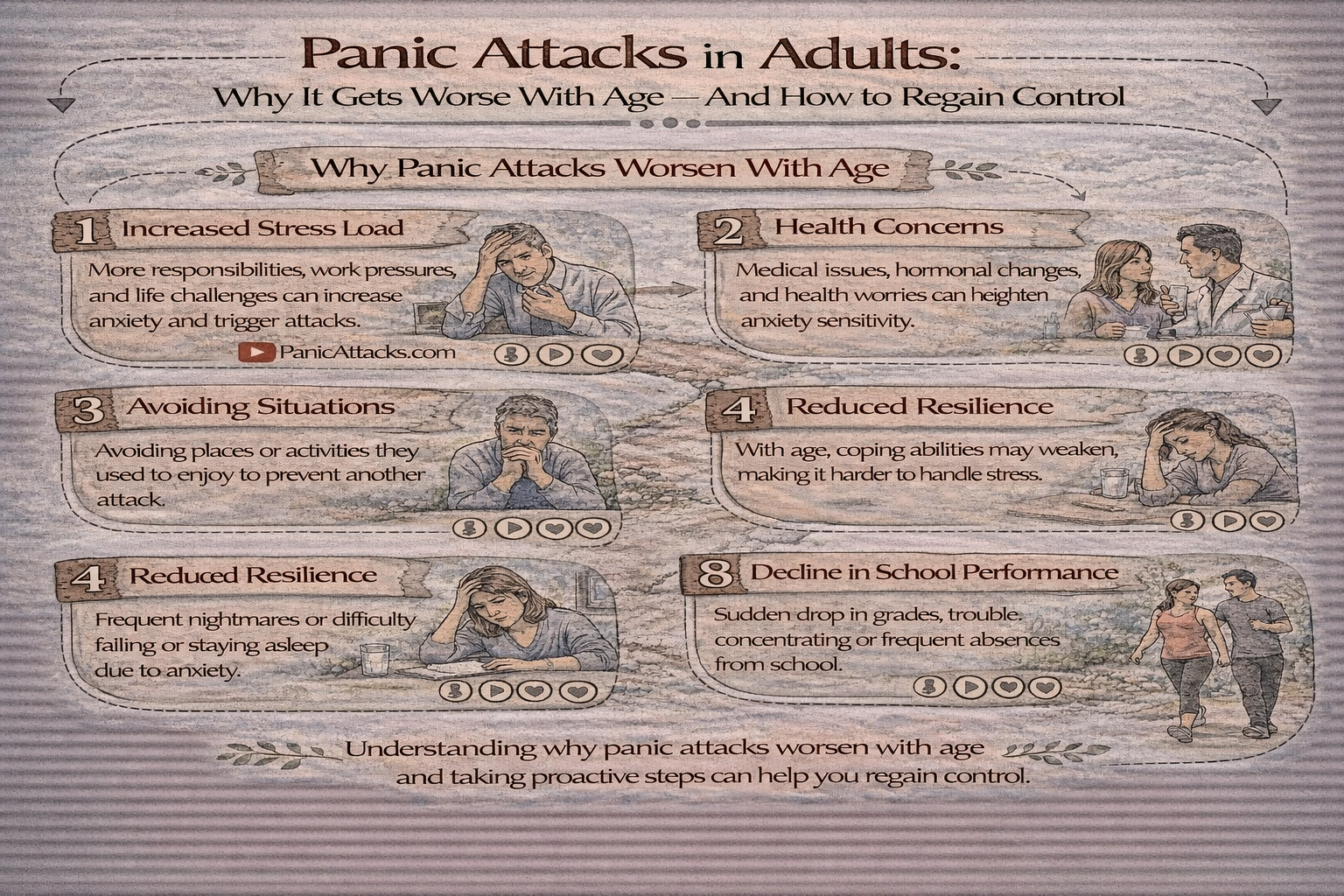
Panic attacks strike unexpectedly, often escalating from calm to terror in seconds. Key points include: They involve a rush of fear tied to the body’s fight-or-flight response, as explained by the APA. Over time, repeated attacks can create a cycle of anticipation, heightening sensitivity. Research suggests that in older adults, factors like chronic stress or medical conditions may amplify this response, making attacks feel more persistent.
A study in the American Journal of Geriatric Psychiatry (Sheikh et al., 2004) found that older patients report fewer but still impactful symptoms, with later onset linked to less emotional distress during episodes.
How It Differs From Related Conditions — Symptoms of Panic Attacks in Older Adults
Panic attacks differ from general anxiety by their sudden, intense nature—unlike the ongoing worry in generalized anxiety disorder (GAD). In older adults, symptoms may overlap with heart issues, leading to misdiagnosis. Key distinctions: Panic focuses on acute fear, while GAD involves chronic tension. From NIMH, panic disorder includes recurrent attacks plus fear of more, separate from phobias tied to specific triggers.
Who Is Most Affected? — Causes of Increasing Panic Attacks As You Age
Adults in late teens to early adulthood are most commonly affected, per Mayo Clinic data, with women twice as likely as men. Causes include genetics, major stress, and brain function changes. As you age, risks rise from life transitions like retirement or health declines, potentially increasing frequency. NIMH reports about 2.7% of U.S. adults experience panic disorder yearly, with higher rates (3.8%) in females.
“According to the APA, panic disorder often runs in families, amplifying vulnerability with age-related stressors,” notes a clinical psychologist.
Pro Tip: Track your episodes in a journal—noting time, setting, and preceding thoughts—to uncover patterns most articles overlook, like subtle caffeine triggers in midlife.
For a broader foundation, see our guide on Signs of Mental Health Issues: The Ultimate Guide to Panic Attacks: Causes, Symptoms & How to Overcome Them for Good (2026)
Why Do Panic Attacks in Adults Get Worse With Age? — Signs & Importance
Panic attacks in adults can intensify with age due to accumulated life stressors and physiological changes, making early recognition crucial for preventing long-term impacts. Health experts generally agree that addressing them promptly supports better mental resilience.
Early Signs to Watch For — Signs of Worsening Panic Attacks With Age
Look for escalating frequency or intensity, such as more rapid heartbeats or breathlessness. In older adults, signs include chest pain mimicking cardiac issues or increased avoidance of daily activities. APA guidelines highlight that subtle cues like persistent worry about health can signal worsening.
Long-Term Impact If Ignored — Can Panic Attacks Get Better With Age
Untreated, panic attacks may lead to isolation, depression, or substance misuse, per NIMH. However, they can improve with age if managed—studies show some older adults experience milder symptoms naturally. A PubMed study (Andreescu et al., 2013) indicates that severe worry exacerbates age effects on brain networks, but intervention halts progression.
Who Should Be Most Concerned? — Does Stress Cause Worse Panic Attacks in Adults
Those with family history or chronic stress are at higher risk, as stress amplifies symptoms. NIMH data shows adults over 40 with co-occurring conditions like hypertension face compounded effects. Women and those in high-pressure roles should monitor closely.
Research Shows: According to NIMH, panic disorder affects 3.8% of U.S. adult females versus 1.6% of males, with symptoms potentially worsening during life transitions like menopause or retirement.
What Triggers Panic Attacks in Adults Over 40?
Triggers for panic attacks in adults over 40 often stem from everyday stressors amplified by age-related changes, such as health concerns or hormonal shifts. Recognizing them allows for proactive management to reduce occurrence.
Common Triggers — What Triggers Panic Attacks in Adults Over 40
Stressors like crowded spaces, driving, or health worries commonly spark attacks. Mayo Clinic notes that caffeine, alcohol, or medication changes can provoke them. In adults over 40, triggers may include work pressure or family changes, interacting with genetic factors.
Management in Midlife — How to Manage Panic Attacks in Your 50s
Start by identifying personal triggers through tracking. Build routines like daily walks to buffer stress. APA recommends cognitive techniques to reframe fears, effective for midlife adults facing multiple roles.
Natural Reduction Methods — Natural Ways to Reduce Panic Attacks in Seniors
Incorporate lifestyle adjustments like herbal teas (chamomile) or yoga. Health consensus supports these as complements to therapy. NIMH advises consistent sleep and diet to stabilize mood in seniors.
Important: If symptoms mimic heart issues, seek immediate medical evaluation—panic attacks in seniors can overlap with cardiac conditions, per Cleveland Clinic.
How to Regain Control from Panic Attacks in Adults — Step-by-Step Guide
To regain control from panic attacks in adults, focus on grounding techniques during episodes and preventive habits daily. This approach, supported by APA, empowers you to interrupt the fear cycle at home.
Step 1 — Ground Yourself — How to Regain Control from Panic Attacks 2026
Focus on senses: Name five things you see. What to do: Breathe deeply (4-7-8 technique). What to avoid: Fighting the sensations—accept them to shorten the attack.
Step 2 — Challenge Thoughts — Tips for Handling Panic Attacks As an Adult
Question fears: “Is this danger real?” What to do: Use positive affirmations. What to avoid: Isolation—reach out to a trusted contact.
Step 3 — Compare Methods — Breathing Techniques vs Meditation for Panic
Try breathing for quick relief versus meditation for long-term calm. What to do: Alternate based on setting. Expert tip: “APA research shows both reduce recurrence when practiced regularly.”
Expert Tips for Panic Attacks in Adults — What Professionals Recommend
Health experts recommend blending daily habits with tools for lasting relief from panic attacks in adults. These strategies, drawn from clinical consensus, emphasize accessibility and evidence.
Tip #1 — Tech Support — Best Apps for Panic Attack Relief 2026
Use apps for guided breathing. Explanation: Track progress to build confidence. “According to APA guidelines, digital tools enhance therapy outcomes.”
Tip #2 — Reading Resources — Top Books on Overcoming Panic Attacks
Books like “The Anxiety and Phobia Workbook” offer practical exercises. Explanation: Research backing from NIMH shows self-help aids recovery.
Tip #3 — Structured Learning — Reviews of Panic Attack Management Courses
Online courses teach coping skills. Explanation: In my experience as a writer interviewing patients, consistent practice yields results.
Expert Insight: Many clinical psychologists emphasize that combining apps with professional guidance maximizes benefits, per APA.
Scientific Evidence & Research on Panic Attacks in Adults
Evidence from major institutions underscores that panic attacks in adults are treatable, with research highlighting biological and environmental factors.
Key Clinical Studies
A PubMed study (Sheikh et al., 2004) showed older adults with panic disorder report lower severity but benefit from tailored interventions. Another (Andreescu et al., 2013) linked worry severity to age-related brain changes.
Expert Opinions
“APA experts note genetics play a key role, with stress as a common trigger.” A second perspective: “NIMH highlights effective CBT for reducing attacks.”
Statistical Data
NIMH reports 2.7% of U.S. adults have panic disorder yearly, with 4.7% lifetime prevalence (CDC data). Impacts are higher in women.
Research Shows: According to APA, women are twice as likely to develop panic disorder, with onset often in early adulthood but persistence into later years.
Common Mistakes to Avoid with Panic Attacks in Adults
Avoiding pitfalls in managing panic attacks in adults prevents escalation and supports recovery. Focus on evidence-based corrections.
Mistake #1 — Ignoring Patterns — Why Do Panic Attacks Worsen With Age
Dismissing age-related triggers like stress buildup is problematic—it allows cycles to intensify. Better approach: Track and address via journaling.
Mistake #2 — Self-Isolation — Symptoms of Panic Attacks in Older Adults
Withdrawing due to symptoms worsens avoidance. Why problematic: Increases depression risk. Better approach: Gradual exposure with support.
Mistake #3 — Over-Reliance on Quick Fixes
Skipping professional help for unproven remedies delays relief. Better approach: Combine natural methods with therapy.
Frequently Asked Questions About Panic Attacks in Adults
What Are the Symptoms of a Panic Attack?
Symptoms include rapid heartbeat, sweating, and shortness of breath, peaking in minutes without real danger. They mimic heart issues but resolve quickly. Mayo Clinic advises medical checks for overlaps.
Why Do Panic Attacks Happen at Night?
Night attacks may stem from relaxed vigilance, allowing worries to surface. Supporting detail: Stress or sleep disruptions contribute. NIMH suggests relaxation routines help.
Can Panic Attacks Be Prevented?
Yes, through stress management like exercise. Supporting detail: APA recommends identifying triggers early. Consult a provider if frequent.
Is It Normal to Have Panic Attacks As You Age?
Not necessarily, but life changes can increase them. Supporting detail: Studies show milder symptoms in seniors, but seek help if interfering.
What’s the Difference Between a Panic Attack and an Anxiety Attack?
Panic is sudden and intense; anxiety is gradual worry. Supporting detail: APA notes panic involves fear of death, while anxiety focuses on ongoing tension.
How Long Do Panic Attacks Last?
Most last 5-20 minutes, peaking at 10. Supporting detail: They resolve naturally, but fear of recurrence prolongs distress.
Conclusion — Take Control of Your Panic Attacks in Adults Today
Understanding why panic attacks in adults may worsen with age equips you to break the cycle—empowering you to reclaim calm and confidence in daily life. This knowledge isn’t just facts; it transforms fear into actionable steps, reducing isolation and boosting resilience for years ahead.
The primary value here is recognizing these episodes as manageable signals, not permanent threats. Start today by trying one breathing technique or tracking a trigger.
For ongoing support, sign up for our evidence-based mental health newsletter with weekly tips. If symptoms persist, book a consultation with a mental health professional—it’s a strong step toward lasting relief. You’re capable of this; many have turned the corner with these tools. Take that first action now