Imagine watching a loved one suddenly gripped by intense fear, shortness of breath, and a racing heart—statistics show that 2.7% of U.S. adults experience panic disorder annually, affecting millions of families. If you’re a family member or close friend, this scene might feel all too familiar, leaving you helpless and unsure of the right steps to take. Supporting someone with panic attacks can feel overwhelming, leading to frustration, isolation, and uncertainty about how to help without making things worse. You might worry about saying the wrong thing or pushing too hard, which can strain relationships and heighten everyone’s stress.
This complete family guide will equip you with step-by-step strategies, expert tips, and evidence-based insights to provide effective family support for panic disorder, empowering you to foster recovery. You’ll learn how to recognize signs, respond during an attack, implement long-term strategies, and avoid common pitfalls—all while prioritizing your own well-being. Drawing from guidelines by organizations like the National Institute of Mental Health (NIMH) and the American Psychological Association (APA), this advice is rooted in current research to help you navigate this journey with confidence and empathy. Remember, you’re not alone in this—effective support can make a profound difference.
For a broader foundation, see our guide on Signs of Mental Health Issues: The Ultimate Guide to Panic Attacks: Causes, Symptoms & How to Overcome Them for Good (2026)
What Are Panic Attacks and Panic Disorder?
Panic attacks are sudden episodes of intense fear that trigger severe physical reactions when there’s no real danger or apparent cause. They can be frightening for both the person experiencing them and those around them, but understanding them is the first step in providing effective family support for panic disorder. In this section, we’ll break down the symptoms, causes, and key differences to help you respond knowledgeably.
Symptoms of Helping a Friend with Panic Attacks
Physical symptoms like rapid heartbeat, sweating, trembling, and chest pain often dominate a panic attack, making it feel like a medical emergency. Emotional signs include intense fear, a sense of doom, or detachment from reality, which can leave the person feeling out of control. These episodes typically last 5-20 minutes but can feel eternal, often leaving exhaustion in their wake. If you’re helping a friend with panic attacks, recognizing these signs early allows you to offer calm reassurance.
Moreover, symptoms might include shortness of breath, chills, nausea, or dizziness, which can mimic other conditions. This overlap is why it’s crucial to rule out medical issues first. Research suggests that many people experience their first attack in late teens or early adulthood, often during stressful periods.
Causes and Triggers of How to Help a Loved One with Panic Attacks
Biological factors such as genetics or brain chemistry imbalances play a significant role in panic attacks, with family history increasing risk. Environmental stressors like trauma, major life changes, or chronic anxiety can also contribute. Common triggers include crowded spaces, caffeine, or health concerns, which activate the body’s fight-or-flight response inappropriately.
When figuring out how to help a loved one with panic attacks, identifying personal triggers through open conversations can be invaluable. For instance, someone might notice attacks spike during work deadlines or after consuming stimulants. Addressing these proactively supports long-term management.
Difference Between Panic Attacks and Supporting Someone with Panic Disorder
An isolated panic attack doesn’t necessarily mean panic disorder; it’s a single event versus recurrent episodes with ongoing fear of future attacks. In panic disorder, this fear leads to avoidance behaviors, impacting daily life like work or social activities. Supporting someone with panic disorder involves addressing both the attacks and the anticipatory anxiety.
Without intervention, avoidance can escalate, leading to complications like agoraphobia. Family support for panic disorder focuses on breaking this cycle through encouragement and professional guidance.
Research Shows:
A 1983 study in JAMA Psychiatry found a 17.3% morbidity risk for panic disorder in first-degree relatives, underscoring its genetic component.
For a broader foundation, see our guide on Signs of Mental Health Issues: 10 Proven Self-Help Strategies for Panic Attacks Recommended by Real Therapists
Why Family Support for Panic Disorder Matters
Family support for panic disorder isn’t just helpful—it’s transformative. It can reduce the emotional burden on the individual and prevent the disorder from worsening, fostering a path to recovery. Here, we’ll explore the impacts and long-term benefits.
Impact on the Individual from Family Guide to Panic Attacks Support
Family guide to panic attacks support reduces isolation and stigma, improving emotional resilience. It enhances adherence to treatment plans, as loved ones can remind and encourage consistency. Without this, individuals might feel misunderstood, exacerbating symptoms.
Studies indicate that supportive environments help manage anxiety more effectively. For example, knowing family is there can lessen the intensity of fear during episodes.
Benefits of Supportive Family Environment
A supportive family environment lowers relapse rates and promotes faster recovery. It builds coping skills through shared experiences, turning challenges into opportunities for growth. This collective approach strengthens resilience against triggers.
Additionally, it prevents secondary issues like depression by providing emotional buffers. Families who educate themselves often see better outcomes overall.
Long-Term Outcomes of Helping Spouse with Panic Disorder
Helping a spouse with panic disorder leads to decreased risk of comorbid conditions like depression. It fosters stronger family bonds and overall well-being, creating a ripple effect of positive mental health. Over time, this support can normalize discussions about anxiety.
Research supports that family involvement improves long-term prognosis, reducing the need for intensive interventions later.
For a broader foundation, see our guide on Signs of Mental Health Issues: Depression in Older Adults: Why Seniors Are at High Risk and What Families Can Do
How to Recognize Signs of a Panic Attack in a Loved One
Spotting a panic attack early allows for timely support, potentially shortening its duration. This knowledge empowers you to act confidently without panic yourself. We’ll cover physical, emotional, and when to escalate.
Physical Signs of Supporting Partner with Panic Attacks
Shortness of breath, dizziness, nausea—these are common physical signs when supporting a partner with panic attacks. Chills or hot flashes might also occur, mimicking other health issues. Stay observant to differentiate from routine discomfort.
These symptoms arise suddenly, often without warning. Noting patterns can help anticipate and prepare.
Emotional and Behavioral Indicators
Sudden fear, restlessness, or withdrawal signal emotional distress. Pacing or seeking escape are behavioral clues that an attack is underway. Empathy here is key—validate their feelings without judgment.
These indicators often precede physical ones, offering a window for intervention.
When to Seek Immediate Help for How to Support Sibling with Panic Attacks
If symptoms mimic a heart attack or last unusually long, seek emergency help immediately when figuring out how to support a sibling with panic attacks. Signs of self-harm risk demand urgent professional intervention.
Always err on caution; better safe than sorry in potential crises.
Important:
Panic attack symptoms can resemble heart attacks—call 911 if chest pain persists or if it’s the first episode.
How to Help Someone During a Panic Attack
During a panic attack, your calm presence can be a lifeline. This section provides a step-by-step guide to de-escalate the situation effectively, drawing from expert-recommended techniques.
Immediate Response Techniques for How to Calm Loved One During Panic Attack
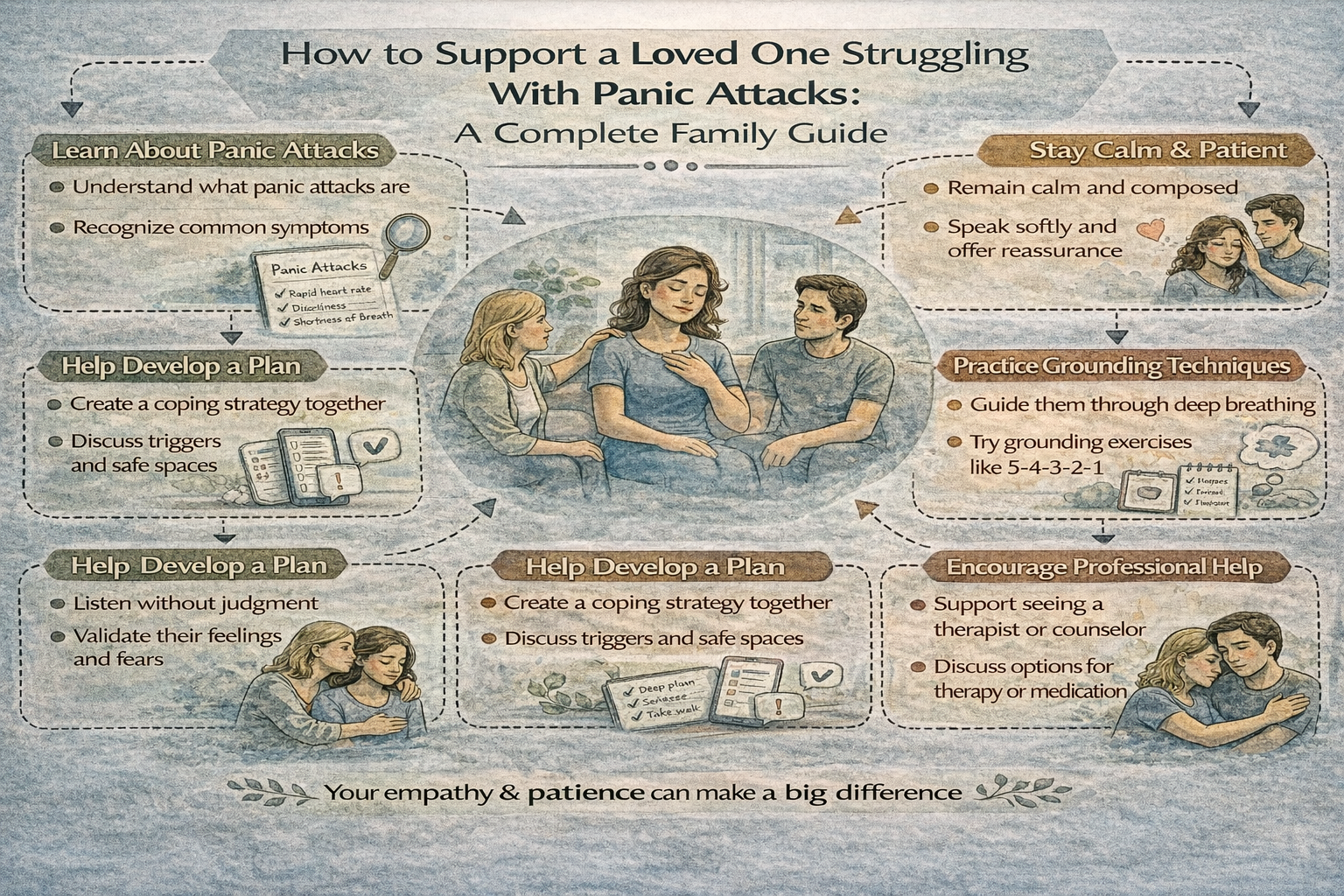
Stay calm, reassure safety, and remain present—these are core immediate response techniques for how to calm a loved one during a panic attack. Move to a quiet space if possible to minimize overstimulation.
Avoid overwhelming them with questions; simple affirmations suffice. Your steady demeanor models composure.
Breathing Exercises to Try
Guide 4-7-8 breathing: Inhale for 4 seconds, hold for 7, exhale for 8. This regulates the nervous system quickly.
Grounding techniques like 5-4-3-2-1 sensory focus—name 5 things you see, 4 you touch, etc.—shift attention from fear. Practice these together in calm times for familiarity.
Start slowly; if they’re hyperventilating, encourage pursed-lip breathing. Consistency builds effectiveness over time.
What to Say and What Not to Say During Loved One Panic Attack
Say: “This will pass; I’m here with you” to provide comfort. Avoid: “Just relax” or dismissing feelings, as it can invalidate their experience.
Positive, empathetic language fosters trust. Phrases like “You’re safe” reinforce reality amid fear.
Expert Insight:
As Dr. Golda Ginsburg notes, cognitive-behavioral family interventions can prevent anxiety transmission by teaching calm responses during attacks.
Long-Term Strategies for Family Support in Panic Disorder
Beyond immediate help, long-term strategies build resilience. Family support for panic disorder involves ongoing encouragement and lifestyle adjustments for sustained improvement.
Encouraging Professional Treatment for Helping Loved One with Panic Attacks
Suggest therapy like cognitive behavioral therapy (CBT) or medication options when helping a loved one with panic attacks. Offer to attend appointments to show solidarity.
CBT helps reframe thoughts; medications like SSRIs manage symptoms. Discuss options openly, respecting their pace.
Building a Supportive Home Environment
Reduce stressors, promote routines to create stability. Foster open communication without pressure.
Small changes, like designated calm spaces, make a difference. Regular check-ins build trust.
Helping with Lifestyle Changes for Supporting Child with Panic Attacks
Encourage exercise, healthy diet, sleep hygiene when supporting a child with panic attacks. Monitor progress gently, celebrating small wins.
Activities like walking or mindfulness apps aid management. We recommend apps like Calm for guided sessions, which many find helpful for daily practice.
Pro Tip:
Incorporate family routines like evening walks to normalize exercise, reducing triggers subtly without focusing solely on the disorder.
Best Practices for Family Support for Panic Disorder
Implementing best practices ensures your family support for panic disorder is effective and sustainable. These tips draw from clinical guidelines to optimize outcomes.
Communication Tips for How to Support a Family Member Panic Attack
Use “I” statements, listen actively when learning how to support a family member with a panic attack. Validate emotions without judgment to build understanding.
Setting Boundaries
Balance support with self-care to prevent resentment. Avoid enabling avoidance, as it reinforces fears.
Clear boundaries maintain healthy dynamics. Seek your own therapy if needed.
Involving the Whole Family
Educate siblings/partners about the condition. Consider family therapy options for collective healing.
Scientific Evidence & Research
Understanding the science behind panic disorder reinforces the importance of family involvement. This section highlights key studies, expert views, and data.
Clinical Studies
A family study in JAMA Psychiatry (1983) found a 17.3% morbidity risk for panic disorder in relatives of affected individuals, highlighting familial patterns. Research in the American Journal of Psychiatry (2015) showed family-based interventions reduced anxiety disorders in children of anxious parents by about 26% (from 31% to 5%).
Expert Opinions
Experts like Dr. Golda Ginsburg emphasize cognitive-behavioral family interventions to prevent anxiety transmission. Mental health professionals recommend staying calm, validating feelings, and encouraging professional help during attacks.
Statistical Data
NIMH data: 2.7% of U.S. adults had panic disorder in the past year; lifetime prevalence 4.7%, higher in females (3.8% vs. 1.6%).
Women are twice as likely to develop it.
For more, visit NIMH Panic Disorder page, Mayo Clinic, and APA.
Common Mistakes to Avoid
Even with good intentions, certain approaches can hinder progress. Avoiding these common mistakes ensures your support is helpful.
Mistake #1: Dismissing Their Feelings
Why it’s problematic: Invalidates experience, increases isolation. Better approach: Acknowledge and empathize, saying “I believe you—this must be scary.”
This builds trust.
Mistake #2: Overprotecting or Enabling Avoidance
Why it’s problematic: Reinforces fear cycles. Better approach: Encourage gradual exposure with support, like accompanying them to feared places initially.
Promote independence gently.
Mistake #3: Ignoring Your Own Well-Being
Why it’s problematic: Leads to caregiver burnout. Better approach: Seek your own support networks, such as therapy or groups.
Self-care sustains long-term help.
Frequently Asked Questions (FAQs)
What to Do if a Loved One Has a Panic Attack?
Stay calm and reassure them it’s temporary. Guide deep breathing and ground them in the present. If symptoms persist or mimic a heart attack, seek emergency help. This approach helps de-escalate the episode effectively. Remember, your presence provides security—focus on simple, supportive actions. Consult a professional if attacks recur frequently.
How to Help a Loved One with Panic Attacks Long-Term?
Encourage therapy like CBT and medication if needed. Foster a supportive environment with open communication and healthy habits. Avoid enabling avoidance; instead, promote gradual exposure. Family involvement can improve outcomes significantly. Track progress together and celebrate improvements. Always prioritize professional guidance for personalized plans.
What Not to Say During a Loved One Panic Attack?
Avoid phrases like “Just calm down” or “It’s all in your head,” as they minimize the experience. Instead, say “I’m here with you” to validate feelings. This prevents escalation and builds trust. Focus on empathy to avoid unintentional harm. If unsure, silence with presence is often better.
Is Family Support for Panic Disorder Effective?
Yes, studies show family involvement reduces symptoms and prevents transmission to children. Support enhances treatment adherence and emotional resilience, leading to better long-term recovery. For instance, family-based CBT has shown significant reductions in anxiety incidence. Integrate it with professional care for optimal results.
How to Support a Family Member with Panic Attack Without Overwhelming Them?
Listen actively, set boundaries, and offer help without taking over. Encourage professional care while providing empathy. Balance support with self-care to avoid burnout. This maintains respect for their autonomy. Start with small gestures and adjust based on their feedback.
Can Supporting Someone with Panic Disorder Prevent Future Attacks?
Consistent support, combined with therapy, can reduce frequency. Teaching coping skills and reducing stressors helps manage triggers effectively. Evidence suggests family interventions lower onset risks in at-risk groups. However, prevention isn’t guaranteed—focus on management.
What Are Signs of Helping Spouse with Panic Disorder?
Look for recurrent attacks, avoidance behaviors, and ongoing fear. Early recognition allows timely intervention and support. Additional signs include anticipatory anxiety or lifestyle changes. Monitor compassionately and suggest evaluation if patterns emerge.
Conclusion
Effective family support for panic disorder reduces isolation, enhances recovery, and strengthens relationships, leading to improved mental health for everyone involved. By recognizing signs, responding calmly during attacks, and implementing long-term strategies like encouraging therapy and healthy habits, you empower your loved one to manage symptoms with greater confidence. This guide provides actionable tools to help loved ones navigate panic attacks with empathy and knowledge, transforming challenges into opportunities for growth.
Take a clear next action step: Discuss concerns with a healthcare professional or therapist to tailor support. Schedule a consultation for personalized support today—many find starting with a family session helpful. For more resources, explore our comprehensive guide to anxiety management or sign up for weekly mental health tips via email.
With patience and knowledge, you can make a profound difference—your support matters. Remember, seeking help is a strength, and progress is possible for all.
Medical Disclaimer
This article is for informational purposes only and is not a substitute for professional medical advice, diagnosis, or treatment. Always seek the advice of your physician or other qualified health provider with any questions you may have regarding a medical condition. If you’re experiencing a mental health crisis, please call the 988 Suicide & Crisis Lifeline or visit your nearest emergency room. For non-emergency support, contact the Substance Abuse and Mental Health Services Administration (SAMHSA) National Helpline at 1-800-662-4357. The content in this article is based on current research and expert consensus as of 2026, but medical knowledge evolves. Always verify information with your healthcare provider.