If your heart is pounding, your breathing feels tight, and sudden fear takes over without warning, you are not alone — and real help is available right now. According to the National Institute of Mental Health (NIMH), about 6 million adults in the United States experience panic disorder each year. Many more people have occasional panic attacks that feel just as frightening.
During an attack, it’s common to feel confused, isolated, or scared that something serious is happening — like a heart attack or loss of control. The reassuring truth is that free, effective, and immediate emergency resources for panic attacks are available worldwide. This guide provides practical tools that work within minutes, 24/7 crisis hotlines, global support directories, science-based coping strategies, and clear steps for longer-term recovery.
What Is a Panic Attack? A Clear Explanation
A panic attack is a sudden wave of intense fear or physical discomfort that rises quickly and usually peaks within minutes. It can happen unexpectedly and may feel life-threatening — even when no actual danger exists.
For a broader foundation, see our guide on Signs of Mental Health Issues: The Ultimate Guide to Panic Attacks: Causes, Symptoms & How to Overcome Them for Good (2026)
Common Symptoms of a Panic Attack
You may experience several of the following symptoms at the same time:
- Rapid or pounding heartbeat
- Sweating or shaking
- Shortness of breath
- Chest pain or pressure
- Dizziness or feeling faint
- Hot flashes or chills
- Nausea or stomach discomfort
- Tingling or numbness
- Fear of losing control or dying
These symptoms happen because your body’s fight-or-flight system activates strongly — even though you are safe.
For a broader foundation, see our guide on Signs of Mental Health Issues: Best Panic Attacks Treatment Options in 2026: Evidence-Based Options That Actually Work
Panic Attack vs. Panic Disorder
Having one panic attack does not mean you have panic disorder. Panic disorder involves repeated, unexpected attacks along with at least one month of ongoing worry about future attacks or behavior changes to avoid them. Over time, this fear may limit daily activities, work, travel, or social situations.
Research shows women experience panic disorder at roughly twice the rate of men
Common Causes and Risk Factors
Many attacks appear suddenly, but certain factors increase risk:
- High stress levels
- Excess caffeine
- Poor sleep
- Genetic vulnerability
- Trauma history
- Major life transitions
Pro Tip:
Keep a simple panic log on your phone. Write down the time, location, and how you felt before the attack. Recognizing patterns increases confidence and control.
Why Immediate Resources for Panic Attacks Matter
Access to reliable emergency resources for panic attacks can reduce intensity, shorten episodes, and prevent long-term complications.
The Power of Fast Support
Knowing what to do — and who to contact — often reduces the length and severity of an attack. Early action also prevents unnecessary emergency room visits and decreases avoidance behaviors.
Mental Health and Daily Functioning
Untreated panic attacks can disturb sleep, reduce work performance, and strain relationships. Studies show that people who access support early report improved quality of life and fewer recurring episodes.
Global Access in 2026
Digital tools and international crisis networks now make high-quality mental health support accessible worldwide — without travel, long waitlists, or insurance barriers.
Research Insight:
Early intervention and structured coping skills may reduce the risk of developing full panic disorder by up to 50% in vulnerable individuals.
For a broader foundation, see our guide on Signs of Mental Health Issues: Early Warning Signs of Panic Attacks: How to Spot Them Before Things Get Worse
Recognizing a Panic Attack in Yourself or Someone Else
Quick recognition leads to faster response.
Checklist of Signs
- Sudden intense fear without clear cause
- Rapid heart rate
- Chest tightness
- Difficulty breathing
- Shaking or sweating
- Fear of losing control
- Tingling or chills
- Nausea
- Feeling detached from reality
- Strong urge to escape
If four or more symptoms appear suddenly and peak within 10 minutes, it is likely a panic attack.
How Long Does a Panic Attack Last?
Most attacks peak within 10 minutes and fade within 20–30 minutes. Some people feel tired or sensitive afterward.
When to Seek Emergency Medical Care
Call emergency services or visit the ER if:
- It is your first episode
- Severe chest pain does not improve
- Symptoms feel different from past panic attacks
- You are unsure whether it could be a heart issue
It is always better to be cautious.
Immediate Help for Panic Attacks: Step-by-Step Plan
When symptoms begin, follow these actions calmly.
5 Grounding Techniques That Work Quickly
- 5-4-3-2-1 Method:
Name 5 things you see, 4 you touch, 3 you hear, 2 you smell, 1 you taste. - Box Breathing:
Inhale 4 seconds, hold 4, exhale 4, hold 4. - Cold Water Reset:
Splash cold water or hold an ice cube. - Progressive Muscle Relaxation:
Tighten and release muscle groups slowly. - Texture Focus:
Hold an object and describe its details.
Get Immediate Panic Attack Help
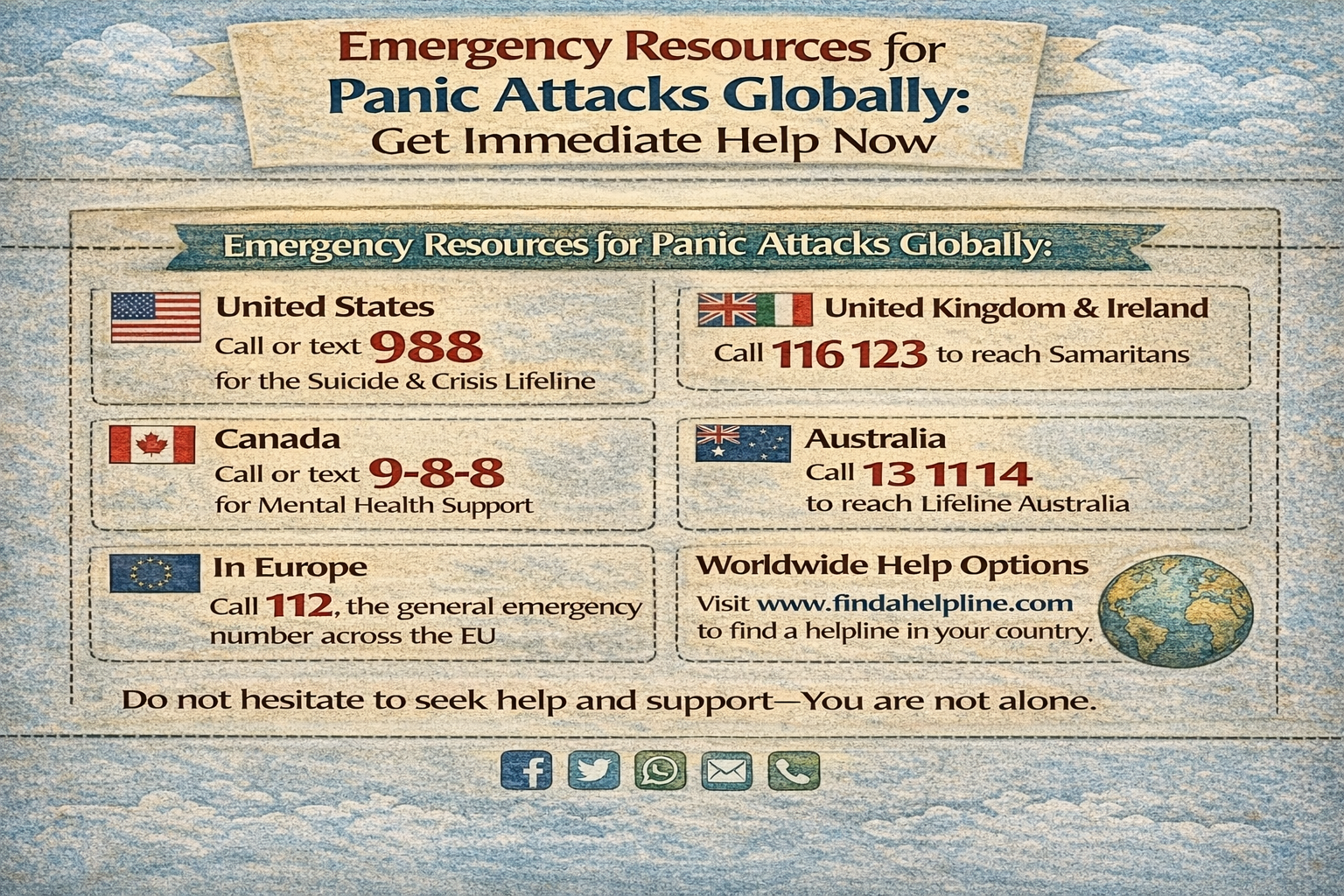
- Call or text 988 (U.S.)
- Use your pre-saved safety plan
- Contact a trusted person
What to Say
“I’m having a panic attack right now and need help calming down.”
Clear communication makes it easier for others to support you.
Global 24/7 Panic Attack Hotline Support
Free, confidential crisis services are available worldwide.
United States – 988 Lifeline
Call, text, or chat 988 anytime. Trained counselors provide immediate support in English, Spanish, and many other languages.
International Resources
Websites like findahelpline.com connect you with verified hotlines in your country.
Crisis Text Line
In the U.S., text HOME to 741741 for 24/7 text-based support.
Best Online Resources and Digital Tools
Technology allows you to access help instantly.
- 988 chat via 988lifeline.org
- Calm and Headspace emergency breathing tools
- Psychology Today therapist directory
- NIMH and ADAA educational materials
Geo-targeted searches help you find licensed professionals offering virtual sessions quickly.
Free Self-Help Tools for Long-Term Relief
You can start recovery today at no cost.
- Download worksheets from reputable mental health organizations
- Practice daily breathing exercises
- Walk 20 minutes per day
- Reduce caffeine
- Maintain consistent sleep
- Practice mindfulness
Expert Perspective:
Mental health specialists consistently report that learning even one grounding skill significantly improves panic management.
Scientific Evidence Behind Panic Attack Resources
Research strongly supports structured treatment.
- CBT reduces panic symptoms for 70–80% of individuals
- Early intervention decreases recurrence
- Annual prevalence: approximately 2.7% of U.S. adults
- Women are affected about twice as often as men
Major organizations such as the American Psychological Association and Mayo Clinic recommend combining crisis support with cognitive behavioral therapy for best results.
Common Mistakes to Avoid
Waiting Alone
Isolation increases fear. Reach out immediately.
Searching Randomly During Crisis
Bookmark trusted resources ahead of time.
Skipping Follow-Up Care
After stabilization, schedule therapy within 48 hours.
Frequently Asked Questions
What is the fastest help available?
Call or text 988 (U.S.) for immediate connection to trained crisis counselors.
Are global hotlines free?
Yes. Many services are confidential and free worldwide through verified directories.
Do online tools actually help?
Yes. Research shows guided self-help and online CBT reduce panic severity, especially when combined with professional support.
Are these services private?
Major crisis services follow strict confidentiality policies.
Conclusion
You now have reliable emergency resources for panic attacks — including hotlines, practical calming techniques, digital tools, and long-term recovery strategies. Panic may feel overwhelming, but it is manageable and treatable.
Take action now:
Save 988 in your contacts and bookmark this page.
If symptoms are happening right now, pause, breathe slowly, and reach out. Support is available 24/7. Recovery is possible, and you deserve to feel safe and steady again.
Medical Disclaimer
This article is for educational purposes only and does not substitute professional medical advice. Always consult a qualified healthcare provider for diagnosis or treatment decisions. In a crisis, call or text 988 or contact local emergency services. Information reflects research and expert consensus as of 2026.