Did you know that an estimated 2.7% of U.S. adults experience panic disorder each year, with women twice as likely to be affected? This statistic from the National Institute of Mental Health highlights how common these intense episodes can be. Panic attacks can strike unexpectedly, causing intense fear, rapid heartbeat, and overwhelming distress—often exacerbated by everyday dietary choices like caffeine or sugary foods that mimic or amplify symptoms.
If you’re searching for ways to manage these challenges, you’re in the right place. In this guide, you’ll learn which foods trigger panic attacks, those to avoid for anxiety relief, and the best healing foods to reduce symptoms quickly, along with practical diet tips. We’ll explore how simple changes, like swapping processed snacks for nutrient-rich options, may help stabilize your mood and promote faster recovery.
For a broader foundation, see our guide on Signs of Mental Health Issues: 10 Proven Self-Help Strategies for Panic Attacks Recommended by Real Therapists
What Are Panic Attacks?
Panic attacks are sudden episodes of intense fear or discomfort that peak within minutes, often feeling like a heart attack or loss of control. They can disrupt daily life, leaving you exhausted and fearful of the next one. Understanding them is key to management, including recognizing how certain foods that trigger panic attacks might play a role.
Symptoms of Panic Attacks
Sudden intense fear or discomfort peaking within minutes is the hallmark. Physical signs like heart palpitations, sweating, trembling, shortness of breath, or chest pain often occur, mimicking serious health issues. Emotionally, you might experience fear of losing control or dying, which can heighten distress.
These symptoms can be overwhelming, but they’re not dangerous. Research suggests that avoiding foods that trigger panic attacks, such as caffeine-laden drinks, may help reduce their intensity.
Causes and Triggers
Genetic factors and brain chemistry imbalances, like low serotonin levels, contribute to vulnerability. Stressful life events or environmental stressors, such as work pressure or trauma, can ignite episodes. The role of diet in amplifying triggers is emerging—high-sugar foods may cause blood sugar crashes that mimic panic.
Lifestyle factors compound this. For instance, chronic sleep deprivation or dehydration can lower your threshold for attacks.
Prevalence in the USA
Panic disorder affects 2.7% of adults annually, with higher rates in females (3.8%) compared to males (1.6%), per NIMH data. Lifetime prevalence is around 4.7%, meaning nearly 1 in 20 Americans will experience it.
These numbers underscore the need for accessible strategies, including dietary adjustments to avoid foods that trigger panic attacks.
Research Shows:
A National Comorbidity Survey Replication study found that 2.7% of U.S. adults had panic disorder in the past year, emphasizing its widespread impact.
For a broader foundation, see our guide on Signs of Mental Health Issues: The Ultimate Guide to Panic Attacks: Causes, Symptoms & How to Overcome Them for Good (2026)
Why Does Diet Matter for Panic Attacks?
Your diet influences more than physical health—it shapes brain function and stress responses. Poor choices can exacerbate panic by fueling inflammation or instability, while nutrient-rich foods may promote calm. This section explores why tweaking what you eat could make a difference in managing symptoms.
How Food Affects Brain Chemistry
Nutrients influence serotonin and neurotransmitter levels, which regulate mood. Blood sugar fluctuations from poor diet can mimic or worsen panic, triggering adrenaline surges. Inflammation from unhealthy foods is linked to increased anxiety, as studies show.
For example, refined carbs spike then crash energy, potentially heightening vulnerability to attacks.
The Gut-Brain Connection
Microbiome health impacts mood and stress responses through the gut-brain axis. Probiotic-rich diets support calmer mental states by fostering beneficial bacteria. Poor diet disrupts this axis, heightening panic risk and making symptoms harder to manage.
Emerging research highlights how fiber and fermented foods nurture this connection.
Long-Term Benefits of Dietary Changes
Reduced frequency and severity of attacks may result from consistent healthy eating. Improved overall mental resilience builds over time, helping you bounce back faster. Studies suggest these shifts could lower inflammation and stabilize mood.
Expert Insight:
As noted by experts at Harvard Health, “Magnesium-rich foods like leafy greens can help lower anxiety by supporting nerve function and relaxation.”
For a broader foundation, see our guide on Signs of Mental Health Issues: How to Handle Panic Attacks at Work: Strategies Worldwide Employees Swear By
What Foods Trigger Panic Attacks?
Certain foods can act like silent saboteurs, ramping up anxiety through physiological effects. Identifying and limiting them may help prevent episodes. Here’s a closer look at common culprits and why they worsen symptoms.
Foods to Avoid for Anxiety
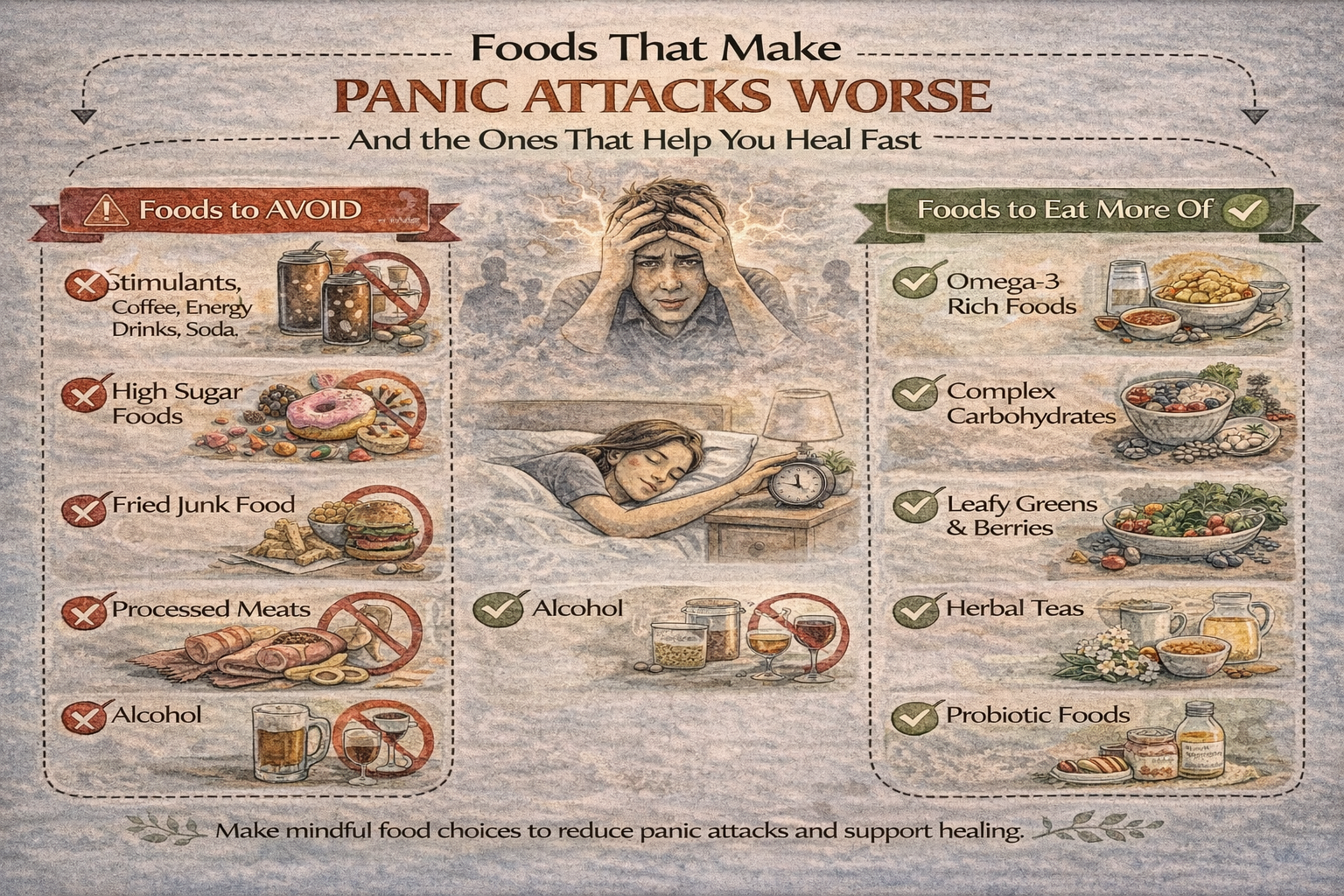
Caffeine increases heart rate and adrenaline, mimicking panic and potentially triggering attacks. Alcohol alters serotonin, leading to rebound anxiety after the initial calm wears off. Processed meats, high in sodium, raise blood pressure, adding to physical stress.
These items disrupt balance, so moderation is key.
Worst Foods for Panic Attacks
Refined sugars cause blood sugar crashes and mood swings, heightening irritability. Fried foods’ high fats promote inflammation, linked to worse mental health. High-salt snacks disrupt electrolyte balance, potentially exacerbating symptoms like palpitations.
Opt for whole alternatives to sidestep these risks.
Anxiety Triggering Foods List
Examples include soda, candy, white bread, and chips—quick carbs that spike energy then crash. Why they worsen: These lead to rapid fluctuations, releasing stress hormones that mimic panic.
Pro Tip:
If caffeine is a staple, switch to decaf gradually over a week to avoid withdrawal headaches that could mimic anxiety.
How Do Certain Foods Worsen Anxiety Symptoms?
Beyond triggers, some foods sustain a cycle of heightened anxiety through ongoing effects. Understanding this helps you make proactive choices. We’ll examine how these impact your body and mind.
Foods That Worsen Anxiety Symptoms
High-fat diets are associated with higher anxiety per scoping reviews, as they fuel chronic inflammation. Refined carbs are linked to increased symptoms in animal studies, disrupting brain chemistry. Processed foods correlate with depression and anxiety, per population research.
These patterns compound over time.
Foods Aggravating Panic Symptoms
Sugary drinks have a direct link to mood instability, causing rapid highs and lows. Artificial additives may disrupt neurotransmitter function, adding to unease.
Limit them to stabilize your day.
Avoid Foods During Panic Attacks
Stimulants like energy drinks exacerbate heart palpitations, intensifying fear. Heavy meals can cause digestive discomfort mimicking attacks, like bloating or nausea.
Choose light, soothing options instead.
Important:
If symptoms persist despite dietary changes, consult a healthcare professional—panic attacks may signal an underlying condition needing medical attention.
What Are the Best Foods to Reduce Panic Attacks?
Shifting focus, certain foods offer protective benefits by nourishing the brain and body. Incorporating them may help buffer against stress. Let’s explore top choices and their mechanisms.
Best Foods to Reduce Panic
Fatty fish like salmon are rich in omega-3s to lower inflammation and support brain health. Eggs provide vitamin D and B vitamins for mood regulation, potentially easing symptoms. Pumpkin seeds, high in magnesium, offer calming effects on the nervous system.
These are easy additions to meals.
Foods That Help Calm Anxiety
Dark chocolate’s flavonols improve brain function and stress adaptation, in moderation. Yogurt’s probiotics support gut health and reduce anxiety, per studies. Green tea’s L-theanine promotes relaxation without drowsiness.
Enjoy them mindfully for best results.
Natural Foods to Ease Anxiety
Leafy greens are magnesium-rich for nerve function, helping steady moods. Berries’ antioxidants protect against oxidative stress, linked to lower anxiety.
Nature’s pharmacy at your fingertips.
[Affiliate opportunity: Consider omega-3 supplements like Nordic Naturals for convenient daily support, or meal kits from Blue Apron featuring anxiety-friendly ingredients.]
How Can Foods Help You Heal from Panic Attacks Fast?
Healing involves not just avoidance but active nourishment. These foods may accelerate recovery by addressing root imbalances. Here’s how to incorporate them.
Healing Foods for Panic Attacks
Turmeric’s curcumin reduces inflammation linked to anxiety, with anti-anxiety effects in studies. Avocados’ healthy fats and fiber stabilize blood sugar, preventing crashes. Nuts and seeds provide zinc, which lowers anxiety per research.
Versatile and nutrient-dense.
Foods to Prevent Panic Episodes
Complex carbs like oats offer steady energy release, avoiding spikes. Chamomile tea has natural sedative properties, promoting calm.
Sip for serenity.
Best Diet for Healing Anxiety
Mediterranean-style emphasizes whole foods, fruits, veggies, and healthy fats. Steps: Start with small swaps, like oats for cereal, and track responses in a journal.
Diet Tips for Panic Attacks: Building a Healing Meal Plan
Practical application turns knowledge into habit. These tips guide you toward a sustainable plan. Focus on balance for lasting calm.
Diet Tips for Panic Attacks
Balance meals with protein, fats, and carbs to maintain steady energy. Hydrate well and limit caffeine intake to prevent jitters. Incorporate anti-inflammatory foods daily, like berries or turmeric.
Simple yet effective.
Calming Diet for Anxiety Relief
Sample daily menu: Breakfast oats with berries, lunch salmon salad with greens. Track in a food-mood journal to identify patterns.
Personalize as needed.
Expert Tips
Eat regular small meals to stabilize blood sugar and avoid drops. Consult a nutritionist for a personalized plan tailored to your needs.
Professional guidance enhances success.
Scientific Evidence & Research
Backing up advice with science builds trust. This section reviews key studies on diet’s role in anxiety and panic.
Clinical Studies
A 2021 scoping review in Nutrients linked high-fat, sugar, and refined carbs to higher anxiety, while fruits, veggies, and omega-3s reduce it. The 2019 ATTICA study found SFAS patterns (saturated fats, sugars) associated with higher anxiety in older adults.
These underscore dietary impact.
Expert Opinions
Harvard Health notes magnesium-rich foods like leafy greens lower anxiety; probiotics in yogurt reduce symptoms. Mayo Clinic advises complex carbs raise serotonin for calming effects; avoid simple sugars to prevent crashes.
Consensus favors whole foods.
Statistical Data
A 2024 Frontiers study showed fiber negatively associated with anxiety (reduced risk by about 2.3 points per unit). Processed meats increased anxiety risk slightly (1.02 per serve), per similar research.
Data supports balanced intake.
NIH on Panic Disorder; Nutrients Scoping Review; ATTICA Study]
Common Mistakes to Avoid
Even with good intentions, pitfalls can undermine progress. Awareness helps you steer clear.
Mistake #1: Relying on Caffeine for Energy
Why it’s problematic: It mimics panic symptoms like rapid heartbeat, worsening cycles. Better approach: Switch to herbal teas or water for steady hydration.
Mistake #2: Skipping Meals Leading to Blood Sugar Drops
Why it’s problematic: Causes irritability and anxiety spikes from instability. Better approach: Eat balanced snacks every 3-4 hours, like nuts and fruit.
Mistake #3: Overconsuming Processed Foods
Why it’s problematic: Increases inflammation and anxiety risk over time. Better approach: Opt for whole foods and home-cooked meals for nutrient density.
Frequently Asked Questions (FAQs)
What foods trigger panic attacks?
Foods like caffeine, alcohol, refined sugars, and processed meats can trigger panic attacks by spiking adrenaline, causing blood sugar crashes, or raising inflammation. Avoiding these and opting for balanced meals helps stabilize mood. Research suggests gradual reduction prevents withdrawal effects; consult a doctor if symptoms intensify.
What are the worst foods for panic attacks?
High-fat fried foods, sugary sodas, and salty snacks are among the worst, as they disrupt neurotransmitter balance and exacerbate symptoms like heart palpitations. Focus on whole grains and veggies instead for relief. Studies link these to higher anxiety; replacing them may improve resilience over weeks.
What are the best foods to reduce panic?
Fatty fish rich in omega-3s, magnesium-packed leafy greens, and probiotic yogurt can reduce panic by supporting brain health and calming the nervous system. Incorporate them daily for faster healing. Clinical reviews show these lower inflammation; aim for 2-3 servings weekly, adjusting based on response.
What foods help calm anxiety naturally?
Dark chocolate, chamomile tea, and berries provide antioxidants and calming compounds that ease anxiety. These natural options promote serotonin production without the side effects of stimulants. Evidence indicates moderate intake aids adaptation; enjoy in small portions to avoid overindulgence.
What diet tips help with panic attacks?
Build a calming diet by eating regular meals with complex carbs, proteins, and healthy fats. Track triggers in a journal and stay hydrated to prevent episodes and promote mental stability. Experts recommend consistency; if attacks persist, seek professional evaluation for comprehensive care.
Are there foods to prevent panic episodes?
Yes, foods like avocados, nuts, and turmeric prevent episodes by stabilizing blood sugar and reducing inflammation. A Mediterranean diet has shown to lower anxiety risk in studies. Integrate gradually; monitor for improvements, and combine with therapy for best outcomes.
What is the best diet for healing anxiety?
A diet emphasizing fruits, vegetables, whole grains, and omega-3s, while limiting processed foods, supports healing. Research links this pattern to reduced anxiety symptoms over time. Personalize with expert input; sustainable changes yield lasting benefits.
Conclusion
Avoiding trigger foods reduces panic frequency, while healing foods like omega-3-rich fish promote fast recovery and calmer days—empowering you to reclaim control naturally. These shifts foster resilience, turning overwhelming moments into manageable ones.
Managing panic through diet empowers you to take control of your mental health naturally, backed by science showing real improvements.
Medical Disclaimer:
This article is for informational purposes only and not a substitute for professional medical advice, diagnosis, or treatment. Always seek the advice of your physician or qualified health provider.