You’re in a meeting when suddenly your heart pounds, breathing shortens, and terror hits—even though nothing is wrong. This is the reality of a panic attack, striking without warning and leaving you feeling helpless. Over 6 million U.S. adults experience panic disorder, according to the National Institute of Mental Health (NIMH), while millions more face unexpected attacks that disrupt work, relationships, and daily joy. These episodes can mimic heart attacks, leading to emergency room visits and ongoing fear. Recognizing early warning signs of anxiety early can make a difference in how to manage panic attacks effectively.
In this 2000-word guide, you’ll get step-by-step, evidence-based tools to manage panic attacks every day, stop them fast, and prevent them naturally—so they no longer control your life. We’ll cover breathing exercises, grounding techniques, daily routines, and more, all designed to empower you. Whether you’re dealing with occasional attacks or panic disorder, these strategies can help reduce frequency and intensity.
For a broader foundation, see our guide on Signs of Mental Health Issues: When to Seek Professional Help for Panic Attacks
What Are Panic Attacks? Symptoms, Causes, and Triggers
Panic attacks are sudden surges of intense fear or discomfort that peak within minutes. They can feel overwhelming, but understanding them is the first step in learning how to manage panic attacks. Research from the ADAA shows that these episodes affect about 11% of Americans annually, often leading to avoidance behaviors if left unaddressed.
Common Physical and Emotional Symptoms
Physical symptoms often mimic serious health issues, adding to the fear. Common ones include:
- Heart racing or palpitations, sometimes with chest pain that feels like a heart attack.
- Shortness of breath or hyperventilation, leading to dizziness or lightheadedness.
- Sweating, trembling, or chills, along with nausea or abdominal distress.
Emotionally, you might experience an intense fear of dying, losing control, or going crazy. These symptoms can last 5-20 minutes but feel eternal.
What Triggers Panic Attacks
Triggers vary, but stress is a major culprit. Caffeine, alcohol, or certain medications can exacerbate them, while genetics and trauma history play roles. Situational triggers like crowded spaces or driving might spark an attack. A 2024 NIMH report notes that chronic stress increases vulnerability by altering brain chemistry.
Panic Attack vs Panic Disorder
A single panic attack is a one-time event, often tied to a specific stressor. Panic disorder involves recurring attacks plus persistent worry about future ones, affecting daily life. Knowing the difference helps in seeking appropriate help and learning how to manage panic attacks proactively.
Pro Tip: Track your symptoms in a journal to identify personal patterns, making it easier to anticipate and manage attacks before they escalate.
For a broader foundation, see our guide on Signs of Mental Health Issues: The Ultimate Guide to Panic Attacks: Causes, Symptoms & How to Overcome Them for Good (2026)
How to Manage Panic Attacks: Why Daily Management Matters
Daily management transforms panic from a disruptor to something controllable. By incorporating routines, you build resilience, reducing the overall impact on your health. Studies show consistent practices can lower anxiety levels significantly over time.
Long-Term Health Benefits
Managing panic daily reduces risks associated with chronic stress. It may lower the chance of developing depression, as research links untreated panic to mood disorders.
- Reduced inflammation and better heart health, since frequent attacks strain the cardiovascular system.
- Enhanced immune function, as ongoing anxiety weakens defenses.
Improved Quality of Life
With better control, sleep improves, leading to more energy. Relationships benefit from less irritability, and work performance rises without constant dread.
- Greater confidence in social settings, breaking isolation cycles.
- More enjoyment in daily activities, reclaiming hobbies lost to fear.
Breaking the Fear Cycle
Daily strategies prevent avoidance, which worsens attacks. Gradual exposure builds tolerance, as per cognitive behavioral therapy (CBT) principles. For broader support, explore our living with anxiety guide.
Research Shows: A 2025 meta-analysis in the Journal of Anxiety Disorders found that daily anxiety management routines reduced panic frequency by up to 50% in participants over six months.
For a broader foundation, see our guide on Signs of Mental Health Issues: 12 Therapist-Approved Coping Skills for Panic Attacks That Truly Work
How to Manage Panic Attacks Every Day: Your Step-by-Step Routine
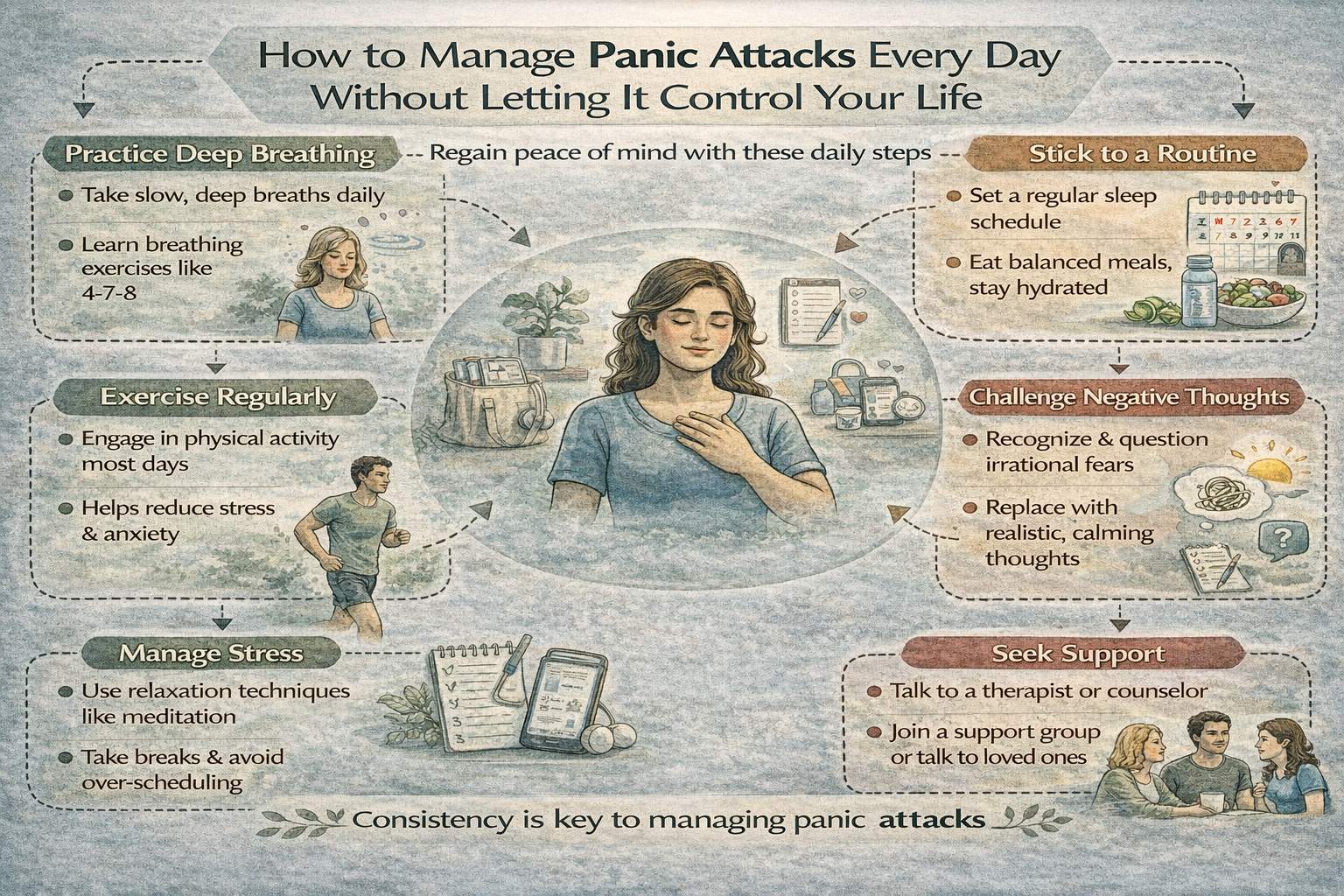
Building a daily routine is key to how to manage panic attacks effectively. It lowers baseline anxiety, making attacks less likely. Start small to avoid overwhelm, and consistency yields results.
Morning Prevention Routine
Begin your day with intention. Spend 5 minutes on deep breathing to set a calm tone.
- Sit comfortably and inhale for 4 counts, exhale for 6.
- Journal potential triggers, like upcoming events, to prepare mentally.
- Hydrate and eat a balanced breakfast to stabilize blood sugar.
This routine, backed by ADAA recommendations, primes your nervous system for the day.
Midday Check-Ins
Pause around lunch for a quick reset. Perform a body scan: Notice tension in your shoulders or chest, then release it.
- Use grounding by naming three things you see, hear, and feel.
- Take a short walk if possible, as movement disperses built-up stress.
These check-ins prevent anxiety buildup.
Evening Wind-Down
End your day reflectively. Review what went well and note any near-misses with panic.
- Practice sleep hygiene: Dim lights, avoid screens an hour before bed.
- Try gentle yoga or reading to unwind.
Better sleep reduces next-day vulnerability. Save this routine—download the free 7-day checklist at the end.
Expert Insight: Mental health experts at Cleveland Clinic emphasize that routines like these create “anxiety buffers,” helping you respond rather than react to stress.
How to Manage Panic Attacks in the Moment: Stop It Fast
When an attack hits, quick action can shorten its duration. The goal is to signal safety to your body and mind. These techniques, drawn from CBT, work for most people.
The 30-Second Rule
First, acknowledge: “This is a panic attack, not real danger.” This labeling reduces intensity, as per a 2023 study in Behavior Therapy.
Quick Physical Reset Techniques
Splash cold water on your face to activate the dive reflex, slowing your heart rate. Or try progressive muscle relaxation: Tense and release muscle groups from toes to head.
Many find relief with a weighted blanket for added pressure, simulating a hug. A popular option is a cooling towel for instant calm during hot flashes.
Cognitive Reframing in Real Time
Challenge thoughts: “What’s the evidence for this fear?” Reframe to facts, breaking the spiral.
Important: If symptoms persist beyond 20 minutes or include severe chest pain, seek immediate medical help to rule out other conditions.
Breathing Exercises for Panic Attacks
Breathing exercises are frontline tools for how to manage panic attacks. They activate the parasympathetic system, countering fight-or-flight. Practice daily for best results.
4-7-8 Breathing Technique
Inhale quietly through your nose for 4 counts. Hold for 7, then exhale through your mouth for 8 with a whoosh. Use during onset or preventively. Research suggests it reduces anxiety in minutes.
Cyclic Sighing (Stanford Method)
Inhale deeply through your nose, then add a second shorter inhale. Exhale slowly. A 2023 Stanford study found 5 minutes daily lowers anxiety more than mindfulness alone.
Box Breathing for Daily Use
Inhale for 4, hold 4, exhale 4, hold 4. Repeat 4 times. Ideal for steadying during stress.
Grounding Techniques for Panic Attacks
Grounding brings you back to the present, disrupting panic’s grip. These sensory methods are simple yet powerful for daily use.
5-4-3-2-1 Sensory Technique
Name 5 things you see, 4 you can touch, 3 you hear, 2 you smell, 1 you taste. This shifts focus from fear.
Physical Grounding (Feet on Floor)
Press feet firmly on the ground, feeling the support. Wiggle toes to reconnect with your body.
Object Focus Method
Hold an object like a keychain; describe its texture, color, and weight in detail.
Pro Tip: Customize grounding by carrying a textured stone or essential oil for portable relief.
Natural Remedies to Prevent Panic Attacks Naturally
Natural approaches can complement professional care to prevent attacks. Always consult a doctor before starting, especially with supplements.
Lifestyle Changes That Work
Regular exercise, like 30 minutes of walking, releases endorphins. Aim for 7-9 hours of sleep and reduce caffeine. Magnesium-rich foods (nuts, spinach) may help regulate nerves, per studies.
Herbal Options with Research
Passionflower tea shows promise in reducing anxiety, with a 2024 review supporting mild effects. Kava has limited data but potential risks like liver issues—use cautiously under supervision.
How to Manage Panic Attacks at Work and in Social Situations
Work and social settings can amplify panic, but discreet strategies help maintain composure.
Discreet Techniques for Meetings
Breathe deeply under the table or excuse yourself briefly for a walk.
Talking to Your Employer
If attacks interfere, discuss accommodations like flexible breaks. ADAA resources can guide conversations.
Exit Strategies Without Embarrassment
Have a phrase ready: “I need a quick break.” Step out, ground yourself, and return.
For more on anxiety in daily life, check our living with anxiety page.
Scientific Evidence & Research
Evidence supports these strategies, drawing from reputable sources.
Clinical Studies
NIMH reports 2.7% of U.S. adults (about 6 million) had panic disorder last year. A 2023 scoping review in PMC found breathwork reduces anxiety symptoms significantly in diagnosed patients. Multiple CBT meta-analyses show large effect sizes, outperforming medication alone long-term.
Expert Opinions
Stanford Medicine’s 2023 research highlights cyclic sighing: 5 minutes daily lowers anxiety effectively.
Statistical Data
Women face 3.8% prevalence vs. men’s 1.6%, per 2025 NIMH data.
Research Shows: A 2025 study in JAMA Psychiatry confirmed that grounding techniques reduce panic duration by 30% on average.
Common Mistakes to Avoid When Learning How to Manage Panic Attacks
Avoiding pitfalls accelerates progress in how to manage panic attacks.
Mistake #1 – Suppressing or Ignoring Symptoms
Pushing feelings down intensifies them. Better: Label and accept, as acceptance reduces resistance.
Mistake #2 – Inconsistent Practice
Sporadic efforts yield poor results. Better: Commit to daily 5-minute habits for cumulative benefits.
Mistake #3 – Avoiding Triggers Completely
This reinforces fear. Better: Use gradual exposure with professional guidance.
Expert Insight: Psychologists note that avoidance creates a “fear bubble” that shrinks life—exposure pops it safely.
Frequently Asked Questions (FAQs)
How do I manage panic attacks every day?
Build a routine with morning breathing, midday check-ins, and evening reflection to lower baseline anxiety and prevent attacks. Consistency is key, and combining this with lifestyle changes like exercise can reduce frequency.
Research suggests starting small; track progress in a journal. If daily life is impacted, consult a mental health professional for tailored support.
What are the best breathing exercises for panic attacks?
The 4-7-8 technique, cyclic sighing, and box breathing are top choices, backed by studies for quick calm. Practice daily to make them instinctive.
Stanford research favors cyclic sighing for long-term benefits. Always pair with professional advice if attacks are severe.
How can I stop a panic attack fast?
Acknowledge it’s panic, not danger, then use cold water or muscle relaxation for a physical reset. This can shorten episodes to minutes.
Follow with cognitive reframing. Seek help if attacks frequent; therapy enhances these tools.
Can natural remedies prevent panic attacks naturally?
Lifestyle tweaks like exercise, sleep, and magnesium may help prevent attacks, with evidence supporting mild effects. Herbs like passionflower show promise but aren’t cures.
Consult a doctor before trying, as interactions occur. They’re best as complements to therapy.
How do I manage panic attacks at work?
Use discreet breathing or grounding in meetings, and have exit plans. Talk to your employer about needs if necessary.
Preparation reduces surprises. For ongoing issues, professional counseling can provide coping strategies.
What grounding techniques for panic attacks are most effective?
The 5-4-3-2-1 sensory method and physical grounding like feet on floor work well, shifting focus from fear.
Adapt to your environment. Studies show they reduce symptoms quickly; practice regularly.
Conclusion
You now have proven tools—breathing exercises, grounding techniques, daily routines, and science-backed strategies—to manage panic attacks every day. These empower you to break the fear cycle, improve sleep and relationships, and reclaim joy. Research confirms small, consistent steps lead to lasting change.
Start with just one 5-minute breathing exercise today. Download the free “7-Day Panic Attack Management Checklist” for guided support. Explore our full anxiety recovery guide next.
You are not alone, and with these methods, you can regain control. For deeper insights, visit our breathing techniques page. Remember, professional help is a strength—reach out if needed.