If you are experiencing a panic attack right now — racing heart, tight chest, dizziness, feeling like you might lose control — you are not alone. A panic attack feels overwhelming, but it is not dangerous, and it will pass.
According to the National Institute of Mental Health (NIMH), approximately 2.7% of U.S. adults (about 6 million people) experience panic disorder each year. Millions more experience isolated panic attacks. These episodes can disrupt work, driving, school, relationships, and daily functioning. The fear of the next attack often creates a cycle of avoidance that worsens anxiety over time.
For a broader foundation, see our guide on Signs of Mental Health Issues: The Ultimate Guide to Panic Attacks: Causes, Symptoms & How to Overcome Them for Good (2026)
What Is a Panic Attack Crisis? (Clinical Definition)
A panic attack crisis is a sudden surge of intense fear or physical discomfort that peaks within minutes. Even when there is no real danger, the body reacts as if there is an emergency.
Mental health professionals define panic attacks as abrupt episodes that include strong physical symptoms and intense fear.
Common Panic Attack Symptoms
- Rapid or pounding heartbeat
- Shortness of breath
- Chest discomfort
- Dizziness or lightheadedness
- Sweating or shaking
- Nausea
- Fear of losing control or dying
Most panic attacks last 5–20 minutes, with peak intensity within the first 10 minutes.
Panic Attack vs Anxiety: What’s the Difference?
Everyday anxiety builds gradually and is usually linked to a specific stressor. A panic attack, however, appears suddenly and reaches high intensity quickly, often “out of the blue.”
When attacks become frequent and cause persistent worry or avoidance behaviors for more than one month, it may indicate panic disorder. Lifetime prevalence is approximately 4.7% of adults.
Research from NIMH shows women are more than twice as likely as men to experience panic disorder.
For a broader foundation, see our guide on Signs of Mental Health Issues: Panic Attacks Medications: What Doctors Around the World Actually Prescribe in 2026
Why Does a Panic Attack Make Everything Feel Impossible?
During a panic attack, the brain activates the fight-or-flight response.
The amygdala signals danger. Adrenaline increases heart rate and breathing. Blood pressure rises. Even though you are safe, the brain struggles to turn off the alarm system.
After an attack, many people begin avoiding situations where it happened. Over time, this avoidance reinforces fear and shrinks daily life.
Chronic stress, sleep deprivation, high caffeine intake, major life transitions, and emotional overload increase vulnerability to panic attacks.
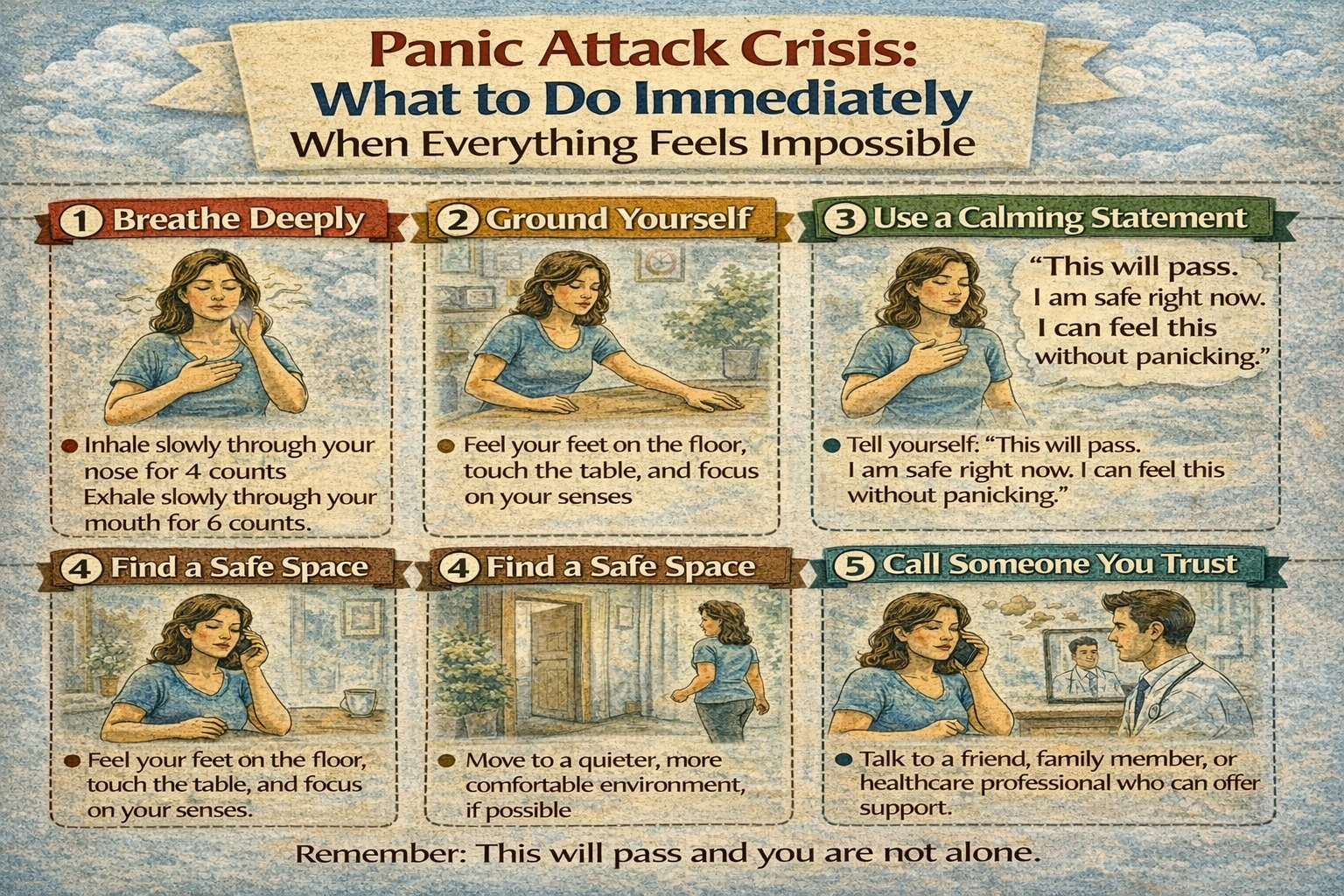
How to Stop a Panic Attack Immediately (First 60 Seconds)
Early action reduces intensity.
Step 1: Stabilize Your Position
Sit or stand in a safe place.
Step 2: Use a Safety Statement
Say:
“This is a panic attack. It is uncomfortable but not dangerous. It will pass.”
Step 3: Slow Your Breathing
Make your exhale longer than your inhale.
If symptoms include severe chest pain, jaw or arm pain, or prolonged breathing difficulty, seek emergency care to rule out medical conditions.
Best Breathing Exercises for Panic Attacks (Evidence-Based)
Controlled breathing activates the parasympathetic nervous system, calming the body.
4-7-8 Breathing Technique
- Inhale for 4 seconds
- Hold for 7 seconds
- Exhale for 8 seconds
- Repeat 4 cycles
Box Breathing
Inhale 4 → Hold 4 → Exhale 4 → Hold 4
Used in high-stress professions, this method improves nervous system regulation.
A 2023 meta-analysis published in Scientific Reports found breathwork interventions produced statistically significant reductions in anxiety symptoms (Hedges’ g = −0.32).
Grounding Techniques for Panic Attacks
Grounding helps redirect attention from catastrophic thoughts to the present moment.
5-4-3-2-1 Grounding Method
- 5 things you see
- 4 things you feel
- 3 things you hear
- 2 things you smell
- 1 thing you taste
This technique reduces dissociation and restores cognitive control.
Severe Panic Attack: When to Seek Help
Seek professional evaluation if:
- Attacks recur frequently
- You fear attacks for more than one month
- You avoid work, school, travel, or relationships
- Symptoms interfere with daily functioning
Evidence shows CBT is the gold standard treatment for panic disorder, with large effect sizes in reducing attack frequency and severity.
Medication (such as SSRIs) may also be recommended by licensed healthcare providers.
If you are in emotional crisis, call or text 988 (U.S.) or contact local emergency services.
Common Mistakes That Worsen Panic Attacks
1. Fighting the sensations aggressively
Resistance increases adrenaline.
2. Rapid shallow breathing
This worsens dizziness due to CO₂ imbalance.
3. Avoiding triggers permanently
Avoidance strengthens fear pathways in the brain.
Gradual exposure with professional guidance produces better long-term outcomes.
Scientific Data & Authority Sources
- NIMH: 2.7% past-year prevalence, 4.7% lifetime
- 2023 Breathwork Meta-Analysis (Scientific Reports)
- Multiple CBT meta-analyses show strong clinical efficacy
- American Psychiatric Association (2024): 43% of adults report increased anxiety
Conclusion: You Can Regain Control
A panic attack crisis feels overwhelming, but it is treatable. Evidence-based breathing techniques, grounding exercises, and professional therapy significantly reduce symptoms.
Start small. Practice one technique daily while calm. Skill repetition builds automatic nervous system regulation.
Recovery is possible. Millions have regained control — and you can too.
Medical Disclaimer
This content is for educational purposes only and does not replace professional medical advice. Always consult a licensed healthcare provider for diagnosis or treatment decisions. If you are in immediate crisis, contact emergency services or call/text 988.