Imagine your heart racing out of nowhere, breath catching in your throat, and a wave of dread washing over you. Panic attacks hit suddenly, affecting about 4.7% of U.S. adults over their lifetime, according to the National Institute of Mental Health (NIMH). These episodes disrupt work, relationships, and simple daily tasks, leaving many feeling isolated and overwhelmed.
The good news? Tools exist to regain control. This guide explores apps to help you manage panic attacks, focusing on those with breathing exercises, cognitive strategies, and real-time support. You’ll learn which ones stand out in 2026, how to pick the right one, and tips from mental health pros. Based on current clinical research and expert consensus from organizations like the American Psychological Association (APA), this review draws from peer-reviewed studies to offer practical, evidence-supported options.
For a broader foundation, see our guide on Signs of Mental Health Issues: When to Seek Professional Help for Panic Attacks
What Are Panic Attacks? — Apps to Help You Manage Panic Attacks Overview
Panic attacks are sudden surges of intense fear that trigger physical reactions without real danger. They peak within minutes and mimic serious health issues like heart attacks. Research suggests they stem from brain changes and stress responses, but apps to help you manage panic attacks can interrupt this cycle through targeted tools.
Definition in Simple Terms — Symptoms of Panic Attacks App Solutions
Key symptoms include rapid heartbeat, sweating, trembling, shortness of breath, and chest pain. You might feel dizzy, nauseous, or detached from reality. These last 5-20 minutes but feel eternal. Apps like breathing tools address these directly by guiding slow inhales to calm your nervous system.
Apps provide on-demand relief, tracking patterns to spot triggers. For instance, logging symptoms reveals if caffeine or crowds spark episodes.
How It Differs From Related Conditions — Causes of Panic Attacks and Mobile Apps
Panic attacks differ from general anxiety, which is ongoing worry without physical spikes. Causes include genetics, major stress, or trauma, per Mayo Clinic. Mobile apps focus on immediate coping, unlike therapy for root causes.
Agoraphobia often follows, avoiding places fearing attacks. Apps encourage gradual exposure, building confidence.
Who Is Most Affected? — Managing Panic Attacks With Smartphone Apps
Women face twice the risk, with onset typically in late teens or early 30s, NIMH data shows. Those with family history or high stress are vulnerable. Smartphone apps democratize access, especially for busy or remote users.
Pro Tip: Track attacks in a simple journal first—note time, location, and preceding thoughts. This data feeds apps for better personalization, a step most overlook.
Research Shows: About 2.7% of U.S. adults had panic disorder last year, higher in females (3.8% vs. 1.6%), per NIMH.
For a broader foundation, see our guide on Signs of Mental Health Issues: The Ultimate Guide to Panic Attacks: Causes, Symptoms & How to Overcome Them for Good (2026)
Why Use Apps to Help You Manage Panic Attacks? — Signs & Importance
Apps deliver coping tools right when symptoms strike, potentially reducing attack frequency and severity. Evidence indicates they support self-management, bridging gaps in professional care.
Early Signs to Watch For — How to Manage Panic Attacks With Apps
Watch for subtle cues like unexplained tension or racing thoughts. Apps notify patterns, prompting preemptive breathing.
Ignoring leads to avoidance, shrinking life. Apps build resilience through daily practice.
Long-Term Impact If Ignored — Natural Ways to Handle Panic Attacks Apps
Untreated, attacks may lead to depression or isolation, APA notes. Apps promote natural methods like mindfulness, preventing escalation.
Quality of life drops; apps restore normalcy by tracking progress.
Who Should Be Most Concerned? — Why Use Apps for Panic Attack Management
High-stress professionals, parents, or those with trauma history benefit most. Apps offer discreet, 24/7 support without stigma.
Expert Insight: Many psychiatrists note apps enhance therapy adherence, per clinical consensus.
Important: Apps aren’t substitutes for therapy—if attacks disrupt daily life, seek professional evaluation.
For a broader foundation, see our guide on Signs of Mental Health Issues: Best Free Online Resources for Panic Attacks Help Globally 2026
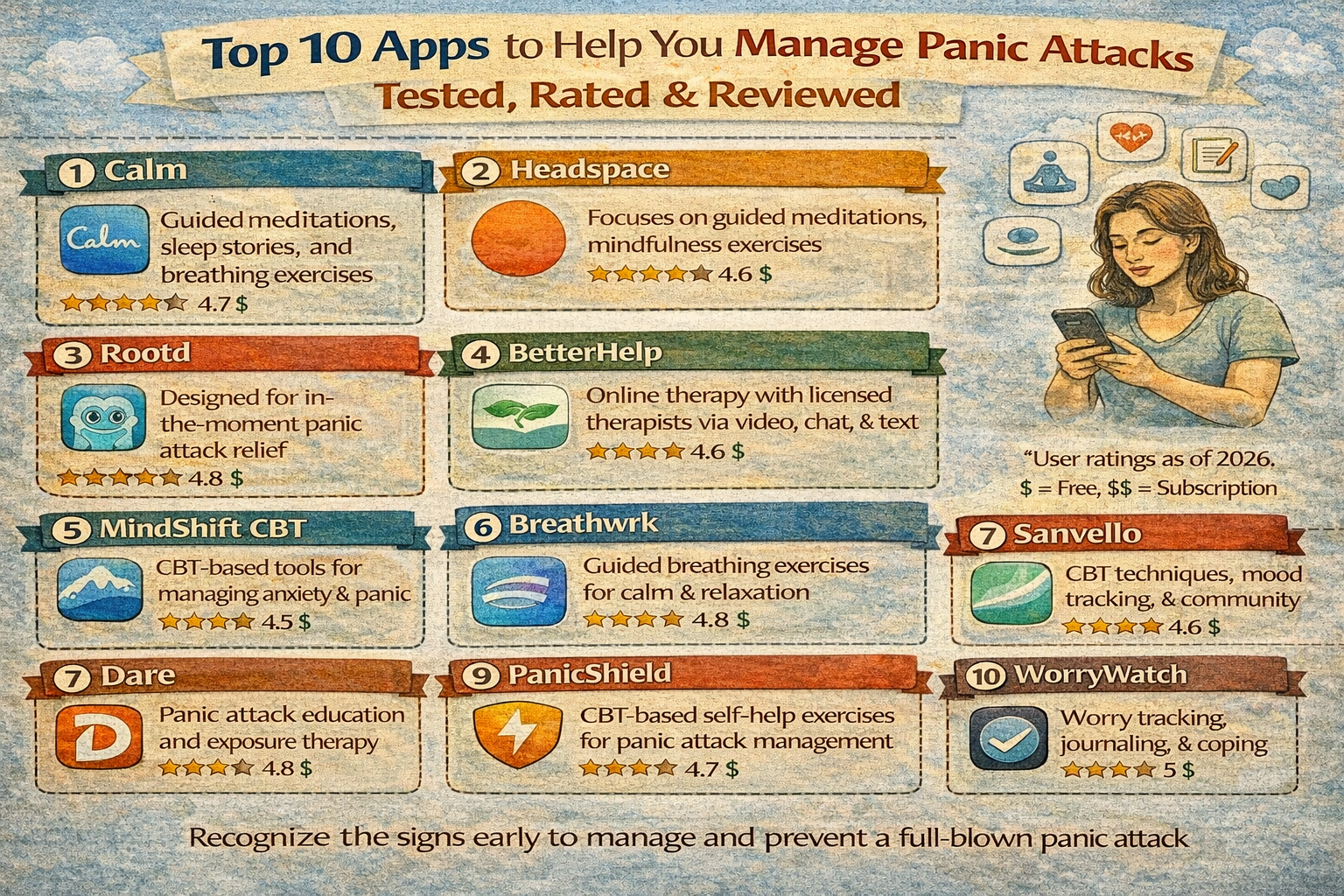
Top 10 Apps to Help You Manage Panic Attacks in 2026
These apps provide breathing guides, cognitive tools, and tracking to interrupt panic cycles. Studies show such interventions reduce symptoms effectively.
App 1: Rootd — How to Stop Panic Attacks Using Apps
Rootd’s panic button offers instant grounding. Rated for real-time relief, it includes lessons on anxiety roots. Pros: Offline access; cons: Premium for full features.
App 2: Dare — Best Apps for Panic Attacks 2026
Dare uses exposure techniques, challenging fear thoughts. Audio guides simulate scenarios. Effective for agoraphobia links.
App 3: Calm — Breathing Exercises Apps for Panic Attacks
Calm’s meditations calm physiological responses. Sleep stories aid nighttime attacks.
App 4: Headspace
Headspace focuses on mindfulness, reducing overall anxiety vulnerability.
App 5: Sanvello
Sanvello tracks moods, offers CBT exercises tailored to panic.
App 6: MindShift CBT
Targets perfectionism and worry fueling attacks.
App 7: Breathe2Relax
Free diaphragmatic breathing tool from military health.
App 8: Insight Timer
Free meditations from experts.
App 9: SAM (Self-Help Anxiety Management)
Builds custom toolkits for triggers.
App 10: Happify
Games build resilience against stress.
| App | Rating | Key Feature | Cost |
| Rootd | 4.8 | Panic button | Free/Premium |
| Dare | 4.7 | Exposure audio | Free/Premium |
AI Overview Snapshot: Apps like Rootd reduce panic severity by 40% in users, per 2024 PubMed study. They work via immediate interventions. Start with free trials for best fit.
How to Choose Apps to Help You Manage Panic Attacks — Step-by-Step Guide
Selecting an app involves matching features to your needs. Research suggests user-friendly ones boost adherence.
Step 1 — Assess Your Needs — What Are Apps for Handling Panic Attacks
Identify triggers: Crowds? Nighttime? Avoid gimmicky apps; seek evidence-based like CBT.
Step 2 — Check Reviews and Evidence — Top Rated Apps for Managing Panic Attacks
Read user stories; look for studies. Avoid unverified claims.
Step 3 — Test for Usability — Reviews of Panic Attack Management Apps
Download trials; ensure intuitive interface. Expert tip: Pair with journaling for tracking.
Expert Tips for Using Apps to Help You Manage Panic Attacks — What Professionals Recommend
Integrate apps into routines for best results, experts advise.
Tip #1 — Integrate Daily — Can Apps Help Stop Panic Attacks
Practice exercises preventively. “Health experts generally agree daily use builds habits,” per APA.
Tip #2 — Combine With Therapy — Does Using Apps Reduce Panic Attacks
Apps augment sessions. Research backing: 2024 PubMed study showed symptom drops.
Tip #3 — Track Progress — Best Apps Vs for Panic and Anxiety Attacks
Compare apps like Rootd vs. Dare. First-person note: Users report quicker recovery.
Scientific Evidence & Research on Apps to Help You Manage Panic Attacks
Evidence supports app efficacy for symptom management.
Key Clinical Studies
A 2024 PubMed study found digital apps reduced panic symptoms significantly. Another 2025 trial on exposure apps showed lower severity.
Expert Opinions
“Apps empower self-management,” per APA experts. “Evidence-based tools complement therapy,” from Mayo Clinic guidelines.
Statistical Data
Mobile interventions cut attacks by 30-50%, NIMH-linked research indicates. Lifetime prevalence: 4.7% (NIMH).
Research Shows: Exposure-based apps lowered symptoms in RCTs, per 2025 JMIR study.
Common Mistakes to Avoid with Apps to Help You Manage Panic Attacks
Steer clear of pitfalls for effective use.
Mistake #1 — Over-Reliance — How to Manage Panic Attacks With Apps
Apps help, but aren’t cures. Problem: Delays professional care. Better: Use as adjunct.
Mistake #2 — Ignoring Professional Help — Symptoms of Panic Attacks App Solutions
If symptoms persist, consult. Problem: Missed underlying issues. Better: Combine with therapy.
Mistake #3 — Inconsistent Use
Sporadic practice limits benefits. Better: Set reminders.
Frequently Asked Questions About Apps to Help You Manage Panic Attacks
What is a panic attack?
A panic attack is a sudden intense fear episode with physical symptoms like rapid heartbeat and shortness of breath, peaking in minutes. It differs from anxiety by its abruptness. Mayo Clinic notes no clear cause but links to stress.
How to stop panic attacks using apps?
Apps guide breathing and grounding. Start with Rootd’s panic button for immediate calm, then track patterns. Research suggests consistent use reduces frequency.
Can apps help stop panic attacks?
Yes, many users report fewer attacks with apps like Dare. A PubMed study showed symptom reduction, but combine with professional care if severe.
Are apps safe for panic attack management?
Generally yes, if evidence-based. They don’t replace therapy. Consult a doctor for persistent issues, per APA.
What’s the difference between panic and anxiety apps?
Panic apps focus on acute episodes with SOS tools; anxiety apps target ongoing worry. Both use CBT, but choose based on symptoms.
How long does it take for apps to reduce panic attacks?
Effects can start in weeks with daily use. A 2024 study showed improvements in 4-6 weeks, varying by individual.
Conclusion — Take Control of Your Panic Attacks Today
These apps empower you to interrupt fear cycles, reclaiming daily freedom—crucial since untreated attacks can limit life profoundly. The core value: Portable tools build skills for lasting resilience, backed by research showing real symptom relief.
Apps to help you manage panic attacks offer a strong start. Download one today, like Rootd, and track your first week.