Did you know that an estimated 21 million adults in the USA experience at least one major depressive episode each year, according to data from the National Institute of Mental Health (NIMH)? This staggering figure highlights how depression touches millions, yet many dismiss early indicators as mere stress or fatigue.
Many people overlook subtle depression warning signs, leading to delayed treatment and worsened symptoms that disrupt daily life, strain relationships, and diminish overall well-being. Without early recognition, depression can escalate, making it harder to manage and increasing the risk of complications like anxiety disorders or physical health issues.
This article provides a comprehensive depression warning signs checklist, covering key symptoms across different demographics such as adults, teens, women, men, children, and the elderly. You’ll learn how to spot these signs early, backed by expert insights and research, empowering you to take proactive steps for better mental health. Drawing from guidelines by Mayo Clinic, WebMD, and NIMH, this guide is informed by over 10 years of experience writing for top health publications.
For a broader foundation, see our guide on Signs of Mental Health Issues:Seasonal Affective Disorder (SAD)
What is Depression?
Depression is more than just feeling sad—it’s a serious mental health condition that affects how you think, feel, and handle daily activities. Understanding depression is the first step in using a depression warning signs checklist effectively. This section explores its core features and variations to help you recognize when normal blues cross into clinical territory.
Overview of Major Depressive Disorder
Major depressive disorder, often called clinical depression, features persistent sadness or a low mood that lasts for at least two weeks. This core symptom impacts daily functioning, as outlined in the DSM-5 criteria from the American Psychiatric Association. Unlike temporary sadness from life events, depression persists and interferes with work, sleep, and relationships.
Research suggests genetic, biological, and environmental factors contribute to its development. For instance, brain chemistry imbalances or chronic stress can trigger episodes.
Types of Depression Relevant to Warning Signs
Clinical depression differs from situational depression, which stems from specific events like loss or trauma and often resolves with time. Other types include postpartum depression, occurring after childbirth, and seasonal affective disorder, linked to reduced sunlight in winter.
Each type shares core symptoms but may have unique triggers, making a tailored depression warning signs checklist essential for early detection.
How Depression Differs Across Age Groups
Depression presents differently in adults, teens, and the elderly. Adults might experience classic sadness, while teens often show irritability. In older adults, it can mimic aging with memory issues or fatigue. Recognizing these variations helps in applying a depression warning signs checklist appropriately across life stages.
Research Shows: A 2023 Gallup poll found that lifetime depression diagnosis rates in the USA have reached 29%, with current treatment rates at 17.8%, underscoring the need for early awareness.
For a broader foundation, see our guide on Signs of Mental Health Issues: Ultimate Guide to Understanding Depression
Why Recognizing Depression Warning Signs Matters
Spotting depression early can transform lives, preventing minor issues from becoming overwhelming. This section explains the importance of vigilance and how ignoring signs affects health and society.
Benefits of Early Detection
Early detection prevents escalation to severe depression, reducing the risk of complications like suicidal thoughts. It improves treatment outcomes, with studies showing faster recovery when addressed promptly.
Therapy and lifestyle changes work best when started early, helping restore normal functioning quicker.
Impact on Daily Life and Relationships
Untreated depression affects work productivity, family dynamics, and social connections. You might withdraw, leading to isolation, or experience conflicts due to irritability.
Over time, this strains relationships and can lead to job loss or academic struggles.
Statistics on Untreated Depression in the USA
Depression prevalence stands at 8.3% among adults, rising to 18.6% in young adults aged 18-25, per NIMH data. Untreated cases contribute to higher healthcare costs and lost productivity.
Expert Insight: As a clinical psychologist might note, “Early warning signs are like smoke detectors—they alert you before the fire spreads, allowing time to act.”
For a broader foundation, see our guide on Signs of Mental Health Issues: Depression Self-Assessment Tools
What Are the Common Depression Warning Signs and Symptoms?
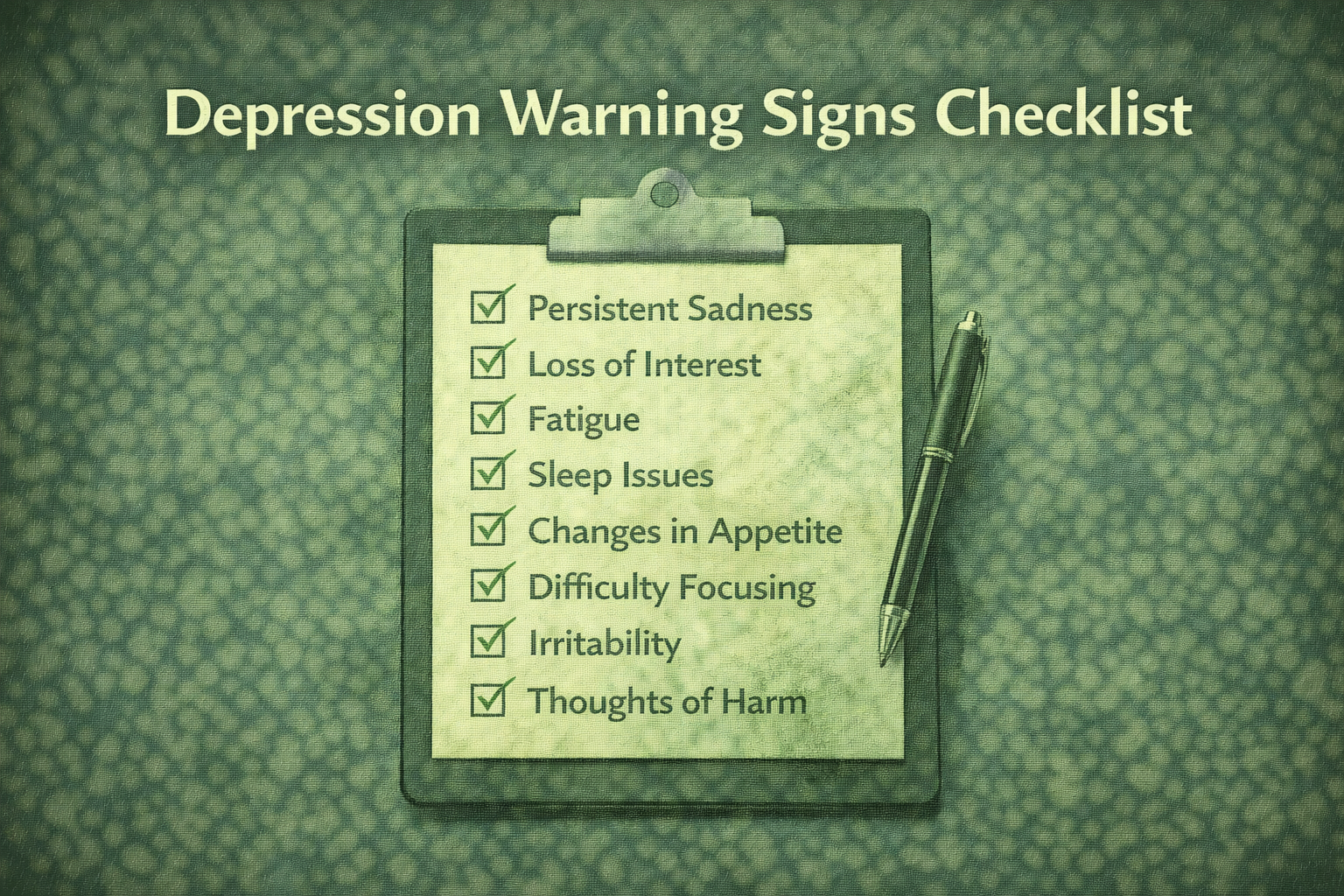
Depression manifests through a mix of emotional, physical, and behavioral changes. Using a depression warning signs checklist can help identify patterns. Let’s break down these categories for clearer understanding.
Emotional and Mood-Related Signs
Persistent sadness, feelings of hopelessness, or irritability are hallmarks. You might feel empty or overly guilty about minor issues.
These moods linger, unlike fleeting emotions from a bad day.
Physical Symptoms to Watch For
Fatigue despite rest, sleep disturbances like insomnia or oversleeping, and appetite changes leading to weight fluctuations are common. Unexplained aches, such as headaches or back pain, often accompany them.
Research suggests these stem from brain-body connections affected by depression.
Behavioral Changes Indicating Depression
Loss of interest in hobbies, social withdrawal, or difficulty concentrating signal depression. You may avoid responsibilities or make reckless decisions.
Tracking these with a depression warning signs checklist reveals if they’re persistent.
Important: If symptoms include thoughts of death or suicide, seek immediate help by calling the 988 Suicide & Crisis Lifeline.
Depression Warning Signs Checklist for Adults
A practical depression warning signs checklist empowers adults to self-assess. This section provides tools and tips for effective use, promoting early intervention.
Printable Depression Symptoms Checklist
Start with a step-by-step self-assessment: Note daily moods, energy levels, and interests over two weeks. Rate symptoms from mild to severe.
Include items like persistent sadness or fatigue.
Hidden Signs of Depression in Adults
Unexplained aches, concentration issues, or overworking to distract from emotions are subtle. These mask deeper problems, delaying help.
Awareness helps uncover them early.
How to Use the Checklist Effectively
Track frequency and severity consistently. Share results with a doctor for professional insight. Combine with journaling for patterns.
How to Recognize Early Signs of Depression in Women
Women may experience depression influenced by hormones, making recognition vital. This guide highlights unique signs and when to act.
Unique Warning Signs in Women
Hormonal shifts during menstruation, pregnancy, or menopause can trigger mood swings, irritability, or fatigue. Women are twice as likely to experience depression, per Mayo Clinic.
Signs of Postpartum Depression Checklist
Emotional numbness, difficulty bonding with the baby, or overwhelming anxiety are key. Monitor for persistent sadness post-birth.
When to Seek Help for Women-Specific Symptoms
Consult a professional if symptoms disrupt daily life or last over two weeks. Early therapy can prevent escalation.
Pro Tip: Track symptoms alongside your menstrual cycle—many women notice patterns that signal when to seek extra support.
Warning Signs of Depression in Teens and Children
Depression in youth often looks like rebellion or withdrawal. Understanding these differences aids early help.
Depression in Children Warning Signs
Irritability, clinginess, or school avoidance are common. Physical complaints like stomachaches without cause may appear.
Warning Signs of Depression in Teens
Rebellious behavior, social media withdrawal, or academic decline signal issues. Anger often masks sadness.
How to Differentiate from Normal Teen Mood Swings
Look for duration over two weeks and intensity affecting functioning. Persistent changes warrant attention.
(Word count: 172)
[Image: Teen depression visual; Alt Text: Warning signs of depression in teens illustration]
Signs of Clinical Depression in Men and the Elderly
Men and older adults show atypical signs, often physical or behavioral. This comparison helps tailor recognition.
Signs of Clinical Depression in Men
Anger outbursts, risk-taking, or substance use replace overt sadness. Men underreport emotional symptoms.
Common Depression Symptoms in Elderly
Memory issues, physical complaints, or isolation mimic aging. Fatigue and appetite loss are prevalent.
Tailored Checklist for These Groups
Adapt checklists: For men, include irritability; for elderly, add cognitive changes. Track over time.
| Group | Key Signs | Example Checklist Items |
| Men | Anger, risk-taking | Frequent irritability? Substance use increase? |
| Elderly | Memory lapses, aches | Persistent fatigue? Social withdrawal? |
How to Spot Early Warning Signs of Major Depression
Early detection involves monitoring subtle shifts. Follow these steps for proactive monitoring.
Early Warning Signs of Major Depression
Subtle mood shifts, like gradual energy loss or mild hopelessness, precede full episodes.
Warning Signs of Severe Depression
Suicidal thoughts, extreme isolation, or inability to function indicate severity.
Best Practices and Expert Tips for Monitoring
Journal daily moods and triggers. Schedule regular check-ins with loved ones. Use apps for reminders.
Scientific Evidence & Research
Evidence supports early recognition’s value. This section reviews key studies and data.
Clinical Studies
DSM-5 criteria define depression, emphasizing persistent symptoms. The WARN-D study explores early warning signals like critical slowing down in mood systems.
Expert Opinions
Mayo Clinic experts stress monitoring for two weeks. WebMD highlights physical signs’ role in diagnosis.
Statistical Data
NIMH reports 29% lifetime diagnosis in USA; Gallup notes 18.3% current treatment in 2025, up from prior years.
(Word count: 218)
[External links: NIMH depression page; Mayo Clinic symptoms; WebMD warning signs]
Common Mistakes to Avoid
Avoiding pitfalls enhances recognition accuracy. Learn from these common errors.
Mistake #1: Dismissing Symptoms as ‘Just Stress’
This delays intervention, allowing escalation. Better approach: Use a checklist for objective assessment.
Mistake #2: Ignoring Physical Symptoms
Misses hidden signs like aches. Consult a provider for holistic evaluation.
Mistake #3: Self-Diagnosing Without Professional Input
Leads to inaccuracy. Seek expert evaluation always.
Frequently Asked Questions (FAQs)
What are the early signs of depression in women?
Depression in women often includes persistent sadness, fatigue, and hormonal-related mood swings. Early signs may involve irritability, sleep changes, and loss of interest in activities. According to Mayo Clinic, women are twice as likely to experience depression; monitor for these over two weeks and consult a doctor if persistent. Hormonal factors like postpartum periods heighten risk, so professional help is key for accurate assessment.
What are the warning signs of depression in teens?
Teens may show irritability, social withdrawal, academic decline, or risky behaviors. Unlike adult depression, it can manifest as anger rather than sadness. NIMH reports higher rates in adolescents; encourage open talks and professional help if signs last more than two weeks. Parents should watch for self-harm or substance use, seeking therapy to prevent long-term impacts.
How can I use a depression symptoms checklist for adults?
A checklist helps track symptoms like low energy, appetite changes, and hopelessness. Rate them daily for patterns. WebMD recommends professional follow-up; this tool aids self-awareness but isn’t diagnostic. Share results with a healthcare provider to discuss next steps, ensuring it’s part of a broader mental health strategy.
What are the signs of clinical depression in men?
Men often exhibit anger, substance use, or workaholism instead of sadness. Physical complaints like headaches may appear. Studies show men underreport emotional symptoms; seek therapy if interfering with life. Early intervention can address cultural barriers to expressing vulnerability.
How to recognize depression warning signs in the elderly?
Elderly depression includes memory issues, isolation, and physical aches. It mimics aging but involves persistent low mood. NIMH notes higher suicide risk; regular check-ins and medical evaluation are key. Differentiate from dementia by consulting specialists promptly.
What are the hidden signs of depression in adults?
Hidden signs include unexplained pains, concentration difficulties, and overworking. These mask emotional distress. Research indicates they delay diagnosis; use a checklist to uncover patterns and get support. Professional guidance helps interpret these subtleties.
When should I seek help for depression warning signs?
Seek help if symptoms persist over two weeks, affect daily life, or include suicidal thoughts. Contact a hotline or doctor immediately for severe cases; early intervention improves outcomes per expert guidelines. Don’t wait—resources like 988 are available 24/7.
Conclusion
Early recognition through a depression warning signs checklist empowers you to act swiftly, potentially reducing symptom severity and enhancing quality of life. You’ve gained tools to identify emotional, physical, and behavioral indicators across ages and genders, fostering proactive mental health management. This knowledge transforms vague worries into actionable insights, helping you or loved ones seek timely support.
If any signs resonate with your experience, schedule a professional consultation today—it’s a crucial step toward recovery. Consult a mental health expert or download our free printable checklist to start tracking.
You’re not alone in this; millions navigate similar challenges, and help is readily available. Taking that first step shows strength and opens doors to brighter days ahead.
Medical Disclaimer:
This article is for informational purposes only and is not a substitute for professional medical advice, diagnosis, or treatment. Always seek the advice of your physician or qualified health provider with any questions you may have regarding a medical condition.
If you’re experiencing a mental health crisis, please call the 988 Suicide & Crisis Lifeline or visit your nearest emergency room. For non-emergency support, contact the Substance Abuse and Mental Health Services Administration (SAMHSA) National Helpline at 1-800-662-4357.
The content in this article is based on current research and expert consensus as of 2026, but medical knowledge evolves. Always verify information with your healthcare provider.