According to recent Gallup data from 2025, 18.3% of U.S. adults—nearly 48 million people—are currently experiencing or being treated for depression, highlighting the widespread impact of this mental health challenge. If you’re between 25 and 55, you might be juggling work, family, and daily responsibilities while grappling with persistent sadness, isolation, or fatigue that makes everything feel overwhelming. Despite available treatments like medication and therapy, many people still feel alone in their struggles, unsure where to turn for additional support.
This article explores depression support groups as a valuable complement to professional care. You’ll learn what these groups are, why they matter, the different types available, how to find them in the USA, best practices for participation, and insights from scientific research. Whether you’re seeking online depression support groups or local options, this guide will help you take informed steps toward feeling more connected and empowered. Drawing from expertise aligned with WebMD and Mayo Clinic standards, backed by clinical studies and expert opinions, we’ll provide practical, evidence-based information to support your journey.
For related reading, see our guide on Signs of Mental Health Issues: What is Depression? Complete Overview
What Are Depression Support Groups?
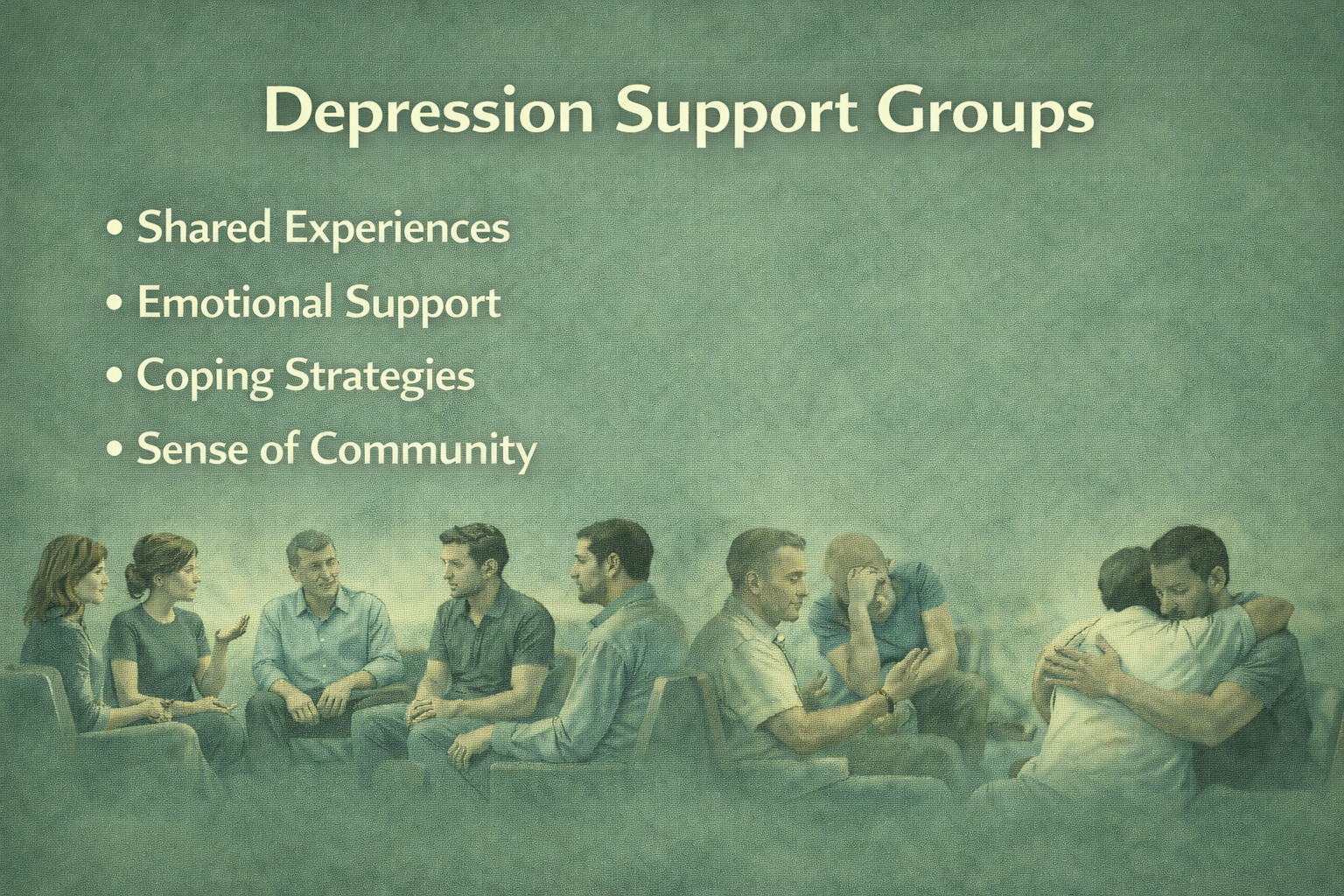
Depression support groups bring together individuals facing similar challenges to share experiences and offer mutual encouragement. These gatherings provide a non-judgmental space where participants can discuss coping strategies, emotional hurdles, and daily victories. Research suggests that such peer interactions can complement professional treatments, helping reduce feelings of isolation without replacing medical advice.
Typically led by trained peers or facilitators, depression support groups emphasize emotional validation and practical tips. They’re not formal therapy but serve as a bridge to build resilience. According to the Depression and Bipolar Support Alliance (DBSA), these groups foster hope by showing that recovery is possible through shared stories.
Definition and Purpose of Depression Support Groups
Depression support groups are structured meetings where people with depression connect to exchange support. Participants might share how they manage symptoms like low energy or negative thoughts, gaining insights from others’ journeys. The core purpose is to promote emotional healing and empowerment, as studies show peer connections can ease depressive burdens.
These groups often focus on real-life applications, such as handling work stress or family dynamics. They’re complementary to treatments like antidepressants or counseling, helping fill gaps in professional care. Always consult a healthcare provider to ensure they align with your overall plan.
Key Features of Effective Support Groups
Confidentiality is paramount in depression support groups, creating a safe environment for honest discussions. Regular meetings—weekly or bi-weekly—build consistency, whether in-person or virtual. This structure allows members to track progress and celebrate small wins together.
Effective groups emphasize empowerment, encouraging participants to take active roles in their recovery. Hope is woven in through success stories, reminding everyone that improvement is achievable. Look for groups affiliated with organizations like the National Alliance on Mental Illness (NAMI) for quality assurance.
How They Differ from Therapy Sessions
Depression support groups are peer-led, relying on shared lived experiences rather than clinical expertise. In contrast, therapy sessions involve licensed clinicians guiding evidence-based interventions like cognitive behavioral therapy (CBT). Groups focus on camaraderie and validation, while therapy targets root causes and skill-building.
This peer approach can feel less intimidating for some, offering relatability that therapy might not. However, groups aren’t diagnostic; they’re supportive add-ons. If symptoms worsen, seek professional help immediately.
Pro Tip:
Before joining, observe a session virtually if possible—this can ease anxiety and help you gauge if the group’s vibe matches your needs.
For a broader foundation, see our guide on Signs of Mental Health Issues: Ultimate Guide to Understanding Depression
Why Join Depression Support Groups?
Feeling isolated is a common hallmark of depression, but connecting with others who understand can shift that dynamic. Depression support groups offer a sense of community, helping you realize you’re not alone in your experiences. Research indicates that participation.
Emotional Benefits and Reduced Isolation
Depression support groups foster belonging, combating the loneliness that often accompanies the condition. Hearing others articulate similar struggles provides validation, reducing self-doubt. This connection can alleviate emotional distress, anxiety, and even physical fatigue associated with depression.
Participants often report feeling lighter after sessions, as sharing burdens lightens the load. A sense of camaraderie emerges, turning strangers into allies on the recovery path.
Practical Advantages for Mental Health Management
Learn proven coping strategies from peers who’ve navigated similar challenges in depression support groups. Success stories can ignite hope and motivation, encouraging you to try new habits like journaling or exercise routines. This peer wisdom enhances overall recovery and personal empowerment.
Groups also offer accountability, helping you stay committed to self-care goals. Many find this practical input bridges gaps in formal treatment.
Long-Term Impact on Well-Being
Over time, depression support groups build resilience through sustained social connections. They complement medication and therapy, potentially leading to better adherence and outcomes. Studies suggest participants develop stronger social skills, reducing relapse risks.
This holistic approach supports enduring mental health, empowering you to thrive beyond symptoms.
Research Shows:
A 2023 meta-analysis in Psychological Medicine found that peer support interventions modestly improve personal recovery for mental health conditions, including depression, with consistent but small effects.
For a broader foundation, see our guide on Signs of Mental Health Issues: Depression Recovery Stories
Types of Depression Support Groups
Depression support groups come in various formats to suit different needs and preferences. Whether you prefer digital convenience or face-to-face interactions, options abound. Understanding these types helps you choose one that aligns with your lifestyle and goals.
From general to specialized, these groups cater to unique demographics or themes. Organizations like NAMI and DBSA provide reliable frameworks, ensuring quality and accessibility.
Online Depression Support Groups
Virtual platforms such as DBSA or NAMI online communities offer flexible access to depression support groups. Ideal for those with mobility limitations or busy schedules, these groups meet via video or chat anytime. Many are free and allow anonymity, reducing barriers to entry.
Participants appreciate the global reach, connecting with diverse experiences. However, screen fatigue can be a drawback—balance with offline activities.
Local Depression Support Groups
In-person meetings through NAMI or DBSA foster deeper connections in community settings. These local depression support groups emphasize face-to-face empathy, building trust through shared physical presence. They often include tailored options for women, teens, or other groups.
The tangible support can feel more immediate, though location and timing might limit access. Hybrid models are increasingly common.
Specialized Groups Such as Christian Depression Support Groups
Faith-based options like Christian depression support groups integrate spiritual elements for added comfort. Specialized formats address demographics such as postpartum depression support groups or those for bipolar conditions. These peer-led sessions focus on mutual encouragement within a targeted context.
Anxiety-combined groups are popular, given the overlap. Choose based on your identity for maximum relevance.
How to Find Depression Support Groups in the USA
Locating the right depression support group starts with reliable resources. In the USA, national organizations simplify the search, offering directories and helplines. Begin by assessing your preferences—online, in-person, or specialized—to narrow options.
Persistence pays off; trying a few groups ensures a good fit. Remember, this is a step toward empowerment, not a commitment.
Searching for Free Depression Support Groups Near Me
Use NAMI or DBSA websites to search by ZIP code for free depression support groups near me. Local mental health organizations and hospitals often host sessions—check their calendars. Apps like Meetup or online directories expand your reach.
Start with SAMHSA’s locator tool for vetted options. Free groups remove financial barriers, making support accessible.
Finding Virtual Depression Support Groups
Platforms like HealthUnlocked or Anxiety and Depression Association of America (ADAA) communities host virtual depression support groups. SAMHSA resources point to free online choices, evaluated by schedule and focus. Join forums for ongoing discussions.
Consider time zones and tech requirements. Virtual formats suit remote areas or introverted individuals.
Tips for Choosing the Right Group
Match your needs—age, gender, or condition-specific—like depression support groups for women or teens. Attend a trial session to assess dynamics and comfort. Prioritize confidentiality and positive facilitation.
If it doesn’t click, try another; the right group feels supportive, not draining.
Expert Insight:
As experts from the Mayo Clinic note, support groups can ease distress and fatigue by providing a sense of community, but they’re most effective when combined with professional care.
Online vs. In-Person Depression Support Groups
Choosing between online and in-person depression support groups depends on your circumstances. Both offer unique advantages, with hybrids emerging as flexible alternatives. Weigh factors like convenience and connection depth.
A comparison reveals no one-size-fits-all; experiment to find what suits you.
Advantages of Online Groups
Online groups provide home-based convenience, perfect for tight schedules. They boast broader reach, including depression support groups online free, connecting you globally. Anonymity appeals to those wary of exposure.
However, digital interactions might lack emotional nuance. Ideal for introverts or rural residents.
Benefits of In-Person Groups
In-person settings strengthen bonds through non-verbal cues like smiles or hugs. Local depression support groups build community ties, offering immediate empathy. Structured formats ensure focused discussions.
Drawbacks include travel and potential exposure anxiety. Great for those craving tangible connections.
Which to Choose Based on Your Needs
Hybrid options blend benefits for ultimate flexibility. Consider location, schedule, and comfort—online for accessibility, in-person for depth. Consult a professional if unsure.
Best Practices and Expert Tips for Depression Support Groups
Maximizing depression support groups requires preparation and engagement. Approach with an open mind, focusing on mutual respect. These tips from experts ensure positive experiences.
Consistency amplifies benefits, turning one-time attendance into lasting growth.
Preparing for Your First Meeting
Set realistic expectations—groups offer support, not cures. Be open to sharing at your pace, and listen actively to others. Choose depression support groups aligned with your interests for better engagement.
Research the format beforehand to reduce anxiety. Remember, it’s okay to observe initially.
Active Participation Strategies
Share comfortably to build trust over time. Apply coping skills learned, like breathing exercises, in daily life. Maintain boundaries to prevent emotional overload—step back if needed.
Active involvement fosters deeper connections and personal insights.
Maximizing Benefits Long-Term
Attend regularly for sustained support and progress tracking. Combine with professional care, like therapy, for comprehensive management. Seek feedback from the group to refine your approach.
Adjust as your needs evolve, perhaps trying specialized options.
Important:
If you experience thoughts of self-harm during or after a group session, contact the 988 Suicide & Crisis Lifeline immediately—support groups are not equipped for crises.
Scientific Evidence & Research
Research on depression support groups highlights their role in enhancing recovery. While not a standalone treatment, they show promise in complementing care. Studies from reputable sources provide balanced insights.
Peer support’s effectiveness varies, but evidence supports its inclusion in mental health strategies.
Clinical Studies
A 2011 meta-analysis published in General Hospital Psychiatry showed peer support reduces depressive symptoms with a standardized mean difference (SMD) of -0.59 compared to usual care. Randomized controlled trials (RCTs) indicate improvements in recovery and empowerment, though effects on clinical symptoms are limited.
More recent reviews, like a 2021 systematic analysis in BMC Psychiatry, confirm small gains in overall recovery.
Expert Opinions
Experts from Mayo Clinic emphasize that depression support groups reduce isolation and improve coping skills, making them a valuable adjunct. ADAA and DBSA highlight peer support’s augmentation of therapy, fostering hope through shared experiences.
Clinical psychologists note the relational benefits outweigh potential drawbacks when groups are well-facilitated.
Statistical Data
Studies show slight enhancements in mental health recovery metrics, with no significant difference from CBT in some trials (SMD 0.10). A 2023 review in Psychological Medicine suggests modest efficacy for personal recovery.
While not transformative for symptoms, they aid 40-60% of participants in feeling more empowered.
For more, see NIMH on depression and JAMA Psychiatry meta-analysis.
Common Mistakes to Avoid
Navigating depression support groups effectively means sidestepping pitfalls that could hinder benefits. Awareness prevents discomfort and maximizes value. Approach with intention for the best outcomes.
Mistake #1: Joining Without Researching the Group
Rushing in may lead to a poor fit, causing discomfort or ineffective support. Unaligned groups can exacerbate feelings of mismatch.
Better approach: Review focus, rules, and participant reviews via NAMI or DBSA sites beforehand. This ensures compatibility.
Mistake #2: Over-Sharing or Dominating Discussions
This disrupts dynamics, alienating others and breaching shared space. It can create imbalance and resentment.
Better approach: Balance sharing with active listening. Follow guidelines to maintain harmony and mutual benefit.
Mistake #3: Expecting a Quick Cure or Ignoring Professional Advice
Groups complement, not replace, treatment—expecting miracles overlooks their supportive role.
Better approach: Integrate as part of a holistic plan with therapy or meds. Consult professionals for personalized guidance.
Frequently Asked Questions (FAQs)
What are depression support groups for teens?
Depression support groups for teens provide a safe space for adolescents to share experiences and coping strategies. These groups, often through NAMI or DBSA, focus on age-specific challenges like school stress and peer pressure, helping reduce isolation and build resilience. Sessions encourage open dialogue in a confidential setting, empowering teens to develop healthy habits. If symptoms persist, consult a pediatric mental health professional for integrated care.
How do depression and anxiety support groups work?
Depression and anxiety support groups combine discussions on overlapping symptoms, offering peer support for managing both conditions. Participants learn techniques like mindfulness, with meetings led by peers or facilitators, promoting emotional validation and practical advice. Groups typically meet regularly, allowing members to track progress and exchange tips. They’re not therapy but can enhance professional treatment—speak with a doctor if anxiety or depression intensifies.
Are there postpartum depression support groups?
Yes, postpartum depression support groups help new mothers cope with hormonal changes and parenting stress. Available through local hospitals or online via Postpartum Support International (PSI), they provide empathy, resources, and strategies for recovery. Mothers share stories of adjustment, reducing shame and isolation. Combine with medical evaluation, as postpartum depression may require therapy or medication—consult your obstetrician promptly.
What about bipolar depression support groups?
Bipolar depression support groups, like those from DBSA, address mood swings and depressive episodes. They offer education on medication adherence and triggers, fostering a community for sharing highs and lows. Participants gain insights into cycle management in a supportive environment. These groups complement psychiatric care—monitor symptoms closely and seek immediate help for manic shifts.
How to find depression support groups for adults?
Search NAMI or DBSA websites by location, or use SAMHSA’s helpline for depression support groups for adults. Options include in-person, virtual, and specialized groups, ensuring accessibility for working professionals. Directories list schedules and focuses—start with a call to verify. If you’re unsure, a therapist can recommend fits based on your needs.
Are there depression recovery support groups?
Depression recovery support groups focus on long-term management and relapse prevention. Through peer-led sessions, members share success stories and tools for maintaining wellness post-treatment. These groups emphasize lifestyle adjustments and ongoing support. They’re ideal after initial recovery—integrate with follow-up care from a healthcare provider to sustain gains.
Conclusion
Depression support groups offer profound benefits, from diminishing loneliness to building lasting resilience and empowerment. By connecting with others who truly understand, you gain practical tools and emotional validation that can transform your daily experience, making recovery feel more attainable. The primary value lies in this shared journey—realizing you’re part of a community equipped to navigate challenges together.
Take one clear step today: Search for a local or online group via NAMI or DBSA and attend an introductory session. This small action can open doors to meaningful support.
For personalized guidance, consult a mental health professional or join a local depression support group today. Download our free mental health resources for additional tips, or explore our hub page on mental health recovery guides.
Remember, seeking support is a strength, not a weakness. With the right resources, including depression support groups, you can move toward a brighter, more connected future. You’re not alone, and help is within reach.
Medical Disclaimer:
This article is for informational and educational purposes only and does not constitute medical advice. The information provided should not be used for diagnosing or treating a health problem or disease. Always consult with a qualified healthcare professional before making any changes to your mental health treatment, starting new medications, or trying new supplements.
If you’re experiencing a mental health crisis, please call the 988 Suicide & Crisis Lifeline or visit your nearest emergency room. For non-emergency support, contact the Substance Abuse and Mental Health Services Administration (SAMHSA) National Helpline at 1-800-662-4357.
The content in this article is based on current research and expert consensus as of 2026, but medical knowledge evolves. Always verify information with your healthcare provider.