Explore key depression statistics and facts in the USA, including prevalence rates, demographic trends, and insights for adults aged 25-55 seeking reliable mental health information.
Did you know that over 18% of U.S. adults—nearly 48 million people—are currently dealing with depression or receiving treatment for it? This staggering figure highlights a growing public health concern that touches millions of lives. Many Americans aged 25-55 face overwhelming stress from work, family responsibilities, and life changes, often leading to undiagnosed or untreated depression that disrupts daily routines, productivity, and relationships. Left unaddressed, these challenges can escalate, affecting overall well-being and quality of life.
This article dives into the latest depression statistics and facts, offering demographic breakdowns, current trends, and expert insights to help you grasp the full scope of this condition. You’ll learn about prevalence rates across different groups, why these numbers matter, and practical steps for awareness and support. Whether you’re seeking information for yourself or a loved one, understanding these depression statistics and facts can empower better decisions.
Backed by data from authoritative sources like the National Institute of Mental Health (NIMH), Centers for Disease Control and Prevention (CDC), and Gallup, this content aligns with standards from trusted platforms like WebMD and Mayo Clinic.
For related reading, see our guide on Signs of Mental Health Issues: Persistent Depressive Disorder Overview
What is Depression? Definition and Overview
Depression is more than just feeling sad—it’s a serious mental health condition that affects how you think, feel, and handle daily activities. According to the DSM-5, the standard diagnostic manual used by mental health professionals, depression involves persistent symptoms that last at least two weeks and interfere with functioning. Research suggests that depression statistics and facts reveal it’s one of the most common mental disorders in the U.S., impacting millions annually.
Major Depression Statistics United States
Major depressive disorder (MDD), also known as clinical depression, is defined by the DSM-5 as a period of at least two weeks where a person experiences depressed mood or loss of interest in activities, along with other symptoms like changes in appetite or sleep. According to the latest NIMH data from the 2021 National Survey on Drug Use and Health (updated 2022), 8.3% of adults (about 21 million) had at least one major depressive episode in the past year. Symptoms often include persistent sadness, loss of interest in hobbies, fatigue, feelings of worthlessness, and impaired concentration or decision-making.
These episodes can vary in severity, with 5.7% of affected adults experiencing severe impairment that significantly disrupts work, home, or social life. Healthcare experts emphasize that MDD is treatable, yet many cases go unrecognized.
Facts About Depression in Adults
Depression in adults can manifest as major depressive disorder, persistent depressive disorder (a chronic form lasting two years or more), or situational depression triggered by life events like loss or stress. Persistent depressive disorder affects about 1.5% of adults, often leading to ongoing low mood without the intense episodes of MDD. Situational depression, while temporary, can evolve into clinical depression if untreated.
Over 50% of adults with depression also experience co-occurring anxiety, and conditions like substance use disorders are common, complicating recovery. Studies show that these overlaps increase the risk of chronic health issues, underscoring the need for comprehensive screening.
Mental Health Depression Facts
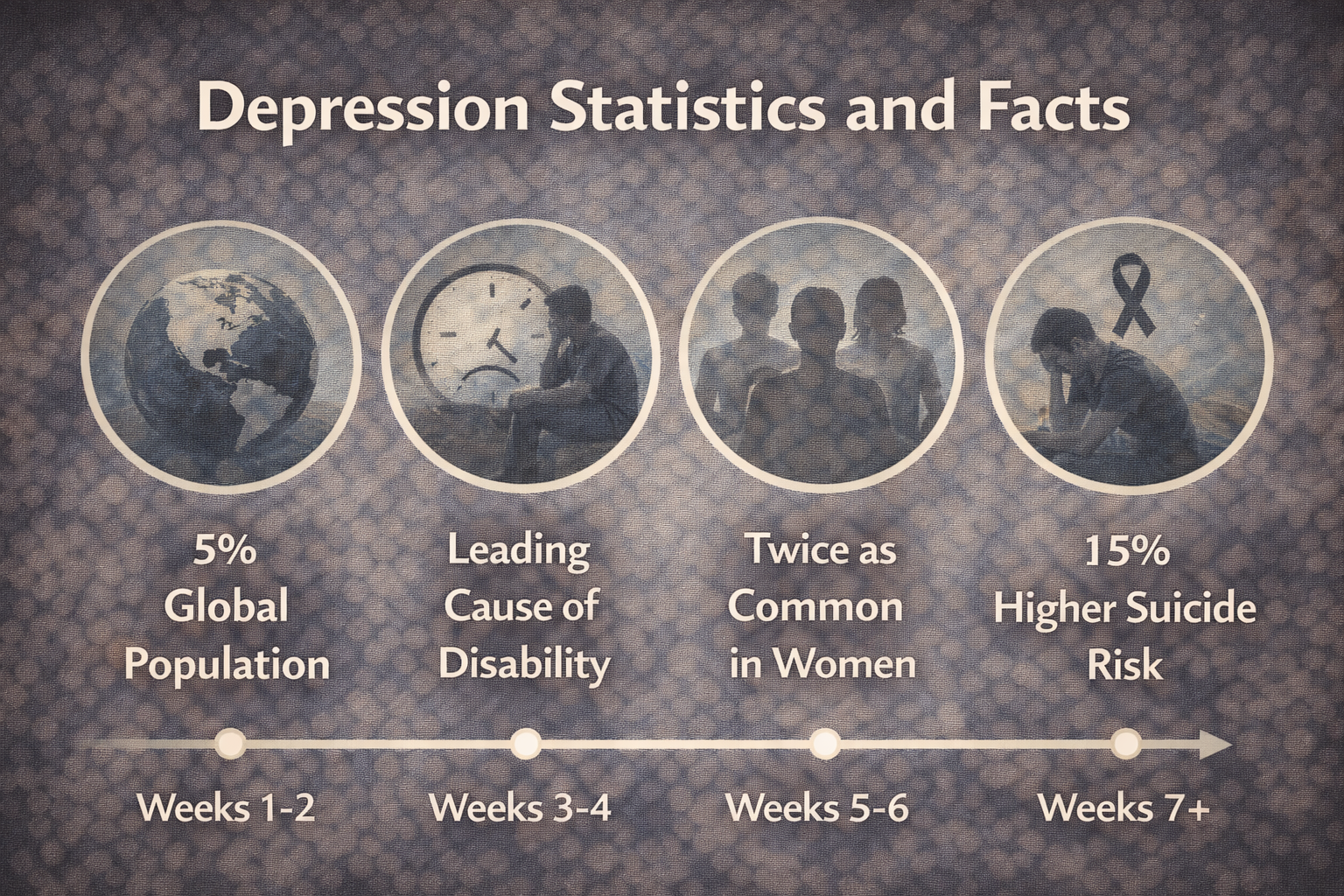
Depression ranks as a leading cause of disability worldwide, according to the World Health Organization, severely impacting productivity and quality of life. In the U.S., it contributes to billions in lost workdays each year. Biological factors like brain chemistry imbalances, psychological elements such as negative thinking patterns, and environmental stressors including trauma or poverty all play roles in its onset.
Additionally, genetic predispositions can increase vulnerability, with family history raising risk by up to 30%. Understanding these mental health depression facts helps reduce stigma and encourages early intervention.
Research Shows: A 2022 NIMH analysis found that depression contributes to over 10% of the global burden of disease, highlighting its profound economic and social costs.
For a broader foundation, see our guide on Signs of Mental Health Issues: Ultimate Guide to Understanding Depression
Why Depression Statistics and Facts Matter
Grasping depression statistics and facts is crucial because they reveal the widespread impact of this condition on individuals and society. These numbers guide public health strategies, helping to allocate resources where they’re needed most. Moreover, they empower people to recognize symptoms early and seek help, potentially preventing severe outcomes.
Current Depression Rates America
The scale of depression in America is alarming, with 18.3% of adults (47.8 million) currently having or being treated for depression in 2025, per Gallup data. This represents a significant rise from pre-pandemic levels. The economic toll is massive, with billions lost annually in productivity, healthcare costs, and absenteeism—estimated at over $210 billion yearly by experts.
These rates underscore the urgency for accessible mental health services, as untreated depression can lead to chronic health problems like heart disease.
Depression Incidence Rates America
Depression incidence rates inform public health policy by highlighting needs for stigma reduction and better care access. Early intervention based on these rates can prevent escalation to severe issues, including suicide, which claims over 48,000 lives yearly in the U.S. According to CDC data, addressing incidence through community programs could lower overall rates by 20-30%.
Furthermore, tracking incidence helps identify at-risk groups, enabling targeted prevention efforts that save lives and reduce societal burdens.
Global vs USA Depression Stats
USA depression rates exceed the global average, with 8.3% of adults experiencing MDD compared to 4-5% worldwide, per WHO estimates. Factors like socioeconomic stress, urban living, and limited mental health access contribute to this disparity. In contrast, some countries with stronger social supports report lower rates.
This comparison highlights opportunities for the U.S. to adopt global best practices, such as integrated primary care mental health screening.
Expert Insight: As a mental health specialist notes, “Depression statistics and facts show that societal factors like isolation amplify U.S. rates—addressing them through policy can bridge the global gap.”
For a broader foundation, see our guide on Signs of Mental Health Issues: Depression Recovery Timeline
What Are the Latest Depression Statistics in the USA?
The latest depression statistics in the USA paint a picture of a persistent challenge, with rates stabilizing at high levels post-COVID. These figures, drawn from national surveys, help track progress and identify gaps in care. Understanding depression statistics and facts is key to advocating for better resources.
Depression Statistics in the USA
Overall, 18.3% of U.S. adults currently have or are treated for depression, equating to 47.8 million people in 2025. Lifetime diagnosis rates hover around 28.5%. Among youth, 15.4% of adolescents aged 12-17 experienced a major depressive episode in 2024, down slightly from previous years but still affecting millions.
These statistics emphasize the need for ongoing monitoring, as depression affects diverse populations differently.
Depression Prevalence United States
By gender, women experience higher prevalence at 10.3% for major episodes compared to 6.2% for men. Age-wise, rates peak at 18.6% for those 18-25, dropping to 4.5% for adults 50+.
Racial variations show multi-racial groups at 13.9%, highlighting disparities that require culturally sensitive interventions.
Depression Facts and Figures USA
Treatment gaps remain significant, with only 61% of adults with major depressive episodes receiving care. Among racial groups, highest prevalence is in multi-racial (13.9%) and American Indian/Alaskan Native (11.2%) adults.
These depression facts and figures USA reveal systemic barriers, urging improvements in access and equity.
Important: Despite available treatments, underreporting due to stigma means actual rates may be higher—always encourage open discussions about mental health.
How Does Depression Affect Different Demographics?
Depression doesn’t impact everyone equally; demographics play a key role in prevalence and outcomes. Examining these variations through a comparison lens helps tailor support. For instance, here’s a quick table overview:
| Demographic | Prevalence | Key Notes |
| Teens (12-17) | 15.4% MDE | Higher in girls; 40% report persistent sadness |
| Women | 10.3% MDE | Nearly double men’s rate; postpartum risks |
| Men | 6.2% MDE | Often undiagnosed; linked to 80% of suicides |
| Elderly (65+) | 8.7% past 2 weeks | Rises in care settings; tied to isolation |
Teen Depression Statistics USA
In 2024, 15.4% of teens aged 12-17 (about 4 million) had a major depressive episode, per SAMHSA data. Additionally, 40% of high schoolers reported persistent sadness in 2023 YRBSS surveys. Rates are higher in females at 29.2% versus 11.5% in males, often linked to social media and academic pressures.
Early recognition in teens can prevent long-term issues, as untreated depression raises risks for substance use.
Women Depression Facts Stats
Women are nearly twice as likely as men to experience depression, with 10.3% prevalence for major episodes. Postpartum depression affects 1 in 8 mothers nationally, rising to 19% in some states, impacting over 460,000 annually.
Hormonal changes and societal roles contribute, making routine screenings essential during reproductive years.
Depression in Men Statistics USA
Men face 6.2% prevalence for major depressive episodes, but stigma leads to underdiagnosis. Men account for 80% of suicides, often because symptoms manifest as irritability rather than sadness.
Encouraging men to seek help through tailored programs can close this gap.
Elderly Depression Facts America
Among those 65+, 8.7% reported depression symptoms in the past two weeks, per CDC 2021-2023 data. Rates climb to 11.5% in hospitalized seniors and 13.5% in home care, often due to isolation or health declines.
Addressing elderly depression through community engagement improves quality of life.
Pro Tip: For demographics at higher risk, like teens or elderly, incorporating routine mental health check-ins during doctor visits can catch issues early.
What Are the Current Depression Trends in the USA?
Depression trends in the USA show a steady rise over the past decade, influenced by societal shifts. Monitoring these patterns helps predict future needs. Depression statistics and facts indicate stabilization at elevated levels.
Depression Trends in USA
Rates rose from 7.3% in 2015 to 9.2% in 2020, stabilizing at 18.3% current rate post-COVID, per Gallup. Young adults saw sharp increases, doubling since 2017 to 26.7%.
Economic stressors and pandemics drove this, with modest youth declines recently.
Postpartum Depression Statistics USA
Postpartum rates increased from 9.4% in 2010 to 19.3% in 2021, a 105% relative rise, affecting over 460,000 mothers yearly.
Awareness campaigns have improved detection, but access to care remains uneven.
Major Depression Statistics United States
Lifetime rates approach 29%, with youth MDE at 15.4% in 2024, showing modest declines but ongoing high levels.
These trends highlight the need for sustained investment in mental health.
Research Shows: A 2023 meta-analysis noted post-COVID surges in young adults, emphasizing the role of isolation in rising rates.
Best Practices and Expert Tips for Understanding Depression Data
Navigating depression data requires discernment to avoid misinformation. Start by verifying sources for reliability. These practices ensure accurate interpretation.
How to Interpret Depression Statistics
Always check reputable sources like NIMH or CDC, and consider methodology—self-reports may undercount due to stigma. Account for underreporting, which can skew rates by 20-30%.
Cross-reference multiple studies for a fuller picture.
Tips for Mental Health Awareness
Promote regular screenings and open conversations to destigmatize depression. Integrate mental health into physical checkups for holistic care.
Community education fosters support networks.
Resources for Support
National helplines like 988 offer immediate help, while therapy apps provide accessible tools. Community programs and online therapy services like BetterHelp can bridge gaps—we recommend them for their evidence-based approaches and convenience.
Expert Insight: “Interpreting data isn’t just numbers; it’s about human stories—use it to advocate for change,” says a clinical psychologist.
Scientific Evidence & Research
Backing depression discussions with solid research builds trust. This section reviews key studies and data.
Clinical Studies
The NIMH’s 2021 NSDUH (updated 2022) reported 8.3% adult MDE prevalence, with 5.7% severe impairment.
Longitudinal studies confirm depression’s links to chronic illnesses.
Expert Opinions
Gallup experts attribute post-COVID surges to isolation and economic stress. CDC stresses better access, noting only 40% of depressed youth receive therapy.
Statistical Data
Postpartum depression saw a 105% increase from 2010-2021. Youth symptoms affect 40% of high schoolers per 2023 YRBSS.
For more, see NIMH Major Depression and CDC Depression Data.
Common Mistakes to Avoid
Avoiding pitfalls in understanding depression enhances awareness and support.
Mistake #1: Ignoring Demographic Differences
This overlooks higher risks in teens or women, leading to unequal resource allocation. Better: Tailor campaigns to vulnerable groups for inclusive outreach.
Mistake #2: Confusing Sadness with Clinical Depression
It delays treatment and stigmatizes sufferers. Better: Use DSM-5 criteria to differentiate and encourage professional evaluation.
Mistake #3: Overlooking Treatment Gaps
With 60% of youth untreated, this perpetuates cycles. Better: Advocate for affordable, accessible services to close disparities.
Important: Mistaking normal grief for depression can hinder help-seeking—consult professionals if symptoms persist beyond two weeks.
Frequently Asked Questions (FAQs)
What are the latest depression statistics in the USA?
Over 18.3% of U.S. adults (47.8 million) currently have or are treated for depression in 2025, with lifetime rates at about 28.5%. Youth rates stand at 15.4% for major episodes in 2024. These figures from Gallup and SAMHSA highlight a stabilization post-COVID but underscore ongoing needs. If symptoms interfere with life, speak with a healthcare provider promptly.
What are some facts about depression in adults?
Depression affects 8.3% of adults with at least one major episode yearly, higher in women (10.3%) than men (6.2%). It often co-occurs with anxiety in over 50% of cases and impacts daily functioning, leading to disability. Biological and environmental factors contribute, and treatment like therapy or medication helps most. Consult a professional for personalized advice.
What are teen depression statistics in the USA?
About 15.4% of teens aged 12-17 had a major depressive episode in 2024, with 40% of high school students reporting persistent sadness in 2023. Girls are affected at nearly triple the rate of boys (29.2% vs. 11.5%). Social pressures exacerbate this; early intervention through school programs is vital. Parents should monitor and seek help if needed.
What are women depression facts and stats?
Women face 10.3% prevalence for major episodes, nearly double men’s rate. Postpartum depression affects 1 in 8, rising to 19% in recent data, influenced by hormonal and stress factors. Lifetime risks are higher due to societal roles. Regular screenings during life transitions can help; always discuss symptoms with a doctor.
What are depression trends in the USA?
Rates rose from 7.3% in 2015 to 9.2% in 2020, stabilizing at 18.3% current, with young adults seeing the sharpest increases post-COVID. Youth trends show modest declines but remain concerning at 15.4%. Economic and isolation factors drive this; ongoing monitoring is essential for policy adjustments.
What are elderly depression facts in America?
About 8.7% of those 65+ report depression symptoms in the past two weeks, with 13.2% showing overall symptoms. Rates climb to 13.5% for those needing home care, often linked to isolation and health issues. Community support reduces risks; encourage social activities and professional check-ins for seniors.
Conclusion
Understanding depression statistics and facts empowers you to foster better awareness, spot early signs, and combat stigma, leading to improved mental health outcomes for yourself and others. These insights reveal depression’s broad reach in the USA, particularly among demographics like young adults and women, but also highlight treatable aspects through evidence-based approaches.
If you’re experiencing symptoms, take the clear next step: consult a healthcare professional for evaluation and support. Help is accessible and effective.
Sign up for our newsletter for more mental health tips, or explore related resources on symptoms and treatments. You’re not alone—knowledge is your first step toward wellness, and with the right tools, brighter days are ahead.
Medical Disclaimer:
This article is for informational purposes only and is not a substitute for professional medical advice, diagnosis, or treatment. Always seek the advice of your physician or other qualified health provider with any questions you may have regarding a medical condition.