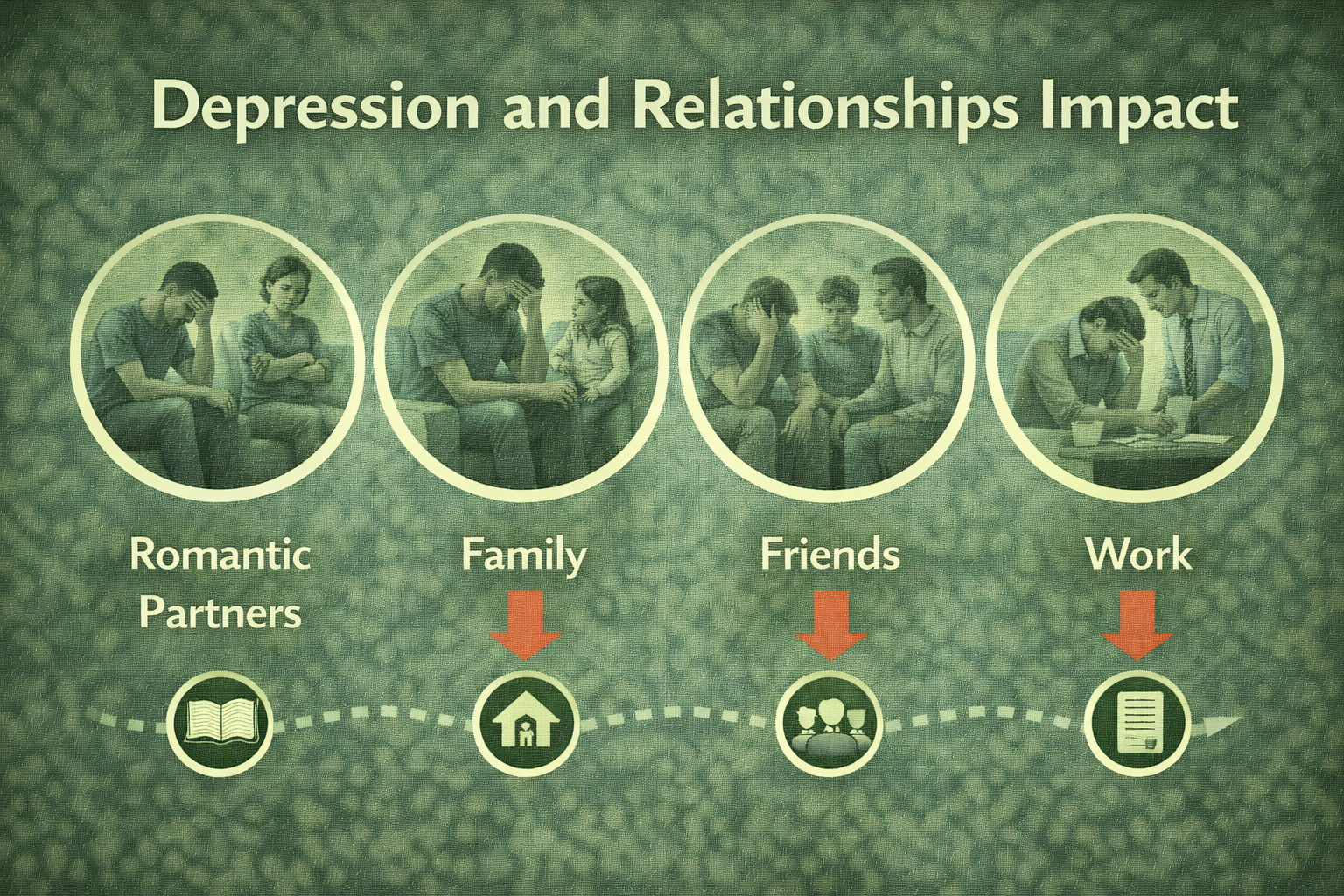
Imagine waking up next to your partner, but feeling an invisible wall between you—one built from persistent sadness, low energy, and unspoken frustrations. Millions of Americans in relationships experience this strain when one partner battles depression; studies show that poor relationship quality can double the risk of developing depression. If you’ve noticed more arguments, less intimacy, or a growing sense of isolation in your partnership, you’re not alone. Depression and relationships impact each other in profound ways, creating cycles that affect not just the individual but the entire bond.
Depression doesn’t isolate itself to one person; it ripples outward, leading to withdrawal, irritability, and conflicts that erode trust and closeness in marriages, long-term partnerships, and even dating relationships. This can manifest as emotional distance, reduced physical affection, or heightened tension during everyday interactions. However, understanding this interplay offers hope for recovery and stronger connections.
In this article, you’ll discover how depression and relationships impact one another, recognize key signs that depression is straining your bond, explore effective support strategies, and gain evidence-based insights into healing paths. We’ll also cover common pitfalls to avoid and answer frequently asked questions. Backed by authoritative sources like the National Institute of Mental Health (NIMH), Mayo Clinic, and peer-reviewed studies on the interpersonal effects of depression, this guide aims to empower you with knowledge and actionable steps. For foundational information, check our related article on Understanding Major Depressive Disorder.
Research Shows:
A 2023 meta-analysis in JAMA Psychiatry found that individuals in low-quality relationships have up to a 2.6 times higher odds ratio for depressive episodes, highlighting the bidirectional link between relational health and mental well-being.
For related reading, see our guide on Signs of Mental Health Issues: Signs and Symptoms of Depression
What Is the Impact of Depression on Relationships?
Depression profoundly influences partnerships, often turning what should be sources of support into arenas of misunderstanding and pain. Understanding this impact is crucial because it helps couples identify issues early and seek appropriate interventions. In this section, we’ll break down the core effects, how straining occurs, and specific intimacy challenges.
Understanding Depression’s Core Effects on Partnerships
When depression takes hold, it often leads to withdrawal and isolation, reducing emotional availability for your partner. You might find yourself pulling away from conversations or shared decisions, leaving the other feeling neglected. Additionally, irritability and negative thinking patterns can escalate minor disagreements into major conflicts, eroding the foundation of mutual respect.
Loss of interest, known as anhedonia, further complicates matters by diminishing enjoyment in activities once shared, like date nights or hobbies. Research suggests these symptoms create a barrier to connection, making it harder to maintain the emotional glue that holds relationships together.
How Depression Straining Romantic Relationships Occurs
The depression and relationships impact often unfolds through vicious cycles. For instance, depression may cause one partner to become distant, prompting frustration in the other, which in turn deepens the isolation. This bidirectional nature means that poor relationships can exacerbate depression symptoms, creating a feedback loop that’s hard to break without intervention.
Studies indicate that this straining is common, with many couples reporting increased tension as depression persists. Recognizing this pattern early can prevent escalation and open doors to healing.
Depression and Intimacy Issues in Close Bonds
Intimacy suffers greatly under depression’s weight, with reduced libido, emotional numbness, and physical disconnection becoming prevalent. Over time, this can lead to long-term effects on trust and closeness, where partners feel more like roommates than lovers.
The depression and relationships impact here is particularly poignant, as intimacy is a key pillar of romantic bonds. Addressing these issues requires patience and often professional guidance to rebuild that vital connection.
Expert Insight:
As a clinical psychologist might note, “Depression doesn’t just dim one’s inner light—it casts shadows on those closest, but with empathy and education, couples can navigate back to warmth and understanding.
For related reading, see our guide on Signs of Mental Health Issues: Ultimate Guide to Understanding Depression
How Depression Affects Relationships: Key Signs to Watch For
Spotting the signs that depression is infiltrating your relationship can be a game-changer, allowing for timely support and prevention of deeper rifts. This section outlines common indicators across various aspects of daily life and dynamics.
Signs Depression Is Affecting Relationship
Look for increased arguments or emotional distance, which often signal underlying depression. Your partner might withdraw from shared time or activities, leaving you feeling disconnected. Irritability directed at you or the family can also emerge, turning small issues into flashpoints.
These signs highlight how depression and relationships impact daily harmony, making proactive conversations essential.
Depression Causing Relationship Issues in Daily Life
In everyday routines, depression may lead to neglect of responsibilities or affection, straining the partnership’s balance. Over-reliance on the non-depressed partner for emotional support or excessive reassurance-seeking can create imbalance.
Such patterns underscore the need for boundaries and mutual understanding to mitigate these issues.
Depressed Partner Hurting Relationship Dynamics
Feelings of being a burden often plague the depressed partner, while the other may experience reduced communication and empathy. This can foster resentment if unaddressed.
Recognizing these dynamics is key to fostering compassion and seeking help. For more on this, see our guide to Supporting a Partner with Mental Health Challenges.
Pro Tip:
Track subtle changes like fewer shared meals or avoided eye contact over a week; journaling these can reveal patterns and prompt gentle discussions without blame.
For related reading, see our guide on Signs of Mental Health Issues: Depression Support for Families
Can Depression Ruin Relationships? The Real Risks
Yes, untreated depression can pose significant risks to relationships, but awareness and action can mitigate them. This section explores why the impact on marriage is notable and long-term effects on partnerships.
Why Depression Impact on Marriage Is Significant
Higher conflict and lower satisfaction from depression are linked to increased separation risks. The bidirectional effects amplify strain, where depression worsens relational issues, and vice versa.
Research shows that couples facing this have higher odds of dissolution, emphasizing early intervention.
Effects of Depression on Partnerships Long-Term
Even in remission, persistent issues like eroded trust, diminished intimacy, and altered family roles can linger. This underscores the importance of ongoing support.
Many people find success with online therapy platforms like BetterHelp for couples counseling, which offers convenient, evidence-based sessions to rebuild bonds.
Important:
If depression includes thoughts of harm, seek immediate professional help—it’s a medical emergency, not a relationship flaw.
How to Help Partner with Depression Effectively
Supporting a partner with depression requires balance, empathy, and self-protection. This step-by-step guide provides practical ways to offer help without overwhelming yourself.
Supporting Spouse with Depression Without Enabling
- Listen actively without trying to “fix” everything; validate their feelings to build trust.
- Encourage professional help gently, perhaps by researching options together.
- Set clear boundaries to safeguard your own mental health, like designating time for self-care.
These steps prevent enabling while fostering recovery.
Practical Ways to Offer Support
Engage in low-pressure shared activities, such as short walks, to combat isolation. Show patience during low-energy periods and educate yourself on depression symptoms via reliable sources.
Small, consistent efforts can make a big difference in the depression and relationships impact.
When to Seek Couples or Individual Therapy
If conflicts persist or one partner’s well-being suffers, it’s time for therapy. Signs include ongoing resentment or inability to communicate effectively.
Consider individual therapy for the depressed partner and couples sessions for joint issues. Explore our article on Therapy Options for Depression.
Research Shows:
A study in the Journal of Family Psychology found that couples therapy reduced depressive symptoms by 50% in participants, improving satisfaction bidirectionally.
Overcoming Depression in Relationships: Healing Paths
Healing from the depression and relationships impact is possible with intentional strategies. This section offers actionable advice for rebuilding and recovering.
Healing Relationships After Depression
Rebuild trust through open, non-judgmental communication—schedule regular check-ins to express needs. Joint therapy or support groups can provide tools for reconnection.
Patience is key as both partners adjust.
Relationship Advice for Depression Recovery
Prioritize self-care for both, like exercise or hobbies, to boost individual resilience. Celebrate small wins, such as a shared laugh, to reinforce positive momentum.
Talk to a licensed therapist today—find help here [therapy finder link].
Expert Insight:
Healthcare professionals often say, “Recovery thrives in supportive environments; viewing depression as a shared challenge, not a personal failing, accelerates healing.”
Scientific Evidence & Research on Depression and Relationships Impact
Evidence underscores the profound link between depression and relational health. Here’s a summary of key studies, expert views, and data.
Clinical Studies
Research reveals that poor relationship quality doubles depression risk, with odds ratios around 2.60 for low-quality ties. Depression is associated with higher conflict, withdrawal, and intimacy issues in partnerships.
Longitudinal studies confirm bidirectional effects, where marital dissatisfaction predicts depressive symptom increases.
Expert Opinions
According to Mayo Clinic and NIMH, depression causes noticeable relational problems, with bidirectional influences common. Experts emphasize treating both the individual and the relationship.
Statistical Data
Approximately 8-10% of U.S. adults experience major depression annually, with many reporting relational strain. Strained partnerships significantly elevate depression odds.
For more, visit NIMH Depression Page, Mayo Clinic Depression Symptoms, or a PLOS One study on social relationships and depression.
Pro Tip:
When reviewing research, look for longitudinal studies—they better capture how depression and relationships impact evolve over time, offering more reliable insights.
Common Mistakes to Avoid When Dealing with Depression and Relationships Impact
Navigating this terrain requires awareness of pitfalls that can worsen the situation. Here are key mistakes and better approaches.
Mistake #1: Ignoring the Problem or Blaming the Partner
Why problematic: This delays help and intensifies cycles of guilt and resentment. Better approach: Foster understanding through education and professional input to address root causes compassionately.
Mistake #2: Overburdening Yourself as the Supporter
Why problematic: It leads to burnout and resentment, harming both partners. Better approach: Prioritize self-care, like therapy for yourself, and set realistic boundaries.
Mistake #3: Avoiding Professional Help
Why problematic: Symptoms often persist without expert intervention. Better approach: Encourage therapy or medication as recommended by healthcare providers.
mportant:
Assuming depression will “pass on its own” can prolong suffering; research shows untreated cases have higher relational fallout rates.
Frequently Asked Questions (FAQs)
How Depression Affects Relationships – What Are the Main Ways?
Depression leads to withdrawal, irritability, reduced intimacy, and conflict, creating distance and strain in partnerships. These effects can manifest as emotional numbness or heightened arguments, impacting daily interactions. If these persist, consult a healthcare professional for personalized guidance.
Can Depression Ruin Relationships?
Yes, untreated depression can increase conflict and isolation, raising risks of separation—but with support and treatment, many couples heal and strengthen bonds. Therapy often helps mitigate these risks by addressing both mental health and relational dynamics. Seek professional help if symptoms interfere with your partnership.
What Are Signs Depression Is Affecting Relationship?
Common signs include emotional withdrawal, frequent arguments, loss of affection/intimacy, and one partner feeling burdened or resentful. You might notice reduced shared activities or increased irritability in daily life. If these signs disrupt your bond, talking to a therapist can provide clarity and strategies.
How to Help Partner with Depression Without Burning Out?
Listen empathetically, encourage treatment, maintain your own self-care, and consider couples counseling to address shared impacts. Set boundaries to prevent exhaustion while offering support. If burnout looms, prioritize your well-being and consult a professional for balanced advice.
Does Depression Impact on Marriage Lead to Higher Divorce Rates?
Strained marriages from depression show higher risks, but therapy and support often prevent dissolution and improve outcomes. Studies indicate bidirectional effects where improving one aspect benefits the other. Always discuss with a healthcare provider if divorce thoughts arise amid symptoms.
How Long Does It Take to Heal Relationships After Depression?
Varies; many see improvement in months with consistent treatment, communication, and effort from both partners. Factors like therapy adherence influence timelines. Patience and ongoing check-ins help; consult experts if progress stalls.
Conclusion
Recognizing the depression and relationships impact early unlocks pathways to empathy, effective support, and lasting recovery—transforming potential rifts into opportunities for deeper bonds. You’ve now gained insights into signs, strategies, and evidence showing that depression is treatable, and with understanding, relationships can not only survive but thrive.
Take one clear next step: Talk openly with your partner about any signs you’ve noticed and seek professional guidance together if needed. Book a therapy session or explore resources today—your relationship deserves this investment.
For ongoing support, sign up for our email opt-in to receive weekly mental health tips. Check our hub on Mental Health Resources or comprehensive depression guide.
Healing is possible; many couples emerge closer, more resilient after addressing these challenges. You’re taking a powerful step by being informed—keep moving forward with hope.
Medical Disclaimer:
This article is for informational purposes only and not a substitute for professional medical advice. Consult a qualified healthcare provider for diagnosis or treatment. If you’re experiencing a mental health crisis, call the 988 Suicide & Crisis Lifeline or visit your nearest emergency room. For non-emergency support, contact the Substance Abuse and Mental Health Services Administration (SAMHSA) National Helpline at 1-800-662-4357. The content is based on current research and expert consensus as of 2026, but medical knowledge evolves. Always verify information with your healthcare provider.