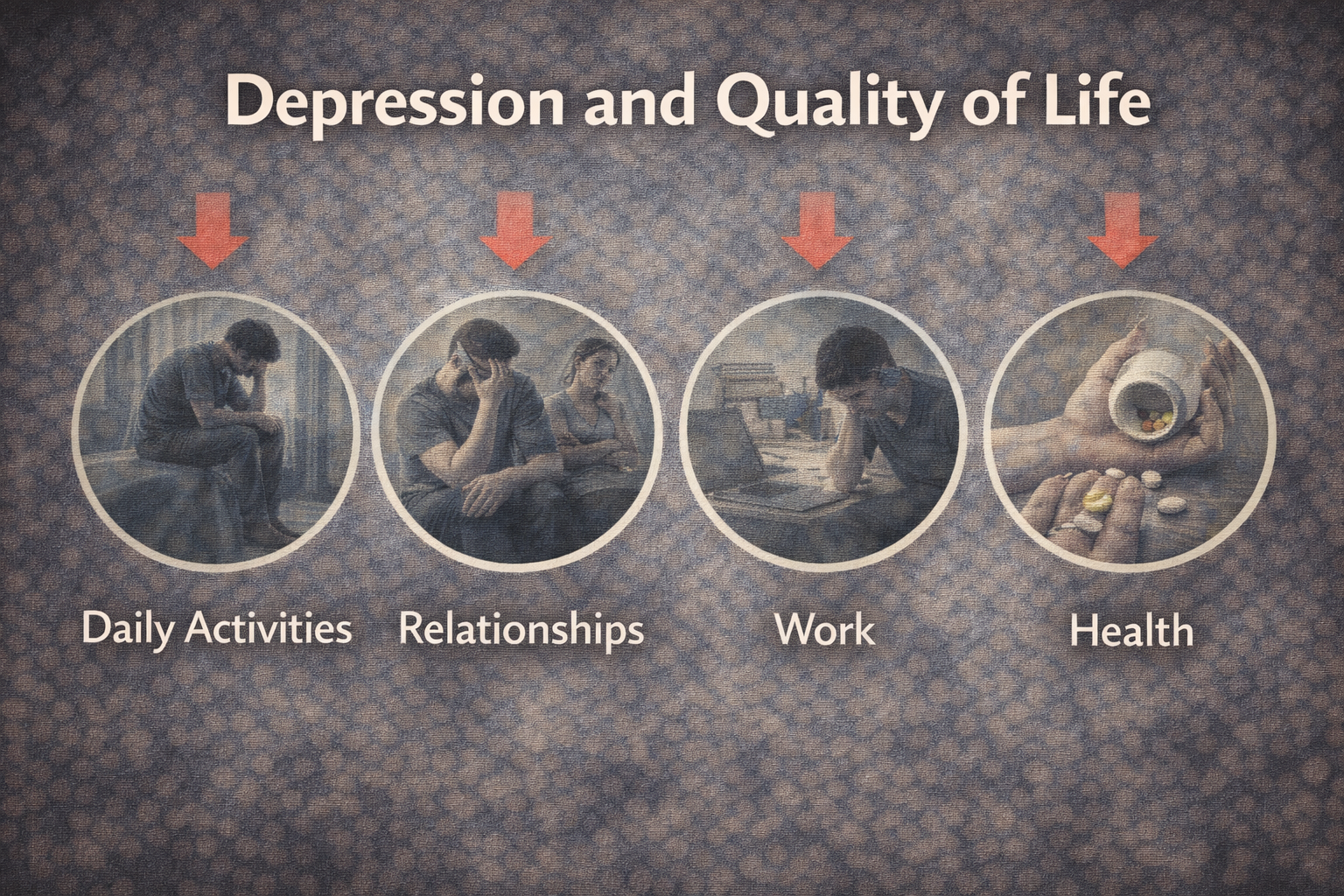
The relationship between depression and quality of life is complex and far-reaching.. Depression extends far beyond temporary sadness—it represents a significant mental health challenge that can dramatically reduce everyday functioning, interpersonal connections, professional performance, and general wellness. Individuals experiencing depression often face ongoing emotional lows, diminished enthusiasm for previously enjoyed pursuits, exhaustion, and concentration challenges that transform routine activities into daunting obstacles.
The extent of its impact is significant: According to recent reports from the National Institute of Mental Health (NIMH), approximately 21 million adults in the United States have experienced at least one major depressive episode in recent years, highlighting how widespread the condition is. for roughly 8.3% of the adult population. Lifetime prevalence rates are even higher, with studies estimating that roughly 20–21% of adults will experience major depressive disorder at some point in their lives. Among working-age individuals (25-55), these manifestations frequently result in workplace absence, relationship tension, and pervasive despair that diminishes life satisfaction—often more intensely than numerous physical chronic illnesses including diabetes or cardiovascular disease.
Encouragingly, both depressive symptoms and overall life satisfaction can improve through evidence-based treatments. This comprehensive resource examines how depression and quality of life connect, reviews widespread consequences, outlines practical enhancement strategies (encompassing therapy, physical activity, and lifestyle modifications), presents supporting research, and addresses frequently raised questions. Drawing upon clinical investigations, NIH/PubMed information, and American Psychiatric Association recommendations, you’ll acquire clear, practical understanding to facilitate recovery and wellness.
What Is Depression and Quality of Life?
Understanding these concepts provides a strong starting point for exploring how they interact.
Defining Depression
Depression, alternatively known as major depressive disorder, encompasses persistent manifestations that disrupt everyday existence. DSM-5 diagnostic standards identify essential indicators including continuous sadness, diminished interest or enjoyment (anhedonia), weariness, alterations in rest or eating patterns, worthlessness feelings, and impaired concentration or decision-making abilities. These symptoms must last at least two weeks and cause noticeable distress or impairment in daily life.
Within the United States, annual prevalence approximates 8.3%, with elevated rates among women (10.3%) and younger demographics. Lifetime vulnerability may approach 20-21% for numerous adults. Distinguished from fleeting sadness or bereavement, depression constitutes a medical phenomenon frequently involving neurochemistry, heredity, stress factors, and life circumstances.
For a broader foundation, see our guide on Signs of Mental Health Issues: Ultimate Guide to Understanding Depression
What Quality of Life Means in Mental Health
Quality of life (QoL) refers to a person’s perceived well-being across several areas, including physical health, emotional functioning, social relationships, and environment. Measurement tools such as the SF-36 and WHOQOL-BREF assess these domains using self-reported questions about energy levels, pain, mood, relationships, and overall life satisfaction.
Depression undermines these domains by depleting energy, straining bonds, and establishing pessimistic perspectives that influence everything.
The Interconnection Between Depression and Quality of Life
Depression and quality of life influence one another in a two-way cycle: depression can diminish QoL, while poor QoL may intensify or extend depressive symptoms. Research demonstrates depression frequently impairs QoL more substantially than numerous physical ailments, with quality-adjusted life expectancy losses considerably surpassing those from conditions like cardiovascular disease or diabetes.
Note: Monitoring daily emotional patterns and energy fluctuations in a basic journal reveals trends and demonstrates advancement over time, even when modifications feel minimal.
How Depression Affects Quality of Life
Depression’s influence extends beyond mood—it cascades through every life aspect.
Depression Impact on Quality of Life
Emotionally, depression generates despair, diminished self-regard, and remorse. Physically, exhaustion, discomfort, and sleep disruptions drain vitality. Socially and professionally, individuals retreat, miss employment, or experience relationship difficulties, resulting in isolation and decreased productivity.
Depression Effects on Daily Life Quality
Everyday functioning deteriorates: self-maintenance, professional responsibilities, and leisure activities become challenging. Investigations indicate severe impairment in 60-70% of mood disorder instances, with numerous individuals reporting existence feels “suspended.”
Depression and Reduced Quality of Life in Specific Groups
For working-age individuals (25-55), this translates to increased workplace absence and diminished earnings. The effects may continue even after symptoms decrease, influencing long-term health, relationships, and overall well-being.
For related reading, see our guide on Signs of Mental Health Issues: What is Depression? Complete Overview
Why Improving Quality of Life Matters in Depression
Prioritizing quality of life enhancement results in stronger outcomes than focusing solely on symptom reduction.
Benefits of Better Quality of Life
Enhanced QoL decreases depression intensity, diminishes relapse probability, reinforces relationships, and elevates professional performance. This establishes a beneficial cycle where incremental achievements generate momentum.
The Role of Depression Treatment Improve Quality of Life
Effective intervention—therapy, pharmacological treatment, or combined approaches—yields moderate-to-substantial QoL improvements. Comprehensive recovery addresses functioning, not exclusively mood.
Research Shows: Meta-analyses reveal that addressing depression produces moderate QoL enhancements, frequently restoring everyday functioning.
How to Improve Quality of Life with Depression
Significant steps can accompany professional care.
Improving Quality of Life with Depression – Practical Strategies
Begin modestly: establish a gentle schedule with regular wake/sleep patterns. Define attainable objectives, emphasize nutrition (balanced consumption), and cultivate social support—even short connections assist.
Managing Depression for Better Quality of Life
Practicing mindfulness or keeping a journal can help you observe your thoughts without judgment. Address stress through controlled breathing or brief walks. Incorporate professional guidance for direction.
For related reading, see our guide on Signs of Mental Health Issues: Living with Depression Daily
Living with Depression Quality of Life Tips
Document daily accomplishments to develop self-kindness. Prevent isolation by arranging low-stress interactions. Acknowledge advancement.
Numerous individuals discover mood-monitoring applications like Daylio or CBT-focused workbooks valuable for developing awareness and patterns.
Expert Insight: Minor, regular actions accumulate—emphasize advancement, not flawlessness.
Therapy for Depression and Quality of Life
Therapy addresses fundamental patterns while enhancing QoL.
Types of Therapy That Help
Cognitive Behavioral Therapy (CBT) confronts pessimistic thinking. Interpersonal Therapy (IPT) enhances relationships. Mindfulness-oriented methods decrease rumination.
Does Treating Depression Improve Quality of Life?
Yes—meta-analyses indicate moderate improvements in quality of life after treatment, with greater benefits often observed when therapy is combined with medication.
Finding the Right Support
Alternatives include face-to-face therapy, digital therapy, or support communities for collective experiences.
Exercise, Lifestyle Changes, and Quality of Life Benefits
Lifestyle adjustments provide powerful, accessible assistance.
Exercise Depression Quality of Life Benefits
Aerobic pursuits (walking, running) and mind-body disciplines (yoga, tai chi) diminish manifestations and enhance QoL. Meta-analytic research also confirms meaningful gains in both physical and psychological well-being.
Other Lifestyle Factors
Emphasize sleep practices, sustain social connections, and minimize alcohol. These facilitate overcoming depression for enhanced life quality.
Studies suggest that regular physical activity can produce results comparable to some treatments for mild to moderate depression.
Scientific Evidence & Research
Evidence validates the connections and interventions.
Clinical Studies
Meta-analyses demonstrate CBT and SSRIs moderately enhance QoL. Longitudinal investigations connect untreated depression to persistent diminished QoL.
Expert Opinions
Depression compromises QoL more substantially than numerous chronic diseases. Prompt intervention proves essential for recovery.
Statistical Data
Approximately 70% of mood disorder cases involve severe QoL impairment. Treatment improves functioning and reduces burden.
Common Mistakes to Avoid
Prevent these obstacles for enhanced progress.
Mistake #1: Ignoring Professional Help
Why problematic: Postpones recovery and worsens QoL. Better approach: Pursue therapy or medication promptly.
Mistake #2: Relying Only on Willpower
Why problematic: Depression influences motivation biologically. Better approach: Combine self-directed efforts with evidence-based treatment.
Mistake #3: Isolating Yourself
Why problematic: Amplifies hopelessness. Better approach: Participate in depression support groups for connection and quality of life advantages.
Important: If manifestations include suicidal contemplations, contact the 988 Suicide & Crisis Lifeline immediately.
Frequently Asked Questions (FAQs)
How does depression affect quality of life?
Depression substantially diminishes quality of life by generating fatigue, social retreat, decreased productivity, and emotional distress—frequently more debilitating than physical chronic conditions. Depression disrupts emotional, physical, and social dimensions, creating a comprehensive sense of reduced wellness.
How depression affects quality of life long-term?
Unaddressed or recurring depression can produce persistent impairments in employment, relationships, and wellness, though effective treatment frequently restores functioning. Numerous individuals regain or surpass previous levels with continuous management.
Does treating depression improve quality of life?
Affirmative—investigations demonstrate moderate to significant QoL improvements following therapy, medication, or lifestyle modifications, with many regaining pre-depression functioning. Combined strategies frequently produce optimal results.
What are ways to enhance quality of life depression?
Integrate professional treatment with physical activity, social support, routine establishment, and mindfulness; aerobic activity and therapy demonstrate substantial benefits. Begin modestly and develop consistency.
Can exercise improve quality of life with depression?
Affirmative—meta-analyses validate exercise (particularly aerobic/mind-body) decreases manifestations and enhances physical/psychological QoL dimensions. Even moderate activity like walking assists.
Are depression support groups quality of life helpful?
Affirmative—support groups decrease isolation, supply coping strategies, and enhance emotional wellness through collective understanding and support.
What’s the link between depression and reduced quality of life?
Depression disrupts multiple life dimensions, producing lower measurements on QoL assessments; addressing depression comprehensively improves outcomes.
Conclusion
Understanding depression and quality of life reveals that recovery remains achievable—effective treatments, lifestyle adjustments, and support restore joy, function, and connections. Numerous individuals not only manage manifestations but experience meaningful enhancement in everyday wellness.
The essential transformation: depression need not define existence. Initiate with one action—consult a healthcare provider, attempt a brief walk, or contact a trusted individual.
If experiencing difficulties, reach out today—professional assistance genuinely transforms lives. No individual is isolated, and brighter days remain accessible.
Sign up for our mental health newsletter for weekly tips and resources, or explore our Mental Health Resources hub. Consult a doctor or therapist to find what works best.
Quick Takeaways
- Depression impairs QoL across emotional, physical, and social domains—often severely.
- Evidence-based treatments like therapy and exercise lead to meaningful improvements.
- Lifestyle changes (routine, movement, support) support recovery.
- Early professional help prevents long-term effects.
- Progress is possible—small steps matter.
Medical Disclaimer
This article serves informational and educational purposes exclusively and does not constitute medical advice. The information presented should not substitute for diagnosing or treating a health problem or disease. Always consult with a qualified healthcare professional before implementing any modifications to mental health treatment, initiating new medications, or exploring new approaches.
If experiencing a mental health crisis, please call or text 988 (Suicide & Crisis Lifeline) or visit the nearest emergency room. For non-emergency support, contact the SAMHSA National Helpline at 1-800-662-HELP (4357).
The content reflects current research and expert consensus, but medical knowledge evolves. Always verify with a healthcare provider.