Have you ever felt your heart racing at 2 a.m. over worries that refuse to fade, or woken up exhausted despite a full night’s sleep? If so, you’re far from alone. Nearly 1 in 5 American adults (19.1%) experiences an anxiety disorder each year, according to the National Institute of Mental Health.
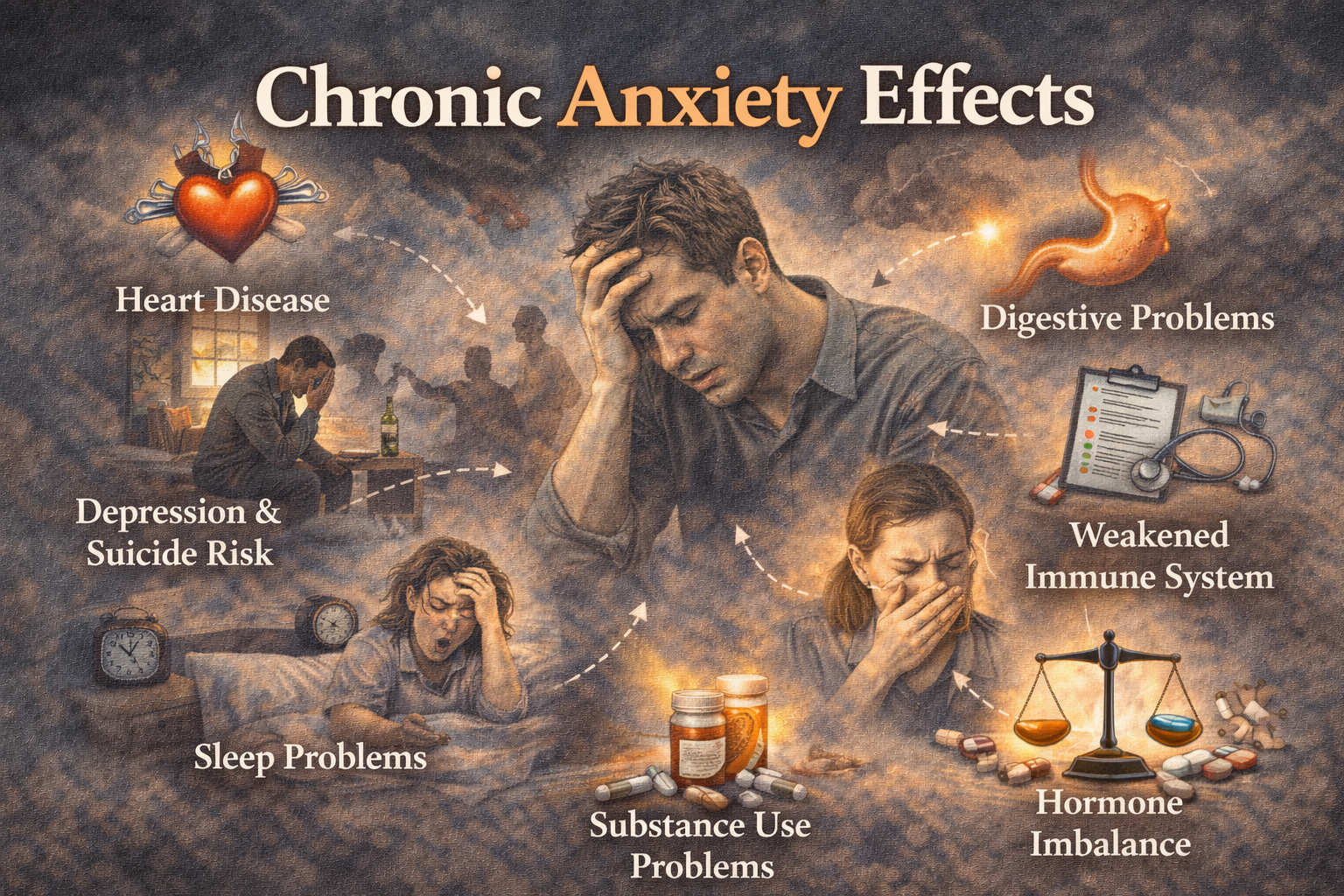
For many, occasional worry turns into chronic anxiety effects that quietly damage physical health over months or years. Untreated chronic anxiety keeps your body’s fight-or-flight system switched on, flooding it with stress hormones like cortisol and adrenaline. This sustained activation raises risks for heart disease, weakened immunity, digestive troubles, persistent fatigue, and changes in brain structure.
For a broader foundation, see our guide on Signs of Mental Health Issues: What is Anxiety Disorder?
What Are Chronic Anxiety Effects? (Definition & Overview)
Chronic anxiety effects refer to the wide-ranging physical and mental changes that occur when anxiety persists for six months or longer, often as part of generalized anxiety disorder (GAD) or other untreated forms.
Defining Chronic Anxiety
Unlike normal stress that comes and goes, chronic anxiety involves excessive worry or fear that feels difficult to control. Your brain and body remain in a near-constant state of high alert, with the sympathetic nervous system and HPA axis (hypothalamic-pituitary-adrenal) overactive. Over time, this leads to chronic anxiety effects that manifest both physically and mentally.
How Chronic Anxiety Differs from Acute Anxiety
Acute anxiety is a short-term, protective response—helpful when facing immediate danger. Chronic anxiety, however, creates sustained “wear and tear.” Your body builds tolerance to stress hormones, leading to dysregulation. Cortisol levels stay elevated, inflammation increases, and systems begin to break down.
Why Chronic Anxiety Persists in Daily Life
Common triggers include work pressure, relationship strain, health concerns, or financial stress. A vicious cycle often develops: worry leads to avoidance behaviors, which reinforce rumination and keep the anxiety alive.
Pro Tip:
Many people notice chronic anxiety effects worsen in the late afternoon when blood sugar dips. A small protein-rich snack around 3 p.m. can help stabilize mood and reduce symptom intensity.
For a broader foundation, see our guide on Signs of Mental Health Issues: Complete Guide to Anxiety Disorders
Physical Effects of Chronic Anxiety on the Body
The body pays a heavy price when anxiety becomes chronic. Prolonged activation of the stress response affects nearly every major system.
Chronic Anxiety Effects on Body – Cardiovascular System
Constant elevated heart rate and blood pressure strain your arteries and heart muscle. Research from the American Heart Association shows that anxiety and depression can increase the risk of a major cardiovascular event (heart attack or stroke) by about 35%. Inflammation in artery walls further raises the odds of hypertension and heart disease.
How Anxiety Affects Body Long Term – Immune System
Chronic cortisol suppresses immune function, making you more susceptible to infections and slowing healing. Studies link long-term anxiety to reduced natural killer cell activity and higher inflammation, leaving the body less able to fight viruses or recover from illness.
Gastrointestinal Effects Chronic Anxiety
Through the gut-brain axis, anxiety disrupts digestion. Many people experience IBS-like symptoms—cramping, bloating, diarrhea, or constipation—because stress alters gut motility and microbiome balance.
Chronic Anxiety Causes Fatigue and Muscle Tension
Your muscles stay tense for protection, leading to headaches, jaw pain, and overall exhaustion. The constant energy drain from heightened alertness often results in profound, unrelenting fatigue even after rest.
Research Shows:
According to the Mayo Clinic, long-term stress hormone exposure increases risks for heart disease, high blood pressure, and digestive problems while weakening immune responses.
Brain Effects of Chronic Anxiety – Neurological Impact
Your brain is highly sensitive to prolonged anxiety, but the good news is that change is possible through neuroplasticity.
Long Term Anxiety Health Effects on Brain Structure
Sustained high cortisol can shrink the hippocampus (key for memory and learning) and impair the prefrontal cortex (responsible for decision-making and emotional regulation). These structural changes contribute to difficulty concentrating and heightened fear responses.
Chronic Anxiety and Sleep Disturbances
Racing thoughts and hyperarousal fragment sleep, creating a cycle where poor sleep worsens anxiety and fatigue the next day. Many report insomnia or restless nights as a hallmark of chronic anxiety effects.
Cognitive and Emotional Consequences
You may notice memory lapses, irritability, or feeling “foggy.” Over time, these can affect work performance and relationships.
Expert Insight:
Clinical psychologists note that while chronic anxiety can temporarily alter brain pathways, consistent treatment promotes new, healthier neural connections.
For a broader foundation, see our guide on Signs of Mental Health Issues: Anxiety Severity Levels
Why Addressing Chronic Anxiety Effects Matters
Ignoring chronic anxiety effects allows damage to accumulate, but early action can prevent serious complications.
Long Term Consequences Chronic Anxiety
Untreated anxiety raises the risk of developing depression, reduces quality of life, and increases healthcare costs. It can accelerate aging at the cellular level and contribute to metabolic issues.
Effects of Untreated Anxiety – Broader Health Risks
Links exist to type 2 diabetes, autoimmune flares, and faster cognitive decline. The constant inflammatory state affects overall longevity.
Chronic Anxiety Impact on Health – Statistical Perspective
Anxiety disorders affect 19.1% of U.S. adults annually. Those with untreated anxiety face significantly higher cardiovascular risks—up to 35% greater chance of major events.
How to Reverse Chronic Anxiety Effects
The brain’s neuroplasticity means many chronic anxiety effects can be reduced or reversed with consistent effort.
Evidence-Based Treatments for Recovery
Cognitive Behavioral Therapy (CBT) is the gold standard, helping reframe anxious thoughts. Mindfulness-based approaches and, when appropriate, medication (such as SSRIs) also show strong results. Studies confirm CBT produces lasting improvements in 60-80% of people.
Lifestyle Changes to Reduce Long-Term Damage
Regular exercise (150 minutes moderate activity weekly), a Mediterranean-style diet rich in omega-3s, and consistent sleep hygiene help restore balance. Even short daily walks can lower cortisol.
Reversing Chronic Anxiety Effects – Neuroplasticity Tips
Practice deep breathing (4-7-8 technique), progressive muscle relaxation, and exposure exercises. Professional therapy accelerates progress by guiding you safely through fear.
Speak to a licensed therapist today – find qualified help near you through Psychology Today or your insurance provider.
Scientific Evidence & Research on Chronic Anxiety Effects
Clinical Studies
The NIH and APA document how chronic stress leads to immune dysregulation and elevated cardiovascular risk. A 2023 American Heart Association analysis found anxiety accelerates development of heart disease risk factors.
Expert Opinions
Mayo Clinic experts explain that prolonged cortisol disrupts digestion, heart function, and immunity, but these processes are often reversible with intervention.
Statistical Data
Anxiety raises major cardiovascular event risk by approximately 35%. Lifetime prevalence of any anxiety disorder reaches 31.1% among U.S. adults.
Common Mistakes to Avoid When Managing Chronic Anxiety Effects
Mistake #1: Ignoring Physical Symptoms
Treating only the mental side while dismissing chest tightness or stomach issues delays care. Better approach: Track all symptoms and discuss them with your doctor.
Mistake #2: Relying Only on Caffeine or Avoidance
Caffeine amplifies anxiety; avoidance strengthens fear pathways. Better: Replace with herbal tea and gradual exposure.
Mistake #3: Delaying Professional Help
Waiting until symptoms feel unbearable lets effects compound. Better: Seek support early—most people see meaningful improvement within weeks of starting treatment.
Frequently Asked Questions (FAQs)
What are the long term effects of anxiety on the body?
Chronic anxiety effects include increased heart disease risk, weakened immunity, digestive problems, fatigue, and changes in brain structure from sustained stress hormones. Early management helps limit and reverse many of these.
Can chronic anxiety effects on body be reversed?
Yes. Through therapy, lifestyle changes, and stress reduction, neuroplasticity allows significant recovery of brain and body function for most people. Many notice improvements within months.
How does chronic anxiety cause heart problems?
Constant fight-or-flight raises blood pressure and heart rate while promoting inflammation. Over time this increases hypertension and cardiovascular disease risk by about 35%.
What are the gastrointestinal effects chronic anxiety?
It disrupts the gut-brain axis, leading to IBS-like symptoms such as cramps, bloating, diarrhea, or constipation in many people with anxiety disorders.
Does chronic anxiety cause fatigue and sleep issues?
Yes. Ongoing alertness drains energy reserves and fragments sleep, creating a cycle of tiredness that further fuels anxiety.
What are the brain effects of chronic anxiety?
Prolonged stress can reduce hippocampus volume and impair the prefrontal cortex, affecting memory, focus, and emotional regulation. Therapy promotes healing through neuroplasticity.
How long does it take to reverse chronic anxiety effects?
Results vary by individual and consistency of treatment. Many experience noticeable relief in 4–12 weeks, with deeper recovery often taking 6–24 months of sustained effort.
Quick Takeaways
- Chronic anxiety effects extend beyond worry to impact heart, immunity, gut, sleep, energy, and brain structure.
- Nearly 19.1% of U.S. adults are affected annually, but effective treatments exist.
- Lifestyle changes and CBT can reduce symptoms comparably to medication for many.
- Early action prevents compounding damage and supports reversal through neuroplasticity.
- You are not alone—professional help combined with daily habits offers real hope.
Conclusion
Chronic anxiety effects reach far beyond mental distress—they can strain your heart, weaken immunity, disrupt digestion, exhaust your body, and alter brain function. Yet the science is clear: understanding these impacts empowers you to take action, and many changes are reversible.
By addressing chronic anxiety effects early with evidence-based strategies, you protect your long-term health and open the door to renewed energy, clearer thinking, and greater peace. Start today by tracking one symptom or scheduling that first conversation with a healthcare provider.
Ready for support? Sign up for our free “7-Day Anxiety Relief Starter Kit” (includes breathing exercises, symptom tracker, and expert tips) or explore comprehensive anxiety treatment options. Relief is closer than you think.
Medical Disclaimer:
This article is for informational and educational purposes only and does not constitute medical advice. The information provided should not be used for diagnosing or treating a health problem or disease. Always consult with a qualified healthcare professional before making any changes to your mental health treatment, starting new medications, or trying new supplements.
If you’re experiencing a mental health crisis, please call or text the 988 Suicide & Crisis Lifeline or visit your nearest emergency room. For non-emergency support, contact the SAMHSA National Helpline at 1-800-662-4357.