Nearly 48 million Americans — that’s 18.3% of U.S. adults — currently have or are being treated for depression, according to the latest Gallup data from 2025. This is a record high and a sharp rise since 2015.
If you or someone you love has felt persistently sad, empty, or hopeless for weeks — even when life looks “fine” on the outside — you’re not alone, and it’s not a personal failing. Many people know the signs of depression but still wonder: Why me? Why now?
This guide explains the real causes of depression — biological, psychological, and environmental factors that often work together. You’ll learn how these causes connect to recognizable symptoms of depression in teens, signs of depression in men and women, early signs, and more. You’ll also discover how long depression typically lasts, when it can improve on its own, and the clear next steps that can make a real difference.
Written to the same standards as WebMD and Mayo Clinic content, this article draws directly from the National Institute of Mental Health (NIMH), CDC, and peer-reviewed research.
What Causes Depression?
Depression almost never has one single cause. Instead, it usually results from a combination of factors that interact in complex ways.
The Biopsychosocial Model of Depression
Healthcare professionals use the biopsychosocial model to explain depression:
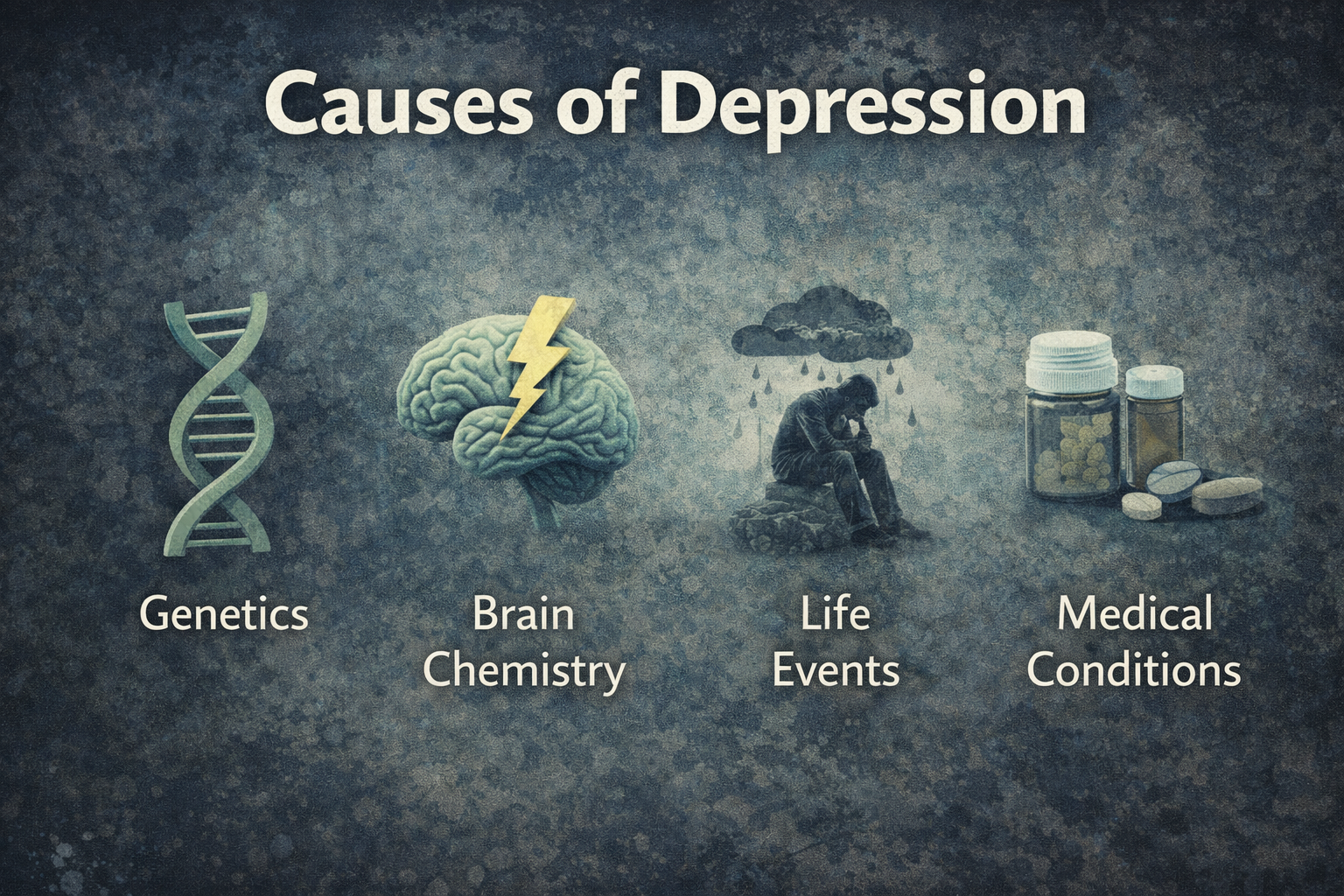
Biological factors (genes, brain chemistry, hormones) Psychological factors (thought patterns, past trauma) Social/environmental factors (stress, relationships, life events)
These three areas constantly influence each other.
The causes of depression are rarely “just in your head.” They are very real, measurable, and highly treatable once identified.
Quick Self-Check
If you’ve been wondering how to know if you have depression that stems from identifiable causes, the sections below will help you recognize patterns in your own life.
Biological Causes of Depression
Your biology can make you more vulnerable to depression — but it doesn’t guarantee you’ll develop it.
Genetics and Family History
If a close family member has had depression, your risk is higher. Studies consistently show heritability of 40–50% (Stanford Medicine). That means genes explain roughly half the risk in many cases, while life experiences explain the other half.
Brain Chemistry and Neurotransmitters
Imbalances or poor functioning in serotonin, dopamine, norepinephrine, and other brain chemicals play a role. Modern research also highlights inflammation, stress hormones (cortisol), and reduced neuroplasticity (the brain’s ability to form new connections).
Hormonal Changes and Medical Conditions
Thyroid disorders, chronic pain or illness, postpartum hormonal shifts, menopause, and low vitamin D levels can all trigger or worsen depressive symptoms.
Physical Symptoms of Depression — such as unexplained aches, fatigue, or changes in appetite — often stem directly from these biological changes.
Psychological Causes of Depression
How you think and what you’ve been through can powerfully shape your risk.
Negative Thought Patterns and Cognitive Distortions
Chronic self-criticism, all-or-nothing thinking, and rumination (replaying negative events) can maintain or deepen depression over time.
Trauma, Childhood Adversity, and Learned Helplessness
Early experiences of abuse, neglect, loss, or unpredictable environments can rewire the brain’s stress response, making depression more likely later in life.
Personality Traits That Increase Vulnerability
Perfectionism, high neuroticism, and low resilience are associated with greater risk, especially when combined with stress.
For related reading, see our guide on Signs of Mental Health Issues:Depression in Older Adults
Environmental and Social Causes of Depression
Your daily life and surroundings matter enormously.
Chronic Stress, Loss, and Major Life Events
Job loss, bereavement, divorce, financial strain, or ongoing caregiving can overwhelm coping resources and trigger depression.
Social Isolation, Loneliness, and Relationship Problems
Humans are social beings. Prolonged loneliness activates the same brain pathways as physical pain and is a strong predictor of depression.
Financial Pressure, Job Loss, and Discrimination
Systemic stressors such as racism, sexism, poverty, or workplace harassment add chronic load that can tip the balance toward depression.
Why Understanding the Causes of Depression Matters
Knowing the causes of depression changes everything:
It ends the cycle of self-blame “I should just snap out of it”. It guides better treatment choices (therapy for psychological causes, medication or lifestyle changes for biological ones).
Recognizing Signs That Reveal Underlying Causes
Different causes often show up in distinct symptom patterns.
Signs of Depression in Men
Irritability, anger, substance use, or physical complaints rather than overt sadness.
Signs of Depression in Women
More likely to report sadness, guilt, sleep/appetite changes, and rumination.
Symptoms of Depression in Teens
Irritability, withdrawal from friends/family, declining school performance, self-harm thoughts.
Early Signs of Depression
Persistent low energy, loss of interest in hobbies, minor sleep changes — often appearing weeks before full symptoms.
Physical Symptoms of Depression
Fatigue, headaches, digestive issues, muscle tension — sometimes mistaken for purely medical problems.
Mild Depression Symptoms
Subtle but persistent low mood, reduced pleasure, mild concentration issues.
Depression Symptoms in Young Adults
Often tied to life transitions — college stress, early career pressure, social media comparison.
Warning Signs of Depression
Thoughts of death, giving away possessions, sudden calm after deep despair.
Is It Depression or Just Sadness?
Sadness is a normal emotion that usually fades. Depression lasts most of the day, nearly every day, for at least two weeks and interferes with daily functioning.
How Long Does Depression Last and Can It Go Away on Its Own?
Average Duration by Type
Single episode of major depression → 6–12 months without treatment Persistent depressive disorder (dysthymia) → 2+ years Seasonal affective disorder → seasonal pattern, improves with spring
When It Can Resolve Naturally vs. When It Needs Treatment
Very mild, short-lived episodes triggered by a clear event sometimes improve with time, support, and lifestyle changes. Moderate-to-severe depression rarely resolves fully without professional help.
Factors That Shorten or Lengthen Episodes
Early treatment, strong social support, healthy sleep/exercise, and addressing root causes shorten episodes. Ongoing stress, isolation, or untreated medical issues lengthen them.
For related reading, see our guide on Signs of Mental Health Issues: Ultimate Guide to Understanding Depression
Different Types of Depression and Their Specific Causes
| Type | Key Features | Common Contributing Causes |
| Major Depressive Disorder | Severe symptoms ≥2 weeks | Combination of biological + major life stress |
| Persistent Depressive Disorder | Milder but lasts ≥2 years | Chronic low-level stress + possible genetic factors |
| Seasonal Affective Disorder | Winter pattern | Reduced sunlight → serotonin/melatonin disruption |
| Postpartum Depression | After childbirth | Hormonal crash + sleep deprivation + new-parent stress |
| Situational Depression | Clear trigger (loss, trauma) | Environmental stressor (often resolves faster) |
Scientific Evidence & Research
Clinical Studies
NIMH and Stanford research confirm 40–50% heritability. A major 2024 review in Nature highlighted the roles of HPA-axis dysregulation, inflammation, monoamine imbalances, and impaired neuroplasticity.
Expert Opinions
“Depression is not a character flaw — it is a medical condition with multiple causes,” notes the National Institute of Mental Health.
Statistical Data
18.3% of U.S. adults currently have or are treated for depression (Gallup 2025) — ~47.8 million people. Women are about 1.7× more likely than men to experience depression. Rates are highest among young adults under 30 and lower-income households.
Common Mistakes to Avoid
Mistake #1: Assuming It’s “Just Sadness” or Will Pass
Waiting too long delays recovery and can make episodes more severe.
Mistake #2: Ignoring Biological Causes and Self-Medicating
Alcohol, cannabis, or unregulated supplements can worsen depression over time.
Mistake #3: Waiting for Motivation Before Seeking Help
Depression itself robs you of motivation. Starting treatment often restores energy and hope.
Frequently Asked Questions (FAQs)
What causes depression?
Depression has no single cause. It results from a mix of genetic, biological, psychological, and environmental factors that interact differently for each person.
What are the signs of depression in men?
Men often show irritability, anger, increased substance use, workaholism, or physical complaints instead of classic sadness.
How long does depression last?
Without treatment, most episodes last 6–12 months, though many people recover faster with proper care.
Can depression go away on its own?
Mild, short-lived cases sometimes improve naturally, but moderate-to-severe depression rarely does without support.
What are the different types of depression?
Major types include major depressive disorder, persistent depressive disorder, seasonal affective disorder, postpartum depression, and situational depression — each with somewhat different causes and treatment needs.
Is it depression or just sadness?
Sadness is temporary and tied to a specific event. Depression involves persistent symptoms that interfere with daily life for at least two weeks.
For related reading, see our guide on Signs of Mental Health Issues: Major Depressive Disorder (MDD) Guide
Conclusion
The causes of depression are real, identifiable, and highly treatable. Understanding them removes shame and points the way toward effective solutions — whether that’s therapy, medication, lifestyle changes, or a combination.
If you recognize any of the signs of depression described here, reach out today. Even one conversation with a trusted professional can be the turning point.
Speak with a licensed therapist today — many offer free initial consultations. You can also call or text the 988 Suicide & Crisis Lifeline 24/7.