Anxiety disorders affect nearly 40 million U.S. adults each year, yet many wonder: “Why me?”—feeling overwhelmed without understanding why anxiety took root in their lives. If you’re constantly battling racing thoughts, panic, or avoidance that disrupts sleep, work, or connections, it can feel isolating and uncontrollable, leading to self-doubt or hesitation in seeking support.
This lack of insight into causes often perpetuates the cycle, making symptoms feel like a personal failing rather than a treatable condition. But exploring the causes of anxiety disorders can empower you. This article delves into genetic, biological, trauma-related, stress, childhood, hormonal, lifestyle, and medical factors, helping reduce blame, identify risks, and guide prevention.
Drawing from NIMH research, DSM-5 framework, Mayo Clinic guidelines, APA position statements, and longitudinal studies on anxiety etiology, this provides evidence-based clarity.
For a broader foundation, see our guide on Signs of Mental Health Issues: Complete Guide to Anxiety Disorders
What Causes Anxiety Disorders? An Overview
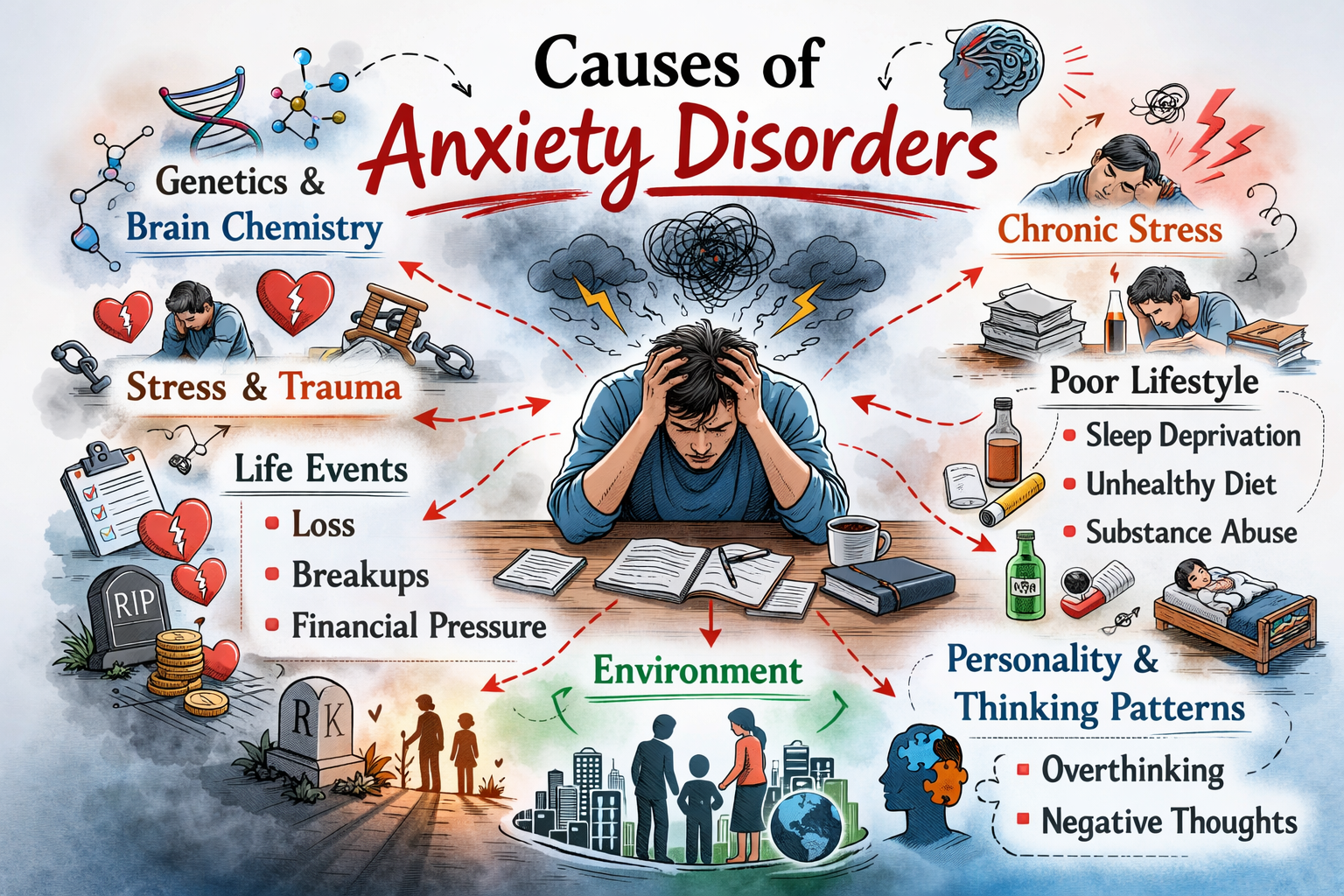
The causes of anxiety disorders are complex, involving multiple interacting factors. No single element explains everything, but understanding the overview reduces mystery. This section explores the multifactorial nature.
Anxiety Disorders Are Rarely Caused by One Factor
Anxiety arises from a multifactorial model: genetics, biology, environment, and experiences combine. Risk factors interact, increasing likelihood rather than guaranteeing disorders.
This explains variability among individuals.
Biological vs. Environmental Causes of Anxiety
Biological causes include inherited traits and brain chemistry imbalances. Environmental involve stress, trauma, or learned behaviors from surroundings.
Both shape vulnerability.
Why Understanding Causes Matters
It reduces self-blame: “It’s not my fault, but I can influence it.” Guides personalized prevention, like therapy for trauma or lifestyle tweaks.
Empowerment follows knowledge.
The causes of anxiety disorders highlight prevention potential.
Genetic Causes of Anxiety
Genetic causes of anxiety play a significant role, though not deterministic. Family patterns offer clues. Here’s the evidence.
How Much of Anxiety Is Inherited?
Heritability estimates range 30-50% for disorders like GAD or panic. Family studies show first-degree relatives face 2-6x higher risk.
This suggests genetic influence.
Specific Genetic Links
Variants in serotonin transporter (5-HTTLPR), COMT, and BDNF genes associate with anxiety. Polygenic risk scores predict vulnerability in research.
Multiple genes contribute.
Genetics Are Not Destiny
Gene-environment interactions via epigenetics determine expression. Protective factors like resilience training offset risks.
Lifestyle modulates genetics.
For a broader foundation, see our guide on Signs of Mental Health Issues: Anxiety Attack Symptoms
Brain Chemistry & Biological Causes of Anxiety
Brain chemistry and biological causes of anxiety involve internal systems. Imbalances explain persistent fear. Dive into key elements.
Key Neurotransmitters Involved
Imbalances in GABA (inhibitory), serotonin, norepinephrine, dopamine occur. Low GABA reduces calming fear signals, heightening anxiety.
This disrupts balance.
Brain Circuitry & Structure
Hyperactive amygdala (fear center), underactive prefrontal cortex (regulation) feature. Smaller hippocampus from stress atrophy affects memory/emotion.
Structures influence responses.
HPA Axis Dysregulation
Overactive stress axis elevates cortisol chronically. This causes fatigue, sleep issues, heightened arousal.
Sustained activation perpetuates symptoms.
What Causes Generalized Anxiety? (GAD-Specific Risk Factors)
What causes generalized anxiety often differs slightly from other types. Chronic worry defines GAD. Examine risks.
Causes of Generalized Anxiety
It involves chronic uncontrollable worry across domains, linked to perfectionism and uncertainty intolerance.
Patterns build over time.
Common Triggers & Contributors
Prolonged psychosocial stress or life transitions trigger. Negative affectivity temperament (high neuroticism) predisposes.
These amplify concerns.
Why Some People Develop GAD
Genetic predisposition plus learned worry from family combine. Early anxious coping models reinforce.
Interaction is key.
For a broader foundation, see our guide on Signs of Mental Health Issues: Social Anxiety Disorder
Trauma & Environmental Causes of Anxiety Disorders
Trauma and environmental causes of anxiety disorders stem from external experiences. These shape responses. Explore how.
How Trauma Causes Anxiety Disorders
Childhood adversity (ACEs) raises risk 2-4x. PTSD or complex trauma heightens threat detection, leading to hypervigilance.
Lasting impacts occur.
Acute vs. Chronic Stress as Triggers
Single events like assault vs. prolonged stress differ. Cumulative allostatic load from stressors overwhelms.
Both contribute.
Sociocultural & Life Event Contributors
Discrimination, financial strain, caregiving burden factor. Pandemic isolation exemplifies modern triggers.
Context matters.
Childhood Causes of Anxiety – Early Life Influences
Childhood causes of anxiety set foundations. Early influences persist. This developmental view clarifies origins.
Childhood Causes of Anxiety
Overprotective or anxious parenting fosters. Anxious or disorganized attachment insecure bonds.
These shape security.
Adverse Childhood Experiences (ACEs)
Abuse, neglect, household dysfunction link dose-response to anxiety. Early bullying adds risk.
Cumulative harm builds.
Temperament & Early Environment
Behaviorally inhibited temperament plus low warmth interacts. Anxious caregiver modeling teaches patterns.
Early intervention helps.
Hormonal Causes of Anxiety in Women
Hormonal causes of anxiety in women tie to biology. Fluctuations exacerbate. Consider gender differences.
Hormonal Fluctuations & Anxiety
Estrogen/progesterone shifts in cycles, pregnancy, postpartum, perimenopause intensify. Hyper/hypothyroidism imbalances contribute.
These cycle-related.
Why Women Are at Higher Risk
2x higher anxiety prevalence. Sex hormones interact with stress axis, amplifying.
Biology plus society.
Practical Considerations
Tracking across cycles reveals patterns. Hormone-sensitive treatments adjust accordingly.
Awareness aids management.
Lifestyle & Medical Causes of Anxiety Disorders
Lifestyle and medical causes of anxiety disorders are modifiable. Identifying them empowers change.
Lifestyle Causes of Anxiety Disorders
Chronic sleep deprivation, excessive caffeine/alcohol worsen. Sedentary behavior, poor diet cause instability.
Habits influence.
Medical & Substance-Related Causes
Hyperthyroidism, B12 deficiency, arrhythmias mimic. Medication effects (steroids, stimulants), withdrawal trigger.
Underlying conditions matter.
How to Identify & Address These
Routine labs, sleep assessments, substance reviews help. Treating root often alleviates anxiety.
Proactive steps work.
Scientific Evidence & Research
Scientific evidence on causes of anxiety disorders supports multifactorial views. Studies provide insights.
Clinical Studies
Twin studies estimate 30-50% heritability. ACEs meta-analyses show strong dose-response to onset.
Genetics and trauma key.
Expert Opinions
NIMH and APA emphasize genes plus environment. Trauma-informed care gains emphasis.
Integrated understanding prevails.
Statistical Data
Lifetime prevalence ~31%. Women 1.5-2x higher; childhood trauma doubles odds.
Data informs prevention.
Visit NIMH Anxiety Statistics; Mayo Clinic Anxiety Causes; APA Anxiety Overview; ACEs Study (CDC).
Common Mistakes to Avoid When Exploring Causes
Avoiding mistakes when exploring causes of anxiety disorders prevents misconceptions. These pitfalls hinder progress.
Mistake #1: Believing It’s “All in Your Head” or Purely Psychological
Why problematic: Ignores biology/trauma, heightens shame. Better approach: Embrace biopsychosocial model.
Mistake #2: Focusing Only on One Cause
Why problematic: Overlooks interactions. Better approach: Seek comprehensive evaluation.
Mistake #3: Self-Diagnosing Medical Causes Without Testing
Why problematic: Delays treatment. Better approach: Consult physician for labs/screening.
Frequently Asked Questions (FAQs)
What Causes Anxiety Disorders?
Anxiety disorders arise from genetic predisposition (30-50% heritability), brain chemistry imbalances (GABA, serotonin), chronic stress, trauma, childhood adversity, hormonal changes, lifestyle factors. No single cause—risks interact. Understanding guides treatment.
What Causes Generalized Anxiety?
Generalized anxiety stems from genetic vulnerability, uncertainty intolerance, perfectionism, psychosocial stress, negative temperament, learned family worry patterns. Combination sustains chronic worry; therapy addresses roots.
Are There Genetic Causes of Anxiety?
Yes—anxiety has moderate heritability (30-50%). Relatives face higher risk. Gene variants (serotonin transporter, COMT, BDNF) implicated, but environment expresses them—lifestyle offsets.
Can Trauma Cause Anxiety Disorders?
Yes—childhood trauma (ACEs), assault, accidents, adversity raise risk 2-4x. Trauma sensitizes fear circuitry (amygdala), increasing lifelong stress reactivity—therapy heals.
What Are Hormonal Causes of Anxiety in Women?
Estrogen/progesterone fluctuations (cycles, pregnancy, postpartum, perimenopause) intensify anxiety. Thyroid imbalances contribute. Women twice likely develop disorders—hormone-stress interaction key.
Can Lifestyle Factors Cause Anxiety Disorders?
Yes—poor sleep, caffeine/alcohol excess, sedentary life, high-sugar diet, stressors trigger/worsen anxiety. Modifying often reduces severity—exercise/sleep help.
Are There Medical Causes of Anxiety?
Certain conditions mimic/trigger anxiety: hyperthyroidism, B12 deficiency, arrhythmias, medication effects (steroids, stimulants), withdrawal. Rule out with doctor—treating underlying alleviates.
Conclusion
Understanding causes of anxiety disorders lessens self-blame, explains symptoms, highlights changeable risks like lifestyle/stress. You’ll identify factors, pursue targeted help, potentially prevent escalation.
Anxiety’s interplay of biology/experiences/environment means it’s real, not weakness—knowledge empowers.
Reflect on risks (family history, trauma, stressors, habits); note 1-2 addressable areas.
Speak with doctor/mental health professional for unique exploration/personalized plan. You didn’t choose anxiety—but choose understanding/support/relief; help exists, many improve dramatically.
Medical Disclaimer:
This article is for informational and educational purposes only and does not constitute medical advice. The information provided should not be used for diagnosing or treating a health problem or disease. Always consult with a qualified healthcare professional before making any changes to your mental health treatment, starting new medications, or trying new supplements.
If you’re experiencing a mental health crisis, please call the 988 Suicide & Crisis Lifeline or visit your nearest emergency room. For non-emergency support, contact the Substance Abuse and Mental Health Services Administration (SAMHSA) National Helpline at 1-800-662-4357.
The content in this article is based on current research and expert consensus as of 2026, but medical knowledge evolves. Always verify information with your healthcare provider.