I’m pretty sure you’ve heard that depression is caused by a “chemical imbalance” in the brain. Well, forget all that. The latest science is very promising.
Nearly 21 million or 8.3 percent of adults in the U.S. experienced at least one major depressive episode within a year. This figure is cited by the National Institute of Mental Health using data from 2021. In recent studies, there are higher trends noted, especially among younger adults and women. Individuals are often plagued by feelings of low mood and hopelessness but are not educated about biological processes.
This guide will present the current scientific understanding of brain chemistry and depression, transcend the outdated and simplistic approaches that often accompany the topic, and provide you with the appropriate steps to take based on the latest scientific research.
Based on peer-reviewed research from the NIH, Nature Reviews, Molecular Psychiatry, and clinical guidelines from the Mayo Clinic and American Psychiatric Association, you’ll finish this article with clarity, reduced stigma, and realistic next steps.
What Is Brain Chemistry and How Does It Relate to Depression?
Brain chemistry refers to the complex communication system of neurons, synapses, neurotransmitters, receptors, and reuptake mechanisms that regulate mood, motivation, sleep, appetite, and stress response.
The Basics of Brain Communication
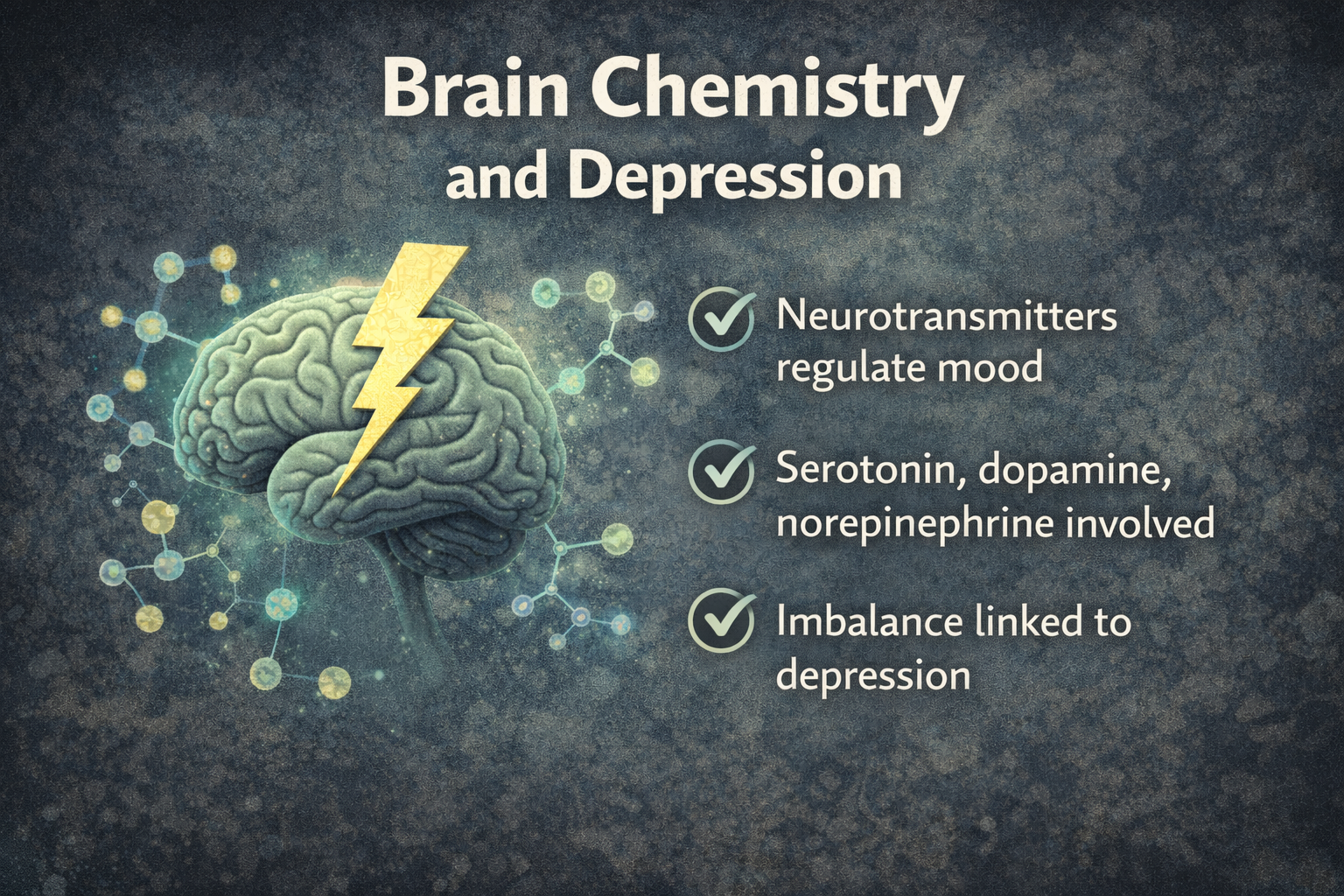
Neurons communicate across tiny gaps called synapses by releasing chemical messengers (neurotransmitters). These bind to receptors on the receiving neuron, then get reabsorbed or broken down. This process happens billions of times every second and is essential for stable mood.
Historically, the monoamine hypothesis suggested depression resulted mainly from low levels of serotonin, norepinephrine, and dopamine. Today we know the picture is much broader.
Beyond Simple “Imbalance” – Current Scientific Consensus
A major 2022 umbrella review in Molecular Psychiatry (Moncrieff et al.) found no consistent evidence that depression is caused by a primary serotonin deficiency. Similar findings apply to other single-chemical explanations.
Instead, depression involves multiple systems: serotonin, norepinephrine, dopamine, glutamate (excitatory), GABA (inhibitory), brain-derived neurotrophic factor (BDNF) for neuroplasticity, and the hypothalamic-pituitary-adrenal (HPA) axis for stress regulation.
Why Brain Chemistry Still Matters
Even though no single “imbalance” causes depression, medications and lifestyle interventions that modulate these systems are effective for many people. Understanding the biology reduces self-blame and improves treatment adherence.
Key Neurotransmitters and Systems Involved in Mood
Serotonin, Norepinephrine, and Dopamine
Serotonin helps regulate mood, sleep, appetite, and pain perception. Norepinephrine influences alertness, energy, and focus. Dopamine drives motivation, reward, and pleasure. Disruptions in these systems can contribute to the low energy, anhedonia, and sleep/appetite changes common in depression.
Glutamate, GABA, and Neuroplasticity (BDNF)
Glutamate is the brain’s main excitatory neurotransmitter; GABA is inhibitory. Balanced signaling supports healthy mood. BDNF promotes the growth and survival of neurons and synapses—often called “fertilizer for the brain.” Lower BDNF levels are consistently observed in depression and improve with successful treatment.
HPA Axis and Stress Hormones
Chronic stress overactivates the HPA axis, leading to prolonged cortisol release. This can damage mood-regulating brain regions (hippocampus, prefrontal cortex) and reduce neuroplasticity.
How Changes in Brain Chemistry Contribute to Depression Symptoms
Depression symptoms often map onto specific brain chemistry disruptions.
Signs of Depression in Men
Men more commonly experience irritability, anger, fatigue, and loss of interest or motivation—often linked to dopamine and norepinephrine changes.
Signs of Depression in Women
Women frequently report sadness, guilt, sleep and appetite disturbances—commonly influenced by serotonin fluctuations and hormonal factors.
Symptoms of Depression in Teens and Young Adults
Withdrawal, academic decline, irritability, and physical complaints are typical; developing brains are especially sensitive to stress-induced HPA and BDNF changes.
Physical Symptoms of Depression
Fatigue, aches, digestive issues, and headaches often stem from inflammation, autonomic nervous system dysregulation, and HPA axis effects.
For related reading, see our guide on Signs of Mental Health Issues: Causes of Depression
What Causes Disruptions in Brain Chemistry?
Multiple factors interact:
Genetics and epigenetics (how genes are expressed) Chronic stress and early-life trauma Inflammation and gut-brain axis disturbances Lifestyle factors (poor sleep, diet, inactivity, substance use) Medical conditions (thyroid disorders, chronic illness)
How Long Does It Take for Brain Chemistry to Normalize?
With effective treatment, many people notice acute symptom relief in 2–6 weeks (medication, therapy, or both).
Meaningful neuroplastic changes and BDNF increases typically require 3–6 months of consistent intervention. Full recovery timelines vary widely; some people need ongoing maintenance to keep systems balanced.
Evidence-Based Ways to Support Healthy Brain Chemistry
Medication & Therapy
SSRIs/SNRIs increase monoamine availability; ketamine/esketamine rapidly boost glutamate signaling and BDNF. Psychotherapy (especially CBT and IPT) helps rewire stress responses and thought patterns.
Lifestyle Interventions
Regular aerobic exercise (30 min most days) reliably increases BDNF and reduces inflammation. Consistent sleep hygiene and a Mediterranean-style diet support neurotransmitter balance. Mindfulness practices down-regulate HPA axis reactivity.
Emerging Approaches
Anti-inflammatory strategies (omega-3s, vitamin D when deficient) and BDNF-boosting activities show promise.
Pro Tip: Many people don’t realize that even moderate exercise (e.g., brisk walking) can raise BDNF levels within hours—comparable to some medication effects in mild-moderate depression.
Scientific Evidence & Research
Clinical Studies
Meta-analyses consistently show HPA axis hyperactivity (elevated cortisol) in many people with depression. BDNF levels are reliably lower during depressive episodes and rise with recovery. Inflammation markers (IL-6, TNF-α, CRP) are elevated in a significant subset of patients.
Expert Opinions & Recent Reviews
A 2024 review in Signal Transduction and Targeted Therapy describes depression as a multifactorial disorder involving HPA dysfunction, monoamine dysregulation, neuroinflammation, and impaired neuroplasticity—with astrocytes playing a central coordinating role.
Statistical Data
8.3% of U.S. adults (21 million) had a major depressive episode in 2021 (NIMH); rates are approximately twice as high in women and young adults.
Research Shows: The 2022 Moncrieff umbrella review found no strong evidence linking depression directly to low serotonin concentrations.
External links: NIMH Depression Overview Molecular Psychiatry (Moncrieff 2022) Nature Signal Transduction and Targeted Therapy (2024 MDD mechanisms review)
For related reading, see our guide on Signs of Mental Health Issues: Ultimate Guide to Understanding Depression
Common Mistakes to Avoid
Mistake #1: Believing it’s “just a chemical imbalance”
This oversimplification can reduce hope in non-drug approaches and increase stigma.
Mistake #2: Stopping medication abruptly
The brain adapts to antidepressants; sudden stops can worsen symptoms via withdrawal and rebound effects.
Mistake #3: Ignoring lifestyle and therapy
Best outcomes almost always combine biological and psychosocial interventions.
Frequently Asked Questions (FAQs)
How to Know If You Have Depression?
If you’ve had persistent depressed mood or loss of interest/pleasure for at least two weeks, plus several other symptoms (sleep/appetite changes, fatigue, guilt, concentration difficulty, thoughts of death), that interfere with daily life, it may be depression. Take the PHQ-9 or speak with a professional for assessment.
Can Depression Go Away on Its Own?
Mild cases sometimes remit within months, especially with lifestyle support. Moderate to severe depression usually requires active treatment; waiting can prolong suffering and increase recurrence risk.
Is It Depression or Just Sadness?
Normal sadness is temporary, proportionate to events, and doesn’t severely impair function. Depression lasts longer, feels disproportionately intense, and interferes with work, relationships, or self-care.
What Causes Depression?
Depression arises from a combination of genetic vulnerability, chronic stress, inflammation, brain chemistry changes, and life circumstances—no single cause.
Early Signs of Depression
Subtle shifts often appear first: changes in sleep, energy, motivation, pleasure in activities, appetite, or concentration.
Physical Symptoms of Depression
Fatigue, unexplained aches, digestive issues, and headaches frequently stem from inflammation and HPA axis changes.
Warning Signs of Depression in Young Adults
Increased isolation, academic/occupational decline, substance use, irritability, or reckless behavior can signal emerging depression.
For related reading, see our guide on Signs of Mental Health Issues: Major Depressive Disorder (MDD) Guide
Conclusion
Brain allure plays a key—but not solitary—role in depression. Understanding the captivation of neurotransmitters, the HPA axis, inflammation, and neuroplasticity (especially BDNF) gives you a hopeful, actionable framework rather than a hopeless “imbalance” label.
You now apperceive that small, constant changes—exercise, sleep, nutrition, accent management—can abutment your brain’s accustomed healing capacity, generally alongside able affliction back needed.
Your abutting step: Track your mood, energy, sleep, and action for the abutting two weeks application a simple account or app. If affection abide or worsen, agenda an arrangement with a primary affliction provider or brainy bloom professional.
You are not broken. Help is available, recovery is possible, and you’ve already taken an important step by learning more. Small actions today can lead to meaningful change tomorrow.