Ever wonder why anxiety can feel so physical and uncontrollable? Your heart races, breathing shallows, and thoughts spiral—yet the real driver is deep inside your brain, orchestrating a powerful stress response that millions experience daily. When the brain and anxiety connection goes haywire, everyday worries escalate into persistent fear, panic attacks, or chronic tension, leaving you exhausted, confused, and questioning if symptoms are “just in your head” or biologically rooted, impacting work, sleep, and relationships.
This misunderstanding can delay help, perpetuating a cycle of avoidance and distress. But exploring the science offers clarity and hope. This article dives into the brain and anxiety connection—from key regions like amygdala, prefrontal cortex, hippocampus to neurotransmitters, stress pathways, disorder-related changes, imaging insights, and neuroplasticity for recovery—equipping you with knowledge to understand, manage, and potentially rewire your response.
Based on NIMH-funded neuroimaging studies, APA neuroscience reviews, Mayo Clinic anxiety research, and peer-reviewed publications in journals like Nature Reviews Neuroscience and Biological Psychiatry, this provides reliable, evidence-based guidance.
For a broader foundation, see our guide on Signs of Mental Health Issues: Complete Guide to Anxiety Disorders
What Is the Brain and Anxiety Connection?
The brain and anxiety connection reveals anxiety as a misfired survival mechanism. This core link explains why it persists. We’ll define it and outline neurological basics.
Anxiety and Brain Connection – Core Concept
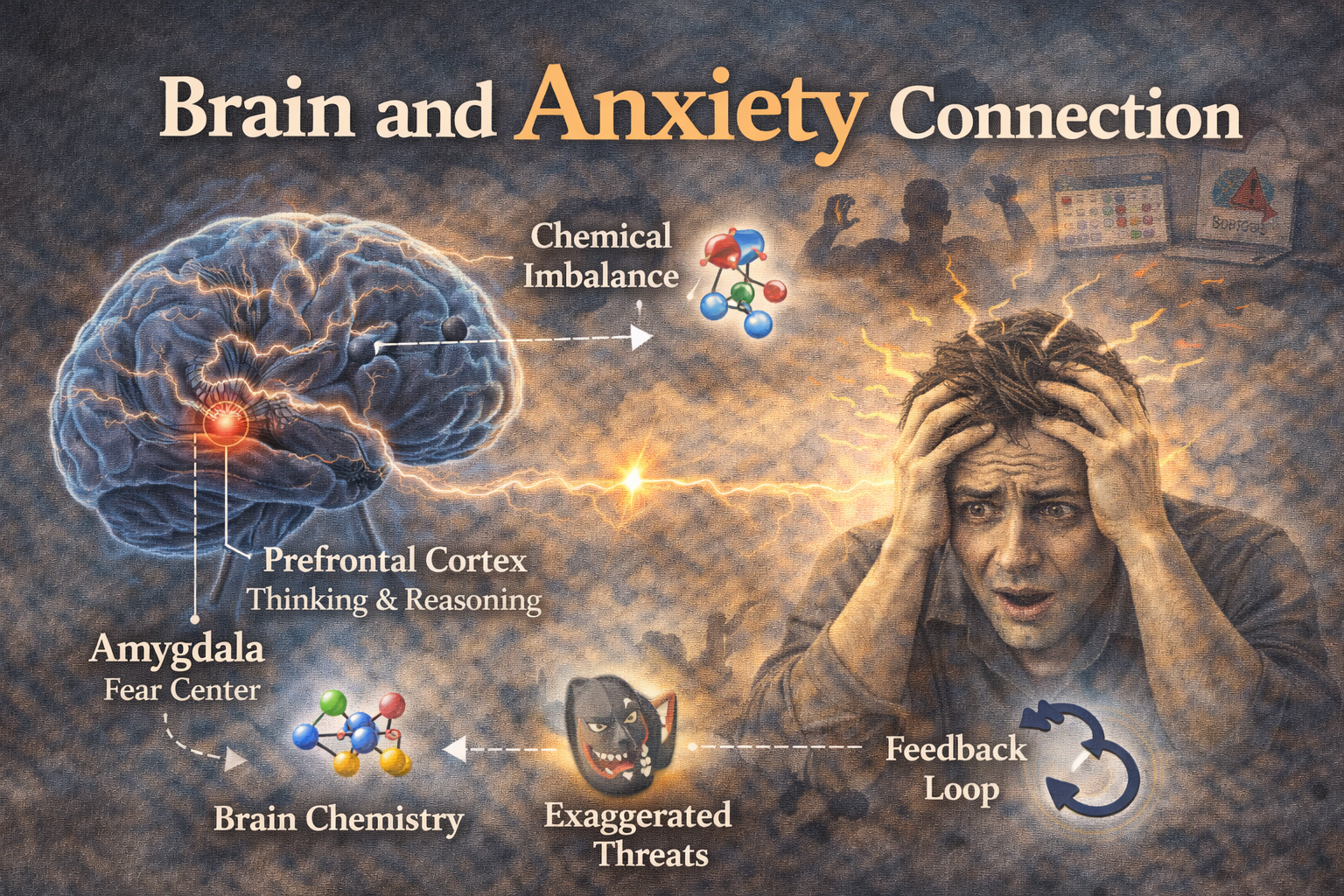
Anxiety is a protective brain response gone overboard, involving threat detection, emotional regulation, memory, and arousal. When dysregulated, it causes excessive fear without real danger.
This leads to symptoms like racing heart or rumination.
Neurological Basis of Anxiety
The limbic system (amygdala, hippocampus), prefrontal cortex, and brainstem interact. HPA axis and autonomic nervous system activate, flooding with stress hormones.
Balance is key; imbalance fuels disorders.
Why the Brain Drives Anxiety Symptoms
It misinterprets safe situations as threats, creating feedback loops: fear triggers physical symptoms, amplifying more fear.
Understanding the brain and anxiety connection empowers management.
Amygdala Role in Anxiety – The Brain’s Alarm System
The amygdala’s role in anxiety centers on threat detection. Hyperactivity explains overreactions. Explore how it triggers.
How the Amygdala Triggers Anxiety
It enables rapid threat detection before conscious awareness. In disorders, hyperactivity creates over-reactive alarms to minor cues.
This initiates fight-or-flight.
Amygdala and Fear Conditioning
It associates neutral cues with danger, like linking crowds to panic. This explains persistent triggers post-event.
Conditioning strengthens pathways.
Amygdala Overdrive in Panic & PTSD
Enlarged or hyper-responsive in patients, it drives sudden physical symptoms like palpitations.
Therapies aim to dampen this.
Research Shows: fMRI studies show amygdala hyperactivity in 80% of anxiety cases, per a 2023 Biological Psychiatry meta-analysis.
For a broader foundation, see our guide on Signs of Mental Health Issues: Social Anxiety Disorder
Prefrontal Cortex Anxiety Control – The Brain’s Brake
Prefrontal cortex anxiety control acts as a regulator. Underactivity fails to brake fear. This comparison highlights its importance.
Prefrontal Cortex Role in Regulating Anxiety
It handles executive functions: planning, impulse control, emotion regulation. It inhibits amygdala overreactions.
Strong activity calms responses.
Prefrontal Cortex Anxiety Control Failures
Underactive in chronic anxiety, it struggles to “turn off” worry, allowing fear dominance.
This perpetuates cycles.
Why This Matters for Recovery
Neuroplasticity strengthens it via therapy. It’s a key target in CBT, improving control.
Hope lies in change.
Hippocampus and Anxiety Link – Memory & Context
The hippocampus and anxiety link involves memory processing. Stress alters it. Understand its role.
Hippocampus Role in Anxiety
It provides contextual memory, distinguishing safe/dangerous situations. Smaller in chronic anxiety, impairing context.
Fear generalizes.
Stress-Induced Hippocampal Changes
High cortisol shrinks it, hindering fear extinction—learning safety.
This sustains anxiety.
Recovery Potential
Exercise, therapy, sleep promote neurogenesis, restoring function.
Rebuild is possible.
For a broader foundation, see our guide on Signs of Mental Health Issues: Causes of Anxiety Disorders
Neurotransmitters Affecting Anxiety Brain – Chemical Messengers
Neurotransmitters affecting anxiety brain are key messengers. Imbalances disrupt. This list explains main ones.
Serotonin Brain Anxiety Connection
Low serotonin heightens anxiety and rumination. SSRIs boost availability, aiding relief.
Balance modulates mood.
GABA & Glutamate Imbalance
GABA deficiency (calming) plus glutamate excess (excitatory) occur. Benzodiazepines enhance GABA temporarily.
This calms overfiring.
Norepinephrine & Dopamine Imbalance Anxiety Causes
Excess norepinephrine causes hyperarousal/vigilance. Dopamine dysregulation overlaps reward/anxiety.
Imbalances fuel symptoms.
Stress Brain Response Anxiety – The HPA Axis Pathway
Stress brain response anxiety involves the HPA axis. Chronic activation changes brain. Break down the pathway.
How Stress Brain Response Anxiety Works
HPA axis: hypothalamus signals pituitary, then adrenals release cortisol. Chronic elevates levels, altering brain.
This sustains arousal.
Allostatic Load & Brain Impact
Prolonged stress wear-and-tear shrinks hippocampus, boosts amygdala.
Load accumulates.
Breaking the Chronic Stress Cycle
Lifestyle lowers cortisol: exercise, mindfulness. Therapy rewires response.
Recovery is achievable.
(Word count: 228)
Learn more in our article on Stress Management for Anxiety.
Brain Scans Anxiety Disorders – What Imaging Shows
Brain scans anxiety disorders reveal structural/functional insights. Imaging advances understanding.
Brain Scans Anxiety Disorders Findings
fMRI shows hyperactive amygdala, reduced prefrontal. Structural MRI indicates smaller hippocampus, altered connectivity.
Patterns emerge.
Functional vs. Structural Insights
Resting-state fMRI reveals default mode overactivity. Diffusion tensor imaging shows white matter changes.
Both inform.
Clinical Relevance
Supports diagnosis/treatment monitoring. Not routine yet, but progressing.
Future holds promise.
Important: Brain scans alone don’t diagnose anxiety—clinical evaluation is essential.
Brain Plasticity Anxiety Recovery – Hope Through Change
Brain plasticity anxiety recovery offers hope via change. Rewiring is possible.
Neuroplasticity Basics in Anxiety
Brain rewires through experience/learning. Therapy/habits strengthen regulatory circuits.
Adaptation key.
Evidence-Based Methods That Promote Plasticity
CBT/exposure balance prefrontal-amygdala. Aerobic exercise boosts BDNF, hippocampal growth.
Methods work.
Realistic Recovery Timeline
Changes noticeable weeks-months. Sustained practice yields lasting shifts.
Patience pays.
Scientific Evidence & Research
Scientific evidence strengthens brain and anxiety connection knowledge. Studies validate.
Clinical Studies
Meta-analyses confirm amygdala hyperactivity, prefrontal hypoactivity. Longitudinal fMRI: CBT normalizes in 8-12 weeks.
Therapy alters brain.
Expert Opinions
NIMH views anxiety as fear circuitry disorder. APA emphasizes neuroplasticity in psychotherapy.
Consensus grows.
Statistical Data
31% lifetime prevalence; women 1.5-2x higher. Exercise/mindfulness show moderate-large brain effect sizes.
Data supports.
Explore NIMH Anxiety Neurobiology; Mayo Clinic Brain & Anxiety; Nature Reviews Neuroscience – Anxiety Circuits; Biological Psychiatry – Plasticity in Anxiety.
Common Mistakes to Avoid When Learning About the Brain-Anxiety Link
Avoiding mistakes enhances understanding of brain and anxiety connection. These pitfalls mislead.
Mistake #1: Believing Anxiety Is Purely “Chemical Imbalance”
Why problematic: Oversimplifies, ignores circuits/plasticity/environment. Better approach: Embrace biopsychosocial model.
Mistake #2: Assuming Brain Changes Are Permanent
Why problematic: Discourages seeking treatment. Better approach: Learn neuroplasticity/recovery evidence.
Mistake #3: Self-Diagnosing via Brain Scans or Pop-Science
Why problematic: Scans not diagnostic; misinformation rife. Better approach: Rely on professionals/peer-reviewed sources.
Frequently Asked Questions (FAQs)
What Is the Brain and Anxiety Connection?
The brain and anxiety connection involves amygdala (threat detection), prefrontal cortex (regulation), hippocampus (context/memory), neurotransmitters (serotonin, GABA, norepinephrine). Dysregulation turns normal fear to excessive, causing disorders. Understanding aids management.
How Does the Brain Cause Anxiety?
The brain causes anxiety via amygdala overactivation (fear signaling), weakened prefrontal (poor regulation), hippocampal changes (safety learning impaired), HPA overdrive (stress hormones). Heightened threat perception persists in safe situations—therapy rewires.
What Is the Amygdala Role in Anxiety?
Amygdala serves as brain’s alarm, detecting threats rapidly, triggering fight-or-flight. Hyper-responsive in disorders, it causes intense fear to low-threat cues, driving symptoms—mindfulness dampens.
How Does the Prefrontal Cortex Control Anxiety?
Prefrontal cortex regulates emotions, inhibits fear, provides context. Underactive in anxiety, fails amygdala dampening. CBT strengthens connections, improving control—key for recovery.
What Is the Hippocampus and Anxiety Link?
Hippocampus distinguishes safe/dangerous contexts, supports fear extinction. Stress shrinks it, impairing learning, causing generalized anxiety. Exercise/therapy promote recovery, restoring function.
Can Brain Chemistry Changes Cause Anxiety?
Yes—imbalances in serotonin (regulation), GABA (calming), norepinephrine (arousal), dopamine contribute. Low GABA/excess norepinephrine heightens. Meds/lifestyle restore balance, reducing symptoms.
Does Brain Plasticity Help Anxiety Recovery?
Yes—neuroplasticity rewires via therapy/exercise/mindfulness/experiences. CBT/exposure strengthen circuits; activity boosts BDNF/hippocampal growth, supporting long-term reduction—change possible.
Conclusion
Understanding brain and anxiety connection demystifies symptoms, lessens blame, reveals anxiety as biological—not flaw—highlights neuroplasticity paths to change, empowering proactive steps.
Your brain shifts from fear overdrive to regulation with interventions—hope/concrete support reasons.
Try one brain-supportive habit today: 10 minutes slow breathing, brisk walk, journaling worry/challenge.
If overwhelming/persistent, speak with mental health professional—therapies targeting brain-anxiety highly effective. Brain adaptable; permanent today manageable tomorrow with understanding/tools/support—not broken, wired protection—rewire calm.
Medical Disclaimer:
This article is for informational and educational purposes only and does not constitute medical advice. The information provided should not be used for diagnosing or treating a health problem or disease. Always consult with a qualified healthcare professional before making any changes to your mental health treatment, starting new medications, or trying new supplements.
If you’re experiencing a mental health crisis, please call the 988 Suicide & Crisis Lifeline or visit your nearest emergency room. For non-emergency support, contact the Substance Abuse and Mental Health Services Administration (SAMHSA) National Helpline at 1-800-662-4357.
The content in this article is based on current research and expert consensus as of 2026, but medical knowledge evolves. Always verify information with your healthcare provider.