That nagging sense of unease before a big presentation or family gathering—is it just normal worry, or could it be anxiety? Nearly 40 million U.S. adults experience an anxiety disorder each year, yet many struggle to tell the difference from everyday concerns. If you’re constantly replaying worst-case scenarios, losing sleep over uncertainties, or feeling physically drained by persistent thoughts, it might be more than passing worry, leaving you exhausted and questioning your mental health.
This confusion can delay help, allowing manageable concerns to escalate into disruptive patterns that affect work, relationships, and well-being. But distinguishing anxiety vs normal worry is empowering. In this article, you’ll learn key differences, recognize red flags like when worry becomes anxiety, explore triggers, and gain practical strategies to manage excessive thoughts before they overwhelm.
Drawing from DSM-5 criteria, NIMH statistics, Mayo Clinic guidelines, and peer-reviewed research, this guide offers accurate, evidence-based insights to clarify your experiences.
For a broader foundation, see our guide on Signs of Mental Health Issues: Complete Guide to Anxiety Disorders
What Is the Difference Between Anxiety and Worry?
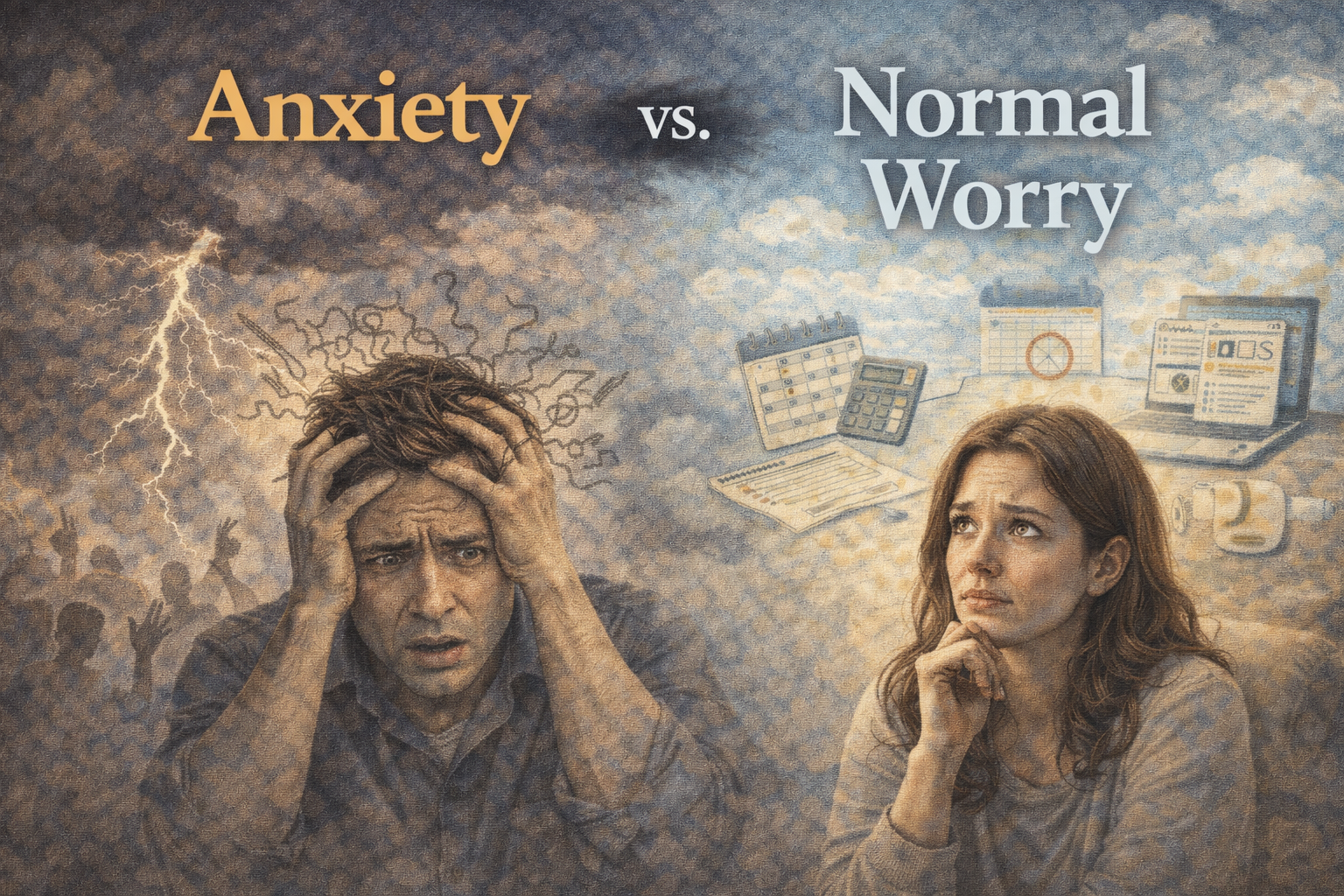
Understanding the difference between anxiety and worry starts with recognizing their roles in daily life. Normal worry can be helpful, while anxiety often hinders. This section defines each and compares them side by side.
Defining Normal Worry
Normal worry involves purposeful, problem-focused thinking about real-life issues, like preparing for a job interview. It’s temporary and proportional, resolving once addressed.
Moreover, it motivates action, such as planning steps to mitigate concerns.
Defining Anxiety
Anxiety features excessive, persistent fear or apprehension, often irrational and future-oriented, imagining catastrophes. It includes physical symptoms like rapid heartbeat and may lead to avoidance behaviors.
This makes it disruptive, unlike fleeting worry.
Anxiety vs Normal Worry – Side-by-Side Comparison
- Duration: Normal worry is short-term; anxiety is chronic and persistent.
- Intensity: Worry feels manageable; anxiety is overwhelming and hard to shake.
- Control: You can redirect worry; anxiety intrudes despite efforts.
- Impact: Worry aids problem-solving; anxiety interferes with daily functioning.
In anxiety vs normal worry, the key is functionality—does it help or harm?
Pro Tip: Set a “worry timer” for 10 minutes daily to address concerns productively, preventing them from spilling into anxiety territory.
Why Understanding Anxiety vs Normal Worry Matters
Grasping anxiety vs normal worry isn’t academic—it’s practical for protecting your health. Mislabeling anxiety as “just stress” delays relief. Here’s why recognition counts.
Effects of Untreated Excessive Worry
Untreated anxiety leads to sleep disturbances, fatigue, irritability, and muscle tension. It raises risks for depression, substance use, or physical issues like high blood pressure.
Over time, it erodes quality of life.
Prevalence and Real-World Impact
Anxiety disorders affect about 19.1% of U.S. adults annually, with many delaying help thinking it’s normal worry. This impacts work productivity and relationships.
Awareness reduces stigma.
Benefits of Early Recognition
Spotting signs prevents escalation into disorders like GAD. It improves relationships, productivity, and overall well-being through timely strategies.
Signs Anxiety Is Not Normal Worry
Identifying when anxiety surpasses normal worry helps you act early. Look for patterns beyond occasional fretting. This checklist explains key indicators.
Signs Anxiety Not Normal Worry
Worry becomes anxiety when it feels uncontrollable and excessive, dominating thoughts without resolution. You might ruminate on multiple issues simultaneously.
This signals a shift.
Anxiety Symptoms vs Normal Worry
Unlike worry, anxiety brings physical symptoms: racing heart, sweating, trembling, or nausea. Sleep problems arise from racing thoughts, even without stressors.
Concentration suffers as the mind fixates on threats.
When Worry Becomes Anxiety
It lasts weeks to months, not hours, interfering with work or self-care. Avoidance of triggering situations emerges, limiting life.
Research Shows: According to NIMH, generalized anxiety disorder affects 2.7% of U.S. adults yearly, often starting as unchecked worry.
For a broader foundation, see our guide on Signs of Mental Health Issues: Specific Phobias Explained
How to Tell Anxiety from Worry
Wondering how to tell anxiety from worry? A self-assessment clarifies. Follow these steps to evaluate your experiences objectively.
How to Tell Anxiety from Worry
Ask: Is this about a specific, solvable problem? Does it persist after resolution? Are physical symptoms like tension present most days?
These questions highlight differences.
Distinguishing Anxiety from Everyday Worry
Track worry for a week: note duration, intensity, and if it spurs action or paralysis. Everyday worry resolves; anxiety lingers.
Journaling reveals patterns.
Is It Anxiety or Just Worry? Quick Checklist
- Does worry last >6 months on most days?
- Is it hard to control?
- Accompanied by 3+ symptoms: restlessness, fatigue, poor concentration?
- Interferes with life?
Score 3+ yeses? Consider professional input.
Normal Worry vs Anxiety Disorder – Key Triggers & Causes
Exploring normal worry vs anxiety disorder reveals triggers turning helpful thoughts harmful. Understanding causes aids prevention.
Normal Worry vs Generalized Anxiety
Normal worry ties to specific events, resolving post-handling. Generalized anxiety is free-floating, spanning topics without resolution.
It persists regardless of circumstances.
Common Triggers That Turn Worry Into Anxiety
Chronic stress, trauma, or perfectionism amplify worries. Caffeine, poor sleep, or life changes like job loss exacerbate.
These build over time.
Biological and Environmental Factors
Genetics influence brain chemistry, like GABA or serotonin levels. Learned behaviors from family or environment contribute.
What Separates Worry from Anxiety – Management Strategies
What separates worry from anxiety? Worry aids, anxiety impairs. These strategies bridge the gap, promoting control.
What Separates Worry from Anxiety
Worry is time-limited and action-oriented, solving problems. Anxiety is pervasive, anticipatory, fostering avoidance and distress.
Recognition is key.
Practical Ways to Manage Excessive Worry
Use scheduled worry time: allocate 15 minutes daily to address concerns, postponing others. Challenge thoughts with reality-testing: “What’s the evidence?”
Practice consistently.
When to Seek Professional Help
If symptoms exceed 6 months or impair functioning, consult a provider. Therapy like CBT helps.
Expert Insight: “Adaptive worry motivates; maladaptive anxiety paralyzes,” says a clinical psychologist, emphasizing timely distinction.
Scientific Evidence & Research
Scientific evidence distinguishes anxiety from normal worry through studies and data. Research validates thresholds and treatments.
Clinical Studies
CBT reduces worry in GAD, with meta-analyses showing large effect sizes. Techniques like worry postponement prove effective in trials.
They outperform waitlists.
Expert Opinions
APA and Mayo Clinic note persistent, uncontrollable worry plus symptoms as clinical thresholds. Distinction is diagnostic core.
Statistical Data
Lifetime anxiety disorder prevalence is 31.1%; GAD affects 5.7%. Annual 19.1% for any anxiety.
Visit NIMH Anxiety Disorders page; Mayo Clinic GAD overview; APA DSM-5 fact sheet.
Common Mistakes to Avoid
Avoiding mistakes in assessing anxiety vs normal worry prevents escalation. These common errors have better alternatives.
Mistake #1: Ignoring Physical Symptoms as “Just Stress”
Why problematic: Delays identifying clinical anxiety, allowing worsening. Better approach: Track symptoms weekly, noting patterns.
Mistake #2: Constant Reassurance-Seeking
Why problematic: Offers brief relief but reinforces cycles. Better approach: Build self-soothing via exposure techniques.
Mistake #3: Self-Diagnosing Without Professional Input
Why problematic: Overlooks comorbidities like depression. Better approach: Seek licensed evaluation for accuracy.
Frequently Asked Questions (FAQs)
What’s the Difference Between Anxiety and Worry?
Normal worry is temporary, focused, and often productive. Anxiety is excessive, persistent, hard to control, and usually accompanied by physical symptoms like racing heart or restlessness. If worry lasts weeks, feels uncontrollable, or disrupts life, it may be anxiety—consult a professional if interfering daily.
How to Tell Anxiety from Worry?
Ask: Is the worry about real, solvable problems? Does it stop once addressed? Is it proportional? Anxiety tends to be future-focused, catastrophic, persistent, and paired with bodily tension or avoidance. Track for a week; if unrelenting, seek evaluation.
When Does Worry Become Anxiety?
Worry becomes anxiety when excessive, lasting months, uncontrollable, and interfering with functioning, sleep, or relationships. Physical symptoms and avoidance are red flags—professional help recommended if persistent.
What Separates Worry from Anxiety Disorder?
Normal worry is time-limited and motivates action. Anxiety disorders involve chronic, intense worry across areas, physical symptoms, and distress. GAD requires symptoms most days for 6 months—diagnosis needs expert input.
Is It Anxiety or Just Worry?
If thoughts are hard to dismiss, return despite efforts, cause daily distress, and include physical symptoms or avoidance, it’s likely more than normal worry. Professional clarity helps rule out disorders.
Anxiety Symptoms vs Normal Worry – What’s Different?
Normal worry lacks strong physical symptoms and resolves with solving. Anxiety brings racing heart, sweating, tension, fatigue, irritability, poor sleep—even without threats. If impacting life, consult a provider.
Normal Worry vs Generalized Anxiety – Key Differences?
Normal worry is specific and temporary. Generalized anxiety involves excessive worry about many topics most days for 6 months, plus 3+ symptoms like restlessness or fatigue. Seek help if chronic.
Conclusion
Recognizing anxiety vs normal worry empowers you to intervene early, preventing exhaustion and fostering balance. You’ll now assess thoughts realistically, use tools like scheduled worry time, and seek help proactively, transforming disruptive patterns into productive ones.
Understanding this difference provides clarity and confidence to manage concerns effectively.
Track worry patterns for one week in a journal, noting triggers and impacts.
If excessive, speak with a therapist—early support changes lives. You don’t have to endure constant unease; with strategies and help, calm awaits—you’re capable.
Medical Disclaimer:
This article is for informational and educational purposes only and does not constitute medical advice. The information provided should not be used for diagnosing or treating a health problem or disease. Always consult with a qualified healthcare professional before making any changes to your mental health treatment, starting new medications, or trying new supplements.
If you’re experiencing a mental health crisis, please call the 988 Suicide & Crisis Lifeline or visit your nearest emergency room. For non-emergency support, contact the Substance Abuse and Mental Health Services Administration (SAMHSA) National Helpline at 1-800-662-4357.
The content in this article is based on current research and expert consensus as of 2026, but medical knowledge evolves. Always verify information with your healthcare provider.