Anxiety disorders affect millions of people across the United States, with recent estimates showing that nearly 1 in 5 U.S. adults (around 19.1%) experienced any anxiety disorder in the past year, according to data from the National Institute of Mental Health (NIMH). Many live with persistent worry, racing thoughts, physical tension, or sudden panic that interferes with work, relationships, and everyday enjoyment. Those wondering why anxiety feels so hard to shake, or which path might actually help, are far from alone — and effective options exist.
The good news is that anxiety therapy types offer proven ways to reduce symptoms and regain control. This comprehensive guide explores the main evidence-based approaches, from cognitive behavioral therapy (CBT) to newer options like acceptance and commitment therapy (ACT). Each section covers how a given approach works, who benefits most, supporting research, and practical steps to get started. Drawing from guidelines by the American Psychological Association (APA), Mayo Clinic, and recent studies, this article aims to provide clear, trustworthy information.
For a broader foundation, see our guide on Signs of Mental Health Issues: Generalized Anxiety Disorder (GAD)
What Are Anxiety Therapy Types? An Overview
Psychotherapy, often called talk therapy, forms the foundation of most anxiety therapy types. These approaches help individuals understand and change patterns in thoughts, behaviors, emotions, and even physical responses that fuel anxiety.
Unlike medication alone — which targets brain chemistry — therapy builds long-term skills. Many experts recommend combining both for optimal results, especially in moderate to severe cases.
Evidence-based therapies rely on rigorous research, while alternative approaches may have less support. The focus here is on those with the strongest backing.
Understanding Psychotherapy for Anxiety
Therapy sessions typically last 45–60 minutes, weekly or biweekly. Clients learn tools to manage triggers rather than just coping temporarily.
How Anxiety Therapy Differs from General Counseling
General counseling offers support through open discussion, but targeted anxiety therapy types use structured techniques and often include homework assignments to practice skills between sessions.
For a broader foundation, see our guide on Signs of Mental Health Issues: Complete Guide to Anxiety Disorders
Common Goals Across Anxiety Therapy Types
Most aim to:
- Reduce the intensity and frequency of symptoms
- Build practical coping skills for daily life
- Improve overall quality of life and functioning
Why Choosing the Right Anxiety Therapy Types Matters
Selecting a therapy that matches the anxiety type, severity, and individual preferences can lead to faster relief and better long-term outcomes.
Impact on Long-Term Recovery
When therapy aligns with specific needs, symptoms often decrease more sustainably, reducing the risk of relapse.
Personalized Factors to Consider
Key considerations include whether the anxiety stems from generalized anxiety disorder (GAD), social anxiety, panic attacks, or trauma-related anxiety. Access matters too — online options expand reach for those in rural areas or with busy schedules.
Combining Therapy with Lifestyle Changes
Regular exercise, consistent sleep, and basic mindfulness practices can amplify therapy benefits.
For a broader foundation, see our guide on Signs of Mental Health Issues: Anxiety Medication Options
What Is the Best Therapy for Anxiety? Evidence-Based Options
No single “best” exists for everyone, but research consistently highlights certain anxiety therapy types as highly effective.
Cognitive Behavioral Therapy (CBT) for Generalized Anxiety
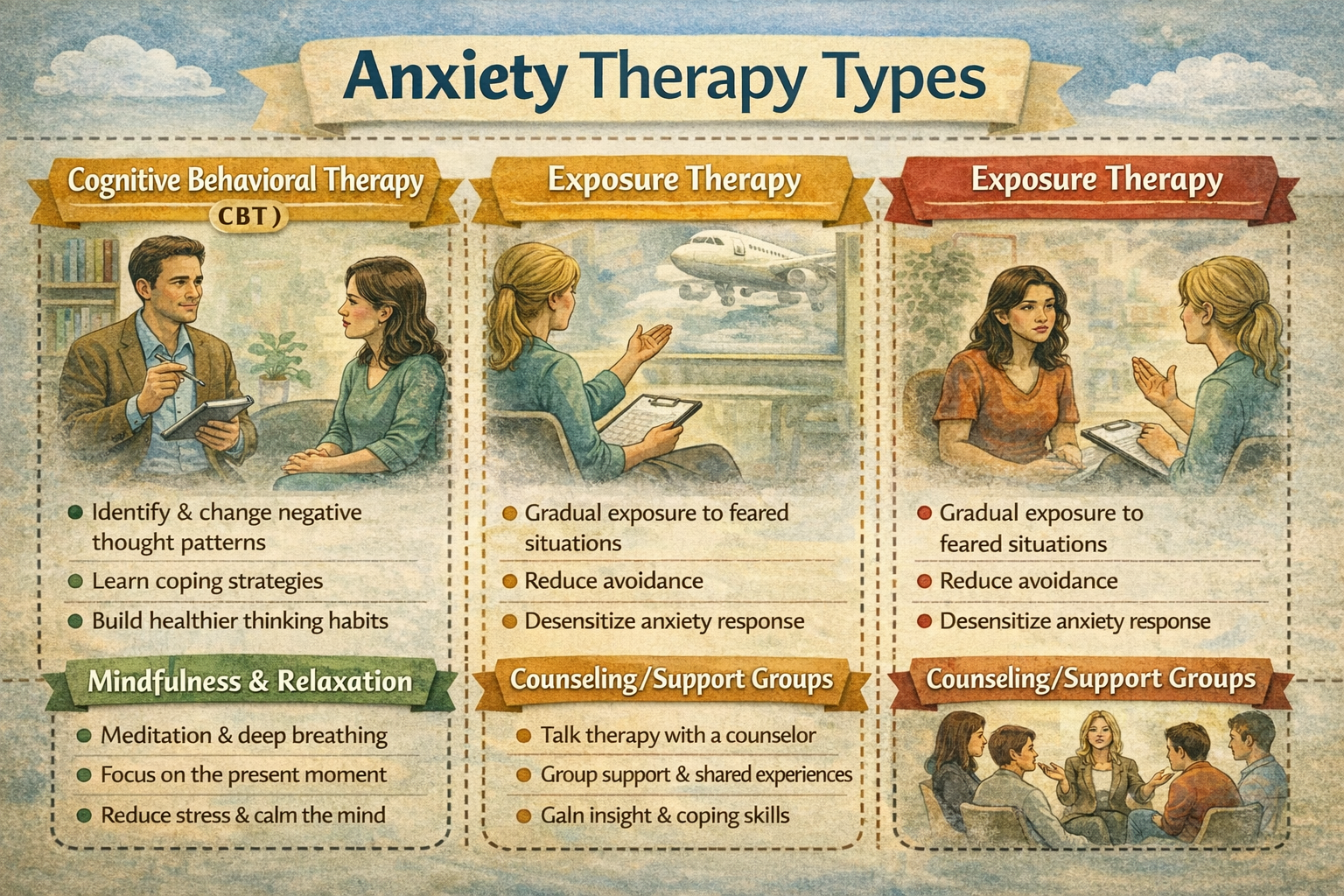
CBT helps identify and reframe negative thought patterns that amplify worry. Clients learn to challenge catastrophic thinking and test beliefs through behavioral experiments.
Studies show CBT as a gold standard, with large effect sizes (often g=0.8–1.2) for GAD, panic, and social anxiety.
Exposure Therapy for Anxiety
This involves gradual, controlled confrontation with feared situations or thoughts to reduce avoidance and sensitivity over time.
It proves particularly strong for phobias and panic-related anxiety.
EMDR Therapy for Anxiety
Eye Movement Desensitization and Reprocessing uses guided eye movements to process distressing memories.
It helps when anxiety stems from past trauma.
ACT Therapy for Anxiety and Mindfulness-Based Approaches
Acceptance and Commitment Therapy encourages accepting thoughts without fighting them while committing to value-driven actions.
It suits chronic, ongoing worry.
Here’s a quick comparison:
- CBT: Best for most anxiety types; strong evidence; structured; 12–20 sessions typical.
- Exposure: Excellent for specific fears; focused; shorter for phobias.
- EMDR: Trauma-linked anxiety; 8–12 sessions.
- ACT: Chronic worry; acceptance focus.
Pro Tip: Starting with CBT is a solid first choice for many — its versatility makes it effective across a wide range of anxiety presentations.
Other Effective Anxiety Therapy Types
Beyond the core options, several approaches show promise.
DBT Therapy for Anxiety
Dialectical Behavior Therapy emphasizes emotion regulation and distress tolerance.
It benefits those with intense emotions or co-occurring conditions.
Somatic Therapy for Anxiety
This body-focused method releases stored tension through awareness and movement.
It gains traction for trauma-related anxiety.
Art Therapy and Group Therapy for Anxiety
Creative expression in art therapy reduces isolation. Group formats build connection and normalize experiences through peer support.
Online CBT for Anxiety
Internet-delivered CBT offers convenience with similar outcomes to in-person for many.
Recent studies support telehealth’s effectiveness, especially guided versions.
How to Choose and Start Anxiety Therapy Types
Taking the first step feels daunting, but a clear process helps.
Step 1: Assess Individual Needs
Key questions to consider: What triggers anxiety most? How severe is it? Is in-person talking, body-focused work, or online sessions the preferred format?
Self-screening tools from reputable sites can guide initial reflection.
Step 2: Find a Qualified Therapist
Look for licensed professionals (LCSW, PsyD, PhD) with anxiety expertise. Directories from Psychology Today or an insurance provider are good starting points.
Checking credentials and reading reviews is recommended.
Step 3: What to Expect in First Sessions
Expect an assessment, goal discussion, and treatment plan outline. Building rapport matters.
Scientific Evidence & Research on Anxiety Therapy Types
Research strongly supports these approaches.
Clinical Studies
Meta-analyses show CBT with large effect sizes and long-term gains in many cases. Exposure excels for specific fears.
Recent network meta-analyses confirm CBT and third-wave therapies (like ACT) outperform usual care.
Expert Opinions
The APA and Mayo Clinic endorse CBT as a first-line treatment for most anxiety disorders.
Statistical Data
Evidence-based therapies reduce symptoms significantly for many — around 60–80% see meaningful improvement. Yet only about 1 in 4 people with anxiety receive treatment.
Mayo Clinic Anxiety Treatment, NIMH on Anxiety Disorders,
Research Shows: A 2024 network meta-analysis found CBT associated with sustained reductions in GAD symptoms compared to usual care.
Common Mistakes to Avoid When Exploring Anxiety Therapy Types
Avoiding pitfalls increases success.
Mistake #1: Delaying Treatment
Anxiety often worsens without help. Starting early prevents escalation.
Better: Reach out when symptoms interfere with life.
Mistake #2: Choosing Based Only on Trends
Popular doesn’t mean suitable. The right match depends on individual needs and research backing.
Better: Prioritize evidence-backed options plus personal fit.
Mistake #3: Quitting Too Soon
Benefits often emerge after 8–16 sessions.
Important: If symptoms include suicidal thoughts or severe impairment, seek immediate help via 988 or emergency services.
Frequently Asked Questions (FAQs)
What are the main types of therapy for anxiety?
The main types of therapy for anxiety include CBT, exposure therapy, ACT, DBT, EMDR, somatic therapy, mindfulness-based approaches, art therapy, and group therapy. CBT remains the most researched and often recommended first-line option due to its broad effectiveness.
What is the best therapy for anxiety?
Cognitive Behavioral Therapy (CBT) is widely regarded as one of the most effective therapies for anxiety, particularly for generalized anxiety, with strong long-term results in meta-analyses. Third-wave options like ACT serve as solid alternatives for persistent worry.
Is online CBT for anxiety effective?
Yes — online CBT for anxiety delivers comparable results to in-person therapy for many, offering convenience and accessibility. Recent telehealth studies support its use, especially with guided support.
How does exposure therapy for anxiety work?
Exposure therapy for anxiety gradually and safely confronts feared situations or thoughts to reduce sensitivity over time. It proves highly effective for phobias and panic by breaking the avoidance cycle.
Can family therapy for anxiety help?
Yes, family therapy for anxiety can help when family dynamics contribute to symptoms. It improves communication, support, and understanding among loved ones.
How long does therapy for anxiety take?
Therapy for anxiety typically involves 12–20 sessions for noticeable change, though some experience benefits sooner. Progress varies by individual and approach.
Conclusion
Exploring anxiety therapy types reveals clear paths forward: evidence-based options like CBT, exposure, ACT, and others provide tools to reduce symptoms and rebuild confidence. The key lies in finding what fits individual circumstances — many experience substantial relief and lasting change.
The knowledge is here to move forward thoughtfully. Reflecting on symptoms and taking one step — scheduling a consultation or reaching out to a professional — is all it takes to begin.
Medical Disclaimer: This article is for informational and educational purposes only and does not constitute medical advice. The information provided should not be used for diagnosing or treating a health problem or disease. Always consult with a qualified healthcare professional before making any changes to mental health treatment, starting new medications, or trying new supplements. If experiencing a mental health crisis, please call the 988 Suicide & Crisis Lifeline or visit the nearest emergency room. For non-emergency support, contact the Substance Abuse and Mental Health Services Administration (SAMHSA) National Helpline at 1-800-662-HELP (4357). The content in this article is based on current research and expert consensus as of 2026, but medical knowledge evolves. Always verify information with a healthcare provider.