Nearly 1 in 5 U.S. adults—about 19.1% according to the National Institute of Mental Health—experiences an anxiety disorder in any given year. Yet many people wake up with a racing heart, constant worry, or a sense of dread and still wonder: Is this normal, or is it getting serious?
If you’ve been telling yourself “it’s just stress” while canceling plans, struggling to focus at work, or lying awake at night, you’re not alone. Anxiety exists on a spectrum, and without clear markers, it’s easy to minimize symptoms until they interfere with your life, relationships, or health. The gap between feeling “a little worried” and needing support can feel confusing and isolating.
For a broader foundation, see our guide on Signs of Mental Health Issues: Panic Disorder Overview
What Are Anxiety Severity Levels?
Anxiety severity levels help clinicians and individuals understand how much anxiety affects daily functioning. Professionals classify anxiety based on how often symptoms occur, how intense they feel, and how much they disrupt work, relationships, or self-care.
The most widely used and validated tool for this is the GAD-7 (Generalized Anxiety Disorder 7-item scale). It produces a score from 0 to 21. Other tools like the Hamilton Anxiety Rating Scale (HAM-A) exist for clinical settings, but the GAD-7 remains the gold standard for quick, reliable self-screening because of its strong validity and ease of use.
What Are the Levels of Anxiety?
- Minimal (0–4): Symptoms are rare or absent. Daily life flows normally with little emotional interference.
- Mild (5–9): Noticeable worry appears several days a week, but you can usually manage it with coping strategies.
- Moderate (10–14): Symptoms occur more than half the days, making concentration, sleep, or social interactions harder.
- Severe (15–21): Intense symptoms nearly every day create major disruption—avoidance, exhaustion, or inability to function as usual.
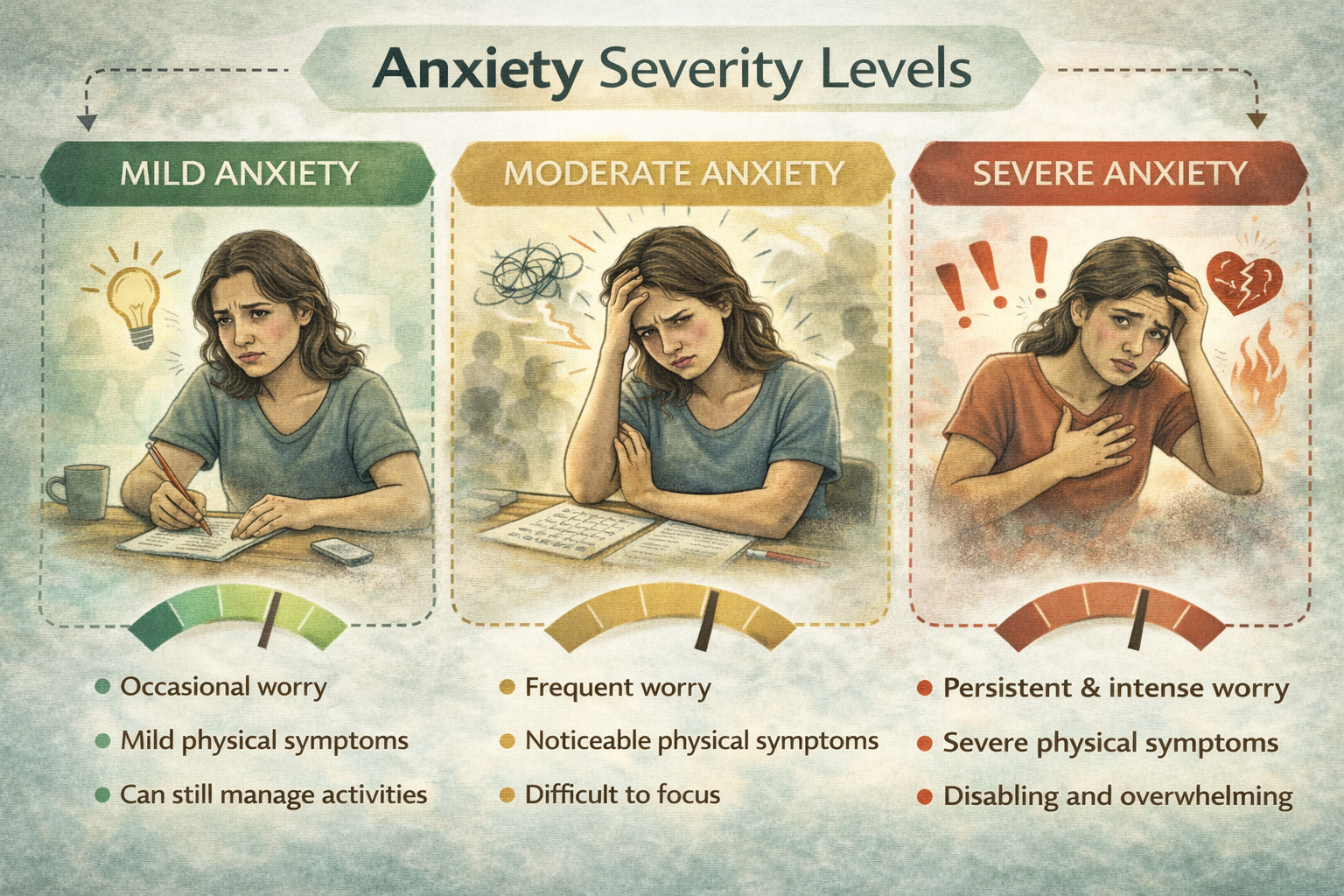
Anxiety Levels Mild vs Severe Comparison
Mild anxiety might mean occasional butterflies before a meeting that fade quickly. Severe anxiety can feel like persistent dread that follows you everywhere, accompanied by physical symptoms such as chest tightness or gastrointestinal distress that make even simple tasks feel overwhelming.
Anxiety severity levels matter because they guide whether self-help steps are enough or whether professional support is the wiser next move.
📊 Research Shows: According to NIMH data, among adults with any anxiety disorder, impairment levels break down as mild (43.5%), moderate (33.7%), and serious (22.8%). Early recognition of your level can prevent progression to more serious impairment.
For a broader foundation, see our guide on Signs of Mental Health Issues: Complete Guide to Anxiety Disorders
Understanding Anxiety Severity Scale – The GAD-7 Tool
The GAD-7 is a simple, free questionnaire that measures anxiety severity over the past two weeks. Healthcare providers and individuals alike use it worldwide because it is quick, reliable, and well-validated.
How to Measure Anxiety Severity with GAD-7
Answer seven questions about how often you’ve been bothered by:
- Feeling nervous, anxious, or on edge
- Not being able to stop or control worrying
- Worrying too much about different things
- Trouble relaxing
- Being so restless that it’s hard to sit still
- Becoming easily annoyed or irritable
- Feeling afraid as if something awful might happen
Rate each from 0 (“not at all”) to 3 (“nearly every day”). Add the scores for your total.
GAD-7 Score Meaning Severity Breakdown
- 0–4: Minimal anxiety – continue healthy habits and monitor.
- 5–9: Mild anxiety – lifestyle changes often bring good relief.
- 10–14: Moderate anxiety – professional input is usually recommended.
- 15–21: Severe anxiety – prompt treatment is strongly advised.
Free Anxiety Severity Test Online Options
Reputable sources such as the ADAA and MDCalc offer free, anonymous GAD-7 tools. These are excellent starting points, but remember: they are screening instruments only. A high score does not equal a diagnosis.
Pro Tip: Take the GAD-7 at the same time of day (e.g., Sunday evening) every two weeks to track trends accurately. Note any life events that might influence your score—this context helps you and your provider see the full picture.
Many people find success pairing self-assessment with guided support. A popular option is connecting with licensed therapists through platforms like BetterHelp, which offers convenient online sessions tailored to your schedule.
For a broader foundation, see our guide on Signs of Mental Health Issues: Test Anxiety Management
Symptoms by Anxiety Severity Level
Symptoms change in frequency and intensity as anxiety severity levels increase. Recognizing the pattern helps you respond appropriately.
Signs of Moderate Anxiety Disorder
At the moderate level you may notice:
- Worry that lasts most days and feels hard to dismiss
- Irritability that strains relationships
- Trouble falling or staying asleep
- Muscle tension or headaches
- Avoidance of situations that trigger worry
These symptoms begin to interfere with work performance or social plans, but you can usually push through with effort.
Severe Anxiety Symptoms Checklist
Severe anxiety often includes:
- Near-constant dread or sense of impending doom
- Panic-like episodes with rapid heartbeat, sweating, or shortness of breath
- Complete avoidance of triggering people or places
- Physical exhaustion from constant tension
- Significant impairment in daily responsibilities
Mild Moderate Severe Anxiety Levels – Key Differences
| Level | Worry Frequency | Physical Symptoms | Daily Impact |
| Mild | Several days/week | Occasional | Manageable with effort |
| Moderate | More than half the days | Frequent | Noticeable interference |
| Severe | Nearly every day | Intense and persistent | Major disruption or impairment |
👨⚕️ Expert Insight: “The shift from moderate to severe often happens when avoidance behaviors take over,” notes clinical psychologists who specialize in anxiety. “Catching it at moderate gives you the best chance for quicker, easier recovery.”
Why Understanding Anxiety Severity Levels Matters
Knowing your anxiety severity level transforms vague discomfort into actionable information. It reduces self-doubt and helps you choose the right support at the right time.
Impact on Daily Life and Health
Untreated moderate or severe anxiety raises the risk of developing depression, sleep disorders, or substance use as people try to cope. It can also contribute to high blood pressure, weakened immunity, and reduced quality of life.
When to Seek Professional Help
Consider reaching out if your GAD-7 score is 10 or higher and symptoms interfere with work, relationships, or self-care for more than two weeks. Even lower scores warrant attention if distress feels unmanageable.
How Serious Is My Anxiety Level?
Ask yourself:
- Do symptoms stop me from doing things I used to enjoy?
- Am I using alcohol, caffeine, or other substances to calm down?
- Have loved ones expressed concern?
Honest answers provide powerful clues.
⚠️ Important: Never ignore thoughts of self-harm or suicide. If these arise, reach out immediately to the 988 Lifeline or a trusted professional.
Anxiety Disorder Severity Levels Explained – Treatment Approaches
Treatment effectiveness improves dramatically when matched to your anxiety severity level.
Mild Anxiety Management
For mild levels, evidence-supported self-care often suffices:
- Regular physical activity (30 minutes most days)
- Mindfulness or deep-breathing exercises
- Consistent sleep schedule and limiting caffeine
- Balanced diet rich in fruits, vegetables, and omega-3s
Moderate to Severe Strategies
Moderate and severe anxiety usually benefit from professional care:
- Cognitive Behavioral Therapy (CBT) – gold-standard talk therapy that teaches you to reframe anxious thoughts. Meta-analyses show moderate to large improvements compared with placebo.
- Medication (SSRIs or SNRIs) when recommended by a psychiatrist
- Exposure therapy for specific triggers
- Combination approaches for fastest relief
Classifying Anxiety as Mild Moderate – Next Steps
After identifying your level, track symptoms weekly. Reassess with the GAD-7 in four weeks. If scores do not improve or worsen, consult a professional.
Learn more about evidence-based options in our guide to best anxiety therapy options.
📊 Research Shows: A major meta-analysis found CBT produces moderate placebo-controlled effects (Hedges’ g = 0.56) across anxiety disorders, with many people maintaining gains long-term.
Scientific Evidence & Research
The GAD-7 was developed and validated in a landmark 2006 study by Spitzer and colleagues published in Archives of Internal Medicine. At a cutoff of 10 or higher, it demonstrated 89% sensitivity and 82% specificity for detecting generalized anxiety disorder.
Clinical Studies on GAD-7
Subsequent research across thousands of patients has confirmed its reliability for screening multiple anxiety disorders, including panic, social anxiety, and PTSD.
Expert Opinions
The NIMH and ADAA emphasize that early identification of anxiety severity levels prevents escalation and improves outcomes. Healthcare professionals recommend routine screening in primary care.
Statistical Data
NIMH reports that 19.1% of U.S. adults had any anxiety disorder in the past year, with lifetime prevalence reaching 31.1%. Many remain undiagnosed at moderate or severe levels, highlighting the value of self-awareness tools like the GAD-7.
Common Mistakes to Avoid When Assessing Anxiety Severity
Mistake #1: Ignoring or Minimizing Symptoms
Problem: Small symptoms can grow when left unaddressed.
Better approach: Track them honestly for two weeks using the GAD-7.
Mistake #2: Relying Only on Self-Diagnosis Without Professional Input
Problem: Anxiety symptoms can overlap with thyroid issues, vitamin deficiencies, or other conditions.
Better approach: Use self-assessment as a starting point, then discuss results with a healthcare provider.
Mistake #3: Avoiding Help Due to Stigma or Fear
Problem: Delay often leads to greater impairment.
Better approach: Remember that seeking support is a sign of strength—millions do it successfully every year.
Frequently Asked Questions (FAQs)
What are the levels of anxiety?
Anxiety severity levels are typically classified as minimal (0–4), mild (5–9), moderate (10–14), and severe (15–21) on the GAD-7 scale. These reflect how often and how intensely symptoms bother you over the past two weeks.
What does moderate anxiety mean?
Moderate anxiety (GAD-7 score 10–14) involves frequent worry and physical symptoms that interfere with daily tasks but are not completely debilitating. Many people at this level find significant relief through therapy or lifestyle adjustments.
How to measure anxiety severity accurately?
Use a validated tool like the GAD-7 questionnaire. Answer each of the seven questions honestly about the past two weeks, add your scores, and compare to standard cutoffs. Always follow up with a healthcare professional for interpretation.
What are severe anxiety symptoms?
Severe anxiety (GAD-7 15+) includes near-constant worry, panic episodes, avoidance behaviors, sleep disruption, and major interference with work or relationships. Immediate professional help is recommended.
Is there a free anxiety severity test online?
Yes. Trusted sites including ADAA.org and MDCalc offer free GAD-7 screenings. These are helpful screening tools but not substitutes for a professional evaluation.
How serious is my anxiety level if I score moderate?
A moderate score signals that symptoms are clinically significant for many people. Close monitoring and evidence-based strategies such as CBT help most individuals improve, but consult a professional if symptoms persist or worsen.
Conclusion
Recognizing anxiety severity levels—from manageable mild worry to more disruptive severe symptoms—gives you the power to act with clarity instead of confusion. Understanding where you stand on the spectrum using tools like the GAD-7 helps prevent escalation and opens the door to effective, personalized relief.
You now have a clear roadmap: assess your level, match it to appropriate strategies, and reach out for support when needed. The transformation from feeling overwhelmed to feeling in control is absolutely possible.
Your next step: Take the GAD-7 assessment right now (scroll up if you haven’t) and reflect on your score. If it’s 10 or higher, schedule a conversation with a licensed mental health professional this week—effective help is more accessible than ever.
You are not alone in this. Millions of people move from high anxiety to lasting calm every year with the right support. Taking that first informed step today is something to feel proud of. Better days are ahead.
Medical Disclaimer:
This article is for informational and educational purposes only and does not constitute medical advice. Always consult with a qualified healthcare professional regarding anxiety or any mental health concerns. If you are in crisis, contact the 988 Suicide & Crisis Lifeline immediately. The content reflects current research and expert consensus as of 2026.