Anxiety disorders are among the most common mental health conditions in the United States. According to the National Institute of Mental Health (NIMH), an estimated 19.1% of U.S. adults experience any anxiety disorder in a given year, with higher rates among women.
Many people live with persistent worry, restlessness, muscle tension, or sleep disturbances that interfere with work, relationships, and daily enjoyment—yet they hesitate to seek help, unsure if their experiences warrant attention.
If someone has been feeling overwhelmed by “what if” thoughts or physical symptoms like a racing heart without clear cause, they are not alone. These signs often go unaddressed due to stigma or lack of awareness, potentially leading to greater distress over time.
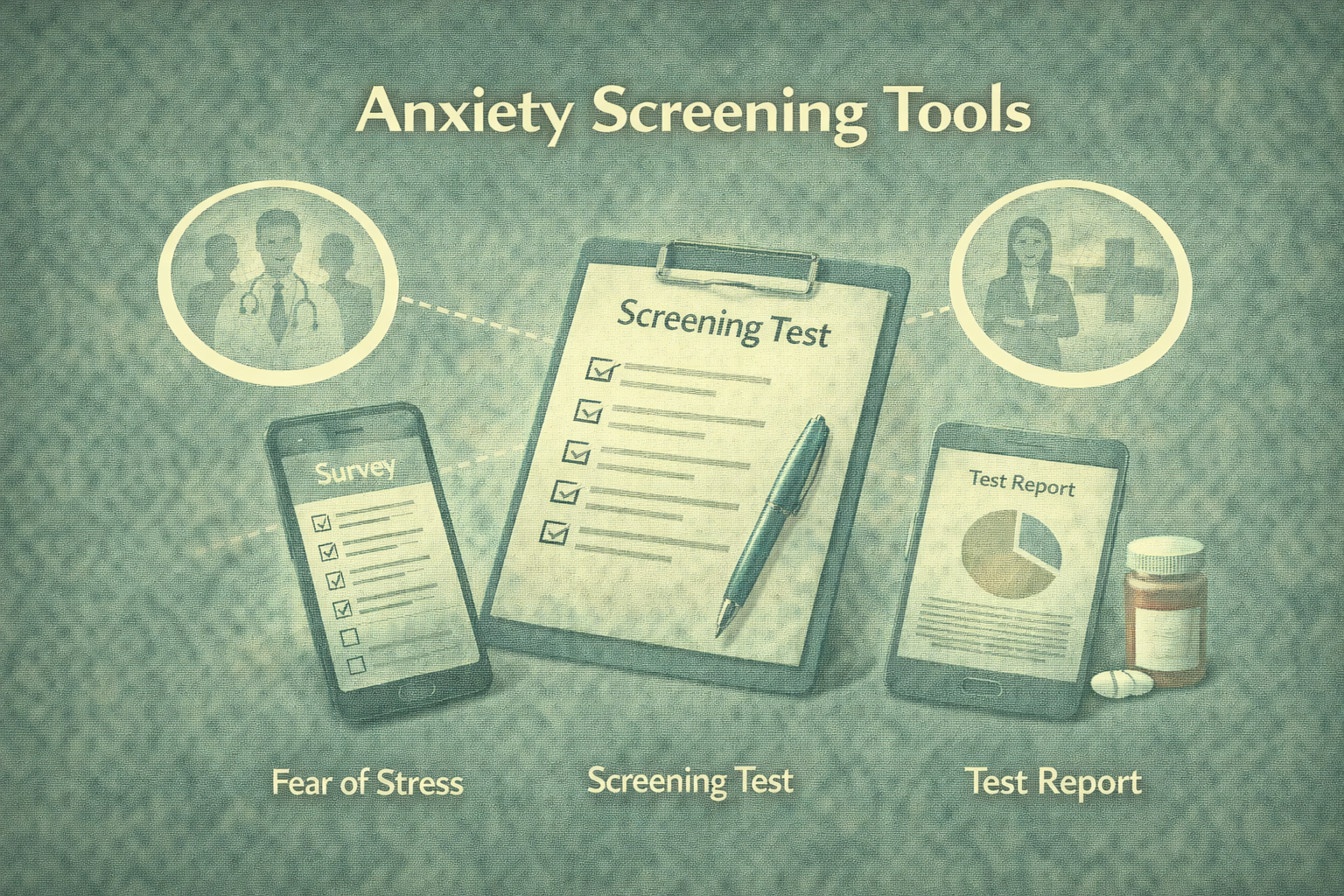
Anxiety screening tools offer a practical first step. These validated questionnaires, such as the free GAD-7 online, help gauge symptom severity and encourage early awareness. This guide covers reliable anxiety screening tools, how to use them effectively, what results mean, and when to reach out for professional support.
For a broader foundation, see our guide on Signs of Mental Health Issues: Complete Guide to Anxiety Disorders
What Are Anxiety Screening Tools?
Anxiety screening tools are brief, self-report questionnaires designed to identify potential symptoms of anxiety disorders. They help individuals recognize patterns that might otherwise go unnoticed.
Definition and Purpose of Anxiety Screening Tools
These tools consist of a short set of questions about common experiences over the past two weeks, such as excessive worry or irritability. They serve as indicators rather than formal diagnoses, flagging when symptoms may warrant professional evaluation.
Importantly, anxiety screening tools gauge severity and can track changes, making them useful for monitoring over time. The USPSTF recommends screening for anxiety in adults under 65, including pregnant and postpartum individuals, highlighting their value in primary care and self-initiation.
Common Types of Anxiety Screening Tools
The most widely recognized is the GAD-7 (Generalized Anxiety Disorder-7), a 7-item scale focused on generalized anxiety symptoms.
Shorter versions include the GAD-2, ideal for quick initial checks in busy settings. Other options incorporate elements from broader scales like PHQ variants, which sometimes overlap with depression screening.
Why Use Free Online Anxiety Screening Tests?
Online versions provide immediate, private access without appointments. They reduce barriers like stigma or cost, prompting earlier conversations with healthcare providers.
Many reputable sites offer these tools confidentially, with instant scoring to guide next actions.
Note: Answer questions based strictly on the past two weeks for the most accurate reflection—avoid projecting future worries or recalling distant episodes.
For a broader foundation, see our guide on Signs of Mental Health Issues: Generalized Anxiety Disorder (GAD)
Why Anxiety Screening Tools Matter for Your Mental Health
Early identification through anxiety screening tools can make a meaningful difference in managing symptoms before they intensify.
Benefits of Early Anxiety Detection
Recognizing signs promptly may prevent escalation to more severe issues, such as panic attacks or co-occurring depression. Timely awareness often leads to better outcomes and improved daily functioning.
How Screening Supports Treatment Decisions
Scores provide objective baseline data that therapists or physicians can use to tailor plans. Repeated screenings help track progress during interventions like therapy or medication adjustments.
Addressing Stigma with Self-Assessment
Self-screening empowers people to normalize mental health checks, much like monitoring blood pressure. It fosters open discussions with loved ones or providers.
Expert Insight: Healthcare professionals often note that regular screening normalizes mental health monitoring, similar to routine physical check-ups, helping catch subtle changes early.
How to Use Anxiety Screening Tools Effectively
Using these tools thoughtfully yields the most useful insights. Follow these steps for reliable results.
Step-by-Step Guide to Taking a Free Online Anxiety Test
- Select a validated option, such as the GAD-7 from a trusted source.
- Set aside 5 minutes in a quiet space.
- Respond honestly about symptom frequency over the past two weeks, using the scale provided (e.g., 0 = not at all, 3 = nearly every day).
- Sum responses for the total score.
Interpreting Your Results
Scores range from 0 to 21 on the GAD-7:
- 0–4: Minimal anxiety
- 5–9: Mild anxiety
- 10–14: Moderate anxiety
- 15–21: Severe anxiety
Higher scores suggest greater impact and the need for follow-up. Use results as a conversation starter with a provider, not a standalone verdict.
Best Free Anxiety Screening Options
Reputable platforms include Mental Health America, which offers the GAD-7 with resources, or sites linked to NIH guidelines. Look for quick online anxiety check tools tailored for adults.
Important: These tools screen for symptoms but do not replace a clinical evaluation. If scores indicate moderate or severe levels, consult a healthcare professional promptly.
The GAD-7: The Gold Standard Anxiety Screening Tool
Developed in 2006, the GAD-7 remains the benchmark for assessing generalized anxiety.
What Makes the GAD-7 Effective?
It targets seven core symptoms, including feeling nervous, uncontrollable worry, and restlessness. The original validation study by Spitzer et al. showed strong reliability, with sensitivity of 89% and specificity of 82% at a cutoff of 10.
How to Access Free GAD-7 Screening Tools Online
Many trusted sites provide the reliable free GAD-7 screening tool, including versions from Mental Health America or clinical resource pages. These offer instant, anonymous scoring.
Comparing GAD-7 to Other Online Generalized Anxiety Disorder Tests
The GAD-7 outperforms many self-assessment anxiety test free options in validation and specificity for generalized anxiety, though broader tools may capture related conditions.
If considering professional follow-up, platforms offering teletherapy can connect people with licensed providers for personalized guidance.
For a broader foundation, see our guide on Signs of Mental Health Issues: Anxiety Diagnosis Process
Other Reliable Free Anxiety Screening Tools
Beyond the GAD-7, several validated options suit different needs.
Quick Online Anxiety Check Tools
Shorter scales like the GAD-2 provide fast insights for initial checks, ideal when time is limited.
Tools for Specific Needs
Free anxiety screening for adults often includes broader mental health options that overlap with depression checks. Reliable free anxiety disorder test variants help identify patterns across conditions.
Research Shows: Meta-analyses confirm the GAD-7’s strong performance across populations, supporting its widespread use in primary care.
Scientific Evidence & Research
Research underscores the value of these tools, particularly the GAD-7.
Clinical Studies on GAD-7 Validity
The foundational study in JAMA Internal Medicine demonstrated good reliability and validity. At a cutoff of 10, it achieved 89% sensitivity and 82% specificity for GAD.
Subsequent meta-analyses affirm its predictive strength for generalized anxiety and related disorders.
Expert Opinions
The USPSTF endorses anxiety screening in adults under 65, citing moderate net benefit from tools like the GAD-7 in primary care.
Experts view it as a practical bridge to further assessment.
Statistical Data
Approximately 19.1% of U.S. adults experience any anxiety disorder annually, per NIMH data, with GAD affecting around 3%. Many cases remain undiagnosed—screening helps close this gap.
Common Mistakes to Avoid When Using Anxiety Screening Tools
Steering clear of pitfalls ensures meaningful use.
Mistake #1: Not Answering Honestly
Inaccurate responses distort results and delay appropriate support. Reflect truthfully to gain genuine insight.
Mistake #2: Treating Results as a Diagnosis
Screening identifies potential issues but isn’t equivalent to a professional diagnosis. Use scores to prompt evaluation.
Mistake #3: Ignoring High Scores
Dismissing elevated results risks worsening symptoms. High scores signal the importance of consulting a provider soon.
Frequently Asked Questions (FAQs)
What is the best online anxiety assessment tool?
The GAD-7 stands out as the most validated and widely recommended free tool for generalized anxiety. It’s quick (under 5 minutes), reliable, and commonly used in clinical settings for screening and monitoring.
How accurate is a free online anxiety screening test?
Validated tools like the GAD-7 show strong accuracy, with sensitivity around 89% and specificity 82% at standard cutoffs, based on original research. However, they serve as screens—not definitive diagnoses—and results should guide professional consultation.
Can I take the GAD-7 anxiety test online for free?
Yes, reputable sites like Mental Health America and others offer the free GAD-7 screening tool with instant scoring and basic guidance, ensuring privacy for self-use.
What does a high score on an anxiety screening questionnaire online free mean?
A score of 10 or higher typically indicates moderate to severe symptoms that may significantly affect daily life. This suggests consulting a healthcare provider for further evaluation and potential support options.
Are self assessment anxiety test free results private?
Yes, trusted platforms prioritize confidentiality, often requiring no personal information for basic completion and scoring. Always choose sites with clear privacy policies.
When should I seek professional help after an online anxiety severity screening tool?
Seek help if scores indicate moderate or severe anxiety, or if symptoms interfere with work, relationships, or safety. Early intervention often leads to better outcomes—contact a therapist, doctor, or crisis line if needed.
Conclusion
Anxiety screening tools, especially the trusted GAD-7, deliver quick, science-backed glimpses into symptoms, helping demystify what people are experiencing and encouraging timely steps toward relief. By providing clarity on severity and patterns, these tools empower moving from uncertainty to informed action, potentially preventing escalation and enhancing wellbeing.
Regular, honest use of reliable anxiety screening tools bridges the gap to meaningful support, whether through lifestyle adjustments, therapy, or medical guidance.
Start today: Consider taking a validated free online test like the GAD-7 from a trusted site. If results raise concerns—or if worry persists regardless of score—reach out to a mental health professional or primary care provider. Resources like the 988 Suicide & Crisis Lifeline are available 24/7.
Medical Disclaimer
This article is for informational and educational purposes only and does not constitute medical advice. The information provided should not be used for diagnosing or treating a health problem or disease. Always consult with a qualified healthcare professional before making any changes to mental health treatment, starting new medications, or trying new approaches.
If experiencing a mental health crisis, please call or text 988 (Suicide & Crisis Lifeline) or visit the nearest emergency room. For non-emergency support, contact the SAMHSA National Helpline at 1-800-662-HELP (4357).
The content is based on current research and expert consensus as of 2026, but medical knowledge evolves. Always verify with a healthcare provider.