Did you know that approximately 42.5 million U.S. adults experience anxiety disorders each year, affecting about 19.1% of the population? This statistic from the National Institute of Mental Health highlights how common anxiety is, yet many people feel isolated in their struggles.
If you’re dealing with persistent worry, restlessness, or physical symptoms like a racing heart, you’re not alone. These issues can disrupt work, relationships, and daily enjoyment, and relying solely on quick fixes like avoidance or over-the-counter remedies often falls short. Without sustainable strategies, anxiety can escalate, leading to fatigue and reduced quality of life.
For a broader foundation, see our guide on Signs of Mental Health Issues: Types of Anxiety Disorders
What Are Anxiety Lifestyle Changes?
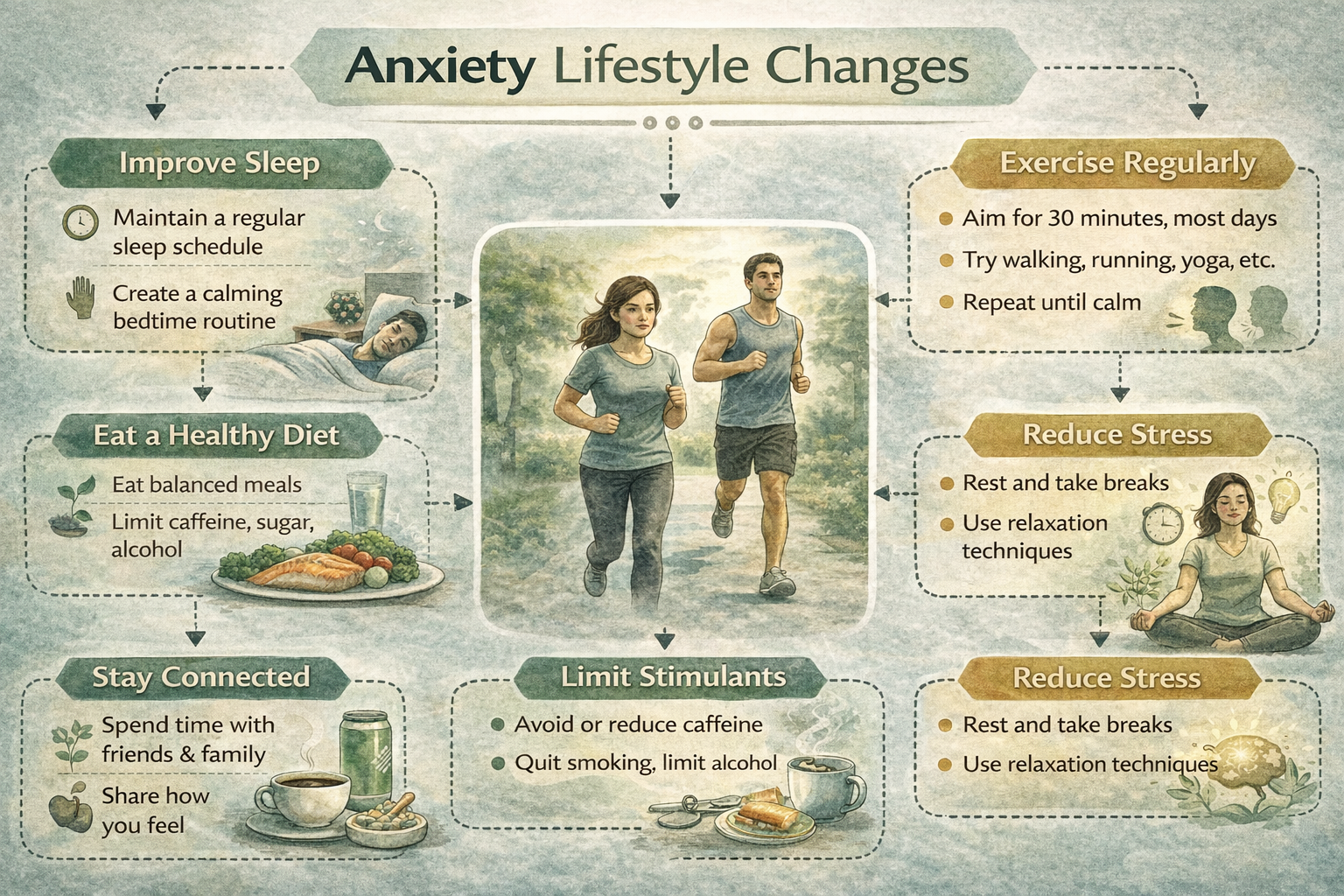
Anxiety lifestyle changes refer to everyday adjustments in habits and routines that may help alleviate anxiety symptoms without relying solely on medication or therapy. These modifications focus on holistic, sustainable practices that address the root causes of stress and worry. Research suggests that incorporating such changes can improve mental health over time, as they influence brain chemistry and overall well-being.
Lifestyle Changes for Anxiety Relief
Simple adjustments in daily habits, such as increasing physical activity or establishing routines, can provide significant relief. For instance, consistent movement helps release endorphins, which act as natural mood boosters. The emphasis is on non-medical approaches that are accessible and buildable, like adding short walks or relaxation exercises. Studies show these can reduce symptoms by promoting a sense of calm and control.
Focusing on sustainable methods ensures long-term benefits. Unlike temporary fixes, these changes encourage gradual progress, helping you integrate them into your life without overwhelm.
Natural Lifestyle Changes for Anxiety
Holistic methods, such as spending time in nature or practicing mindfulness, emphasize balance without pharmaceuticals. Integrating activities like forest bathing or yoga taps into the body’s natural relaxation response. Evidence from clinical reviews indicates that these approaches can lower stress hormones like cortisol.
Moreover, combining them with mindful practices fosters resilience. You might start by dedicating time outdoors, which research links to reduced anxiety levels.
Daily Lifestyle Changes to Reduce Anxiety
Building simple routines, including consistent schedules and proper hydration, supports long-term calm. Hydration alone can prevent dehydration-related irritability, while routines provide structure amid uncertainty. These habits promote stability, which is key for managing anxiety.
Over time, they create a foundation for better emotional regulation. Small steps, like setting meal times, accumulate to foster enduring peace.
Research Shows: A 2024 meta-analysis in the journal Healthcare found that lifestyle interventions, including physical activity and dietary changes, reduced anxiety symptoms with a Hedges’ g of -0.24, indicating a moderate effect.
For a broader foundation, see our guide on Signs of Mental Health Issues: Complete Guide to Anxiety Disorders
Why Make Anxiety Lifestyle Changes?
Incorporating anxiety lifestyle changes can empower you to take an active role in your mental health. These adjustments address underlying factors like stress and poor habits, potentially reducing the need for other interventions. By focusing on benefits like improved resilience, they offer a proactive path to well-being.
Best Lifestyle Changes for Managing Anxiety
These changes can address root causes, such as hormonal imbalances, decreasing reliance on medication. They also enhance overall health, boosting immunity and energy levels. For example, regular routines build emotional strength, helping you handle challenges better.
Additionally, they prevent symptom escalation by promoting balance. Research supports their role in long-term management.
Lifestyle Changes to Help with Anxiety
Such modifications enhance mood through endorphin release and better sleep patterns. Improved rest alone can lessen fatigue-related worry. They also foster a positive cycle, where small wins build confidence.
Preventing escalation is another key benefit, as consistent habits stabilize daily life. Experts note these as foundational for mental health.
Anxiety Management Through Lifestyle Changes
Empowering individuals with control is a core advantage. You gain tools to navigate anxiety independently, supported by research showing sustained benefits. A study from the American Psychological Association highlights how these changes lead to lasting improvements.
Moreover, they integrate easily into life, offering flexibility and autonomy.
Expert Insight: As a clinical psychologist might explain, “Anxiety lifestyle changes aren’t about perfection; they’re about creating habits that support your brain’s natural ability to regulate stress.”
For a broader foundation, see our guide on Signs of Mental Health Issues: Anxiety Breathing Techniques
How Do Lifestyle Changes Affect Anxiety?
Anxiety lifestyle changes influence the body’s stress response, potentially leading to fewer intense episodes. By altering daily patterns, they reshape how your brain processes worry. This section explains the mechanisms with real-world examples.
Effective Lifestyle Changes for Anxiety
These changes positively impact brain chemistry, reducing hormones like cortisol. Over time, they build stronger coping mechanisms. For instance, consistent habits rewire neural pathways for calmer reactions.
Gradual adoption ensures lasting effects, as supported by ongoing research.
How Lifestyle Changes Affect Anxiety
They lower inflammation, which is linked to mood disorders, and improve neural connections. This results in better emotional regulation and fewer anxiety spikes. Studies indicate measurable reductions in symptoms.
Furthermore, they enhance overall brain function, promoting stability.
Lifestyle Modifications for Anxiety Control
Implementing changes gradually yields improvements, like decreased worry frequency. Tracking progress helps refine approaches. Evidence shows this method empowers sustained control.
Exercise as a Key Lifestyle Change for Anxiety
Exercise stands out as a powerful anxiety lifestyle change, with research showing it can rival some treatments in effectiveness. Starting small builds momentum, and consistency is key. This section provides steps to incorporate movement safely.
Lifestyle Tips to Reduce Anxiety Through Movement
Begin with 30 minutes daily of activities like walking or yoga to ease into it. Track your progress in a journal to maintain motivation. These habits release endorphins, easing tension.
Combine with nature for added calm, as studies suggest outdoor exercise amplifies benefits.
Simple Lifestyle Changes for Anxiety via Exercise
Incorporate aerobic activities, such as jogging, to boost mood chemicals. Pair them with deep breathing for immediate relief. This approach is straightforward and effective.
Avoid high-intensity starts; build up to prevent discouragement.
Lifestyle Strategies to Manage Anxiety with Physical Activity
Join group classes for social support, which enhances accountability. However, steer clear of overexertion to avoid added stress. Balance is essential.
Many find success with apps like MyFitnessPal to monitor activity, offering structured guidance.
Pro Tip: If mornings feel overwhelming, try evening walks—research indicates evening exercise can improve sleep quality, indirectly reducing next-day anxiety.
Dietary Adjustments as Natural Lifestyle Changes for Anxiety
Diet plays a crucial role in anxiety management, as certain foods influence brain function. Making thoughtful adjustments can stabilize mood. Focus on nutrient-rich choices for best results.
Anxiety Reduction Through Lifestyle Changes in Diet
Include omega-3-rich foods like salmon and walnuts to support brain health. Limit caffeine and sugar, which can spike anxiety. These tweaks help maintain even energy levels.
Studies, including a review from Harvard Health, suggest omega-3s may reduce symptoms.
Key Lifestyle Changes for Anxiety via Nutrition
Emphasize whole grains and proteins for sustained energy, preventing crashes. Adequate hydration avoids dehydration-linked irritability. Simple swaps make this manageable.
Consistency here fosters long-term stability.
Lifestyle Modifications for Anxiety Control with Meals
Plan balanced meals to avoid blood sugar fluctuations. Include veggies and lean proteins. This strategy promotes steady mood.
Sleep Hygiene for Anxiety Management Through Lifestyle Changes
Quality sleep is vital for anxiety control, as poor rest exacerbates symptoms. Establishing hygiene practices can transform your nights. Aim for consistency to see benefits.
Implementing Lifestyle Changes for Anxiety with Better Sleep
Create a bedtime routine, like reading, to signal rest. Limit screens an hour before bed to reduce blue light interference. These steps enhance sleep quality.
Research from a 2021 meta-analysis shows improved sleep reduces anxiety with a medium effect size.
Daily Lifestyle Changes to Reduce Anxiety at Night
Dim lights and maintain a cool room for a calm environment. Target 7-9 hours nightly; studies link this to up to 22% symptom reduction. Prioritize this for better days.
Stress Management Techniques as Effective Lifestyle Changes for Anxiety
Techniques like mindfulness offer tools to handle stress proactively. They complement other changes for comprehensive relief. Practice regularly for optimal results.
Lifestyle Strategies to Manage Anxiety with Mindfulness
Engage in daily meditation or deep breathing to center yourself. Journal gratitude to refocus positively. These reduce rumination.
A 2023 trial found mindfulness noninferior to medication for anxiety.
Simple Lifestyle Changes for Anxiety Relief
Pursue hobbies and connect socially to build support. Set boundaries to prevent overload. These foster balance.
Important: If anxiety interferes with daily life, consult a healthcare professional—lifestyle changes complement, but don’t replace, expert care.
Best Practices and Expert Tips for Anxiety Lifestyle Changes
To maximize benefits, follow evidence-based practices. Start small to avoid burnout. Combine approaches for synergy.
Best Lifestyle Changes for Managing Anxiety
Begin with one habit, tracking improvements weekly. Integrate multiple changes, like exercise and diet, for amplified effects. Patience is key.
Lifestyle Tips to Reduce Anxiety
Lean on friends or support groups for encouragement. Celebrate progress to stay motivated. These tips enhance adherence.
Scientific Evidence & Research
Lifestyle changes for anxiety are backed by robust studies. They offer accessible ways to manage symptoms.
Clinical Studies
A 2024 meta-analysis in Healthcare revealed lifestyle interventions reduce anxiety symptoms (Hedges’ g -0.24). Exercise studies show small-to-medium effects on symptom reduction.
Expert Opinions
APA and Mayo Clinic endorse exercise and diet for mood stabilization via endorphins. Mindfulness is recommended for stress reactivity.
Statistical Data
NIMH reports 19.1% of U.S. adults affected annually; healthy habits may lower risk by up to 57%, per reviews.
Common Mistakes to Avoid
Avoiding pitfalls ensures effective anxiety management. Recognize these to adjust your approach.
Mistake #1: Avoiding Anxiety Triggers
This increases long-term fear by reinforcing avoidance. It limits life experiences. Instead, try gradual exposure with professional guidance for desensitization.
Mistake #2: Nonacceptance of Anxiety
Rejecting feelings creates secondary anxiety, worsening the cycle. Acceptance reduces intensity. Practice mindfulness to observe without judgment.
Mistake #3: Over-Reliance on Substances
Using alcohol or caffeine temporarily masks symptoms but exacerbates them later. Focus on natural habits like hydration and balanced meals for stability.
Frequently Asked Questions (FAQs)
What are the best lifestyle changes for managing anxiety?
The best lifestyle changes include regular exercise, balanced diet, and good sleep hygiene. Research suggests these can reduce symptoms significantly. Start with 30 minutes of daily activity to release endorphins, aim for 7-9 hours of sleep, and incorporate omega-3-rich foods. Consistency is key, and combining them yields better results. Consult a doctor if symptoms persist.
How do natural lifestyle changes for anxiety work?
Natural changes like mindfulness and healthy eating lower stress hormones such as cortisol. Studies, including a 2023 trial, show mindfulness can be as effective as some medications. They promote brain balance and resilience without side effects. Accessibility makes them ideal for daily use, but they’re most effective alongside professional advice for severe cases.
What daily lifestyle changes to reduce anxiety should I try?
Try routines like staying hydrated, eating whole foods, and taking short walks. These stabilize mood and prevent symptom spikes. Evidence indicates consistency helps regulate emotions. Begin small to build habits, and track how they impact your day. If anxiety disrupts life, seek healthcare support.
Can lifestyle modifications for anxiety control replace medication?
Lifestyle modifications can complement medication but shouldn’t replace it without professional guidance. Studies show combined approaches often work best. While helpful for mild symptoms, severe anxiety may require meds. Always consult your doctor before changes, as abrupt stops can worsen issues.
How to implement lifestyle changes for anxiety effectively?
Set small, achievable goals like one new habit weekly, track progress, and seek support from friends or apps. Start with sleep or exercise for quick wins. Research supports gradual implementation for sustainability. Be patient, and adjust as needed. Professional input ensures safety.
What are effective lifestyle changes for anxiety relief?
Effective changes include exercise, diet tweaks, and stress techniques, reducing symptoms by 20-30% per meta-analyses. Aerobic activity boosts mood, omega-3s stabilize it, and mindfulness calms the mind. Integrate them daily for relief. They’re evidence-based but consult experts for personalization.
Why are lifestyle strategies to manage anxiety important?
They provide long-term control, reducing quick-fix reliance and enhancing health. Empowering self-management builds resilience. Studies link them to lower risks and better quality of life. They’re accessible and preventive, ideal for ongoing well-being.
Conclusion
Anxiety lifestyle changes provide natural, empowering paths to lessen symptoms, boost mood, and foster resilience. By adopting exercise, dietary shifts, better sleep, and mindfulness, you can experience transformative improvements in daily life. These evidence-based strategies offer control and hope, turning overwhelming worry into manageable moments.
Restate the value: Simple tweaks in routines can reshape your mental health landscape, leading to more peace and vitality.
Take one clear step today, such as a 10-minute walk, to begin. Consult a mental health professional for tailored advice—it’s a strength, not a weakness.
You’re not alone in this; small, consistent efforts yield significant progress. Embrace the journey with compassion.
Medical Disclaimer:
This article is for informational purposes only and not a substitute for professional medical advice. The information provided should not be used for diagnosing or treating a health problem or disease. Always consult with a qualified healthcare professional before making any changes to your mental health treatment, starting new medications, or trying new supplements.
If you’re experiencing a mental health crisis, please call the 988 Suicide & Crisis Lifeline or visit your nearest emergency room. For non-emergency support, contact the Substance Abuse and Mental Health Services Administration (SAMHSA) National Helpline at 1-800-662-4357.
The content in this article is based on current research and expert consensus as of 2026, but medical knowledge evolves. Always verify information with your healthcare provider.