Anxiety in men is more common than many realize, affecting millions across the USA. Despite societal pressures that often encourage men to suppress their emotions, recognizing and addressing anxiety can lead to better health outcomes. This guide delves into what anxiety in men looks like, why it matters, and practical ways to manage it, drawing from evidence-based research to provide actionable insights.
Imagine lying awake at night, your mind racing with worries about work deadlines or family responsibilities, while your body tenses up without relief. This scenario is all too familiar for many men, where anxiety manifests not just as worry but as physical strain and irritability. Yet, it often goes undiagnosed because men may dismiss it as “just stress” or fear appearing weak.
The problem is real: Untreated anxiety in men can escalate, impacting relationships, productivity, and even physical health. Men might mask symptoms with anger or avoidance, delaying help and worsening the cycle. But there’s hope—research suggests that early intervention through lifestyle changes, therapy, and support can significantly reduce symptoms.
For a broader foundation, see our guide on Signs of Mental Health Issues: Complete Guide to Anxiety Disorders
What is Anxiety in Men?
Anxiety in men refers to a range of disorders where excessive worry or fear interferes with daily life, often presenting differently due to societal influences. Unlike temporary stress, anxiety in men can persist, leading to chronic emotional and physical strain. Understanding this is crucial because early recognition can prevent escalation into more severe issues.
Anxiety Disorders in Men
Common types include generalized anxiety disorder (GAD), where constant worry dominates; social anxiety, involving fear of judgment; and panic disorders, marked by sudden intense fear. According to NIMH, about 14.3% of U.S. men experience any anxiety disorder annually, lower than women’s 23.4% but still significant. These often show through physical symptoms like muscle tension, differing from emotional expressions more common in women.
Research suggests men may underreport due to stigma, but prevalence highlights the need for awareness.
How Anxiety Differs in Men
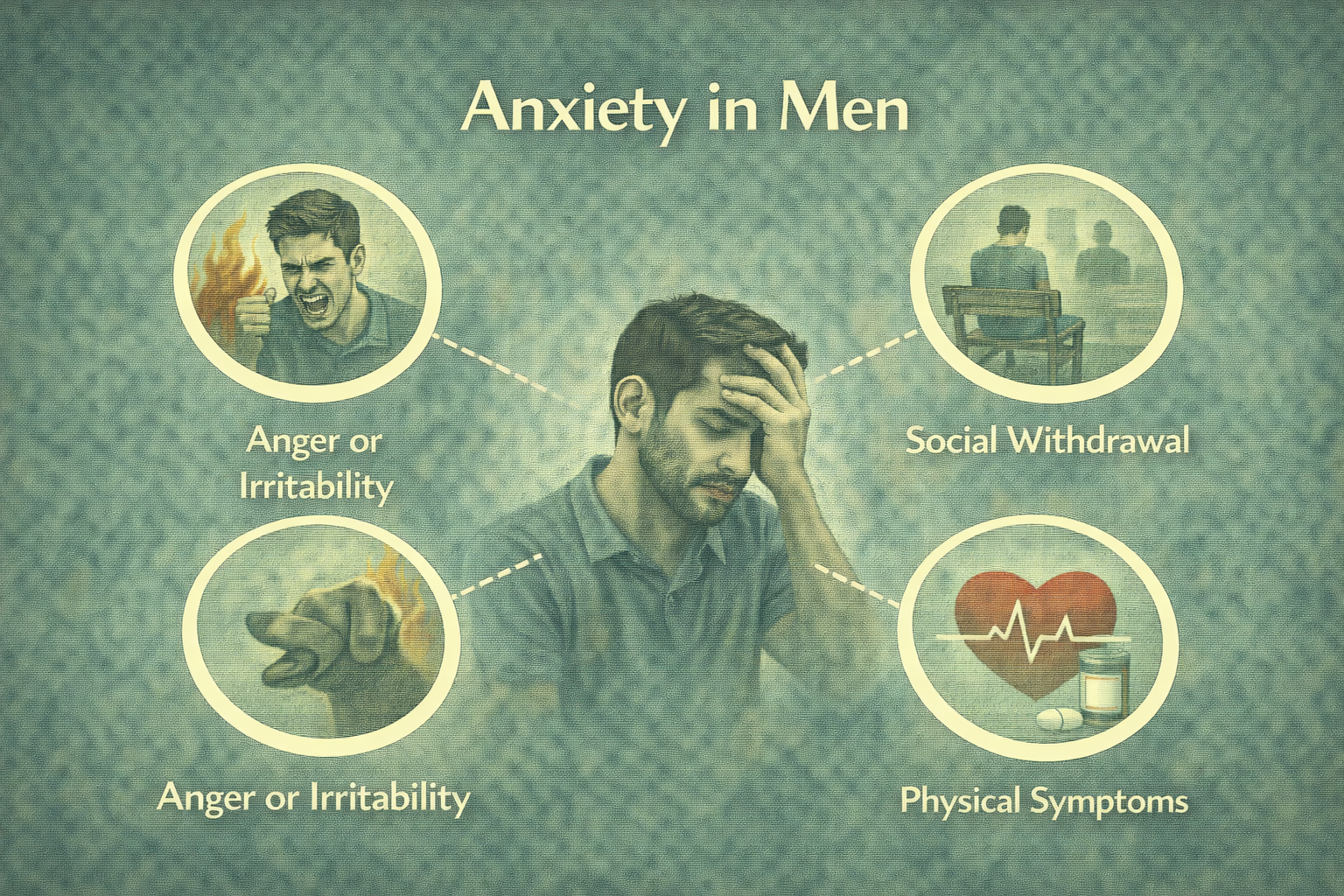
Influenced by norms of stoicism, anxiety in men might appear as irritability or anger rather than overt fear. This can lead to higher risks of comorbidities, such as depression—men with anxiety are twice as likely to develop it, per the Anxiety and Depression Association of America (ADAA)—or substance use as a coping mechanism.
Biological factors, like lower testosterone levels, may exacerbate symptoms, making anxiety feel more physical.
Impact on Daily Life
Anxiety affects work performance, straining focus and decision-making; relationships, through withdrawal or outbursts; and physical health, increasing fatigue. Untreated, it raises suicide ideation risks, with men already at higher rates overall.
Addressing anxiety in men early can restore balance and prevent these disruptions.
Research Shows:
A 2022 NIMH study found that 19.1% of U.S. adults had an anxiety disorder in the past year, with men often experiencing more physical manifestations, underscoring the need for tailored approaches.
For a broader foundation, see our guide on Signs of Mental Health Issues: What is Anxiety Disorder?
Why Anxiety in Men Matters
Anxiety in men isn’t just a mental hurdle—it’s a health concern that ripples into every aspect of life. Ignoring it can lead to cascading issues, but addressing it proactively offers substantial benefits. This section explores the risks and rewards of taking action.
Health Risks Associated with Untreated Anxiety
Untreated anxiety links to heart disease and high blood pressure, as chronic stress elevates cortisol, straining the cardiovascular system. It can escalate to depression or suicidality, with research showing men with anxiety face heightened risks.
Additionally, it weakens immunity, increasing vulnerability to illnesses.
Societal and Economic Impacts
In the 25-55 age group, anxiety causes productivity loss through absenteeism or reduced efficiency, affecting careers. Stigma barriers mean men are less likely to seek help, perpetuating isolation.
This contributes to broader economic burdens, like healthcare costs.
Benefits of Addressing Anxiety Early
Early intervention improves quality of life, enhancing relationships through better communication. It prevents comorbidities, fostering resilience.
Men who manage anxiety report greater satisfaction and energy.
Expert Insight:
As a clinical psychologist might note, “Anxiety in men often hides behind anger, but acknowledging it is the first step to reclaiming control and preventing long-term health decline.”
For a broader foundation, see our guide on Signs of Mental Health Issues: Anxiety in Women
Signs and Symptoms of Anxiety in Men
Recognizing signs of anxiety in men is key, as they often differ from textbook descriptions. Symptoms can be subtle or mistaken for other issues, but awareness empowers timely action. Here’s what to watch for.
Physical Symptoms of Anxiety in Men
Common indicators include a racing heart, muscle tension, headaches, and excessive sweating. Digestive issues like nausea or stomach pain, plus chronic fatigue, signal the body’s stress response.
These can mimic heart problems, leading to further worry.
Emotional and Behavioral Signs
Irritability, restlessness, and difficulty concentrating are hallmarks. Men might exhibit avoidance behaviors, like withdrawing from social events, or sudden outbursts.
This can strain interactions, creating a feedback loop of isolation.
Anxiety Attacks in Men
These involve sudden panic, shortness of breath, and a sense of doom. Often confused with heart attacks, they heighten fear.
Knowing triggers helps in preparation.
Pro Tip:
Track symptoms in a journal to identify patterns—many men find that low blood sugar in the afternoon exacerbates anxiety, so a protein snack around 3 PM may stabilize mood.
Causes of Anxiety in Men
Anxiety in men arises from a mix of factors, not a single source. Understanding these helps in prevention and management. Let’s break it down.
Genetic and Biological Factors
Family history raises risk through inherited traits and brain chemistry imbalances, like serotonin deficits. Hormonal shifts, such as declining testosterone, can amplify vulnerability.
Research links low testosterone to increased cortisol, fueling anxiety.
Environmental and Lifestyle Triggers
Work stress, relationship strains, or past trauma often ignite symptoms. Poor sleep, diet, or substance use worsens it.
Daily pressures compound over time.
Social and Cultural Influences
Masculine expectations to suppress emotions lead to internalized stress. Life events like job loss or midlife changes, such as anxiety in men over 40, intensify this.
Cultural norms discourage help-seeking.
Important:
If anxiety stems from trauma, ignoring it can lead to escalation—consult a professional early to avoid misdiagnosis or worsening.
How to Manage Anxiety in Men
Managing anxiety in men involves practical steps that build resilience. Start small for sustainable change. Here’s a roadmap.
Daily Coping Strategies
Practice deep breathing: Inhale for four counts, hold, exhale slowly. Mindfulness apps guide this, reducing immediate tension.
Journaling tracks triggers, offering clarity.
Lifestyle Changes for Long-Term Relief
Regular exercise, like 30 minutes daily, releases endorphins. A balanced diet with omega-3s supports brain health; limit caffeine and alcohol, which heighten anxiety.
Prioritize sleep hygiene.
Building Support Networks
Talk to trusted friends or join men’s groups for shared experiences. Professional therapy provides tools when self-help isn’t enough.
Community reduces isolation.
Natural Remedies for Anxiety in Men
Natural remedies for anxiety in men can complement other approaches, offering gentle relief. Always consult a doctor, as evidence varies.
Herbal and Supplement Options
Chamomile tea promotes relaxation; magnesium aids serotonin regulation; omega-3s from fish oil reduce inflammation-linked anxiety. Valerian root helps with sleep-related worry.
Studies show modest benefits.
Physical and Mindful Practices
Yoga combines movement and breath for calm; meditation quiets racing thoughts; aromatherapy with lavender eases tension. Outdoor walks in nature lower stress hormones.
Consistency is key.
When to Combine with Professional Care
Use as adjuncts—supplements may interact with meds. If symptoms persist, seek therapy.
Research suggests combining enhances outcomes.
Research Shows:
A 2024 meta-analysis in JAMA Psychiatry found exercise reduces anxiety symptoms by 40%, rivaling medication for mild cases.
Anxiety Treatment for Men
Effective anxiety treatment for men includes proven options tailored to needs. Combining approaches often yields best results.
Therapy Options
Cognitive behavioral therapy (CBT) reframes negative thoughts, effective for 60-80% per studies; exposure therapy builds tolerance to fears; group therapy fosters connection among men.
These empower long-term management.
Medication Approaches
SSRIs like sertraline balance brain chemicals; benzodiazepines offer short-term relief but require monitoring for dependency.
Side effects like fatigue need discussion.
Holistic and Alternative Treatments
Acupuncture stimulates calm; biofeedback teaches control over responses.
Evidence supports as add-ons.
Consider online platforms like BetterHelp for accessible therapy.
Best Practices and Expert Tips for Coping with Anxiety in Men
Coping with anxiety in men benefits from targeted tips. Implement these for real-world relief.
Workplace Anxiety in Men
Use time management tools; set boundaries to prevent burnout. Short walks during breaks reset focus.
Relationship Anxiety in Men
Foster open communication; practice empathy to build trust. Couples therapy can help.
Social Anxiety in Men
Gradual exposure, like starting with small gatherings, builds confidence. Role-playing scenarios prepares.
Expert Insight:
Healthcare professionals emphasize, “Distinguishing productive worry from rumination is crucial—focus on solvable issues to regain control.”
Scientific Evidence & Research
Backing claims with science builds trust. Here’s key evidence on anxiety in men.
Clinical Studies
NIMH data shows 14.3% prevalence; CBT reduces symptoms effectively, per multiple trials.
Expert Opinions
APA notes post-2020 rise in anxiety, with male-specific traits like physical focus.
Statistical Data
ADAA reports men twice as likely for comorbid depression.
For details, see NIMH anxiety stats and APA insights.
Common Mistakes to Avoid
Avoiding pitfalls enhances management. Here’s what not to do.
Mistake #1: Avoiding Triggers
Why it’s problematic: It reinforces fear, shrinking life.
Better approach: Gradual exposure with support builds resilience.
Mistake #2: Self-Medicating with Substances
Why it’s problematic: Temporary relief worsens anxiety long-term.
Better approach: Seek professional alternatives like therapy.
Mistake #3: Ignoring Physical Symptoms
Why it’s problematic: Risks misdiagnosis or escalation.
Frequently Asked Questions (FAQs)
What are the symptoms of anxiety in men?
Anxiety symptoms in men often include physical signs like racing heart, muscle tension, headaches, and fatigue, alongside irritability, restlessness, and avoidance behaviors. These can interfere with daily functioning, but early recognition allows for effective management through therapy or lifestyle adjustments. Research suggests men may experience more anger-related symptoms due to cultural norms.
What causes anxiety in men over 40?
Midlife stressors like career pressures, health changes, and family responsibilities often contribute to anxiety in men over 40, compounded by hormonal shifts such as declining testosterone. Addressing it through regular exercise and professional help can provide relief. Studies indicate this age group benefits from CBT to reframe worries.
How can I cope with anxiety attacks in men?
During anxiety attacks in men, use deep breathing and grounding techniques, like focusing on senses, to regain control. Prevent them with mindfulness practices and avoiding caffeine. If frequent, consult a professional, as attacks may signal an underlying disorder treatable with therapy.
Are there natural remedies for anxiety in men?
Yes, natural remedies for anxiety in men include chamomile tea, magnesium supplements, and omega-3s, which may promote relaxation based on some studies. Combine with yoga or meditation for better results, but always check with a doctor for interactions.
What is social anxiety in men?
Social anxiety in men involves intense fear of judgment in social settings, leading to avoidance and isolation. Treatment often includes CBT to build confidence through gradual exposure. It’s common but manageable with support.
How to manage workplace anxiety in men?
To manage workplace anxiety in men, set clear boundaries, prioritize tasks, and incorporate stress-relief like short walks. If it persists, seek support through employee assistance programs or therapy.
When should men seek anxiety treatment?
Men should seek anxiety treatment when symptoms interfere with daily life, work, or relationships, or if they include thoughts of harm. Consult a professional immediately for tailored care, as early intervention prevents escalation.
Conclusion
Addressing anxiety in men brings profound benefits: enhanced physical health through reduced stress on the heart, stronger relationships via better communication, and an overall improved quality of life with more energy and focus. By understanding symptoms, causes, and strategies like CBT or natural remedies, you gain tools to break the cycle. Early intervention not only prevents escalation but empowers you to live more fully, transforming worry into manageable moments.
Take one clear step today: Schedule a mental health check-up or try a deep breathing exercise. For ongoing support, consider professional consultation—it’s a sign of strength.
You’re not alone in this; millions of men navigate anxiety successfully, and resources are available for a calmer, more confident future. Explore our hub on depression in men for related insights.
Medical Disclaimer:
This article is for informational purposes only and not a substitute for professional medical advice. Consult a healthcare provider before making any changes to your mental health treatment, starting new medications, or trying new supplements.
If you’re experiencing a mental health crisis, please call the 988 Suicide & Crisis Lifeline or visit your nearest emergency room. For non-emergency support, contact the Substance Abuse and Mental Health Services Administration (SAMHSA) National Helpline at 1-800-662-4357.
The content in this article is based on current research and expert consensus as of 2026, but medical knowledge evolves. Always verify information with your healthcare provider.