The anxiety diagnosis process is a structured, professional evaluation designed to identify whether persistent worry, fear, or related symptoms meet criteria for an anxiety disorder. If someone has been feeling overwhelmed by constant worry that interferes with daily life, understanding this process can help ease uncertainty and encourage seeking support.
Nearly 1 in 5 U.S. adults (about 19.1%) experiences an anxiety disorder each year, according to the National Institute of Mental Health (NIMH), with lifetime prevalence reaching around 31.1%. Yet many people hesitate to get evaluated because they aren’t sure what the process involves or fear judgment. The good news is that diagnosis is straightforward, evidence-based, and the first step toward effective management.
This guide walks through the full anxiety diagnosis process—from recognizing when to seek help to what happens during evaluation and beyond. Readers will learn the steps involved, key tools used, DSM-5-TR criteria, and practical next steps. All information draws from authoritative sources like the NIMH, Mayo Clinic, American Psychiatric Association (APA), and Anxiety and Depression Association of America (ADAA).
For a broader foundation, see our guide on Signs of Mental Health Issues: Complete Guide to Anxiety Disorders
What Is the Anxiety Diagnosis Process? (Overview)
The anxiety diagnosis process is a comprehensive clinical assessment to determine if symptoms meet criteria for an anxiety disorder. Unlike everyday stress, these disorders involve excessive, persistent fear or worry that significantly impacts functioning.
Understanding Anxiety Disorders
Anxiety disorders encompass a range of conditions characterized by excessive fear or worry that disrupts daily life, per DSM-5-TR guidelines from the APA. Common types include generalized anxiety disorder (GAD) (chronic worry about multiple areas), panic disorder (recurrent unexpected panic attacks), social anxiety disorder (intense fear of social situations), and specific phobias.
These aren’t simply “overreacting” or “stress”—they require meeting specific clinical criteria, often persisting for months.
Why Professional Diagnosis Matters
A proper diagnosis differentiates anxiety from physical conditions like thyroid imbalances, heart issues, or caffeine sensitivity, which can mimic symptoms. It opens the door to targeted treatments, such as cognitive behavioral therapy (CBT) or medication, improving outcomes significantly.
Research Shows: Studies indicate that untreated anxiety can worsen over time, but early diagnosis leads to better long-term management.
Role of DSM-5 Criteria in Diagnosis
The DSM-5-TR serves as the gold standard in the U.S. for classifying mental disorders. It requires symptoms to cause significant distress or impairment, with duration thresholds (e.g., 6 months for GAD). Professionals use it to ensure consistent, reliable diagnoses.
Image: Infographic flowchart of DSM-5 anxiety criteria. Alt text: DSM-5 criteria for anxiety diagnosis process.
Note: Preparing a symptom journal before an appointment—noting frequency, triggers, and impact—can help providers during the anxiety diagnosis process.
For a broader foundation, see our guide on Signs of Mental Health Issues: Social Anxiety Disorder
Signs You Need an Anxiety Diagnosis
Recognizing when worry crosses into disorder territory empowers action.
Common Symptoms Indicating Professional Evaluation
Look for excessive worry that’s hard to control, plus physical or emotional signs like restlessness, fatigue, irritability, muscle tension, difficulty concentrating, or sleep disturbances. Physical manifestations, such as rapid heartbeat, sweating, or gastrointestinal upset, often accompany these.
When Daily Life Is Affected
If anxiety interferes with work performance, relationships, or self-care—or leads to avoidance of situations—it may signal a disorder. Panic attacks or constant dread of future events are red flags.
Differentiating Normal Anxiety from a Disorder
Normal anxiety is temporary and proportional to stressors (e.g., before a big presentation). A disorder feels persistent, disproportionate, and uncontrollable.
Image: Icon-based visual list of key anxiety symptoms. Alt text: Signs you need an anxiety diagnosis.
For home strategies while awaiting evaluation, check our guide: [Managing Anxiety Symptoms at Home].
Expert Insight: Mental health professionals note that many people wait years before seeking help, but early intervention often requires fewer sessions for improvement.
How Is Anxiety Diagnosed? Step-by-Step Guide
The anxiety diagnosis process follows a logical sequence, focusing on thorough evaluation rather than a single test.
First Steps to Diagnose Anxiety
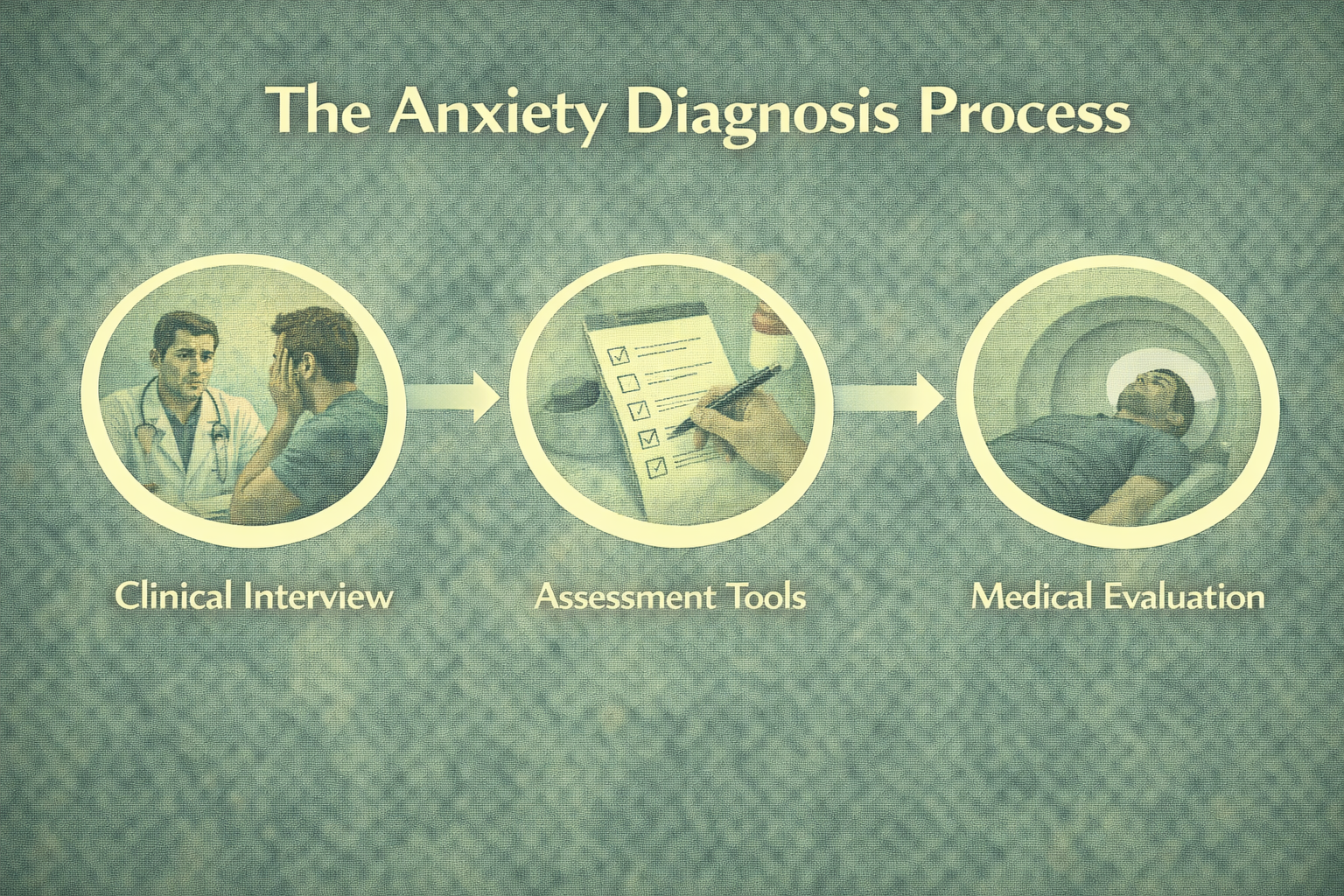
Begin with a primary care provider or directly contact a mental health professional. Openly discuss symptoms, duration, and life impacts. Be honest about family history or stressors.
What Tests Diagnose Anxiety?
No single lab test diagnoses anxiety. Providers may order bloodwork or thyroid tests to rule out medical causes. Psychological screening tools like the GAD-7 questionnaire assess symptom severity.
Anxiety Assessment and Diagnosis Tools
A detailed clinical interview matches symptoms to DSM-5-TR. Tools include standardized scales for severity and monitoring progress.
Image: Step-by-step flowchart illustrating the diagnosis journey. Alt text: How doctors diagnose anxiety step by step.
Important: Online screeners provide insight but cannot replace professional assessment—use them as a starting point only.
Who Diagnoses Anxiety Disorders?
Multiple qualified professionals can conduct evaluations.
Qualified Professionals Involved
Psychiatrists (medical doctors) diagnose and prescribe medication. Psychologists, licensed therapists, and clinical social workers diagnose and provide therapy.
Role of Primary Care Providers
They often handle initial screening, rule out physical issues, and refer to specialists.
Online Anxiety Diagnosis Test Limitations
Online tools like GAD-7 screeners help flag concerns but aren’t diagnostic. Always follow up in person or via telehealth.
If considering teletherapy, platforms like BetterHelp connect people with licensed providers for convenient evaluations (many find it accessible for initial steps).
Anxiety Diagnosis Criteria DSM-5 Explained
DSM-5-TR provides clear, evidence-based criteria.
Key Criteria for Generalized Anxiety Disorder
Excessive anxiety and worry occurring more days than not for at least 6 months, difficult to control, plus at least three symptoms: restlessness, fatigue, concentration issues, irritability, muscle tension, or sleep disturbance.
Process of Diagnosing Generalized Anxiety
Providers explore worry domains (health, work, finances) and ensure symptoms aren’t better explained by another condition.
Criteria for Other Anxiety Disorders
Panic disorder involves recurrent unexpected attacks plus persistent concern. Social anxiety requires marked fear of social scrutiny. Specific phobias center on intense, irrational fear of objects/situations.
Image: Comparative table of DSM-5 criteria across anxiety types. Alt text: Anxiety diagnosis criteria DSM-5 overview.
For a broader foundation, see our guide on Signs of Mental Health Issues: Anxiety in Men
How Long Does Anxiety Diagnosis Take?
Timelines vary but are typically efficient.
Timeline Expectations
An initial visit lasts 45-60 minutes. Full confirmation often occurs in 1-3 sessions.
Factors Affecting Duration
Comorbid conditions (e.g., depression) or complex history may require more time.
What Happens After Diagnosis
Treatment planning begins promptly, often combining therapy, lifestyle changes, or medication.
Scientific Evidence & Research
Diagnosis relies on validated tools and criteria.
Clinical Studies
The GAD-7 demonstrates strong sensitivity (around 79-89% at cutoff 10) and specificity (82-89%) for detecting generalized anxiety, per USPSTF reviews and meta-analyses.
DSM-5 criteria show reliability in structured interviews.
Expert Opinions
APA and NIMH stress comprehensive assessments over self-tools alone for accuracy.
Statistical Data
Past-year prevalence stands at 19.1% among U.S. adults (NIMH), higher in women (23.4%). Many remain untreated due to barriers like stigma (ADAA).
External resources:
- NIMH Anxiety Disorders Overview
- Mayo Clinic GAD Diagnosis & Treatment
- APA DSM-5-TR Assessment Measures
Common Mistakes to Avoid
Steering clear of pitfalls improves outcomes.
Mistake #1: Relying on Self-Diagnosis or Online Tests
Why problematic: Symptoms overlap with other issues; self-assessment can heighten worry without context. Better approach: Consult a licensed professional for accurate evaluation.
Mistake #2: Delaying Professional Help
Why problematic: Symptoms may intensify, affecting quality of life. Better approach: Early intervention often leads to faster relief.
Mistake #3: Ignoring Physical Causes
Why problematic: Conditions like hyperthyroidism mimic anxiety. Better approach: Start with a physical check to rule them out.
Frequently Asked Questions (FAQs)
How is anxiety diagnosed?
Mental health professionals diagnose anxiety through clinical interviews, DSM-5-TR criteria matching, and tools like the GAD-7. They rule out physical causes and evaluate symptom impact—no single test exists; it’s a comprehensive process.
What is the anxiety diagnosis process like?
It begins with discussing symptoms and history, often includes questionnaires, possible physical referrals, and DSM-5 matching. Expect 1-3 visits in a supportive environment.
Who diagnoses anxiety disorders?
Licensed professionals such as psychiatrists, psychologists, therapists, or primary care providers (with referral) can diagnose. They must be qualified mental health experts.
How to get an anxiety diagnosis?
Schedule an appointment with a primary doctor or a mental health provider. Share symptoms openly; telehealth is widely available in the U.S.
How long does anxiety diagnosis take?
Initial assessments typically last 45-90 minutes, with full confirmation in 1-3 sessions depending on complexity and history.
What tests diagnose anxiety?
No specific lab test diagnoses anxiety—providers use psychological assessments, interviews, and bloodwork if needed to exclude medical causes.
Can I get an online anxiety diagnosis test?
Online screeners identify potential concerns but do not provide official diagnoses. Follow up with a professional for confirmation.
Quick Takeaways
- Anxiety disorders affect about 19.1% of U.S. adults yearly and are highly treatable with proper diagnosis.
- The process involves clinical interviews, DSM-5-TR criteria, and ruling out other causes—no single test required.
- Early evaluation leads to better outcomes; don’t delay if symptoms disrupt life.
- Professionals like psychiatrists and therapists are key—telehealth makes access easier.
- Taking time to learn more is a positive step; relief is possible.
Conclusion
Understanding the anxiety diagnosis process demystifies the journey and empowers moving forward with confidence. By recognizing signs early and seeking professional input, people gain access to accurate identification and personalized strategies that can dramatically improve daily life—whether through therapy, medication, or combined approaches.
The core value lies in shifting from uncertainty to clarity: a DSM-5-TR-based diagnosis ensures experiences are validated and addressed effectively.
If symptoms persist or interfere with routine, reach out to a healthcare provider today—many offer telehealth for convenience. Consider exploring licensed therapy options to start the conversation.
No one is alone in this; millions find meaningful relief once they take that first step. With support, anxiety doesn’t have to define life—control can be regained and thriving is possible.
For ongoing tips, sign up for our mental health newsletter or visit our hub on [Anxiety Treatments and Resources].
Medical Disclaimer
This article is for informational and educational purposes only and does not constitute medical advice. The information provided should not be used for diagnosing or treating a health problem or disease. Always consult with a qualified healthcare professional before making any changes to mental health treatment, starting new medications, or trying new approaches.
If experiencing a mental health crisis, call or text the 988 Suicide & Crisis Lifeline or visit the nearest emergency room. For non-emergency support, contact the SAMHSA National Helpline at 1-800-662-HELP (4357).
The content is based on current research and expert consensus as of 2026, but medical knowledge evolves. Always verify with a healthcare provider.