Did you know that over 40 million adults in the USA experience anxiety disorders annually, according to the Anxiety and Depression Association of America? This staggering number highlights how common anxiety has become in our fast-paced world.
Everyday stressors like work pressure, relationships, and uncertainty can trigger overwhelming anxiety, leading to rapid heartbeat, shallow breathing, and mental fog. These symptoms often disrupt daily life, making it hard to focus or relax. Many people feel trapped in this cycle, unsure of simple ways to find relief without medication.
Backed by clinical studies from institutions like Stanford Medicine and meta-analyses showing breathwork’s impact on stress reduction.
For a broader foundation, see our guide on Signs of Mental Health Issues: Social Anxiety Disorder
What Are Anxiety Breathing Techniques?
Anxiety breathing techniques are simple, powerful tools anyone can use to manage stress and calm the mind. At their core, these methods involve deliberate control of your breath to influence your body’s response to anxiety. By focusing on how you inhale and exhale, you can shift from a state of heightened alert to one of relaxation.
These techniques work by engaging your body’s natural systems. When anxiety strikes, your sympathetic nervous system kicks in, preparing you for “fight or flight.” Anxiety breathing techniques counter this by activating the parasympathetic nervous system, often called the “rest and digest” mode. Research suggests this switch can help lower heart rate and reduce cortisol levels, the hormone linked to stress.
Moreover, anxiety breathing techniques are accessible and don’t require special equipment. You can practice them anywhere, making them ideal for busy adults.
Understanding Breathing Exercises for Anxiety Relief
Breathing exercises for anxiety relief are intentional, controlled breathing patterns that activate the parasympathetic nervous system to counteract the fight-or-flight response. This means slowing your breath to signal safety to your brain and body.
Explain physiological basics: They slow heart rate, lower cortisol, and improve oxygen flow to the brain. Studies show this can reduce anxiety symptoms quickly.
Highlight accessibility for beginners and daily use. Even if you’re new to this, starting with short sessions builds confidence over time.
The Role of Deep Breathing Techniques for Anxiety Relief
Deep breathing techniques for anxiety relief play a key role in interrupting anxiety cycles by focusing on the present moment. When worries spiral, these methods ground you, preventing escalation.
Cover historical roots in yoga and mindfulness practices, where breath control has been used for centuries to promote calm. Modern adaptations make them relevant today.
Note variations like rhythmic or paced breathing, which allow customization based on your needs.
For a broader foundation, see our guide on Signs of Mental Health Issues: Complete Guide to Anxiety Disorders
When to Incorporate Anxiety Breathing Techniques
Ideal during panic onset, before stressful events, or as a preventive routine. For instance, use them when you feel tension building.
Benefits for ages 25-55 facing work-life balance issues include better focus at work and improved sleep at home.
Research suggests regular practice can lead to lasting changes in how your body handles stress.
Research Shows:
A 2023 study from Stanford Medicine found that just five minutes of cyclic sighing—a type of deep breathing—reduced anxiety more effectively than mindfulness meditation, improving mood and lowering physiological stress markers.
Why Do Anxiety Breathing Techniques Matter?
Anxiety breathing techniques are more than a quick fix; they address the root of how stress affects your mind and body. In a world where anxiety rates are climbing, these methods empower you to take control without relying solely on external solutions. Understanding their importance can motivate consistent practice.
By incorporating these techniques, you may experience reduced chronic tension and better overall well-being. Let’s explore the mental, physical, and long-term benefits.
For a broader foundation, see our guide on Signs of Mental Health Issues: Anxiety Self-Help Strategies
Impact of Breathing Techniques to Reduce Anxiety on Mental Health
Breathing techniques to reduce anxiety can lower chronic stress, preventing burnout and related health issues. Research suggests they help by calming racing thoughts.
They also improve emotional regulation and sleep quality, making it easier to handle daily challenges.
Supported by evidence of lowered anxiety scores in studies, such as those showing up to 30% symptom reduction with regular use.
Physical Benefits of Breathing Methods for Managing Anxiety
Breathing methods for managing anxiety lower blood pressure, enhance lung function, and boost immunity. This happens as controlled breaths increase oxygen efficiency.
They alleviate symptoms like tension headaches and muscle tightness, providing physical relief alongside mental calm.
Long-Term Importance for USA Adults
These techniques address rising anxiety rates amid economic and social pressures in the USA. With over 31% of adults reporting anxiety, self-tools are crucial.
They empower self-management without sole reliance on medication, fostering independence.
Healthcare professionals often recommend them as a complementary approach.
Expert Insight:
As neuroscientist Dr. Andrew Huberman explains, “Exhale-focused breathing rapidly activates the parasympathetic system, providing immediate calm during anxiety spikes.”
Best Breathing Techniques for Anxiety
When it comes to managing anxiety, certain breathing techniques stand out for their simplicity and effectiveness. These methods have been refined over time and backed by research. Below, we’ll detail four top options, including how to perform them and their unique benefits.
Start with one that resonates with you, and practice regularly for the best results.
4-7-8 Breathing for Anxiety
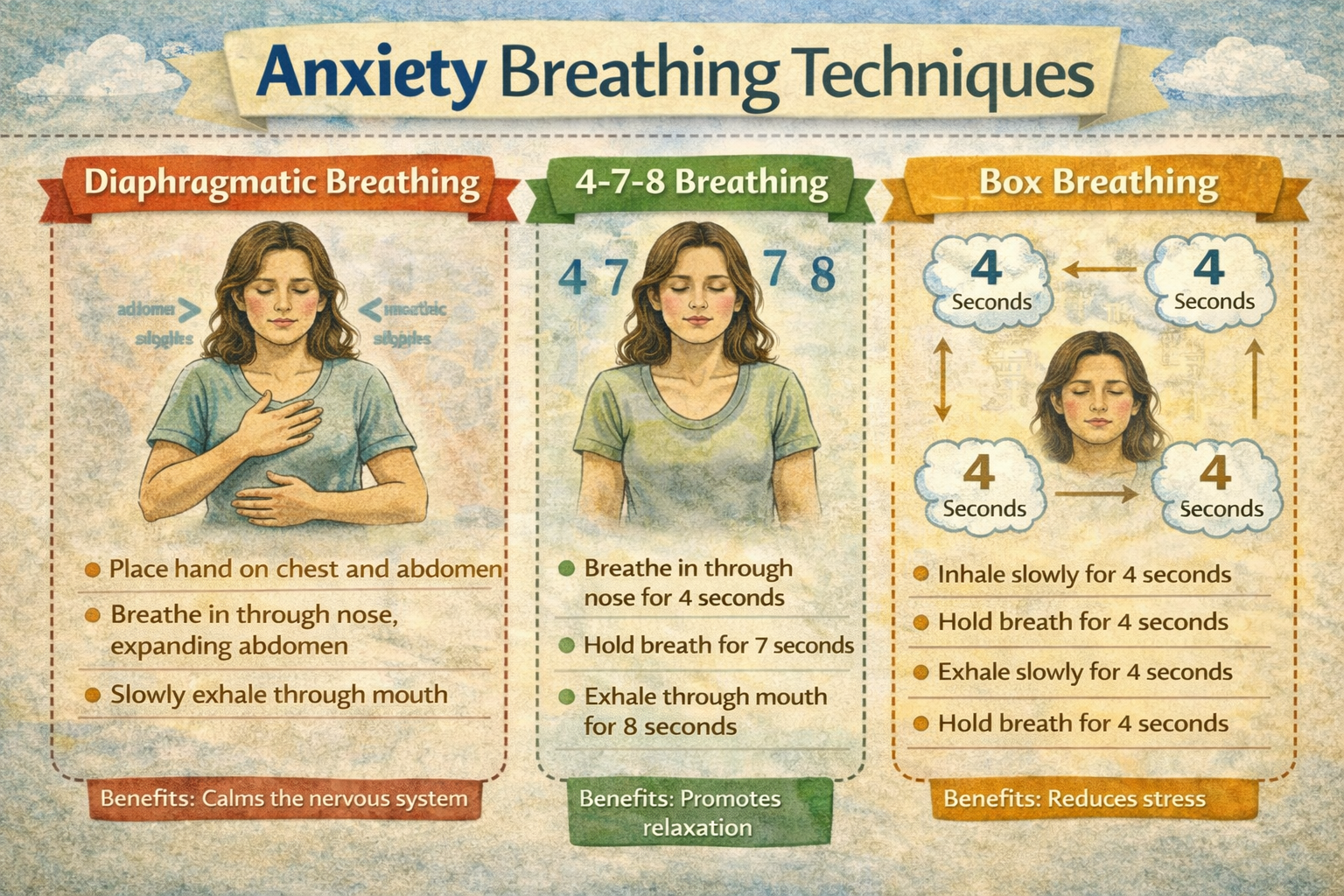
Developed by Dr. Andrew Weil, 4-7-8 breathing for anxiety involves inhaling for 4 seconds, holding for 7, and exhaling for 8.
It calms the nervous system quickly and is ideal for bedtime to ease insomnia related to worry.
Key points: Practice seated, with your tongue on the roof of your mouth. Repeat up to four times per session.
Box Breathing for Anxiety
Box breathing for anxiety is a Navy SEAL technique: Inhale for 4 counts, hold for 4, exhale for 4, hold for 4.
It enhances focus during high-stress moments, like before a meeting.
Variations include longer holds as you build proficiency, starting with 3 counts if 4 feels challenging.
Diaphragmatic Breathing for Anxiety
Diaphragmatic breathing for anxiety, or belly breathing, means inhaling deeply into the diaphragm and exhaling slowly.
It strengthens core muscles and promotes relaxation by engaging the full lungs.
Use a hand on your belly for feedback to ensure proper form.
Mindfulness Breathing for Anxiety
Mindfulness breathing for anxiety focuses on breath sensations without judgment.
It integrates with meditation for sustained calm, helping you observe thoughts without attachment.
Pro Tip:
Pair breathing with a scent like lavender for enhanced relaxation—research suggests aromatherapy amplifies the calming effects of breathwork.
How to Practice Anxiety Breathing Techniques
Getting started with anxiety breathing techniques doesn’t have to be overwhelming. Begin with short, consistent sessions to build a habit. Over time, you’ll notice improvements in how you handle stress.
Focus on comfort and patience as you learn.
Anxiety Breathing Techniques for Beginners
Start in a quiet space, sit comfortably, and set a timer for 5 minutes.
Focus on slow inhales through the nose and exhales through the mouth to engage proper muscles.
Build from 1-2 sessions daily, gradually increasing as it feels natural.
Simple Breathing Exercises for Anxiety in Daily Life
Integrate simple breathing exercises for anxiety during commutes, breaks, or before meetings.
Track mood pre- and post-session to measure effectiveness and stay motivated.
This turns routine moments into opportunities for calm.
Guided Breathing Exercises for Anxiety
Use audio resources or apps for structure in guided breathing exercises for anxiety.
Progress to unguided as confidence grows, allowing personalization.
Effective Breathing Techniques for Anxiety Attacks
During an anxiety attack, quick action is key. Effective breathing techniques for anxiety attacks can help break the cycle fast. These methods are designed for immediate use when symptoms peak.
Remember, if attacks are frequent, consult a professional.
Deep Breathing for Anxiety Attacks
For deep breathing for anxiety attacks, inhale deeply, pause briefly, and exhale fully.
Repeat 5-10 times to break the panic cycle by slowing your breath.
This restores balance to oxygen and carbon dioxide levels.
Quick Breathing Exercises for Anxiety
Quick breathing exercises for anxiety include short bursts like 3-3-3: Inhale 3, hold 3, exhale 3.
They’re portable for on-the-go relief, fitting into any situation.
Practice prevents escalation.
Best Breathing Techniques for Anxiety in High-Stress Situations
Combine the best breathing techniques for anxiety with grounding like the 5-4-3-2-1 sensory check: Name 5 things you see, 4 you touch, etc.
This dual approach anchors you in the present.
Important:
If you have respiratory conditions like asthma, consult a doctor before trying deep breathing—improper technique could cause dizziness or worsen symptoms.
Expert Tips for Breathing Techniques to Reduce Anxiety
To maximize breathing techniques to reduce anxiety, consistency and personalization are essential. Experts recommend integrating them into your routine thoughtfully.
Here are proven tips to enhance your practice.
Consistency in Simple Breathing Exercises for Anxiety
Practice daily for habit formation; aim for 10-15 minutes to see cumulative benefits.
Journal progress to stay motivated, noting how sessions affect your day.
This builds resilience over time.
Combining with Other Therapies
Pair with CBT or exercise for amplified effects, as breathwork complements therapy.
Consult professionals for personalized plans, ensuring a holistic approach.
Monitoring and Adjusting Techniques
Use apps to track HRV; adjust based on response, like shortening holds if needed.
Scientific Evidence & Research
Breathwork’s role in anxiety management is supported by growing research. Studies highlight how these techniques influence physiology and mood.
Let’s examine key findings.
Clinical Studies
Stanford Medicine study (2023): Cyclic sighing (prolonged exhales) reduced anxiety more than mindfulness, improving mood in 5 minutes daily.
Meta-analysis (2023, Scientific Reports): Breathwork showed small-to-medium effects (g=-0.35) in reducing stress and anxiety across 12 RCTs with 785 participants.
Expert Opinions
Dr. Andrew Huberman emphasizes exhale-focused breathing for rapid physiological calm.
Researchers from Nature: Slow breathing lowers valence and arousal in anxiety states.
Statistical Data
Over 31% of US adults report anxiety; breathwork reduces symptoms by up to 40% in meta-analyses.
For details, see NIH on anxiety, Stanford study, and Scientific Reports meta-analysis.
Common Mistakes to Avoid
While anxiety breathing techniques are straightforward, common pitfalls can reduce their effectiveness. Avoiding these ensures better results.
Focus on proper form from the start.
Mistake #1: Breathing Too Shallowly
Why it’s problematic: Reinforces anxiety by limiting oxygen; doesn’t engage diaphragm.
Better approach: Focus on belly expansion for full breaths, placing a hand there to check.
Mistake #2: Rushing Through Sessions
Why it’s problematic: Prevents relaxation response; increases frustration.
Better approach: Start slow, use timers for paced practice to build patience.
Mistake #3: Inconsistent Practice
Why it’s problematic: Benefits require regularity; sporadic use yields minimal results.
Frequently Asked Questions (FAQs)
What are the best breathing techniques for anxiety?
Effective techniques include 4-7-8, box, and diaphragmatic breathing. These activate the parasympathetic system, reducing heart rate and stress. Start with 5 minutes daily for noticeable relief, as supported by Stanford research. Consistent practice can lead to long-term improvements, but combine with professional advice if anxiety persists.
How does deep breathing for anxiety attacks help?
Deep breathing interrupts panic by slowing respiration and lowering cortisol. Inhale deeply for 4 counts, exhale for 6; repeat to regain calm. Studies show it reduces anxiety symptoms in minutes. It’s a quick tool, but if attacks are severe, seek medical help to address underlying causes.
Are guided breathing exercises for anxiety effective for beginners?
Yes, guided sessions provide structure, making it easier for novices. Apps offer voice-led practices; consistent use builds skill, leading to 20-30% anxiety reduction per meta-analyses. Beginners may feel awkward at first, but progress comes quickly. Always start slow to avoid overwhelm.
What is 4-7-8 breathing for anxiety?
Inhale quietly for 4 seconds, hold for 7, exhale audibly for 8. This technique, from Dr. Weil, promotes relaxation and sleep. Practice twice daily for optimal anxiety management. It’s evidence-based for calming the nervous system, but consult a doctor if you have breathing issues.
Can mindfulness breathing for anxiety be done anywhere?
Absolutely; focus on breath sensations without tools. It’s discreet for work or travel, helping manage stress on-the-go with proven mood improvements. No special setup needed, making it versatile. Research supports its role in reducing daily anxiety when practiced mindfully.
How often should I use breathing techniques to reduce anxiety?
Aim for 10-15 minutes daily, plus during triggers. Regularity enhances benefits, with research indicating sustained stress reduction over weeks. Track your sessions to stay consistent. If anxiety interferes with life, pair this with therapy for better outcomes.
Are there risks with anxiety breathing techniques?
Generally safe, but consult a doctor if you have respiratory issues. Start slowly to avoid dizziness; combine with professional care for severe anxiety. Improper technique might cause temporary lightheadedness, but most people experience only benefits.
Conclusion
Anxiety breathing techniques offer immediate calm, long-term resilience, and empowerment over mental health without side effects. By mastering methods like 4-7-8 or box breathing, you can transform overwhelming moments into manageable ones, fostering a sense of control in daily life.
These simple, evidence-based methods can transform how you handle stress, leading to better focus, sleep, and overall well-being.
Medical Disclaimer:
This article is for informational purposes only and not a substitute for professional medical advice. Consult a healthcare provider for personalized guidance. If you’re experiencing a mental health crisis, call the 988 Suicide & Crisis Lifeline or seek emergency help. Content based on research as of 2026; verify with your provider.