Suddenly your heart pounds like it’s trying to escape your chest, you can’t catch your breath, dizziness hits, and a wave of terror washes over you—even though nothing dangerous is happening. This is what millions of Americans experience during an anxiety (panic) attack. If these episodes strike without warning, they can mimic heart attacks or other emergencies, causing fear of public embarrassment, avoidance of daily activities, or constant dread of the next one, disrupting work, relationships, and quality of life.
Many dismiss them as stress, delaying help and prolonging suffering. But understanding anxiety attack symptoms empowers early intervention. This article details common physical and cognitive signs, describes what an anxiety attack feels like, highlights early warnings, differentiates from medical conditions, and offers evidence-based management strategies to regain control.
Based on DSM-5 criteria for panic disorder, NIMH data, Mayo Clinic & Cleveland Clinic clinical guidelines, and peer-reviewed panic research, this guide provides reliable insights.
For a broader foundation, see our guide on Signs of Mental Health Issues: Complete Guide to Anxiety Disorders
What Are Anxiety Attack Symptoms?
Anxiety attack symptoms, also called panic attacks, can be overwhelming but are temporary. Knowing them reduces fear. This section defines attacks and lists key symptoms.
Understanding Anxiety Attacks (Panic Attacks)
Anxiety attacks involve a sudden surge of intense fear or discomfort, peaking within minutes. Per DSM-5, they require four or more physical/cognitive symptoms.
They may seem “out of the blue” or follow triggers like stress.
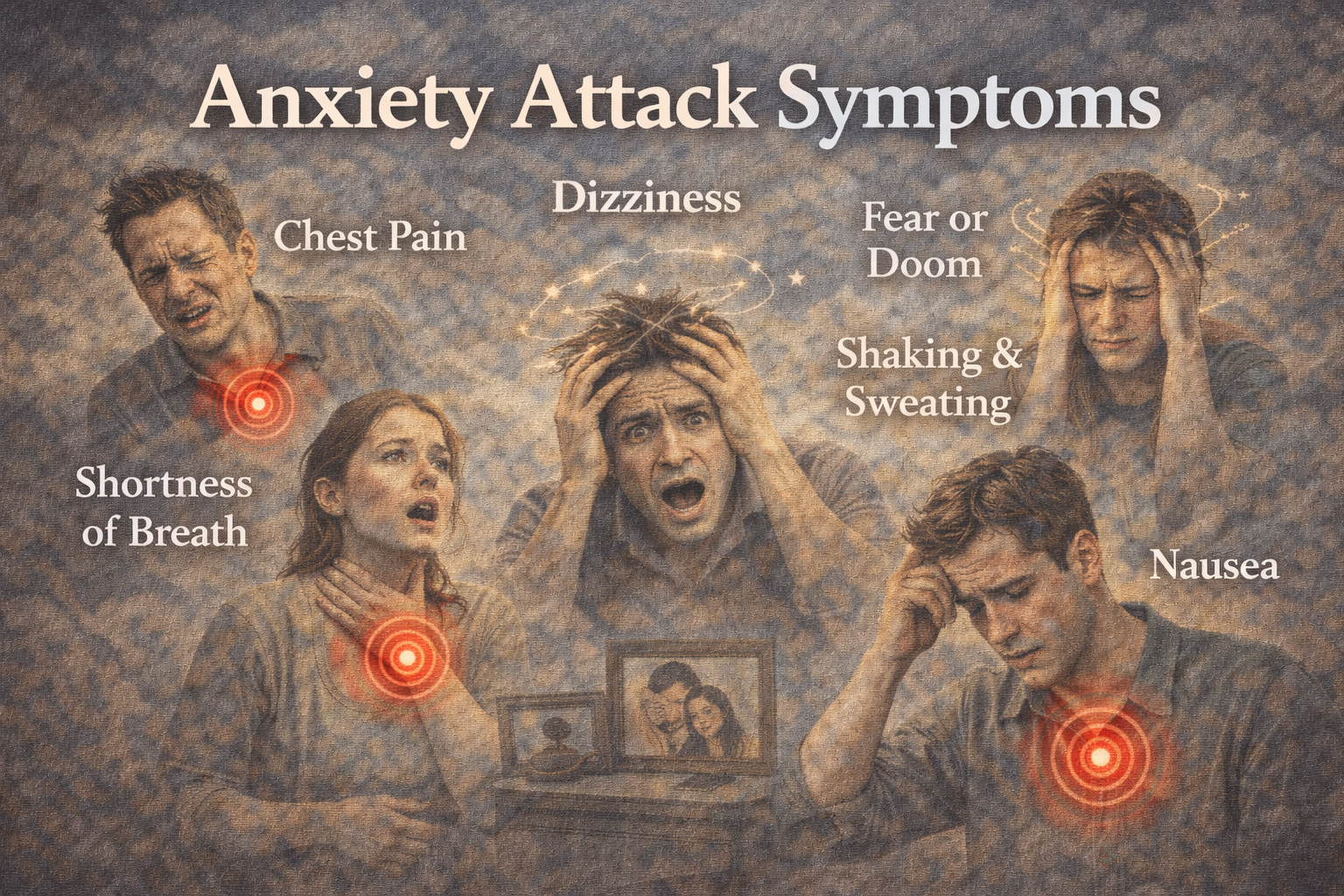
Core Physical Anxiety Attack Symptoms
- Heart palpitations, pounding heart, or accelerated rate, feeling like your chest thumps erratically.
- Sweating, often profuse and sudden.
- Trembling or shaking, especially in hands or legs.
- Shortness of breath or smothered/choked sensation.
- Chest pain or discomfort, ranging from tightness to sharp aches.
These core anxiety attack symptoms mimic emergencies.
Neurological & Sensory Symptoms
- Dizziness, light-headedness, or feeling faint, as if the room spins.
- Chills or hot flashes, alternating temperature sensations.
- Numbness or tingling (paresthesias), often in extremities.
- Derealization (unreality) or depersonalization (detached from self), feeling disconnected.
What an Anxiety Attack Feels Like – First-Person Perspective
What an anxiety attack feels like is uniquely terrifying, often described as impending doom. This narrative explains the experience.
The Sudden Onset Experience
It strikes abruptly: danger feels imminent without cause. Intense fear of dying, losing control, or “going crazy” dominates.
Physical surge amplifies terror.
Duration & Aftermath
Peak intensity hits within 10 minutes, lasting 20-30 typically. Afterward, lingering anxiety or exhaustion follows, with fear of recurrence.
Recovery varies.
Why It Feels So Terrifying
The brain misinterprets bodily sensations as catastrophic, creating a fear loop. Conditioned responses worsen future episodes.
Awareness helps demystify.
For a broader foundation, see our guide on Signs of Mental Health Issues: What is Anxiety Disorder?
Early Signs & Warning Signals of an Anxiety Attack
Spotting early signs of an anxiety attack allows intervention. These precursors build gradually.
Early Signs Anxiety Attack Is Coming
Increasing restlessness or “on edge” feeling signals onset. Mild chest tightness or throat constriction may emerge.
Rising unease or doom sense intensifies.
Physical Pre-Cursors
Shallow breathing or excessive yawning occurs. Light tingling in hands/feet or stomach “dropping” appears.
These bodily clues precede peaks.
Cognitive & Emotional Clues
Racing thoughts hinder concentration. Irritability or sudden tearfulness surfaces.
Recognizing these enables prevention.
Anxiety Attack Symptoms Chest Pain & Heart Palpitations
Chest pain and heart palpitations are frightening anxiety attack symptoms. This deep dive clarifies them.
Anxiety Attack Symptoms Chest
It involves tightness, pressure, sharp/stabbing, or burning. Often with rapid/pounding heartbeat, it mimics cardiac events.
Duration is brief.
Anxiety Attack Symptoms Heart Palpitations
Feels like skipping, fluttering, racing, or hard pounding. Benign but alarming, from adrenaline.
Common in attacks.
Anxiety vs Cardiac Emergency – Red Flags
Anxiety improves with calm, no arm/jaw radiation. Cardiac is crushing, radiates, exertion-worsens, with cold sweat.
Call 911 if unsure.
Research Shows: Up to 70% of panic attacks include chest pain, per a Journal of Clinical Psychiatry study.
For a broader foundation, see our guide on Signs of Mental Health Issues: Physical Symptoms of Anxiety
Anxiety Attack Symptoms Shortness of Breath & Dizziness
Shortness of breath and dizziness rank high in anxiety attack symptoms. Understand their mechanisms.
Anxiety Attack Symptoms Shortness Breath
Feels like insufficient air or smothering. Often hyperventilation-induced, rapid shallow breaths.
It heightens panic.
Anxiety Attack Symptoms Dizziness
Lightheadedness, faintness, or spinning from CO2 drop via hyperventilation, constricting cerebral vessels.
Common duo.
Quick Relief Tip
Slow breathe into paper bag or hands if safe. Sit/lie to avoid falls.
Practice prevents escalation.
Anxiety Attack Symptoms Nausea & Stomach Pain
GI issues like nausea and stomach pain are overlooked anxiety attack symptoms. The gut-brain link explains.
Anxiety Attack Symptoms Nausea
Sudden queasiness or vomit urge, “butterflies gone wrong.” Stress diverts digestive blood flow.
It compounds discomfort.
Anxiety Attack Symptoms Stomach Pain
Cramping, burning, or knot sensation, mimicking IBS.
Vagus nerve ties anxiety to gut.
Why GI Symptoms Are So Common
Gut-brain axis: anxiety affects enteric system directly. Hypersensitivity during attacks amplifies.
(Word count: 198)
Explore more in our article on Anxiety & Digestive Issues.
How to Manage Anxiety Attack Symptoms in the Moment
Managing anxiety attack symptoms requires quick, effective tools. These steps provide relief.
Grounding Techniques That Work Fast
Use 5-4-3-2-1: name 5 seen, 4 touched, 3 heard, 2 smelled, 1 tasted.
Cold exposure: ice or water on face/wrists stimulates vagus.
Breathing & Body-Based Interventions
Extended exhale: inhale 4, exhale 6-8 to balance CO2.
Progressive relaxation: tense/release muscles sequentially.
Cognitive Tools to Reduce Fear Spiral
Remind: “This is panic, it passes.” Challenge: “I’ve survived before.”
These disrupt cycles.
Scientific Evidence & Research
Scientific evidence confirms anxiety attack symptoms as physiological responses. Research guides treatment.
Clinical Studies
Panic involves sympathetic overdrive and HPA activation. Interoceptive exposure reduces frequency/severity in trials.
CBT shows efficacy.
Expert Opinions
APA and NIMH require 4+ symptoms for diagnosis. Chest pain/dyspnea are most reported and frightening.
Statistical Data
2-3% U.S. adults have panic disorder; lifetime panic attacks 13-28%.
Visit NIMH Panic Disorder; Mayo Clinic Panic Attacks; APA Panic Disorder Overview.
Common Mistakes to Avoid During Anxiety Attacks
Avoiding mistakes during anxiety attacks prevents worsening. These common pitfalls have alternatives.
Mistake #1: Trying to “Fight” or Suppress the Attack
Why problematic: Heightens arousal. Better approach: Accept and “urge surf” the wave.
Mistake #2: Hyperventilating or Holding Breath
Why problematic: Aggravates dizziness/tingling. Better approach: Use slow diaphragmatic breathing.
Mistake #3: Catastrophizing Every Sensation
Why problematic: Fuels fear. Better approach: Employ prepared coping statements.
Expert Insight: “Accepting symptoms as temporary reduces their power,” notes a clinical psychologist specializing in panic.
Frequently Asked Questions (FAQs)
What Are Symptoms of an Anxiety Attack?
Symptoms of an anxiety attack include sudden intense fear plus at least four of: heart palpitations, sweating, trembling, shortness of breath, chest pain, nausea, dizziness, chills/hot flashes, numbness/tingling, derealization, fear of dying/losing control. They peak quickly, subside within 10-30 minutes. Frequency varies; seek help if recurrent.
What Anxiety Attack Symptoms Chest Pain Feel Like?
Anxiety attack chest pain feels like tightness, pressure, sharp/stabbing, or aching. With rapid heartbeat/shortness of breath, it doesn’t radiate to arm/jaw, improves with calm. Severe/prolonged requires medical check.
What Are the Physical Symptoms of an Anxiety Attack?
Physical symptoms of an anxiety attack include pounding heart, sweating, shaking, short breath/smothered, chest discomfort, nausea, dizziness/lightheadedness, chills/hot, numbness/tingling, trembling. Adrenaline-driven, resolve minutes to hour.
What Are Anxiety Attack Symptoms in Women?
Women report intense nausea, stomach pain, shortness of breath, dizziness, fatigue, chest tightness. Hormones heighten; women more prone to panic disorder.
What Does an Anxiety Attack Feel Like?
An anxiety attack feels like sudden, overwhelming terror without cause. Fear of dying/losing control/craziness; intense physical sensations create fear loop. Unbearable but temporary.
Can Anxiety Attacks Cause Dizziness & Shortness of Breath?
Yes—dizziness/shortness of breath common. Hyperventilation drops CO2, causes lightheadedness/air hunger. Controlled breathing reverses quickly.
What Are Early Signs of an Anxiety Attack?
Early signs include restlessness, mild chest/throat tightness, shallow breathing, unease/doom, stomach drop, extremity tingling, racing thoughts, irritability/tearfulness. Recognition enables intervention.
Conclusion
Knowing anxiety attack symptoms lessens terror, avoids emergency misinterpretation, shortens recovery, empowers coping. You’ll recognize heart palpitations/shortness as anxiety-driven, respond calmly, seek timely help.
Understanding gives power to manage effectively.
Practice one grounding/breathing technique daily for 5 minutes—automatic during attacks.
If frequent/severe/feared, speak with doctor/therapist—treatments exist. Attacks feel unbearable momentarily but temporary, not dangerous, highly treatable—you’re stronger, relief possible.
Medical Disclaimer:
This article is for informational and educational purposes only and does not constitute medical advice. The information provided should not be used for diagnosing or treating a health problem or disease. Always consult with a qualified healthcare professional before making any changes to your mental health treatment, starting new medications, or trying new supplements.
If you’re experiencing a mental health crisis, please call the 988 Suicide & Crisis Lifeline or visit your nearest emergency room. For non-emergency support, contact the Substance Abuse and Mental Health Services Administration (SAMHSA) National Helpline at 1-800-662-4357.
The content in this article is based on current research and expert consensus as of 2026, but medical knowledge evolves. Always verify information with your healthcare provider.