Many people experience anxiety and depression comorbidity—the simultaneous presence of both conditions—without realizing how intertwined they are. Research shows that up to 60% of individuals with anxiety disorders also experience symptoms of depression, and similar rates apply in reverse, creating a challenging cycle that intensifies daily struggles like persistent worry, low energy, and emotional exhaustion.
If you’ve felt overwhelmed by racing thoughts one moment and profound hopelessness the next, you’re not alone. Adults aged 25-55 often face this overlap, leading to greater severity, longer-lasting symptoms, impaired work and relationships, and elevated risks including suicidality.
This guide explores anxiety and depression comorbidity in depth: what it is, why it develops, common symptoms, causes, evidence-based treatments, daily management strategies, and practical steps forward. Drawing from sources like the National Institute of Mental Health (NIMH), World Health Organization (WHO), and recent clinical studies, you’ll gain clear, actionable insights to better understand and address these overlapping conditions.
For a broader foundation, see our guide on Signs of Mental Health Issues: Complete Guide to Anxiety Disorders
What Is Anxiety and Depression Comorbidity?
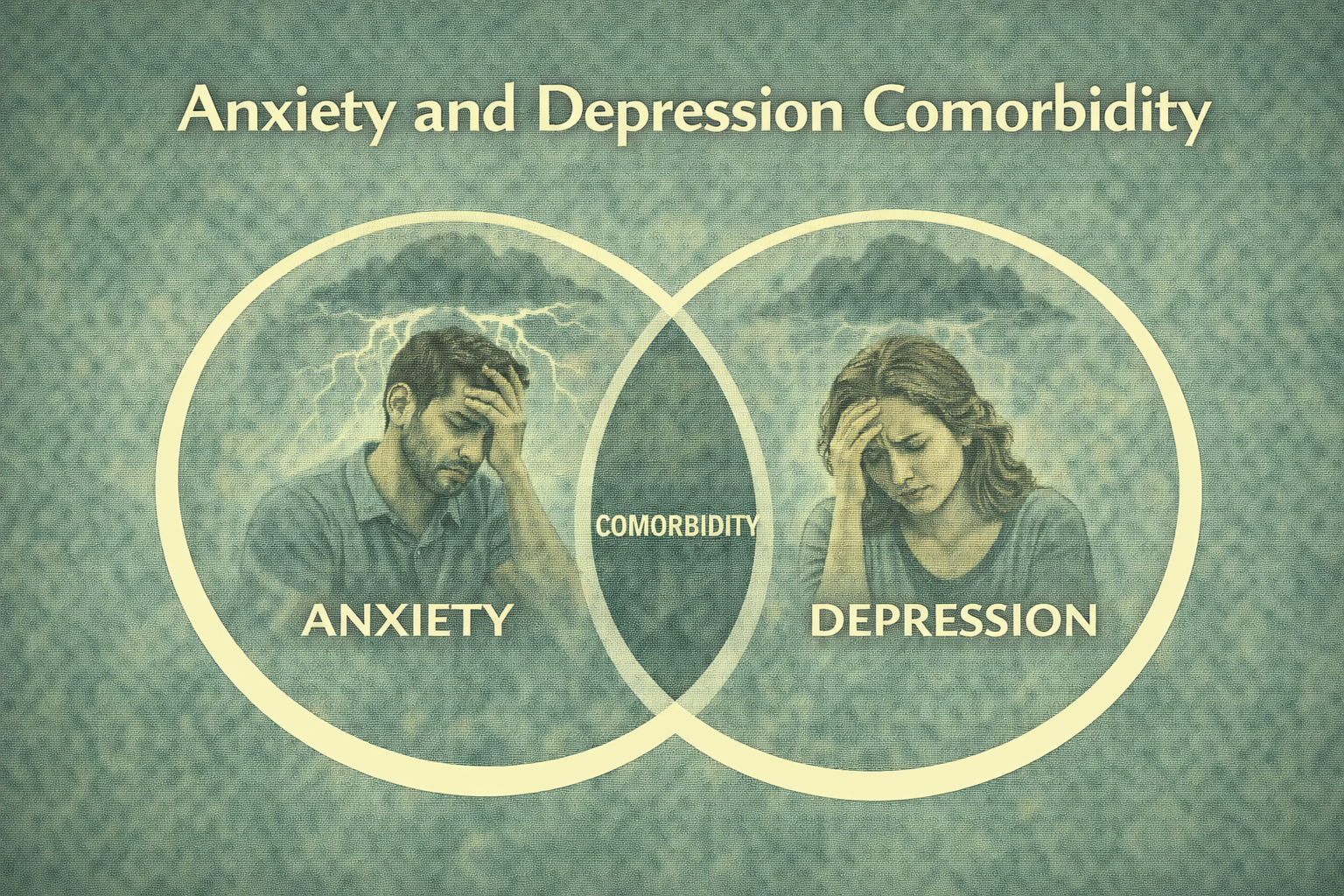
Anxiety and depression comorbidity refers to the co-occurrence of anxiety disorders and depressive disorders in the same person, often amplifying each other’s effects.
This isn’t simply having both conditions independently; the two interact bidirectionally, where untreated anxiety can fuel depressive episodes, and depression can heighten anxiety.
Defining Comorbidity in Mental Health
Comorbidity means two or more disorders occurring together more frequently than by chance alone. In mental health, anxiety and depression comorbidity involves shared features such as persistent negative emotions, physical tension, and disrupted daily functioning.
The bidirectional influence is key: anxiety’s constant vigilance can lead to exhaustion and hopelessness, while depression’s low motivation can increase worry about the future. This overlap often results in more complex presentations requiring integrated care.
How Common Is Anxiety and Depression Together?
Anxiety and depression together are highly prevalent. Studies indicate lifetime comorbidity rates around 40-60%, with many sources citing that about 60% of people with anxiety also experience depression symptoms, and vice versa.
Prevalence is higher among women and peaks in working-age adults (25-55). Recent data from sources like NIMH show that in 2022, about 18-21% of U.S. adults reported symptoms of anxiety or depression, with significant overlap in comorbid cases.
Research Shows:
A large-scale analysis found that comorbidity between major depression and anxiety disorders ranges from 20-70% depending on the specific anxiety type, with generalized anxiety showing particularly high overlap.
Differences from Standalone Anxiety or Depression
When anxiety and depression comorbidity occurs, symptoms tend to be more severe, persistent, and treatment-resistant compared to either condition alone. Standalone anxiety might involve acute worry episodes, while isolated depression focuses on low mood—but together, they create chronic cycles of avoidance, rumination, and fatigue.
Why Does Anxiety and Depression Comorbidity Matter?
Understanding anxiety and depression comorbidity is crucial because the combined impact far exceeds that of either condition alone.
Impact on Daily Life and Well-Being
Comorbid conditions lead to greater functional impairment. You might struggle more with work performance, relationships, and self-care due to compounded fatigue, irritability, and concentration issues.
Chronicity increases, with higher relapse rates if only one aspect is treated.
Increased Health Risks
Anxiety and depression comorbidity links to physical health problems (e.g., cardiovascular issues), substance use, and elevated suicidality risk. Early recognition and integrated treatment significantly improve long-term outcomes.
What Are the Symptoms of Anxiety and Depression Comorbidity?
Recognizing symptoms early helps break the cycle.
Common Signs of Anxiety and Depression Together
Overlapping symptoms include persistent fatigue, sleep disturbances (insomnia or oversleeping), irritability, and difficulty concentrating—often feeling like a constant “brain fog.”
These shared signs make the conditions harder to separate.
Anxiety Depression Comorbidity Symptoms
Anxiety contributes restlessness, excessive worry, and muscle tension, while depression adds hopelessness, loss of interest (anhedonia), and feelings of worthlessness. Together, they create intense emotional swings.
Signs of Anxiety and Depression Together
Physical manifestations are common: headaches, digestive issues, appetite changes, and unexplained aches. Emotional numbing or heightened sensitivity often appears.
Pro Tip:
Track symptoms in a daily journal noting triggers and patterns—this can reveal how anxiety and low mood feed each other and guide discussions with your provider.
For a broader foundation, see our guide on Signs of Mental Health Issues: Agoraphobia Understanding
What Causes Anxiety and Depression Comorbidity?
The causes involve intertwined biological, genetic, and environmental factors.
Biological and Genetic Factors
Shared brain pathways (e.g., involving the amygdala and prefrontal cortex) and neurotransmitters like serotonin and norepinephrine play key roles. Heritability is moderate (around 40%), with genetic variants increasing risk for both.
Environmental and Psychological Triggers
Chronic stress, trauma, adverse life events, and poor coping styles contribute significantly. These factors can activate vulnerability in genetically predisposed individuals.
Causes of Anxiety and Depression Comorbidity
Often bidirectional—anxiety frequently precedes depression, as prolonged worry leads to burnout and hopelessness. Gene-environment interactions amplify risk.
Expert Insight:
Mental health professionals note that addressing shared vulnerabilities like emotion dysregulation is often more effective than targeting one condition in isolation.
How to Treat Anxiety and Depression Comorbidity Effectively
Treatment works best when addressing both conditions simultaneously.
Evidence-Based Therapy Options
Therapy for anxiety and depression often includes Cognitive Behavioral Therapy (CBT), which targets negative thought patterns. Transdiagnostic approaches like the Unified Protocol (UP) are promising, focusing on emotion regulation across disorders.
Medication for Anxiety and Depression
First-line options include SSRIs or SNRIs (e.g., sertraline, venlafaxine), which target shared neurotransmitter imbalances. Augmentation may be needed for resistant cases.
Important:
Medications can take 4-6 weeks to show full effects. Never stop abruptly—consult your doctor to avoid withdrawal.
Combined Treatment Approaches
Combining therapy and medication often yields superior results for anxiety and depression comorbidity, with higher remission rates than either alone.
[Image suggestion: Comparison table of treatment options. Alt text: “Treatment comparison for anxiety and depression comorbidity”]
Many find online platforms helpful for accessible support. Options like reputable teletherapy services offer convenient CBT-based care.
Managing Comorbid Anxiety and Depression in Daily Life
Self-care complements professional treatment.
Coping with Anxiety and Depression
Prioritize lifestyle habits: regular aerobic exercise (30 minutes most days), consistent sleep hygiene, and mindfulness practices like deep breathing.
Natural Remedies for Anxiety and Depression
Evidence supports adjuncts like omega-3 supplements, relaxation techniques (e.g., progressive muscle relaxation), and limited use of mindfulness apps. These are not substitutes for professional care.
Overcoming Anxiety and Depression Together
Build routines, nurture social support, and set small, achievable goals to foster momentum.
For more ideas, check our guide to Lifestyle Tips for Mental Health.
Scientific Evidence & Research on Anxiety and Depression Comorbidity
Research consistently supports integrated approaches.
Clinical Studies
Studies show higher severity and chronicity in comorbid cases, but CBT and medications effectively reduce both symptom sets.
Expert Opinions
Guidelines from NIMH and similar bodies endorse transdiagnostic therapies like UP for promising outcomes in emotional disorders.
Statistical Data
Prevalence of 40-60% overlap; untreated comorbidity worsens outcomes significantly.
- NIMH Any Anxiety Disorder page](https://www.nimh.nih.gov/health/statistics/any-anxiety-disorder)
- PMC article on comorbidity mechanisms](https://pmc.ncbi.nlm.nih.gov/)
- WHO mental health factsheet](https://www.who.int/health-topics/mental-health)
Common Mistakes to Avoid When Dealing with Anxiety and Depression Comorbidity
Avoid these pitfalls for better progress.
Mistake #1: Ignoring One Condition
Treating only depression may leave anxiety fueling relapse. Better: Address both with integrated care.
Mistake #2: Relying Only on Medication or Self-Help
Medication alone misses behavioral patterns; self-help lacks depth for severe cases. Better: Combine with therapy and lifestyle support.
Mistake #3: Delaying Professional Help
Procrastination worsens the cycle. Better: Seek evaluation early—many improve substantially with prompt intervention.
Frequently Asked Questions (FAQs)
What is anxiety and depression comorbidity?
Anxiety and depression comorbidity occurs when both conditions coexist, often amplifying symptoms and severity. This overlap is common, affecting daily functioning more than either alone, and responds well to targeted, combined treatments. Consult a professional for accurate assessment.
What are the symptoms of anxiety and depression?
Overlapping signs include persistent worry, low mood, fatigue, sleep issues, irritability, and concentration problems. Unique aspects might involve restlessness (anxiety) or hopelessness (depression). Physical symptoms like tension or appetite changes often appear.
How to deal with anxiety and depression at the same time?
Combine evidence-based therapy (like CBT), medication if recommended, lifestyle changes (exercise, sleep), and support networks. Start small—track symptoms and seek professional guidance to tailor approaches.
Is medication for anxiety and depression effective for comorbidity?
Yes, SSRIs/SNRIs often help both conditions by targeting shared pathways; many experience relief. Effectiveness varies—work with a doctor to monitor and adjust.
Can you have anxiety and depression together without knowing?
Yes, overlapping symptoms can be misattributed to stress or fatigue. Subtle signs like chronic tiredness may mask the dual presence—professional evaluation clarifies.
What is the best therapy for anxiety and depression?
CBT or transdiagnostic approaches (e.g., Unified Protocol) show strong results for comorbidity by addressing shared mechanisms like avoidance and rumination.
How common is managing comorbid anxiety and depression?
Highly treatable with integrated care—many achieve significant improvement or remission through combined strategies.
Conclusion
Anxiety and depression comorbidity is common yet highly manageable. By understanding symptoms, causes, and evidence-based options like therapy, medication, and daily strategies, you can break the cycle and reclaim balance. Addressing both conditions together leads to better relief, reduced recurrence, and improved quality of life.
The key step now? Reach out—talk to a healthcare provider, explore therapy, or start tracking symptoms. Small actions build momentum toward lasting change.
You’re not alone in this; millions navigate similar paths and find meaningful recovery with support. Help is available, and taking that first step is a powerful act of self-compassion.
Medical Disclaimer: (repeated for emphasis) This article is informational only. Consult a qualified healthcare professional for diagnosis, treatment, or changes to care. In crisis? Call 988 or emergency services immediately.