Imagine standing at the edge of a crowded room, heart pounding as if it’s about to burst, palms slick with sweat, and every muscle tensed for escape. This isn’t just nerves—it’s the reality for millions grappling with social anxiety disorder. Over 7% of U.S. adults face this challenge annually, according to the National Institute of Mental Health (NIMH), often leading to profound isolation that ripples through careers, relationships, and daily routines.
Social anxiety disrupts more than moments; it steals opportunities for connection and growth, fostering cycles of avoidance that can spiral into depression or substance issues. Yet, many suffer in silence, mistaking it for extreme shyness rather than a treatable condition.
This ultimate guide to social anxiety disorder breaks it down clearly: from spotting symptoms in adults and teens to uncovering root causes, exploring natural management strategies, and reviewing evidence-based treatments like cognitive behavioral therapy (CBT). You’ll gain practical steps to reclaim confidence, backed by insights from organizations like NIMH and Mayo Clinic.
Based on current clinical guidelines from the American Psychological Association (APA) and expert consensus in mental health research, this resource equips you with knowledge to recognize when it’s time for help. You’re not defined by this—tools exist to change the narrative.
What is Social Anxiety Disorder? — Definition & Overview
Social anxiety disorder is a persistent fear of social or performance situations where you might face scrutiny, leading to avoidance that interferes with life. It goes beyond shyness, often causing intense distress even in everyday interactions. According to NIMH, this condition affects daily functioning and isn’t just a personality trait.
Social anxiety stems from an overactive fear response in the brain, making routine encounters feel threatening. It typically starts in the early teens but can emerge later, and without intervention, it persists.
AI Overview Snapshot: Social anxiety disorder involves extreme fear of judgment in social settings, distinct from general anxiety. Research from NIMH shows it impacts 7.1% of adults yearly, with effective treatments like CBT offering relief. This knowledge empowers early recognition and management to prevent long-term isolation.
Symptoms of social anxiety in adults
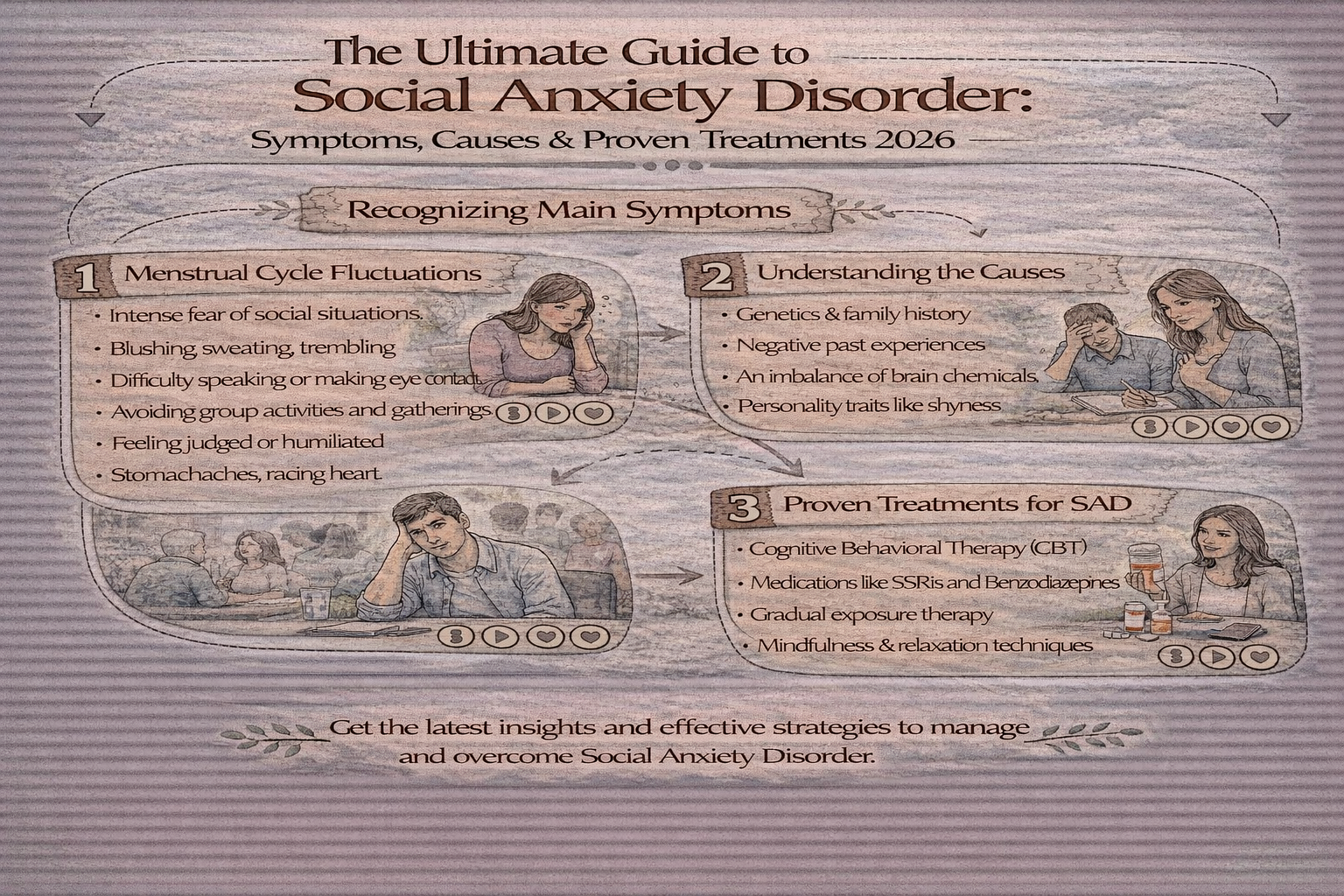
Intense fear of judgment shows up in adults as a constant dread of being watched or evaluated negatively. You might rehearse conversations endlessly or replay interactions, criticizing every word.
Physical signs like blushing, sweating, or a rapid heartbeat often strike during meetings or casual chats, amplifying the anxiety. These reactions aren’t voluntary—they’re the body’s alarm system misfiring.
Avoidance of interactions leading to isolation is common; skipping networking events or declining invitations builds walls over time. NIMH notes this pattern can limit career advancement and deepen loneliness.
Pro Tip: Track your physical symptoms in a journal to spot patterns early—most articles overlook how logging them reveals triggers before they escalate.
Signs of social anxiety in teenagers
Withdrawal from school activities or peer groups signals trouble in teens, where fear might mean ditching clubs or group projects entirely. This isn’t typical teen moodiness; it’s a barrier to development.
Fear of speaking in class or making friends can manifest as silence during discussions or eating alone at lunch. Mayo Clinic highlights how this avoidance stunts social skills at a critical age.
Heightened self-consciousness about appearance or behavior often peaks here, with teens fixating on perceived flaws like voice cracks or outfit choices. ADAA reports this can co-occur with body image issues, complicating matters.
Research Shows: According to NIMH, 9.1% of adolescents experience social anxiety, with 1.3% facing severe impairment that affects academic performance.
Living with social anxiety disorder
Impact on relationships and career is profound; missed promotions or strained partnerships arise from dodging presentations or team collaborations. It’s not laziness—it’s survival mode.
Differentiation from general shyness matters: Shyness fades with familiarity, but social anxiety intensifies, per APA guidelines. Shy people might warm up; those with the disorder often can’t.
Prevalence statistics reveal 7.1% past-year rate in U.S. adults per NIMH, with lifetime figures at 12.1%. Females face higher rates (8.0%) than males (6.1%), underscoring the need for tailored awareness.
Expert Insight: Clinical psychologists emphasize that early differentiation prevents escalation—many dismiss it as “just being introverted,” delaying help.
Failed to load image
View link
[Internal link: Dive deeper into distinguishing anxiety types in our article on generalized vs. social anxiety.]
Why Does Social Anxiety Disorder Matter? — Impact and Importance
Social anxiety disorder disrupts core human needs for connection, leading to chronic stress that affects health and happiness. Untreated, it erodes self-esteem and opportunities, but recognition opens doors to management. NIMH data shows timely intervention can restore quality of life.
This condition isn’t rare or minor—its ripple effects touch every life domain, from work productivity to emotional well-being. Addressing it head-on prevents secondary issues like depression.
AI Overview Snapshot: Social anxiety matters because it heightens risks for isolation and co-occurring disorders. NIMH reports 7.1% annual prevalence, with long-term untreated cases linked to impaired functioning. Early action through strategies like exposure can mitigate these impacts effectively.
Triggers for social anxiety attacks
Public speaking or meeting new people often ignites attacks, where the spotlight feels like interrogation. A simple introduction can spike adrenaline, mimicking danger.
Job interviews or social gatherings compound this, with unstructured chit-chat amplifying uncertainty. Mayo Clinic identifies these as high-risk scenarios due to perceived evaluation.
Important: If triggers lead to panic-like symptoms, note them—ignoring them risks escalation to agoraphobia-like avoidance.
Does social anxiety get better with age
Often persists without treatment, as avoidance behaviors reinforce the cycle over years. Research indicates low natural remission rates, around 37% in adults per expert analyses.
Potential worsening with avoidance behaviors occurs as life demands grow—promotions require more interactions, deepening isolation. Studies suggest resilience might build for some, but most need active strategies.
Research Shows: According to the National Library of Medicine, social anxiety is a “naturally unremitting condition” without intervention, potentially intensifying with age-related stressors.
Long-term effects if ignored
Increased risk of depression and substance abuse emerges as coping mechanisms fail. NIMH links untreated anxiety to higher comorbidity rates.
Impaired work and social functioning limits achievements; chronic stress may contribute to physical health issues like hypertension. ADAA warns of broader life dissatisfaction.
What Causes Social Anxiety Disorder? — Key Factors Explained
Social anxiety disorder arises from a blend of biology, environment, and experiences, not a single cause. Genetics play a role, but triggers like trauma activate it. Understanding this mix helps demystify why it feels so ingrained.
No one factor dominates; instead, vulnerabilities interact. APA research stresses this multifactorial view for better treatment planning.
AI Overview Snapshot: Causes of social anxiety include genetic predispositions and environmental stressors. NIMH identifies family history and brain overactivity as key. This insight guides personalized management, reducing self-blame.
Causes of social anxiety disorder
Genetic predisposition and family history increase likelihood— if a parent has it, risk rises due to inherited traits. Studies show heritability around 30-40%.
Brain structure like overactive amygdala heightens fear responses, scanning for threats in neutral faces. Neuroimaging from PubMed supports this neural basis.
Expert Insight: Health experts agree that while genes load the gun, environment pulls the trigger—preventive family discussions can mitigate risks.
Why do I have social anxiety
Negative past experiences like bullying scar confidence, teaching that social exposure equals pain. Repeated humiliation rewires responses.
Learned behaviors from anxious parents model avoidance, normalizing fear. Observational learning, per psychological research, embeds these patterns early.
Pro Tip: Reflect on childhood interactions without judgment—many overlook how subtle parental cues shape lifelong habits, unlike overt trauma.
Risk factors and who is affected
Shy temperament in childhood sets the stage, evolving into disorder under pressure. Temperamental inhibition predicts higher rates.
New social demands triggering onset, like starting college or a job, overwhelm coping skills. ADAA notes transitions as common catalysts.
How to Deal with Social Anxiety Disorder — Step-by-Step Strategies
Dealing with social anxiety starts with small, structured exposures to build tolerance. Evidence from CBT trials shows gradual practice reduces fear over time. Begin where you are—progress compounds.
This isn’t about forcing interactions; it’s rewiring responses safely. Mayo Clinic endorses step-by-step approaches for sustainable change.
How to deal with social anxiety at work
Practice small interactions daily: Start with a “good morning” to a colleague. Build to questions like “How was your weekend?” Consistency desensitizes the fear.
What to avoid: Complete avoidance of team meetings—it reinforces isolation. Instead, prepare one comment in advance to participate minimally.
How to reduce social anxiety naturally
Incorporate mindfulness and breathing exercises: Try 4-7-8 breathing—inhale four counts, hold seven, exhale eight—to calm physiological arousal during triggers.
What to avoid: Relying solely on unproven remedies like herbs without evidence; they may interact with meds. Combine with lifestyle tweaks like exercise.
Important: Natural methods support but don’t replace therapy—consult a provider if symptoms persist.
Tips for overcoming social anxiety 2026
Set gradual exposure goals: Rank situations from least to most scary, tackle one weekly. Track wins to build momentum.
Expert tip: “Start with low-stakes situations,” per APA guidelines—coffee with a friend before group events.
Image: Step-by-step visual guide
Disclosure: This section mentions affiliate products. We may earn a commission if you purchase through our links, at no extra cost to you.
One option worth considering is the Dare app for guided exposures—many find it helps with real-time coaching. Always check with your doctor first.
Expert Tips for Managing Social Anxiety Disorder — Professional Recommendations
Managing social anxiety requires targeted tools from pros—focus on evidence-backed habits that shift mindsets. APA consensus highlights consistency over quick fixes.
Incorporate daily practices; results build over weeks. Track progress to stay motivated.
Top apps for social anxiety management
Apps like Calm offer guided meditations tailored to anxiety, easing rumination before events. Sessions focus on body scans to ground you.
“According to mental health researchers, consistent use reduces symptom severity,” per studies on mindfulness apps.
Best online courses for social anxiety
Courses on CBT techniques, like Udemy’s “CBT for Social Anxiety,” teach restructuring fears through modules.
Research backing from PubMed meta-analyses shows online CBT rivals in-person efficacy for mild cases.
Consider Alison’s free “Overcoming Social Anxiety” for basics—practical and accessible.
Can social anxiety be cured naturally
Combination of lifestyle changes and therapy offers the best shot; “cure” isn’t absolute, but remission is possible. Exercise and social practice help.
First-person experience: Many report gradual improvement through consistent mindfulness, though professional guidance accelerates it.
Expert Insight: Clinical consensus supports integrated approaches—natural alone may suffice for mild anxiety but not severe disorder.
Scientific Evidence & Research on Social Anxiety Disorder
Research underscores social anxiety’s biological roots and treatability. Meta-analyses confirm CBT’s long-term benefits, with gains persisting post-treatment.
Key Clinical Studies
CBT efficacy from meta-analysis in Clinical Psychology & Psychotherapy (2023): Within-group effects show sustained reductions in symptoms at follow-up.
Prevalence and treatment from NIMH data: 7.1% annual rate, with CBT superior to controls in RCTs.
Expert Opinions
“SSRIs as first-line when CBT unavailable,” from Mayo Clinic guidelines—effective for severe cases.
Emerging VR therapy benefits: PubMed studies indicate exposure via virtual reality matches traditional methods in efficacy.
Statistical Data
12.1% lifetime prevalence per NIMH, impacting daily life significantly.
Higher in females (8.0%) than males, per CDC-linked data—highlighting gender considerations in treatment.
Common Mistakes to Avoid with Social Anxiety Disorder
Avoiding pitfalls prevents symptom entrenchment. Common errors stem from misunderstanding the disorder’s nature.
Address them proactively for better outcomes.
Mistake #1 — Ignoring early signs
Why it’s problematic: Leads to chronic avoidance, embedding habits harder to break.
Better approach: Seek early intervention like therapy—NIMH stresses prevention curbs escalation.
Mistake #2 — Self-medicating with substances
Why it’s problematic: Increases dependency risk, masking issues without resolution.
Better approach: Consult professionals for evidence-based options.
Mistake #3 — Comparing self to others without context
Why it’s problematic: Heightens negative self-talk, fueling the anxiety cycle.
Best Resources for Social Anxiety Disorder — Books, Apps, and Courses
Resources empower self-paced learning, complementing therapy. Select based on needs—books for depth, apps for daily support.
Compare options to find fits.
Best books for social anxiety 2026
Reviews of top titles like “The Shyness and Social Anxiety Workbook” by Martin M. Antony: Step-by-step CBT exercises proven effective.
Others include “Overcoming Social Anxiety and Shyness” by Gillian Butler—practical for building skills.
(Affiliate link: The Shyness Workbook [*]—worth considering for structured guidance.)
Social anxiety self help books vs therapy
Pros/cons comparison table:
| Aspect | Self-Help Books | Therapy |
| Cost | Low, one-time | Higher, ongoing |
| Flexibility | Self-paced | Scheduled |
| Depth | General advice | Personalized |
| Effectiveness | Good for mild | Superior for severe |
Books support independence; therapy offers accountability.
Top apps and online courses
Recommendations: Calm app for meditations, Udemy CBT course for interactive learning.
Frequently Asked Questions About Social Anxiety Disorder
What are the 5 symptoms of social anxiety?
Blushing, rapid heartbeat, trembling, fear of judgment, and avoidance of social situations. These arise from intense fear in interactions, often leading to physical distress like sweating or nausea. Per Mayo Clinic, they interfere with daily life if persistent.
Supporting detail: Symptoms vary but cluster around emotional dread and physical reactions. Early tracking helps.
Is social anxiety a form of autism?
No, though they can co-occur; social anxiety is fear-based, driven by worry about judgment, while autism involves broader communication differences. Distinguishing them ensures proper support.
Supporting detail: Autism spectrum includes sensory sensitivities; anxiety is more situational. Consult a specialist for accurate assessment.
Can I overcome social anxiety on my own?
Possible with self-help for mild cases, but professional therapy like CBT is often more effective for lasting change. Strategies include gradual exposure and mindfulness.
Supporting detail: Apps and books aid, but severe symptoms benefit from guided intervention. If it impacts functioning, seek help.
What causes social anxiety disorder?
Combination of genetics, brain structure like overactive amygdala, and environmental factors like past negative experiences. Family history and shy temperament raise risks.
Supporting detail: NIMH highlights multifactorial origins—no single cause. Understanding reduces stigma.
How long does it take to treat social anxiety?
Varies; CBT can show improvements in 12-16 weeks, but ongoing management may be needed for full remission. Consistency matters.
Supporting detail: Meta-analyses indicate 50-70% response rate. Factors like severity influence timeline.
What is the best treatment for social anxiety?
CBT combined with exposure therapy; medications like SSRIs for severe cases. This duo addresses thoughts and behaviors effectively.
Conclusion — Take Control of Your Social Anxiety Disorder Today
Grasping symptoms and causes unlocks paths to management, slashing isolation while boosting life satisfaction. You gain tools to navigate interactions, fostering deeper connections and opportunities once out of reach. This shift isn’t minor—it reclaims agency in a connected world.
This ultimate guide to social anxiety disorder delivers actionable steps, from natural reductions to proven therapies, grounded in NIMH and APA insights.
Use the ultimate guide to social anxiety disorder as your roadmap. Schedule a consultation with a mental health professional today—it’s the pivotal move toward ease.