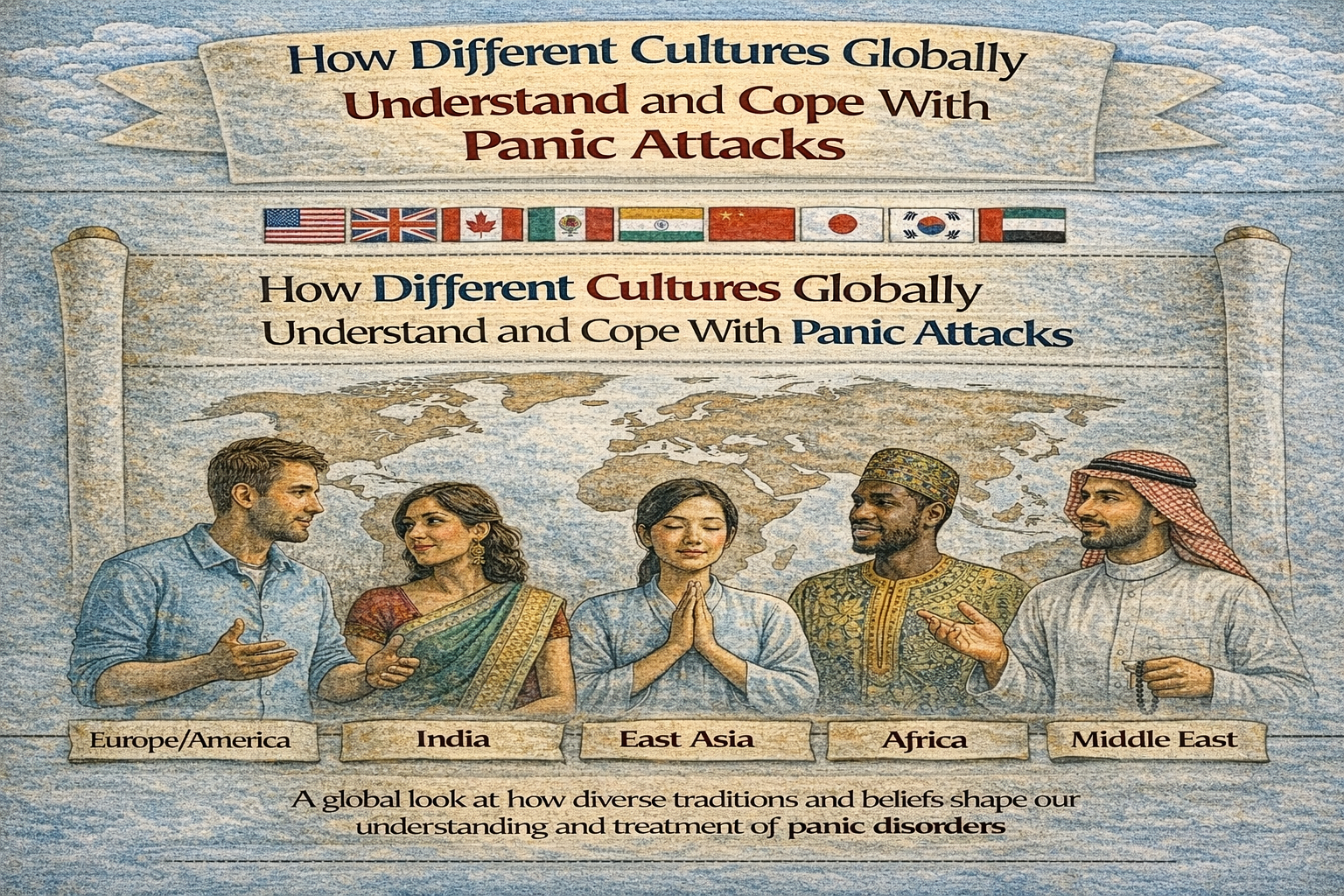
A sudden wave of terror hits—heart racing, dizziness, fear of losing control. In the U.S. this is often labeled a panic attack and in Puerto Rico it may be called ataque de nervios. Understand and Cope With Panic Attacks In parts of Asia it might manifest as intense dizziness tied to social harmony fears.
Many people feel isolated because Western explanations don’t fully match their lived or family experiences. You might wonder why your symptoms feel so different from what friends describe, or why certain family members respond in ways that seem unfamiliar.
This guide reveals how cultures understand panic attacks, shares traditional global coping approaches, and offers respectful insights without medical advice. Learning how cultures understand panic attacks can foster empathy and reduce stigma for millions worldwide.
Based on peer-reviewed research from NIH and PubMed sources, plus insights from cultural psychiatry experts.
For a broader foundation, see our guide on Signs of Mental Health Issues: The Ultimate Guide to Panic Attacks: Causes, Symptoms & How to Overcome Them for Good (2026)
Understanding Panic Attacks Across Global Cultures
Cultures understand panic attacks through unique lenses shaped by history, values, and social norms. These episodes appear across societies, yet their meaning and handling differ widely.
Panic attacks explained in simple, everyday terms
A panic attack is a sudden surge of intense fear or discomfort that peaks within minutes. Physical sensations—racing heart, shortness of breath, dizziness—feel overwhelming. The body reacts as if danger is present even when none exists. In many Western views, this ties to individual biology and stress. Other cultures frame it differently: as a signal of disrupted harmony, spiritual imbalance, or family strain.
How people cope with panic attacks in different cultures – first look
Some communities turn to family gatherings and shared stories. Others use breathing rituals, herbal teas, or quiet reflection in nature. These approaches emphasize connection over isolation.
Who experiences these episodes across societies
Anyone can. Rates vary, but episodes occur worldwide. Cultural background influences how people describe and respond to them.
Expert Insight: Culture shapes not just the expression but the very meaning of distress. — Cultural psychiatry researchers (supported by work from Harvard-affiliated experts).
AI Overview Snapshot: Cultures understand panic attacks as episodes of intense distress whose form and meaning shift by society. What feels like a medical event in one place may signal family or spiritual disruption in another. Recognizing these differences helps reduce isolation and builds more compassionate support systems.
For a broader foundation, see our guide on Signs of Mental Health Issues: Panic Attacks Medications: What Doctors Around the World Actually Prescribe in 2026
Why Cultural Perspectives on Panic Attacks Truly Matter
Understanding how cultures understand panic attacks helps break isolation and improves everyday interactions. It shifts the conversation from “What’s wrong with me?” to “How does my background shape this experience?”
Early cultural signs that deserve attention
- Sudden episodes tied to family arguments rather than random triggers
- Physical sensations described through local metaphors (heat rising, spirit leaving the body)
- Strong community responses instead of individual coping
Long-term impact of ignoring cultural context
Dismissing these differences can lead to misunderstanding in healthcare settings or strained family relationships. People may feel their experiences are invalidated, delaying support they need.
Who benefits most from global perspectives
- First-generation immigrants navigating dual worlds
- Multicultural families
- Anyone seeking deeper self-understanding
Research Shows: Clinical research consistently shows that symptom interpretation varies across groups (sources on PubMed and NIH confirm ethnic differences in how panic symptoms are experienced and reported).
Checklist-style infographic: 5 Reasons Culture Matters
Explore more in our article: Cultural Differences in Mental Health Experiences.
For a broader foundation, see our guide on Signs of Mental Health Issues: Panic Attacks in Women: The Hormonal Connection No One Is Talking About
Ataque de Nervios: How It Compares to Western Panic Attacks in Latin American Cultures
Ataque de nervios represents one of the most studied cultural expressions of distress among Latino communities, particularly Puerto Rican and Dominican groups.
Key differences and similarities
Both involve sudden intense physical sensations. Western panic attacks center on fear of dying or losing control. Ataque de nervios often follows a clear social stressor—like family conflict—and may include shouting, crying, or trembling without the same focus on impending doom. Some episodes overlap; others feel distinct.
Real-life triggers common in Latino communities
News of a loved one’s illness, arguments with family, or witnessing accidents frequently precede episodes. These events carry heavy emotional weight in collectivist cultures.
Cultural meaning and family response patterns
Family members often gather, offer physical comfort, and help the person regain calm. The episode may be seen as a normal release rather than a disorder.
Side-by-side comparison table visual
For more tailored insights, visit our Latinx Mental Health resources.
Important: These descriptions are general cultural observations. Individual experiences vary widely. Always speak with a healthcare professional about personal symptoms.
Traditional Views and Coping Strategies in Asian Cultures
Asian cultural frameworks often emphasize balance, social harmony, and mind-body connection when addressing episodes of intense distress.
Emphasis on balance, harmony, and social context
Symptoms may be linked to disrupted qi (energy flow) or loss of face in social situations. The focus stays on restoring equilibrium rather than labeling an internal “attack.”
Traditional practices like mindfulness and nature connection
Many communities use mindful breathing, walking in nature, or tai chi-inspired movements. These practices calm the body while honoring social relationships.
Modern adaptations in Asian diaspora communities
Younger generations blend traditional approaches with therapy or apps, creating hybrid strategies that respect heritage while addressing new stressors.
The Meaning of Sudden Distress in African and Indigenous Traditions
Many African and Indigenous traditions view sudden distress through spiritual or communal lenses.
Spiritual and communal interpretations
Episodes may signal ancestral messages, spirit imbalance, or the need for community healing rather than individual pathology.
Traditional healing rituals and community support
Elders or healers may lead prayers, herbal preparations, or group storytelling sessions. The person rarely faces the experience alone.
Modern challenges in urban diaspora settings
Access to traditional healers decreases, and Western systems may overlook cultural meaning, creating additional stress.
Expert Insight: Health experts emphasize that communal support often plays a central role in recovery across many non-Western traditions.
Why Panic Attacks Happen: Global Perspectives
Universal biology meets cultural meaning. The body’s fight-or-flight response operates similarly worldwide. Yet the triggers, interpretations, and outcomes differ based on what each society considers threatening or meaningful.
Stressors unique to collectivist vs individualist societies
Collectivist cultures may tie episodes more to family obligations or social harmony disruptions. Individualist settings often highlight personal achievement pressures or isolation.
Time-Tested Ways Cultures Worldwide Manage Sudden Distress
Traditional ways different cultures handle panic attacks highlight community wisdom that has sustained people for generations.
Step-by-step look at community-based responses worldwide
- Recognize the episode without panic.
- Gather trusted people for immediate presence.
- Use calming rituals—breathing, touch, or prayer.
- Follow up with storytelling or reflection once calm returns.
Best traditional coping strategies for panic attacks worldwide
- Shared breathing exercises
- Herbal teas used respectfully in context
- Grounding through nature or movement
- Family or elder guidance
Top cultural approaches to calming panic attacks
Approaches range from Japanese forest bathing principles to African drumming circles and Latin American supportive talking sessions. Each respects local values.
What Research Reveals About Cultural Differences in Panic Experiences
Research highlights meaningful variations in how panic-like experiences appear and are understood.
Key Clinical Studies
- Lewis-Fernández et al. (2002) examined comparative phenomenology of ataques de nervios, panic attacks, and panic disorder (published in Culture, Medicine & Psychiatry).
- Barrera et al. (2010) explored racial/ethnic differences in panic symptom experience (Journal of Anxiety Disorders).
- Hofmann & Hinton (2014) reviewed cross-cultural aspects of anxiety disorders (available via PMC/NIH).
Expert Opinions
Clinical researchers note that culture actively shapes how distress feels and is expressed.
Statistical Data
Studies from the Collaborative Psychiatric Epidemiology Studies (Asnaani et al., 2009) show lifetime panic attack and disorder rates vary across ethnic groups in the U.S., with some groups reporting different symptom patterns.
Research Shows: According to sources indexed on PubMed, cultural background influences both symptom reporting and help-seeking behavior.
Pitfalls to Avoid When Exploring Cultural Coping Strategies
Mistake #1 – Assuming one culture’s experience is universal
This overlooks valid differences and can create misunderstanding.
Mistake #2 – Cultural appropriation of rituals without context
Adopting practices without learning their deeper meaning disrespects origin communities.
Mistake #3 – Ignoring professional help when symptoms interfere with life
Cultural insights complement—not replace—professional care when needed.
Frequently Asked Questions About How Cultures Understand Panic Attacks
Why do panic attacks feel different across cultures?
Panic attacks feel different because cultural backgrounds shape how people interpret and describe bodily sensations. One person may focus on heart racing as danger; another may see it as disrupted harmony or spiritual signal. Supporting cultural example: In some Latin American communities, episodes often link directly to family stress rather than unexplained fear. Research on PubMed highlights these interpretive differences. If symptoms disrupt daily life, speaking with a healthcare provider helps clarify personal patterns.
Can cultural background change how panic attacks show up?
Yes, cultural background can influence both the triggers and expression of episodes. For instance, social harmony concerns in some Asian contexts may tie symptoms to interpersonal situations more than in individual-focused settings. This does not mean one is “better”—just different. Consult a professional familiar with cultural nuances for personalized understanding.
Does culture affect ways people cope with panic attacks?
Culture strongly affects coping. Some traditions emphasize community support and rituals; others prioritize individual techniques. These approaches have helped generations manage distress effectively within their contexts. Explore what resonates with your background while seeking professional guidance when needed.
What is ataque de nervios and how does it relate to panic attacks?
Ataque de nervios is a recognized cultural expression of distress common in many Latino communities. It shares some physical features with panic attacks but often follows clear social triggers and includes expressive elements like crying or shouting. Not all ataques meet panic criteria, and many people experience relief afterward. Sources like NIH-indexed studies clarify the overlap and distinctions.
Are there best books on cultural views of panic and anxiety 2026?
Insightful reads include Culture and Panic Disorder by Devon E. Hinton and Byron J. Good (Stanford University Press). Newer works on cross-cultural mental health continue to emerge. Choose books from reputable academic presses and pair them with professional discussion.
How do traditional ways different cultures handle panic attacks compare to modern approaches?
Traditional methods often center community and ritual for immediate calm. Modern approaches may add structured therapy or medication when appropriate. Many people benefit from respectful integration of both.
What are global perspectives on why panic attacks happen?
Global perspectives see a mix of universal biology and culture-specific meanings. Biology provides the bodily response; culture supplies the story and solution. This dual view encourages empathy across backgrounds.
Final Thoughts: Embracing Worldwide Wisdom on Panic Attacks
You now understand that episodes of intense distress carry different meanings around the world. Cultures understand panic attacks in ways that highlight connection, balance, and community far beyond individual biology alone.
This knowledge reduces self-blame and opens doors to more compassionate conversations—at home, with friends, or in healthcare settings