Imagine you’re in the middle of a busy day when suddenly your heart races, your chest tightens, and a wave of intense fear washes over you—seemingly out of nowhere. This is the reality of a panic attack, which strikes up to 11% of U.S. adults each year, often leaving them feeling overwhelmed and isolated.
These unexpected episodes can disrupt work, relationships, and daily routines, sometimes leading to avoidance behaviors or even agoraphobia. Without proper management, panic attacks may contribute to co-occurring issues like depression or substance use, making it harder to enjoy life fully. The good news is that effective panic attacks medications exist, tailored to individual needs.
For a broader foundation, see our guide on Signs of Mental Health Issues:The Ultimate Guide to Panic Attacks: Causes, Symptoms & How to Overcome Them for Good (2026)
What Are Panic Attacks and Panic Disorder?
Panic attacks are sudden surges of intense fear or discomfort that peak within minutes, often mimicking serious health issues like a heart attack. They can occur unexpectedly or in response to triggers, and when they happen repeatedly with ongoing worry about future attacks, it may indicate panic disorder—a treatable anxiety condition affecting about 2.7% of U.S. adults annually.
Understanding panic attacks medications starts with grasping the condition itself. Panic disorder isn’t just “nerves”; it’s a real medical issue rooted in brain chemistry and life experiences. Early recognition can lead to better outcomes, as untreated cases may worsen over time.
Symptoms of Panic Attacks
Symptoms often include a rapid heartbeat, sweating, and trembling, which can feel alarming and uncontrollable. You might also experience shortness of breath or chest pain, intensifying the fear.
Cognitive signs, such as fearing you’re dying or going crazy, add to the distress. These can make everyday situations feel threatening.
Attacks typically last 10-20 minutes, though the aftermath—like exhaustion or heightened anxiety—may linger longer. Recognizing these signs early can help you seek appropriate panic attacks medications or therapy.
Causes and Risk Factors
Genetic factors play a role, with imbalances in neurotransmitters like serotonin contributing to vulnerability. If a family member has anxiety disorders, your risk increases.
Stressors, including trauma, major life changes, or chronic stress, can trigger the first attack. Even positive events like a new job might spark one.
Co-existing conditions, such as generalized anxiety or depression, often overlap, complicating symptoms. Lifestyle factors like caffeine or lack of sleep may exacerbate risks.
Diagnosis Process
Diagnosis involves a clinical evaluation using DSM-5 criteria, focusing on recurrent attacks and persistent concern. Your doctor will assess frequency and impact on life.
They’ll rule out medical causes through physical exams, blood tests, or EKGs to ensure symptoms aren’t from thyroid issues or heart problems.
If confirmed, treatment planning begins, often incorporating panic attacks medications alongside therapy for comprehensive care.
For a broader foundation, see our guide on Signs of Mental Health Issues: When to Seek Professional Help for Panic Attacks
Why Treat Panic Attacks with Medications?
Treating panic attacks with medications can restore balance and reduce the grip of fear on your life. When symptoms interfere significantly, meds provide a bridge to stability, allowing you to engage in therapy or lifestyle changes more effectively.
Medications aren’t a cure-all but can lessen attack frequency and intensity, improving overall well-being. Doctors weigh benefits against risks, starting with evidence-based options.
Impact on Daily Life
Untreated attacks can disrupt work productivity and strain relationships, as you might avoid social gatherings or travel. This avoidance can lead to isolation.
Quality of life suffers, with potential development of agoraphobia—fear of places where escape feels difficult. Daily tasks become daunting.
Over time, chronic stress from attacks may contribute to physical health issues like high blood pressure.
Benefits of Medication
Medications reduce attack frequency and severity by targeting brain chemicals like serotonin. This creates a calmer baseline.
They help restore neurotransmitter balance, making it easier to manage triggers. Many people report feeling more in control.
Combined with therapy, meds enhance long-term resilience against anxiety.
Research Shows: A Cochrane review indicates SSRIs can reduce panic symptoms by over 50% in many patients.
When Medication is Necessary
Medication is key for moderate to severe cases where therapy alone doesn’t suffice. If attacks persist despite lifestyle adjustments, it’s time to discuss options.
Doctors consider it when symptoms impair functioning or co-occur with depression. Always consult a professional to determine if it’s right for you.
Common Panic Attacks Medications Prescribed by Doctors
Doctors often start with proven panic attacks medications that balance efficacy and safety. These target the brain’s fear response, helping prevent attacks.
Selections depend on your history, but common classes include antidepressants and short-term anxiolytics. Regular monitoring ensures optimal results.
Best Medications for Panic Attacks: SSRIs
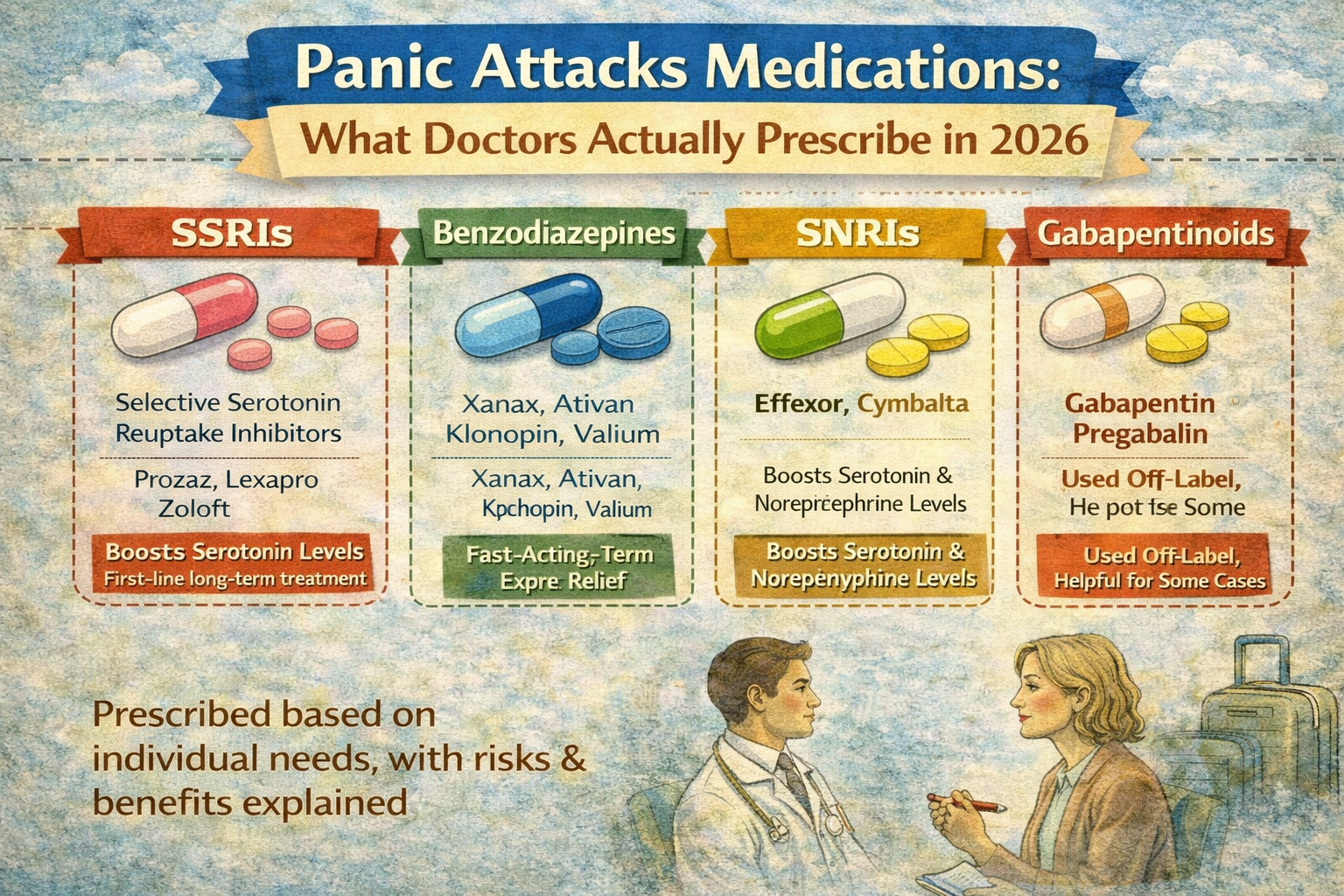
SSRIs like sertraline (Zoloft) and escitalopram (Lexapro) top the list for long-term management. They increase serotonin levels, stabilizing mood.
Studies show high remission rates with low severe side effects. They take 4-6 weeks to fully work but offer sustained relief.
Common choices include fluoxetine (Prozac) and paroxetine (Paxil), tailored to individual response.
Doctor Prescribed Panic Attack Meds: Benzodiazepines
Benzodiazepines such as alprazolam (Xanax) provide rapid relief during acute attacks. They’re fast-acting but used short-term due to dependence risk.
Clonazepam (Klonopin) is another option for bridging until antidepressants kick in. Doctors prescribe cautiously.
They’re effective for immediate symptom control but not ideal for ongoing use.
Common Drugs for Panic Disorders: SNRIs
SNRIs like venlafaxine (Effexor XR) boost serotonin and norepinephrine, addressing both anxiety and depression.
FDA-approved for panic, they suit those with mixed symptoms. Effects build over weeks.
Duloxetine (Cymbalta) is sometimes used, offering dual benefits.
Effective Meds for Anxiety Attacks: Other Options
Other meds include beta-blockers like propranolol for physical symptoms. Tricyclic antidepressants like imipramine are alternatives.
Buspirone provides non-sedating relief over time. Doctors choose based on your profile.
What New Panic Attack Treatments Are Available in 2026?
In 2026, innovation expands panic attacks medications, incorporating psychedelics and rapid-acting options. These build on traditional therapies for better outcomes.
Emerging treatments focus on neuroplasticity, offering faster relief for resistant cases. Always discuss with your doctor.
New Panic Attack Treatments 2026: Psychedelic-Based Therapies
MM120, an LSD-derived compound, shows promise in Phase 3 trials for anxiety reduction. It promotes brain rewiring in supervised sessions.
Psilocybin-assisted therapy targets deep-rooted fears, with studies indicating lasting benefits.
These are administered in clinical settings with therapy integration.
Expert Insight: “Psychedelics can reset anxiety patterns, but they’re not for everyone—professional guidance is essential,” notes a leading psychiatrist.
Medications for Panic in 2026: Esketamine and Others
Esketamine (Spravato) nasal spray provides rapid relief for severe symptoms, often within hours.
Fasedienol, a nasal spray for acute anxiety, activates calming pathways without sedation.
RE104 targets mood disorders, showing potential for panic.
Current Treatments for Panic Attacks: Emerging Trends
Trends include combining meds with exercise or somatic therapies for holistic care.
Brief intensive exercise acts as exposure, reducing sensitivity to physical sensations.
Integration with CBT enhances efficacy.
How Do Doctors Choose the Best Prescription for Panic Attacks?
Doctors personalize panic attacks medications based on your symptoms, history, and preferences. They start conservatively, monitoring response.
Factors like age, co-conditions, and lifestyle guide choices. Collaboration ensures the best fit.
Factors in Choosing Prescription Medications for Panic
Severity and frequency influence selection—mild cases may start with therapy, severe with meds.
Patient history, including past responses or addictions, matters. Pregnancy or breastfeeding alters options.
Side effect profiles are weighed against benefits.
Step-by-Step Process for Prescribed Drugs for Panic Disorder
First, diagnosis confirms the need. Then, SSRIs are often trialed for 4-6 weeks.
Adjustments follow based on efficacy. Benzodiazepines bridge if needed.
Regular follow-ups track progress.
What Doctors Prescribe for Panic: Personalized Approaches
Approaches consider genetics or biomarkers in 2026. Therapy integration is key.
Shared decision-making empowers you.
Over-the-Counter and Natural Alternatives to Panic Attacks Medications
While not replacements, OTC options can support panic management. They complement professional care.
Consult your doctor before starting, as interactions occur.
Over the Counter Panic Meds: Safe Options
Beta-blockers like propranolol (prescription but sometimes discussed OTC) control physical symptoms.
Herbal supplements like kava may calm, but evidence varies.
Magnesium supplements aid relaxation.
Panic Attack Relief Medications: Non-Prescription Strategies
Lifestyle changes, including mindfulness apps, reduce triggers.
Supplements like L-theanine promote calm without drowsiness.
Omega-3s support brain health.
Safe Medications for Panic Attacks: When to Use Alternatives
Use as adjuncts when symptoms are mild. They’re not for severe cases.
Monitor effects and report to your doctor.
Important: Natural doesn’t mean risk-free—kava can cause liver issues; always check interactions.
Side Effects and Risks of Panic Attacks Medications
All panic attacks medications carry potential side effects, but most are manageable. Awareness helps you prepare.
Doctors monitor closely, adjusting as needed. Report concerns promptly.
Common Side Effects of Doctor Recommended Panic Drugs
SSRIs may cause nausea, insomnia, or sexual dysfunction initially. These often fade.
Benzodiazepines lead to drowsiness or memory issues.
SNRIs can increase blood pressure.
Managing Risks with Best Prescription for Panic Attacks
Start low doses to minimize issues. Lifestyle tweaks like diet help.
Regular check-ins catch problems early.
Long-Term Considerations for Medications for Panic in 2026
Dependence risks with benzodiazepines require tapering. SSRIs are safer long-term.
Newer options like psychedelics focus on single doses for sustained effects.
Best Practices and Expert Tips for Using Panic Attacks Medications
Maximize benefits by following best practices. Consistency is key.
Combine with non-med approaches for optimal results.
Expert Tips on Effective Meds for Anxiety Attacks
Adhere to prescribed dosages; track progress in a journal.
Avoid alcohol, which interacts negatively.
Monitor for improvements after 4-6 weeks.
Combining with Therapy for Panic Attack Relief Medications
CBT teaches coping skills, enhancing med effects. Studies show better outcomes.
Exposure therapy builds resilience.
Lifestyle Adjustments with Prescribed Drugs for Panic Disorder
Prioritize sleep hygiene and exercise. Balanced diet supports serotonin.
Stress management like yoga complements.
Pro Tip: Pair meds with a daily 30-minute walk—research links exercise to 40% symptom reduction.
Scientific Evidence & Research
Evidence supports panic attacks medications, with ongoing studies refining options.
Clinical data guides prescriptions for safety and efficacy.
Clinical Studies
Network meta-analyses reveal SSRIs like sertraline and escitalopram achieve high remission with minimal adverse events.
Trials on psychedelics like MM120 show rapid anxiety cuts.
Expert Opinions
Mayo Clinic endorses SSRIs as first-line, benzodiazepines short-term.
Statistical Data
Over 50% symptom reduction with SSRIs per Cochrane reviews. Lifetime prevalence is 4.7% in U.S. adults.
Common Mistakes to Avoid
Avoiding pitfalls ensures safer treatment. Knowledge prevents complications.
Mistake #1: Self-Medicating with Panic Attacks Medications
This risks dependency or harmful interactions. Symptoms may worsen.
Better: Seek doctor-guided prescriptions.
Mistake #2: Abruptly Stopping Doctor Prescribed Panic Attack Meds
Withdrawal can trigger relapse or severe symptoms.
Better: Taper gradually under supervision.
Mistake #3: Ignoring Therapy Alongside Common Drugs for Panic Disorders
Meds alone miss root causes.
Frequently Asked Questions (FAQs)
What Are the Best Medications for Panic Attacks?
SSRIs like sertraline (Zoloft) and escitalopram (Lexapro) are top choices, offering high remission rates with low side effects. They balance brain chemicals to reduce attack frequency.
These take time to work but provide long-term stability. Consult your doctor for personalization.
What Doctor Prescribed Panic Attack Meds Are Common?
Benzodiazepines such as alprazolam (Xanax) for quick relief, but SSRIs and SNRIs like venlafaxine (Effexor) for long-term management.
They’re chosen based on needs. Short-term use minimizes risks.
Are There New Panic Attack Treatments in 2026?
Yes, psychedelic-based like MM120 (LSD formulation) show promise in trials for rapid anxiety reduction.
Esketamine offers fast relief. These are emerging with strong evidence.
What Are Safe Medications for Panic Attacks?
FDA-approved SSRIs and SNRIs are generally safe; monitor for side effects like nausea or insomnia.
They’re low-risk for most. Doctor oversight ensures safety.
Can Over the Counter Panic Meds Help?
Beta-blockers like propranolol manage symptoms but aren’t substitutes for prescriptions; consult a doctor.
Supplements like magnesium aid mildly. Use cautiously.
What Is the Best Prescription for Panic Attacks?
Escitalopram or sertraline, based on meta-analyses showing optimal benefit-risk balance.
Individual factors guide choice. Effectiveness varies.
How Effective Are Medications for Panic in 2026?
Studies show over 50% symptom reduction; new options like esketamine enhance rapid relief.
Combined with therapy, up to 80% improve significantly.
Conclusion
Panic attacks medications in 2026 deliver powerful relief through SSRIs, SNRIs, and cutting-edge therapies like psychedelics, slashing symptoms and boosting quality of life. You now have tools to discuss options confidently, knowing doctors tailor evidence-based choices for safe, enduring management.
Take that vital step: Schedule a consultation with a healthcare provider to explore your symptoms and craft a plan.
Medical Disclaimer:
This article is for informational purposes only and not a substitute for professional medical advice. Always consult a qualified healthcare provider for diagnosis and treatment.
If you’re experiencing a mental health crisis, please call the 988 Suicide & Crisis Lifeline or visit your nearest emergency room. For non-emergency support, contact the Substance Abuse and Mental Health Services Administration (SAMHSA) National Helpline at 1-800-662-4357.
The content in this article is based on current research and expert consensus as of 2026, but medical knowledge evolves. Always verify information with your healthcare provider.