Imagine you’re in the middle of a routine day when suddenly your heart races, your chest tightens, and an overwhelming fear washes over you—like you’re facing imminent danger, even though everything seems fine. This is the reality of a panic attack, and it’s more common than you might think: Up to 11% of Americans experience at least one each year, according to the Cleveland Clinic. Yet many endure these episodes in silence, unsure if they’re serious or how to manage them.
Frequent or severe panic attacks can disrupt your work, relationships, and overall well-being, leading to avoidance behaviors and heightened anxiety that compounds over time. Without professional help for panic attacks, what starts as isolated incidents may evolve into panic disorder, affecting daily life and mental health. It’s a challenge many face, but the good news is that effective strategies exist to regain control.
For a broader foundation, see our guide on Signs of Mental Health Issues: The Ultimate Guide to Panic Attacks: Causes, Symptoms & How to Overcome Them for Good (2026)
What Are Panic Attacks?
Panic attacks are sudden, intense surges of fear or discomfort that peak within minutes, often without an obvious trigger. They can feel overwhelming, mimicking serious health issues like a heart attack, which is why understanding them is crucial for knowing when to seek professional help for panic attacks. These episodes involve the body’s fight-or-flight response activating inappropriately, flooding you with adrenaline. While anyone can experience a one-off attack due to stress, recurring ones may signal panic disorder—a condition where fear of future attacks dominates your thoughts.
Recognizing this distinction matters because occasional attacks might resolve with self-care, but persistent ones often require intervention. Research from the NIMH emphasizes that early awareness can prevent escalation, improving quality of life.
Symptoms Requiring Help for Panic Attacks
Symptoms of a panic attack can be both physical and emotional, striking suddenly and intensely. Common physical signs include a rapid heartbeat, sweating, trembling, shortness of breath, chest pain, nausea, or dizziness. Emotionally, you might feel a sense of doom, fear of dying, or detachment from reality.
These sensations can be terrifying, leading many to rush to the emergency room. If they recur frequently, it’s a key indicator to pursue professional help for panic attacks. According to Mayo Clinic guidelines, symptoms that disrupt sleep or daily routines warrant evaluation.
How to Know if Panic Attacks Are Serious
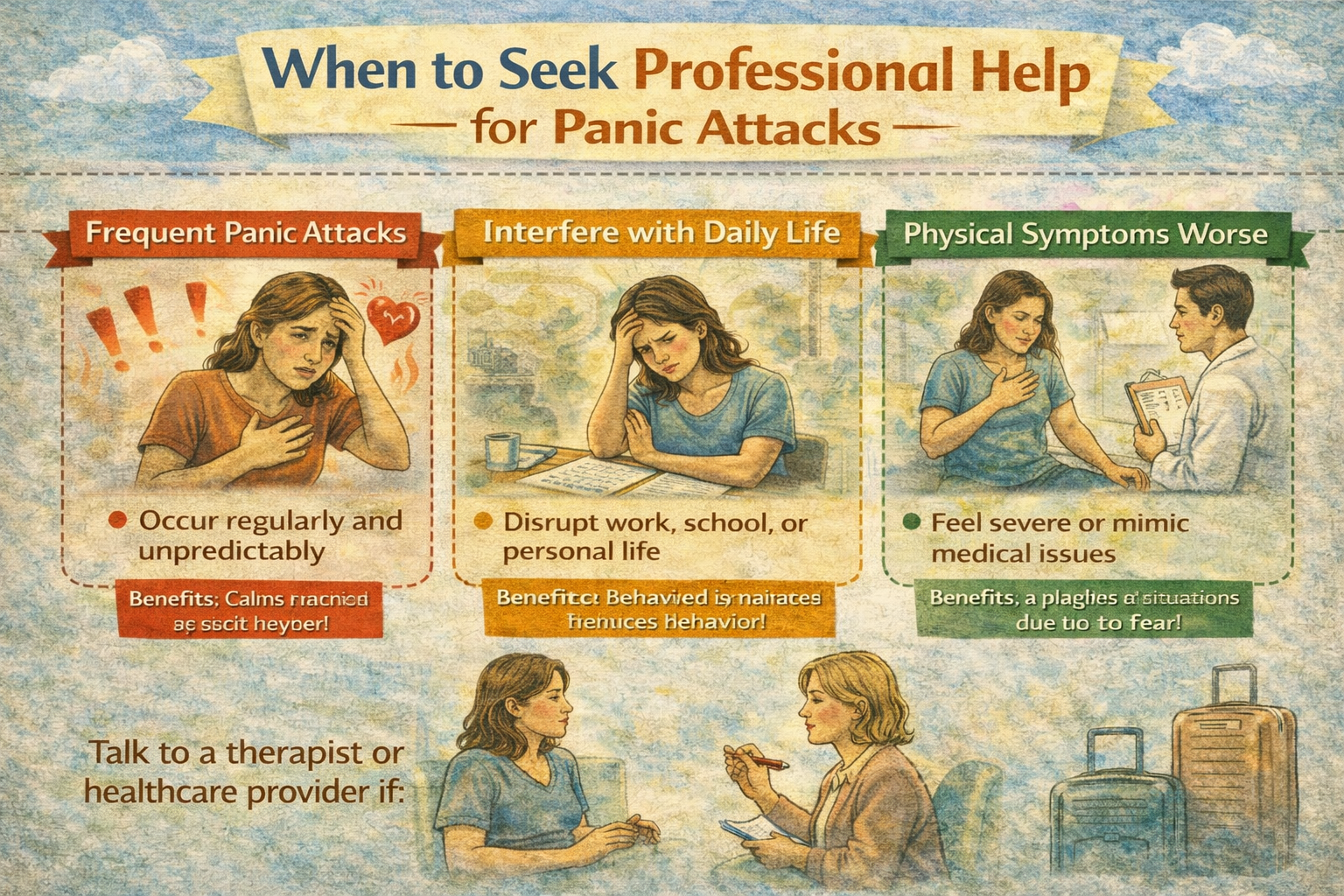
Not every panic attack means you have panic disorder. Occasional ones might stem from stress, caffeine, or medical issues like thyroid problems. However, panic disorder involves repeated, unexpected attacks plus ongoing worry about more occurring, often for at least a month.
The impact on daily functioning is a red flag: If attacks lead to avoiding places or activities, they’re serious. Studies show this avoidance can worsen isolation and depression, highlighting the need for professional assessment.
Serious Panic Attack Signs to Watch For
Watch for frequency—more than once a month suggests a pattern. Associated conditions like agoraphobia, where you fear public spaces due to attack worries, amplify the issue. Other signs include attacks lasting over 15 minutes or co-occurring with depression.
If these persist, professional help for panic attacks becomes essential. The NIMH notes that untreated cases increase suicide risk, underscoring timely intervention.
Research Shows: A NIMH report indicates that 2.7% of U.S. adults experience panic disorder annually, with women twice as likely as men.
For a broader foundation, see our guide on Signs of Mental Health Issues: 10 Proven Self-Help Strategies for Panic Attacks Recommended by Real Therapists
Why Seek Professional Help for Panic Attacks?
Seeking professional help for panic attacks isn’t just about symptom relief—it’s about reclaiming your life from fear’s grip. Many hesitate, thinking they should handle it alone, but evidence shows early intervention prevents long-term complications. This section explores the benefits, from halting escalation to building resilience, helping you understand why timely support matters.
Without help, attacks can intensify, affecting everything from job performance to personal relationships. However, with guidance, most people achieve significant improvement, as supported by clinical data.
Indicators for Seeking Help with Panic Attacks
Professional intervention prevents panic from becoming chronic. It addresses root causes, reducing the likelihood of developing related issues like generalized anxiety.
Moreover, it enhances overall mental and physical health by teaching coping skills that lower stress hormones. Research suggests this holistic approach leads to better outcomes.
When Panic Attacks Need Medical Attention
Attacks can mimic heart issues, raising risks of complications like depression or substance misuse if ignored. Professional help reduces these by providing tools for management.
It also builds long-term resilience, empowering you to face triggers confidently. Guidelines from the American Psychological Association (APA) recommend seeking care when interference is evident.
Benefits of Professional Treatment for Panic Attacks
Evidence-based therapies like cognitive behavioral therapy (CBT) achieve remission in up to 70-90% of cases, per meta-analyses. Personalized plans ensure sustained recovery, tailoring strategies to your needs.
Expert Insight: “Panic isn’t a sign of weakness—it’s a treatable condition,” notes a clinical psychologist from the APA. “Professional support reframes fear as manageable.”
Signs You Need Professional Help for Panic Attacks
You might wonder if your experiences cross the line from manageable anxiety to needing expert input. Signs you need professional help for panic attacks often involve patterns that disrupt your routine, creating a cycle of fear and avoidance. Recognizing these early can make a big difference, as untreated panic may lead to broader mental health challenges.
This section breaks down key indicators, helping you assess your situation empathetically. Remember, seeking help is a strength, not a failure.
When to Seek Help for Panic Attacks
If attacks interfere with work, relationships, or daily activities—like skipping social events or struggling to focus—it’s time for support. Increasing frequency or intensity signals escalation.
These disruptions can erode confidence, but professional help for panic attacks offers strategies to break the cycle.
When Is a Panic Attack an Emergency?
Symptoms mimicking a heart attack, such as severe chest pain or shortness of breath, require immediate medical attention—call 911. Suicidal thoughts or severe dissociation also demand urgent care.
In non-emergencies, ongoing patterns still merit professional evaluation to prevent worsening.
Symptoms Requiring Help for Panic Attacks
Persistent worry about future attacks or avoidance behaviors limiting life— like fearing driving—are strong signs. These can lead to isolation.
Professional help addresses these, fostering recovery. Many find relief through platforms like BetterHelp, which connects you with licensed therapists specializing in anxiety.
Important: Never ignore chest pain during an attack; it could indicate a medical issue. Always rule out physical causes with a doctor first.
When to Get Therapy for Panic Attacks
Deciding when to get therapy for panic attacks involves self-reflection: Are self-help efforts falling short? Therapy provides structured guidance, especially if attacks persist despite lifestyle changes. It’s a proactive step toward understanding triggers and building tools for lasting calm.
Starting therapy early can shorten recovery time, with many seeing improvements in weeks.
How to Know if Panic Attacks Are Serious
Assess frequency and triggers by noting patterns—what precedes an attack? Track symptoms in a journal to spot trends.
If attacks happen unpredictably or intensify, they’re likely serious, per Cleveland Clinic advice.
When to See a Psychiatrist for Panic Attacks
Consider a psychiatrist if self-management fails after 4-6 weeks or if co-occurring conditions like depression exist. They can evaluate for medication alongside therapy.
This dual approach often yields better results for complex cases.
Indicators for Seeking Help with Panic Attacks
Impact on physical health, such as sleep disruption or chronic fatigue, is a cue. A family history of mental health issues raises risk, suggesting genetic factors.
Pro Tip: Use a simple app to log attacks; patterns often reveal hidden stressors like low blood sugar, guiding more effective therapy discussions.
How to Get Professional Help for Panic Attacks
Getting professional help for panic attacks starts with reaching out, but knowing where to begin eases the process. This step-by-step guide demystifies finding support, from initial searches to your first session. With the right provider, you’ll gain insights and strategies tailored to you.
Many overcome barriers like stigma by starting online or through referrals.
Finding a Therapist for Panic Attacks
Search directories like Psychology Today or the APA locator for specialists in anxiety. Check insurance coverage and credentials—look for licensed psychologists or counselors experienced in CBT.
Read reviews and verify telehealth options for convenience.
How to Get Professional Help for Panic Attacks
Schedule an initial consultation via phone or online. Prepare by noting your symptoms and history.
This sets the foundation for effective treatment.
First Steps in Seeking Professional Help
Discuss symptoms openly during your session—honesty aids accurate diagnosis. Set treatment goals, like reducing attack frequency.
Follow-up consistently builds progress.
Options for Panic Attack Treatment
Treatment options for panic attacks range from therapy to medication, often combined for optimal results. Understanding these helps you collaborate with providers on a plan that fits your lifestyle. Evidence supports their efficacy, with many achieving symptom reduction.
A comparison table below outlines key choices.
| Treatment Type | Description | Pros | Cons |
| CBT | Focuses on changing thought patterns and exposure to fears. | High success rate (70-90%); long-lasting. | Requires commitment; sessions needed. |
| Medication | SSRIs or SNRIs to balance brain chemicals. | Quick relief; effective for severe cases. | Potential side effects; not curative alone. |
| Combination | Therapy plus meds. | Comprehensive; faster initial improvement. | Monitoring needed; higher cost. |
| Alternatives | Mindfulness or exercise. | Low-cost; supportive. | Less effective standalone for severe panic. |
Professional Treatment for Panic Attacks
CBT shows proven efficacy with large effect sizes in meta-analyses. Medications like SSRIs (e.g., sertraline) or SNRIs (e.g., venlafaxine) reduce symptoms effectively, per Cochrane reviews.
Choose based on severity—start with therapy for mild cases.
How to Manage Panic Attacks Professionally
Combination therapy excels for acute phases, blending CBT with meds. Alternatives like exercise or mindfulness complement, reducing symptoms by 30-40% in studies.
Always consult professionals for integration.
When Panic Attacks Need Medical Attention
Distinguish emergencies (e.g., severe pain) from ongoing care. Medical attention ensures no underlying issues.
Scientific Evidence & Research
Research on panic attacks and disorder underscores the value of professional help, with studies showing high treatability. From clinical trials to expert views, evidence supports therapies and meds. This section highlights key findings, emphasizing data-driven approaches.
NIMH and Mayo Clinic provide foundational insights.
Clinical Studies
A meta-analysis in JAMA Psychiatry found CBT reduces panic symptoms with large effect sizes. Pharmacotherapy via SSRIs and SNRIs effectively curbs attacks, per Cochrane reviews.
The Bergen 4-day intensive CBT program achieved 90% remission at follow-up, demonstrating concentrated therapy’s power.
Expert Opinions
NIMH advises seeking help when anxiety disrupts life. APA experts like Martin Antony, PhD, note CBT teaches symptoms aren’t dangerous.
UCLA Health recommends combining medication and talk therapy for comprehensive care.
Statistical Data
NIMH data: 2.7% of U.S. adults had panic disorder last year; lifetime prevalence is 4.7%. Women are twice as likely (3.8% vs. 1.6%).
Cleveland Clinic reports 11% experience a panic attack yearly.
External link to NIMH Panic Disorder page
External link to Mayo Clinic Panic Attacks page
External link to Cleveland Clinic Panic Disorder page
Common Mistakes to Avoid
Managing panic attacks effectively means sidestepping pitfalls that can worsen symptoms. Common mistakes stem from instinctive reactions, but awareness helps you choose better paths. This section outlines three key errors, with explanations and alternatives.
Mistake #1: Ignoring Early Signs
Why it’s problematic: Dismissing initial symptoms allows the disorder to worsen, potentially leading to agoraphobia or isolation.
Better approach: Monitor symptoms via journaling and seek help promptly if patterns emerge. Early therapy prevents escalation.
Mistake #2: Relying Solely on Self-Help
Why it’s problematic: It misses professional diagnosis and tailored plans, delaying effective treatment.
Better approach: Combine self-help like breathing exercises with therapy for evidence-based results. Professionals provide accountability.
Mistake #3: Stopping Treatment Too Soon
Why it’s problematic: Halts progress, increasing relapse risk as skills aren’t fully internalized.
Research Shows: A study in Behavior Research and Therapy found avoiding triggers increases anxiety sensitivity by up to 400% in panic sufferers.
Frequently Asked Questions (FAQs)
When to Seek Help for Panic Attacks?
Seek professional help if panic attacks are frequent, intense, or disruptive to daily life. This includes interference with work, relationships, or routines, as early intervention can prevent worsening.
Track patterns; if attacks occur unexpectedly and cause ongoing fear, consult a therapist or doctor. Research suggests timely care leads to better outcomes, with many achieving remission through CBT.
Signs You Need Professional Help for Panic Attacks?
You need help if there’s persistent fear of attacks, avoidance behaviors, or symptoms like chest pain persisting. Attacks more than monthly often indicate panic disorder.
Professional diagnosis rules out medical causes and provides tailored strategies. According to NIMH, these signs affect 2.7% of adults annually, but treatment is highly effective.
How to Know if Panic Attacks Are Serious?
Panic attacks are serious if they mimic heart issues, lead to isolation, or impact daily functioning. Track frequency—if they’re unpredictable and debilitating, seek evaluation.
Therapy like CBT can reduce severity, with studies showing 70% improvement. Always consult a provider to differentiate from other conditions.
When to Get Therapy for Panic Attacks?
Get therapy if self-coping fails after a few weeks or if attacks intensify. Options include CBT or medication for personalized support.
Find specialists via directories like Psychology Today. Evidence indicates therapy prevents chronic issues, enhancing long-term resilience.
When Is a Panic Attack an Emergency?
A panic attack is an emergency if it includes severe chest pain, breathing difficulties, or suicidal thoughts—call 911 immediately. Otherwise, seek ongoing help for management.
Differentiating ensures safety; emergencies rule out heart conditions, while routine care addresses underlying anxiety.
How to Get Professional Help for Panic Attacks?
Contact your primary care doctor for referrals or use online platforms to find anxiety specialists. Initial sessions assess symptoms and create plans.
Be open about experiences for accurate support. Resources like the APA locator simplify the process.
Options for Panic Attack Treatment?
Treatments include CBT for thought restructuring, SSRIs for symptom reduction, or combined approaches. Exercise and mindfulness aid as adjuncts.
Consult experts for tailored plans; meta-analyses confirm CBT’s large effect sizes in reducing attacks.
Conclusion
Professional help for panic attacks offers more than relief—it empowers lasting recovery, symptom reduction, and a return to normalcy, with research showing up to 90% of people achieving remission through evidence-based approaches. By addressing signs early, you transform overwhelming fear into manageable moments, regaining freedom in daily activities and relationships. Timely intervention not only halts escalation but also builds resilience, allowing you to face life’s uncertainties with confidence.
Take that first step: Schedule a consultation with a mental health professional today. Whether through your doctor, directories like Psychology Today, or platforms offering therapy, support is accessible.
Reach out to a therapist or hotline for immediate guidance—options like the 988 Lifeline provide free, confidential help. Remember, seeking professional help for panic attacks is a courageous choice. You’re not alone; effective, compassionate care is available, and brighter days await.
Medical Disclaimer:
This article is for informational purposes only and is not a substitute for professional medical advice, diagnosis, or treatment. Always seek the advice of your physician or other qualified health provider with any questions you may have regarding a medical condition. If you’re experiencing a mental health crisis, please call the 988 Suicide & Crisis Lifeline or visit your nearest emergency room. For non-emergency support, contact the Substance Abuse and Mental Health Services Administration (SAMHSA) National Helpline at 1-800-662-4357. The content in this article is based on current research and expert consensus as of 2026, but medical knowledge evolves. Always verify information with your healthcare provider.