Did you know that 2.7% of U.S. adults experience panic disorder each year, with women twice as likely as men? Imagine your heart racing, breath shortening, and a wave of fear crashing over you without warning.
Panic attacks strike suddenly, causing intense physical and emotional distress, leading to avoidance behaviors and reduced quality of life for millions in the USA. These episodes can feel overwhelming, making everyday activities like work or social gatherings seem impossible, and often leaving individuals feeling isolated and exhausted.
In this guide, you’ll learn 10 proven self-help strategies for panic attacks, backed by therapists, to help you regain control, reduce frequency, and build resilience. We’ll cover practical techniques you can use at home, from breathing exercises to cognitive reframing, all designed to empower you in managing symptoms effectively.
For a broader foundation, see our guide on Signs of Mental Health Issues: The Ultimate Guide to Panic Attacks: Causes, Symptoms & How to Overcome Them for Good (2026)
What Are Panic Attacks?
Panic attacks are sudden episodes of intense fear or anxiety that trigger severe physical reactions when there’s no real danger or apparent cause. Understanding strategies for panic attacks starts with recognizing what they are: not just emotional distress but a full-body response that can mimic serious health issues. Research suggests these attacks often stem from the body’s fight-or-flight system going into overdrive.
Symptoms of Panic Attacks
Symptoms hit hard and fast, usually peaking within minutes. You might experience sudden intense fear or discomfort, feeling like you’re losing control. Physical signs include rapid heartbeat, sweating, trembling, and shortness of breath, which can make you think something is terribly wrong.
Emotionally, fear of dying, losing control, or detachment from reality—known as derealization—can dominate. These symptoms vary but often leave you drained afterward. Remember, while scary, they’re not life-threatening.
Causes and Triggers of Panic Attacks
Genetic factors play a role, as do major life stresses or changes in brain function involving neurotransmitters like serotonin. If you have a family history of anxiety, you may be more susceptible.
Common triggers include caffeine overload, lack of sleep, or specific situations like crowded spaces. Identifying your personal triggers is key to developing effective strategies for panic attacks. Sometimes, they occur without obvious cause, adding to the frustration.
Panic Attacks vs. Panic Disorder
A single panic attack doesn’t mean you have panic disorder; it’s isolated versus recurrent attacks with ongoing fear of more. Panic disorder involves repeated episodes and persistent worry, often leading to avoidance of places or activities where attacks have happened.
This can significantly impact daily life, from work performance to relationships. If attacks recur, professional evaluation is crucial to distinguish from other conditions.
Research Shows:
A National Institute of Mental Health study indicates that 4.7% of U.S. adults experience panic disorder in their lifetime, highlighting the need for accessible management tools.
For a broader foundation, see our guide on Signs of Mental Health Issues: Best Panic Attacks Treatment Options in 2026: Evidence-Based Options That Actually Work
Why Self-Help Strategies Matter for Panic Attacks
Self-help strategies for panic attacks are more than quick fixes; they’re tools that empower you to take charge of your mental health. In a world where professional help might not be immediately available, these techniques bridge the gap, offering immediate relief and long-term benefits. Experts agree that incorporating them can transform how you respond to anxiety.
Benefits of Self-Help Techniques for Panic Attacks
These methods empower individuals to manage symptoms independently, fostering a sense of control that reduces overall anxiety. Over time, consistent use can decrease attack frequency and intensity, allowing you to live more freely.
Many find that self-help builds confidence, turning reactive fear into proactive management. Research supports that these approaches can be as effective as therapy for mild cases.
How Self-Help Complements Professional Treatment
Self-help acts as a bridge between therapy sessions, reinforcing learned skills and maintaining progress. It helps you apply therapist-recommended techniques in real-time, making professional treatment more effective.
For instance, practicing breathing during calm moments prepares you for crises. This combination often leads to better outcomes, as self-help sustains momentum.
Importance for Long-Term Mental Health
Preventing escalation to chronic anxiety is crucial; self-help strategies for panic attacks promote resilience and overall well-being. They improve quality of life by reducing avoidance behaviors and enhancing daily functioning.
Long-term, they contribute to better sleep, relationships, and productivity. Integrating them into your routine can lead to lasting mental health improvements.
Expert Insight:
As a clinical psychologist might note, “Self-help isn’t about going it alone; it’s about building a toolkit that supports professional care and daily resilience.”
How to Recognize Panic Attack Symptoms
Recognizing symptoms early is a vital step in employing strategies for panic attacks effectively. When you know what’s happening, you can respond calmly rather than escalate the fear. This awareness turns a frightening experience into a manageable one.
Common Physical Symptoms
Heart palpitations, chest pain, and dizziness are hallmarks, often mimicking a heart attack. You might also feel nausea, chills, or hot flashes, adding to the distress.
These sensations peak quickly but subside. Tracking them helps you prepare.
Emotional and Cognitive Signs
A sense of doom or derealization—feeling detached from your surroundings—can occur. Fear of going crazy or dying intensifies the episode.
These cognitive distortions fuel the cycle, but recognizing them allows intervention.
Differentiating from Other Conditions
Rule out heart issues or asthma by noting patterns; panic symptoms resolve faster. If chest pain persists or worsens, seek immediate medical help.
Important:
If symptoms include severe chest pain or difficulty breathing, call 911 immediately, as they could indicate a medical emergency.
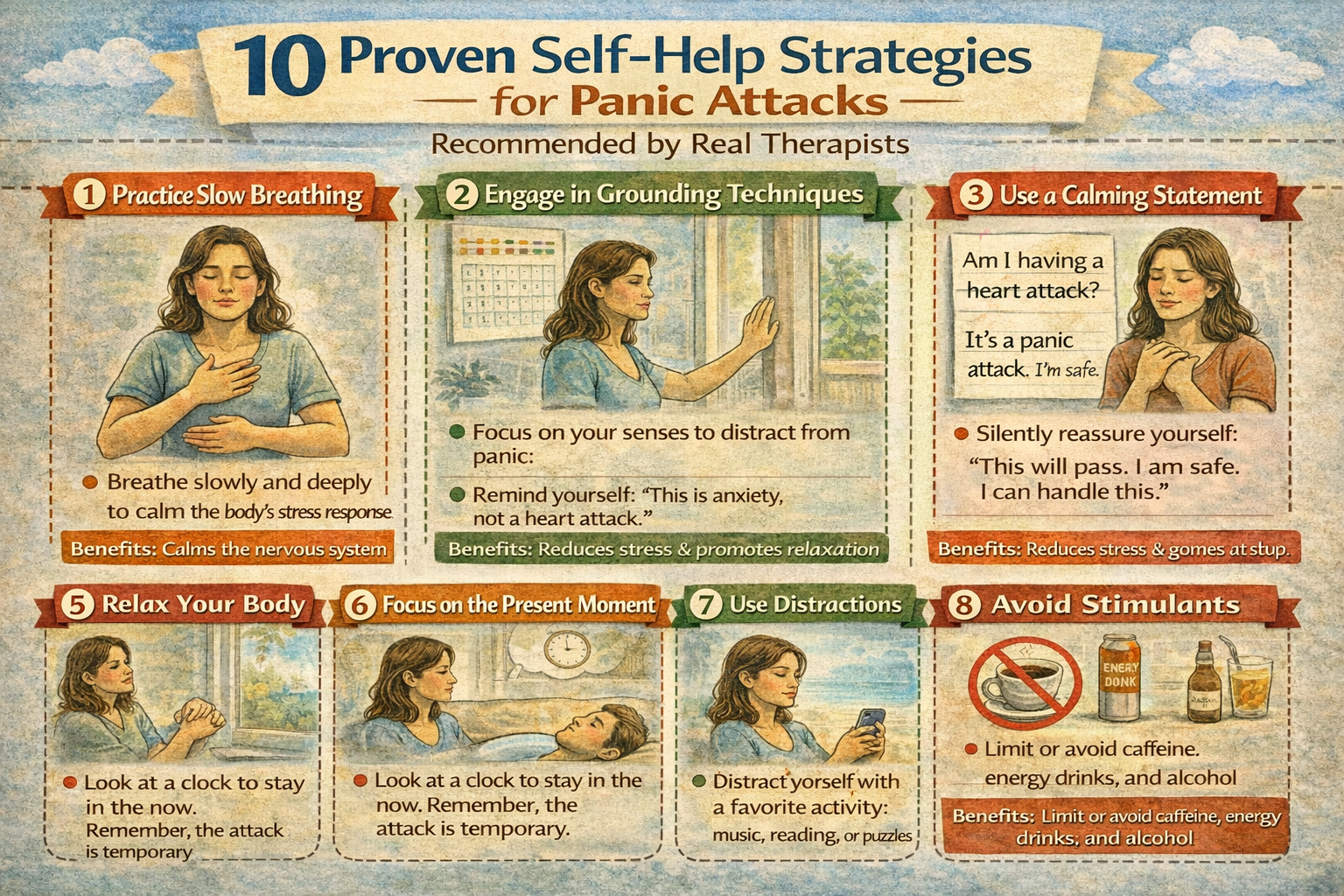
10 Proven Self-Help Strategies for Panic Attacks Recommended by Therapists
Therapists often recommend these strategies for panic attacks as first-line tools for self-management. Backed by clinical evidence, they range from immediate interventions to preventive measures. Start with one or two that resonate, and build from there for best results.
1. Breathing Exercises for Panic Attacks
Breathing exercises are a cornerstone of strategies for panic attacks, helping regulate your autonomic nervous system. The 4-7-8 technique, developed by Dr. Andrew Weil, is particularly effective.
To practice: Inhale quietly through your nose for 4 seconds, hold for 7 seconds, then exhale through your mouth for 8 seconds. Repeat 4 times.
Do this daily to build habit; during an attack, it slows heart rate and calms the mind. Studies show deep breathing reduces symptoms in minutes.
2. Grounding Techniques for Panic Attacks
Grounding brings you back to the present, disrupting the anxiety spiral. The 5-4-3-2-1 method is simple and therapist-approved.
Name 5 things you see, 4 you can touch, 3 you hear, 2 you smell, and 1 you taste. This shifts focus from internal fear to external reality.
Practice in calm times for mastery. It’s especially useful in public settings where discretion is needed.
3. Progressive Muscle Relaxation
This technique reduces physical tension that amplifies panic. Start from your toes and work up, tensing each muscle group for 5 seconds, then releasing.
For example, clench your fists tightly, hold, then let go, noticing the relaxation. Do this sequentially for the whole body.
Regular sessions can lower baseline anxiety. Therapists recommend it before bed to improve sleep, a common panic trigger.
4. Mindfulness Techniques for Panic Attacks
Mindfulness encourages observing thoughts without judgment, a key strategy for panic attacks. Try guided meditation or body scans via apps.
Sit comfortably, focus on your breath, and gently redirect wandering thoughts. Apps like Calm offer panic-specific sessions.
Research indicates mindfulness reduces attack frequency by 30-40%. It’s a long-term tool for rewiring anxious patterns.
5. CBT Strategies for Panic Attacks
Cognitive Behavioral Therapy (CBT) strategies challenge distorted thoughts. Identify catastrophic thinking, like “I’m having a heart attack,” and replace with “This is panic; it will pass.”
Use coping statements: “This is temporary and uncomfortable, but not dangerous.” Journal thoughts to track patterns.
Clinical studies show CBT-based self-help reduces severity in 70-90% of cases.
6. Exposure to Feared Sensations
Gradual exposure builds tolerance to panic sensations. In a safe space, induce mild symptoms—like spinning in a chair for dizziness—then use coping tools.
Start small, perhaps hyperventilating briefly through a straw. Over time, this desensitizes you.
Therapists emphasize safety; combine with professional guidance for best results.
7. Positive Affirmations and Coping Statements
Repeat affirmations like “I am safe” or “This will pass” to reframe panic. These statements counter negative self-talk.
Write them on notes or your phone for quick access. Say them aloud during onset.
Evidence suggests they reduce emotional intensity when used consistently.
8. Distraction Methods
Distraction temporarily redirects attention. Count backwards from 100 by 7s, or engage senses by describing objects around you.
Focus on a task like naming states alphabetically. This buys time for symptoms to peak and fade.
Use sparingly, as over-reliance can avoid deeper work, but it’s great for acute moments.
9. Lifestyle Adjustments for Managing Panic
Limit caffeine and ensure 7-9 hours of sleep nightly, as these directly impact triggers. Exercise regularly—aim for 30 minutes most days—to release endorphins.
Maintain a balanced diet and routine to stabilize mood. Avoid alcohol, which can worsen anxiety.
Studies show aerobic exercise enhances CBT efficacy.
10. Acceptance and Riding Out the Panic
Don’t fight symptoms; accept them as temporary. Tell yourself, “This is panic; I can handle it.”
Allow the wave to crest and subside, typically in 10-20 minutes. This builds confidence.
Pro Tip:
Pair breathing with a favorite scent, like lavender oil, to create a positive association that enhances relaxation during practice.
Best Practices for Implementing Strategies for Panic Attacks
Implementing strategies for panic attacks effectively requires consistency and personalization. Start small to avoid overwhelm, and remember that progress takes time. Track what works to refine your approach.
Daily Practice Routines
Integrate techniques into your routine for prevention, like morning mindfulness or evening relaxation. Track progress in a journal to note patterns and successes.
This builds habit and reduces baseline anxiety. Even 5-10 minutes daily can make a difference.
Combining Multiple Strategies
Layer breathing with grounding for enhanced effect, or add affirmations to exposure. Customize based on personal triggers, like using distraction in social settings.
Experiment to find synergies that suit you. Therapists suggest starting with two complementary methods.
Monitoring Progress and Adjustments
Note attack frequency and severity in your journal. Adapt strategies as needed—if one doesn’t resonate, try another.
When to Seek Professional Help for Panic Attacks
While self-help is powerful, some situations call for professional support. If strategies for panic attacks aren’t enough, don’t hesitate to reach out—it’s a sign of strength.
Signs That Self-Help Isn’t Enough
Frequent attacks disrupting life, work, or relationships signal need for help. Co-occurring depression or extreme avoidance also warrant attention.
If symptoms persist despite efforts, professional assessment is key.
Types of Professional Treatments
CBT, exposure therapy, or medication like SSRIs are common. Finding a therapist in the USA is easier with directories like Psychology Today.
Start with your primary care doctor for referrals.
Resources for Immediate Support
Hotlines like the Anxiety & Depression Association of America (ADAA) or 988 Crisis Lifeline offer help. Crisis text lines provide discreet support.
For symptoms mimicking a heart attack, seek emergency care.
Scientific Evidence & Research
The strategies for panic attacks discussed here are grounded in robust research. Clinical trials and expert consensus support their use, showing significant benefits for many.
Clinical Studies
Randomized controlled trials (RCTs) show CBT-based self-help reduces panic severity with large effect sizes. For example, internet-delivered interventions are effective in 70-90% of cases, comparable to in-person therapy.
A 2025 study found focused CBT superior to usual treatment for symptom reduction.
Expert Opinions
The American Psychological Association (APA) and Mayo Clinic recommend exposure and relaxation techniques as gold-standard. Therapists emphasize acceptance over avoidance to break the fear cycle.
As one expert notes, “Building tolerance to sensations is key to long-term freedom.”
Statistical Data
2.7% of U.S. adults are affected annually, with 4.7% lifetime prevalence. Women are twice as likely; aerobic exercise enhances CBT efficacy by improving outcomes.
For more, see NIMH on Panic Disorder, Mayo Clinic Treatment, and ADAA Resources.
Common Mistakes to Avoid
Avoiding common pitfalls can make your strategies for panic attacks more effective. Awareness helps you steer clear of behaviors that worsen symptoms.
Mistake #1: Fighting the Panic Symptoms
Why it’s problematic: Resisting intensifies the anxiety cycle, prolonging the attack. Your body perceives more threat.
Better approach: Accept and use breathing to ride it out, allowing natural subsidence.
Mistake #2: Avoiding Triggers Completely
Why it’s problematic: This reinforces fear and limits life, potentially leading to agoraphobia.
Better approach: Gradual exposure with support builds confidence and expands your world.
Mistake #3: Relying Solely on Medication Without Strategies
Why it’s problematic: It doesn’t build long-term skills, leaving you vulnerable when meds aren’t enough.
Frequently Asked Questions (FAQs)
How to Stop Panic Attacks Fast?
Start with deep breathing exercises like 4-7-8 to calm your nervous system. Ground yourself using the 5-4-3-2-1 technique. These quick methods, recommended by therapists, can reduce symptoms within minutes by shifting focus and regulating physiology.
Additional details: Practice in advance for automaticity. If fast relief eludes you, combine with distraction. Consult a professional if attacks are frequent.
What Are Natural Remedies for Panic Attacks?
Try mindfulness meditation, progressive muscle relaxation, or herbal teas like chamomile. Regular exercise and avoiding caffeine also help. These evidence-based natural approaches promote relaxation and prevent triggers, as supported by clinical studies.
More context: Incorporate into daily life for best results. While helpful, they’re not substitutes for therapy if symptoms persist. Track what works for you.
How to Manage Panic Attacks at Home?
Create a safe space and use coping statements like “This will pass.” Practice distraction or acceptance techniques. Building a routine with these self-help strategies empowers you to handle attacks effectively without leaving home.
Further info: Stock your space with tools like journals or apps. If home management isn’t sufficient, seek telehealth options. Always prioritize safety.
What Are Therapist-Recommended Panic Attack Tips?
Therapists suggest CBT for reframing thoughts, exposure to build tolerance, and positive affirmations. Focus on acceptance rather than avoidance, as per APA guidelines, to reduce fear and frequency over time.
Details: Start with one tip weekly. Many therapists recommend journaling progress. For personalized tips, consult a licensed professional.
How to Handle Panic Attack Symptoms?
Identify symptoms early and apply grounding or breathing. Don’t hyperventilate; instead, breathe slowly. Track patterns to prevent future episodes, turning reactive management into proactive control.
Additional guidance: Use a symptom log app. If symptoms mimic medical issues, get checked. Professional help can refine your handling skills.
What Are Proven Methods to Prevent Panic Attacks?
Maintain lifestyle balance with sleep, diet, and exercise. Use daily mindfulness and stress management. Studies show these preventives, combined with therapy, lower recurrence by up to 90%.
More: Aim for consistency. Research supports exercise as a key preventive. Monitor for early signs and intervene promptly.
Conclusion
These strategies for panic attacks empower you to interrupt cycles, build resilience, and reclaim daily life with therapist-backed tools. By incorporating them, you gain not just symptom relief but a deeper sense of control over your mental health.
Proven self-help techniques offer immediate relief and long-term prevention, enhancing mental health without solely relying on medication. They complement professional care, providing a holistic approach.
Practice one strategy daily and monitor progress, like starting with the 4-7-8 breathing exercise today.
If attacks persist, consult a professional therapist or doctor. For more resources, explore our Comprehensive Guide to Anxiety Management.
You’re not alone—millions manage panic successfully; start today for a calmer tomorrow. With persistence and support, a more peaceful life is within reach.
Medical Disclaimer:
This article is for informational purposes only and not a substitute for professional medical advice. Consult a healthcare provider for personalized guidance. If you’re experiencing a mental health crisis, please call the 988 Suicide & Crisis Lifeline or visit your nearest emergency room. For non-emergency support, contact the Substance Abuse and Mental Health Services Administration (SAMHSA) National Helpline at 1-800-662-4357. The content in this article is based on current research and expert consensus as of 2026, but medical knowledge evolves. Always verify information with your healthcare provider.